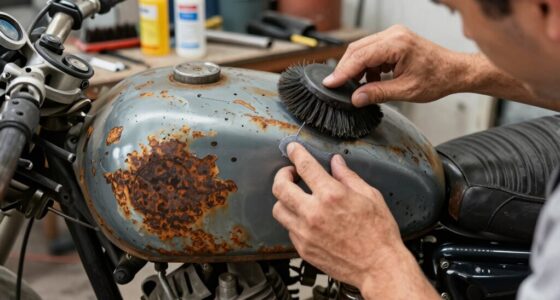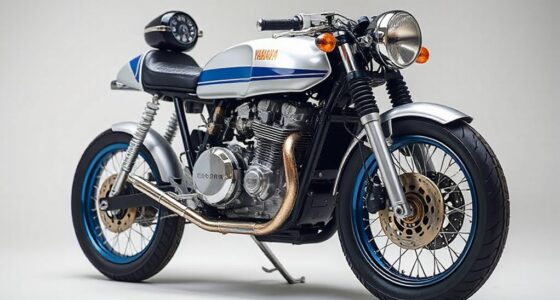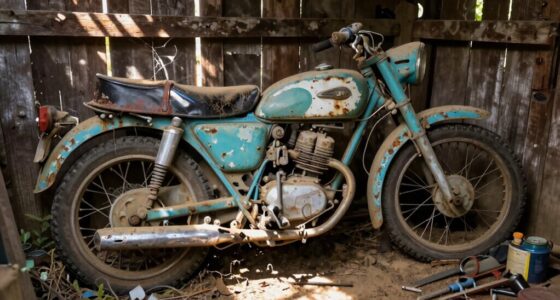
A survivor bike is one that stays largely in its original condition, showing authentic wear, scratches, and patina, emphasizing its history. In contrast, a restoration involves repairing, replacing parts, and often improving its appearance or functionality, sometimes making it look pristine. If you prefer bikes that tell a story with their character intact, you’ll appreciate survivor bikes. Want to understand how these differences impact their value and appeal? Keep exploring to find out more.

Get garage and car supplies delivered free — and shop member deals
- Fast, free delivery on millions of items
- Access to Prime Big Deal Days deals on October 6–7
- Prime Video, Amazon Music and more included
Key Takeaways
- Survivor bikes retain most original parts and show authentic wear, while restorations replace or repair parts for a polished look.
- Survivor bikes emphasize preserving originality, including patina, scratches, and dents, whereas restorations focus on aesthetic perfection.
- Authenticity of survivor bikes is verified through original paint, markings, and components; restorations may involve period-correct replacements.
- Survivor bikes tell a historical story through wear and authenticity; restorations aim for visual appeal and improved functionality.
- Valuation prioritizes rarity and character in survivor bikes; restorations are valued for their beauty and performance enhancements.
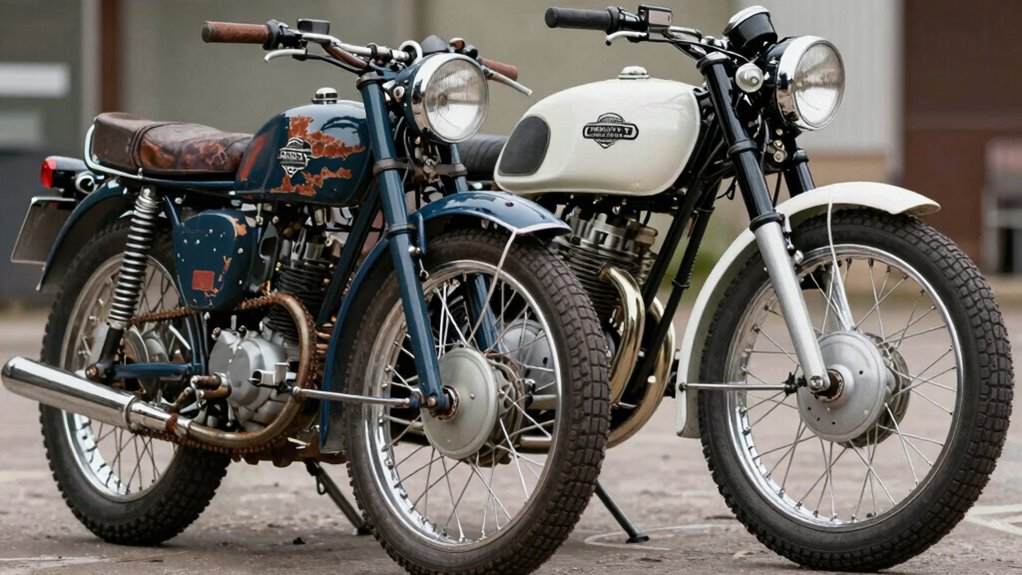
When it comes to classic bikes, the terms “survivor bike” and “restoration” often get used interchangeably, but they actually refer to very different approaches. A survivor bike is a piece that has largely remained in its original condition over the years, with minimal repairs or modifications. Its value lies in originality preservation—every scratch, patina, and dent tells a story about its history. When you encounter a survivor bike, you’re seeing a genuine snapshot of its era. The focus isn’t on making it look perfect but on maintaining its authenticity. To verify this authenticity, collectors often perform a thorough authenticity verification process, checking original parts, paint, and markings against historical records. This confirms that what you see is truly what the manufacturer produced, not a heavily altered replica.
A survivor bike preserves its original parts and patina, offering an authentic glimpse into its historical era.
In contrast, restoration involves actively repairing or replacing parts to bring the bike back to a specific period look or function. You might replace worn-out components, repaint areas, or even modify certain elements to improve performance or appearance. While a restoration can result in a beautiful, museum-quality bike, it often sacrifices some of the original features—especially if parts are replaced or reworked. Restorers usually aim for a certain level of historical accuracy, but the process inherently involves making choices about what to keep and what to change. This means that the bike’s originality is altered in some way, even if the goal is authenticity verification through careful research and sourcing period-correct parts. Additionally, understanding the difference in philosophy between surviving original condition and restoring to a specific standard helps collectors and enthusiasts appreciate the unique value each approach offers. Recognizing these differences can influence your collecting priorities and the way you evaluate vintage bikes.
Furthermore, many enthusiasts recognize that preservation of originality can be crucial for historical integrity and long-term value. If you’re interested in owning a survivor bike, you value the story it carries and the rarity of untouched originality. You understand that parts might be worn or faded, but those imperfections add character and authenticity. When evaluating such a bike, you’ll focus on verifying that it’s as close to factory condition as possible, with original paint, decals, and components intact. If you prefer a restoration, you’re more concerned with achieving a specific look or improving functionality. You’re willing to replace original parts if necessary, knowing that the end result is a beautifully restored piece that may not be entirely original but is often more functional and visually polished.
Ultimately, whether you lean toward a survivor bike or a restoration depends on what you value most—preserving history or creating a visually perfect, functional piece. Both approaches celebrate the craftsmanship of vintage bikes, but they do so through very different philosophies.
As an affiliate, we earn on qualifying purchases.
Frequently Asked Questions
How Do I Determine if a Bike Is a Survivor or Restored?
To determine if a bike is a survivor or restored, look for signs of historical accuracy and original components. A survivor bike maintains its authentic parts with minimal repairs, showing age and wear naturally. Restored bikes often have replaced or refurbished parts, which can sometimes be identified through subtle differences in paint, decals, or hardware. Carefully examine the bike’s details to see if it retains its original integrity or has undergone significant restoration.
What Are the Key Signs of an Authentic Survivor Bike?
To spot an authentic survivor bike, look for original authenticity in its parts, paint, and markings. Genuine survivor bikes often show signs of age like patina, wear, and minor rust, which preservation techniques have maintained without restoring. Check for consistent aging, original decals, and factory finishes. These details indicate the bike has been preserved rather than restored, maintaining its historical integrity and true vintage character.
Can a Restoration Increase a Bike’s Value More Than a Survivor?
Think of it like a rare painting—restoration can sometimes boost a bike’s value more than an untouched survivor, especially if it enhances authenticity. If done carefully, vintage preservation and maintaining authentic originality can appeal to collectors seeking a pristine, functional piece. However, over-restoration risks diminishing its desirability. Ultimately, a well-executed restoration that respects the bike’s history can profoundly increase its worth, sometimes surpassing the value of a survivor.
Are Survivor Bikes More Rare Than Restored Ones?
Yes, survivor bikes are generally more rare than restored ones because they’ve been preserved in their original condition over time. You’ll find that vintage preservation and authenticity verification make survivor bikes highly sought after by collectors. Their untouched state offers a genuine glimpse into the past, making them more valuable and unique compared to restored bikes, which may have undergone modifications or replacements to enhance their appearance or functionality.
What Are the Common Challenges in Authenticating Survivor Bikes?
They say, “Trust but verify,” and that’s key when authenticating survivor bikes. You’ll face challenges like verifying vintage authenticity, ensuring parts are original, and steering through restoration ethics. Original paint, decals, and components are often worn or replaced, making it tricky to confirm true survivor status. You need sharp eyes and knowledge to spot subtle details, and sometimes, expert opinions are essential to avoid misjudging a bike’s history.
As an affiliate, we earn on qualifying purchases.
Conclusion
So, now you see the subtle yet significant line between a survivor bike and a restoration. But here’s the question: which one truly captures the spirit of history? Will you preserve its raw, untouched story or bring it back to life with meticulous detail? The choice isn’t just about appearance—it’s about honoring its legacy. The next decision you make could change how this machine’s story continues. Are you ready to write the next chapter?
original condition vintage bicycle
As an affiliate, we earn on qualifying purchases.
As an affiliate, we earn on qualifying purchases.
period correct bike restoration parts
As an affiliate, we earn on qualifying purchases.
As an affiliate, we earn on qualifying purchases.
Fall Picks
fall essentials
As an affiliate, we earn on qualifying purchases.