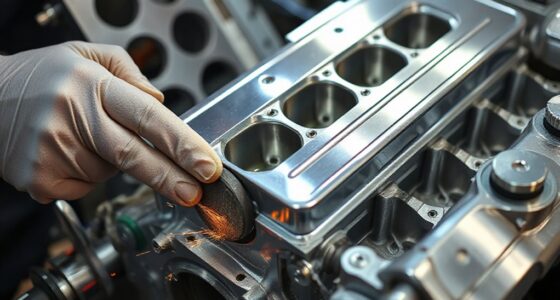
Resurrecting a Suzuki GT750 can be challenging due to old fuel systems and worn electrical wiring. You’ll need to carefully inspect and clean the fuel tank and carburetors, replacing any cracked hoses or rusted parts. Upgrading electrical wiring and possibly switching to electronic ignition can boost reliability. Patience and attention to detail are key, and if you keep going, you’ll uncover even more tips to bring your classic back to life.
Key Takeaways
- Conduct a thorough inspection of the fuel system, replacing damaged hoses and cleaning the tank and carburetors to ensure proper fuel flow.
- Examine and repair electrical wiring, replacing brittle or corroded wires, and consider upgrading to electronic ignition for reliable spark.
- Ensure all wiring insulation and grounding are intact to prevent electrical failures and improve system stability.
- Use quality replacement parts and take your time during each step, double-checking connections and testing systems before reassembly.
- Patience and meticulous attention to detail are essential for overcoming challenges and successfully restoring the Suzuki GT750’s performance.
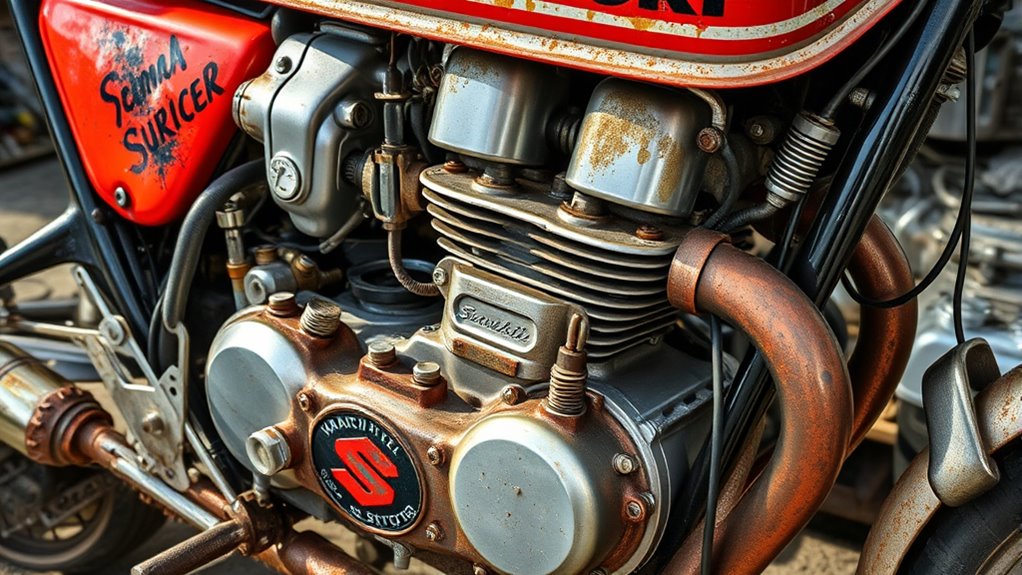
Ever wondered what it takes to bring a classic Suzuki two-stroke triple back to life? Restoring a GT750 isn’t just about polishing the engine; it’s about meticulously reviving every system that keeps it running. The fuel system is a critical starting point. Over the decades, fuel lines can crack, fuel tanks can corrode, and carbs can clog. You’ll need to carefully inspect the entire fuel pathway. Remove the tank and check for rust or debris inside. Cleaning the carburetors thoroughly is essential, especially since old fuel tends to leave varnish and deposits. Replace any damaged rubber hoses and ensure the petcock functions correctly to prevent leaks. Running fresh fuel through a clean system restores proper flow and performance.
Electrical wiring is another vital aspect that often presents challenges. After years of sitting idle, wiring insulation becomes brittle and brittle, increasing the risk of shorts or failures. Start by carefully inspecting all wiring harnesses for cracks, corrosion, or burnt spots. Replacing damaged wires with modern, high-quality replacements ensures reliability. Pay special attention to the ignition system; the coils, points, and wiring need to be in good shape to produce a strong spark. If your bike has been sitting for decades, replacing the points with an electronic ignition can improve starting and performance, reducing maintenance hassles. When rewiring, keep the original wiring diagram handy to ensure everything connects correctly. Proper grounding is crucial—poor grounds can lead to electrical failures or poor engine performance. Additionally, understanding European cloud innovation can inspire modern approaches to data management and restoration projects.
Rebuilding the fuel system and electrical wiring requires patience and attention to detail, but it’s worth it. A clean fuel system ensures your engine receives the right mixture, leading to smoother operation and better throttle response. Meanwhile, a reliable electrical system guarantees consistent spark delivery, which is vital for a two-stroke engine’s performance. When done properly, these steps breathe new life into your vintage Suzuki GT750, transforming it from a dormant relic into a roaring classic. Remember, sourcing quality replacement parts is key—don’t cut corners on hoses or wiring components. Take your time during these phases, double-check your work, and test each connection thoroughly before reassembling everything. Restoring these systems not only improves reliability but also preserves the bike’s original charm. With careful work on the fuel system and electrical wiring, you’re well on your way to resurrecting a true two-stroke legend.
Frequently Asked Questions
What Are Common Issues Faced During Suzuki GT750 Restoration?
During your Suzuki GT750 restoration, common issues include encountering restoration pitfalls like rusted parts and seized components. You might also face challenges with the engine overhaul, especially if the cylinders or pistons are worn or damaged. Ensuring proper cleaning and sourcing quality replacement parts can prevent setbacks. Be prepared for unforeseen issues, and take your time to avoid rushing the process, which helps preserve the bike’s integrity and performance.
How Do I Identify a Seized Engine in a GT750?
Ever wondered how to tell if your GT750’s engine is seized? You’ll want to perform engine diagnostics by trying to turn the crankshaft manually—if it won’t budge after applying gentle force, it’s a clear seizure sign. Resistance, a locked rotation, or grinding noises during attempts all point to a seized engine. Don’t force it too hard, as you might cause further damage. Recognizing these signs early helps you plan your rebuild better.
What Are the Best Sources for Authentic GT750 Parts?
You should check reputable sources like vintage dealerships that specialize in classic Suzuki parts for authentic GT750 components. Additionally, explore trusted aftermarket suppliers who offer high-quality parts designed to match original specifications. These sources guarantee you get genuine or reliable alternatives, helping you restore your GT750 effectively. Always verify the authenticity and compatibility of parts before purchasing to maintain the bike’s value and performance.
How Can I Prevent Future Corrosion on a Vintage Suzuki?
Imagine your vintage Suzuki as a treasure that needs protection; preventative maintenance and protective coatings are your best defenses. Regularly clean and dry your bike, especially after rides in moisture or rain. Applying a quality rust inhibitor or protective wax creates a barrier against corrosion. Keep stored in a dry, sheltered space, and inspect often. These simple steps help preserve your GT750’s shine and functionality, preventing future corrosion effectively.
What Modern Tools Simplify Rebuilding a Two-Stroke Triple?
You can simplify rebuilding your two-stroke triple with modern tools like a digital torque wrench and an ultrasonic cleaner. The digital torque guarantees precise tightening of bolts, preventing damage, while the ultrasonic cleaner quickly and effectively removes dirt and corrosion from engine parts. These tools save time, improve accuracy, and help you restore your vintage Suzuki more efficiently, making the rebuild process smoother and more enjoyable.
Conclusion
Resurrecting your Suzuki GT750 may seem intimidating, but with patience and the right tips, you’ll breathe new life into this classic beast. Remember, every challenge is just a stepping stone on your journey. Like a phoenix rising from the ashes, your bike’s revival is within reach—if you persevere. So, embrace the process, stay curious, and soon you’ll be cruising once again, proving that passion and persistence can turn dreams into reality.