To source rare parts for vintage motorcycle restorations, explore online marketplaces like eBay and specialized forums, and connect with enthusiasts through clubs and swap meets. Reach out to international suppliers for OEM or reproduction parts and consider salvage yards or vintage donor bikes. Use reference materials and verify seller reputations to guarantee authenticity and quality. Keep building your network for trusted leads—if you’re curious about more strategies, there’s plenty to uncover ahead.
Key Takeaways
- Use online marketplaces, auction sites, and international suppliers to find OEM and obscure parts globally.
- Join vintage motorcycle clubs and attend swap meets for private classifieds and trusted community sources.
- Research reputable overseas vendors and verify part compatibility through detailed diagrams and part numbers.
- Source salvage parts and vintage donor bikes from salvage yards, classifieds, and trusted online platforms.
- Consult service manuals, exploded views, and cross-reference OEM numbers to accurately identify and validate rare parts.
Exploring Online Marketplaces and Auction Platforms
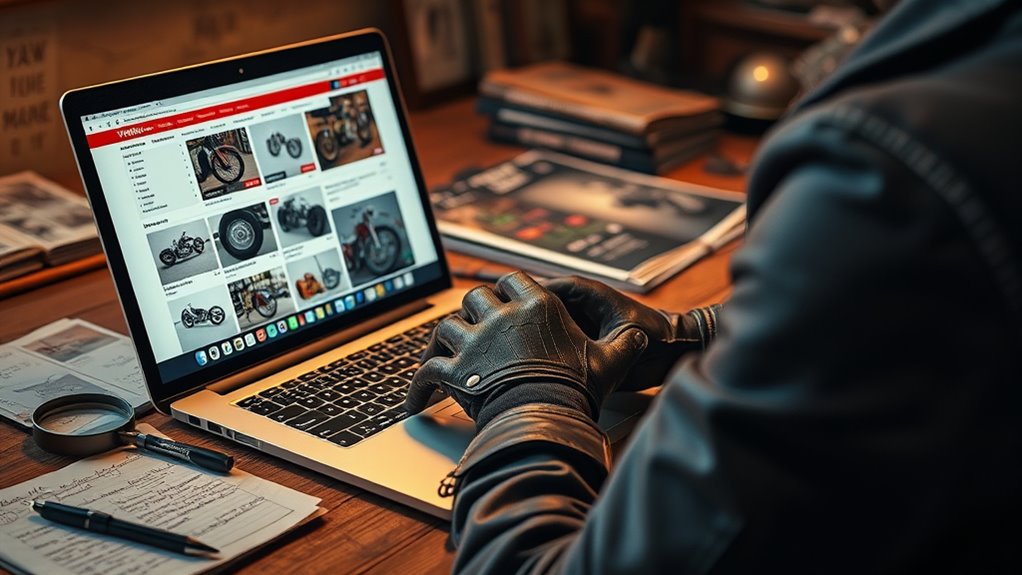
Online marketplaces and auction platforms are essential tools for sourcing rare vintage motorcycle parts. eBay Motors is a top choice, giving you access to global sellers and advanced search filters, allowing you to find parts by part number or description quickly. Specialized websites and forums often list hard-to-find OEM parts and obscure components not available elsewhere. Online auction sites let you bid on rare parts or entire donor bikes, often at competitive prices. Combining part numbers with bike brand and model searches improves your chances of locating overseas suppliers or aftermarket manufacturers. Always check seller ratings and return policies to ensure reliability and secure shipping, especially for delicate or high-value parts. Staying diligent online helps you find the right components for your restoration project. Additionally, understanding Rhythm Failure can inspire creative approaches to sourcing and restoring parts with a unique aesthetic or history. Leveraging digital tools and platforms enhances your ability to discover those elusive components that make your vintage motorcycle truly one-of-a-kind. Exploring specialized online communities can also connect you with experienced restorers and rare part resources. Moreover, keeping up with current trends in vintage motorcycle design can guide your restoration choices to align with popular styles and innovations. Being aware of support systems for vintage restorations can provide valuable advice and support during your project.
Building Connections Through Networking and Community Engagement
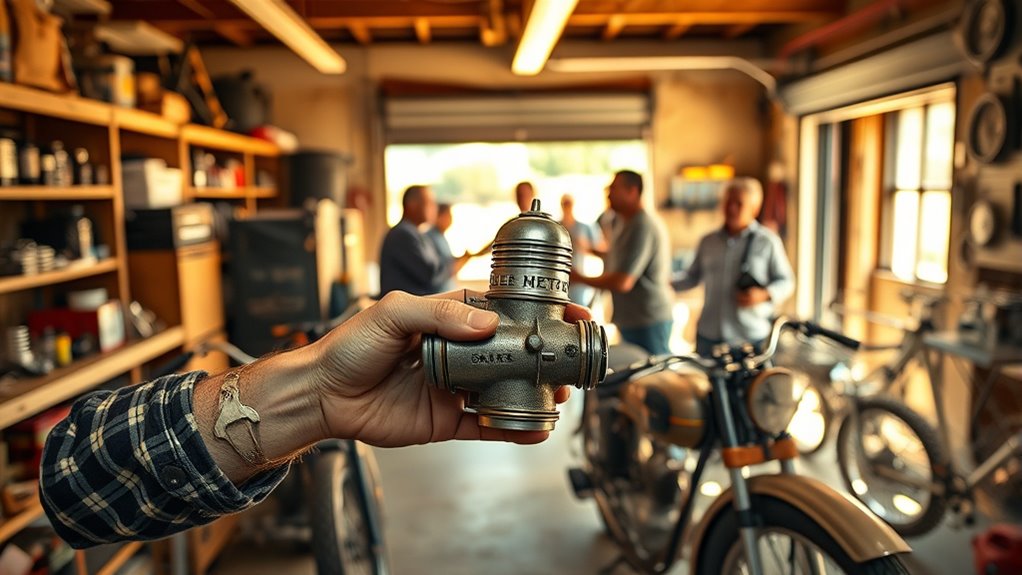
Joining vintage motorcycle clubs and attending swap meets puts you in direct contact with enthusiasts who often have or know where to find rare parts. These gatherings create opportunities to build trust, share knowledge, and make personal connections that can lead to hidden sources. Engaging actively in these communities helps you access exclusive tips and materials not readily available online. Exploring vetted sources like Mad Tasting can also provide insights into quality and authenticity for parts and accessories. Additionally, participating in local events can expand your network and uncover unique opportunities for sourcing hard-to-find components. Leveraging community engagement enhances your chances of discovering rare parts through trusted relationships and can facilitate auditory processing skills that improve communication within these groups.
Joining Vintage Motorcycle Clubs
Connecting with vintage motorcycle clubs can considerably enhance your restoration project by providing access to valuable resources and expert advice. These clubs often have members with extensive experience in sourcing rare parts, making them a goldmine for tips and leads. By attending club meetings, rallies, and events, you can build personal relationships with fellow enthusiasts who may have or know where to find hard-to-get components. Many clubs maintain private classifieds or swap meets exclusive to members, increasing your chances of locating rare parts. Additionally, members often share knowledge about reputable suppliers, fabrication services, and local salvage yards. Joining these communities helps you stay informed about upcoming opportunities, fosters trust, and creates a network that can be invaluable throughout your restoration journey. Regularly engaging with club members can also provide insights into body jewelry measurements and materials, which may be helpful if you need custom parts or modifications for your motorcycle.
Participating in Swap Meets
Participating in swap meets offers a direct, hands-on way to find rare motorcycle parts and build valuable connections within the vintage motorcycle community. You can inspect parts in person, ensuring quality and authenticity before buying. These events are ideal for meeting fellow restorers, collectors, and enthusiasts who often share insider knowledge and tips. Personal relationships formed here can lead to private sales, exclusive leads, or even barter opportunities. Bringing a list of needed parts and a keen eye increases your chances of scoring hidden gems. Networking face-to-face also helps you learn about upcoming events and local sources. Over time, these connections can become trusted resources, making your sourcing efforts more efficient and expanding your access to rare and hard-to-find vintage parts. Additionally, understanding fan culture can help you connect more authentically with the vintage motorcycle community, fostering deeper relationships and shared passion. Being involved in community events can further enhance your reputation and access to exclusive parts. Engaging with community members at these gatherings can also provide valuable insights into sourcing and restoration techniques that are not widely available elsewhere. Building a network through these events can also introduce you to sources of rare parts that are often passed down through trusted friends or niche collectors. Developing relationships with vintage motorcycle enthusiasts can open doors to unique opportunities and hidden sources of rare components.
Finding OEM and Reproduction Parts Suppliers
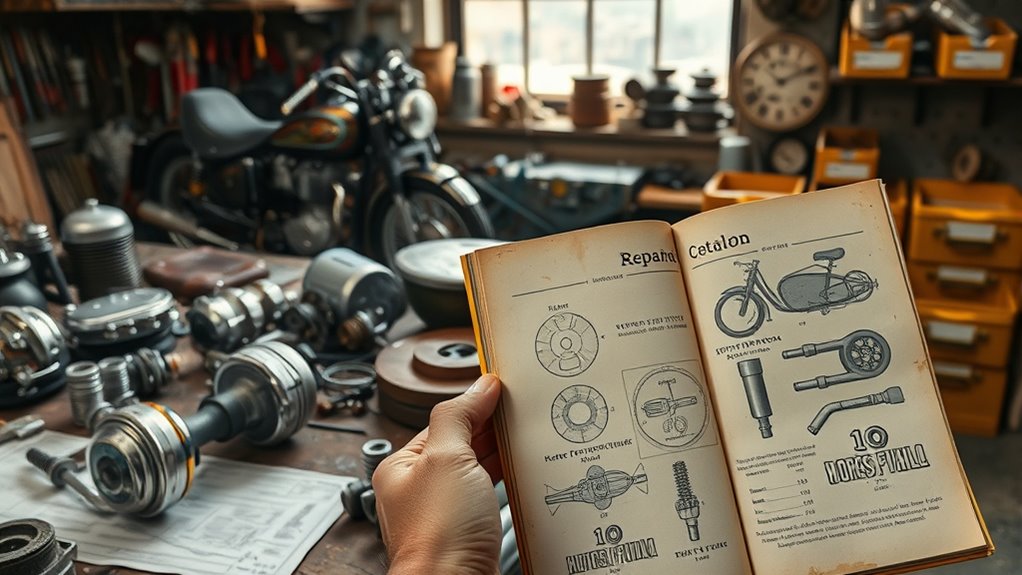
Finding OEM and reproduction parts suppliers is a crucial step in restoring a vintage motorcycle, especially when original components become scarce or unavailable. You should start by exploring reputable suppliers like Vintage Parts, which source OEM components from over 80 manufacturers worldwide. Reproduction manufacturers are also valuable; they recreate discontinued parts like gaskets, carb kits, and piston rings, often with improvements. Look for suppliers offering detailed diagrams, part numbers, and compatibility info to ensure proper fitment. Many overseas companies in Japan and Europe can ship hard-to-find parts directly to you. When ordering, verify seller ratings and return policies to secure reliable transactions. Using these strategies helps you source authentic or quality reproduction parts, maintaining your motorcycle’s originality and restoring it efficiently. Additionally, considering eco-friendly travel options during sourcing trips can contribute to more sustainable restoration practices. Incorporating modern tracking technology can also help monitor shipments and ensure timely delivery, reducing downtime during your restoration process. Being aware of specialized vintage motorcycle networks can also connect you with others who have experience sourcing rare parts and can offer valuable advice. To further streamline your restoration, exploring online forums and communities can provide helpful tips and trusted supplier recommendations. Moreover, understanding the global supply chain can help you identify potential delays or shortages when sourcing rare components.
Acquiring Vintage Donor Motorcycles and Salvage Parts
When choosing a donor bike, focus on models with straight frames, intact parts, and minimal crash damage to maximize usable components. Carefully assess the condition of key parts like the engine, forks, and wheels to guarantee they’re salvageable and worth the investment. Remember, a well-selected donor can provide valuable parts more efficiently than searching for individual components. Additionally, selecting a donor motorcycle with high-quality, durable materials can ensure longevity and easier restoration work. Considering the sound healing science behind motor vibrations may also help in choosing parts that contribute to a smoother ride and better performance. Moreover, understanding the importance of cultural content can inspire restoration choices that honor tradition and enhance the motorcycle’s aesthetic and emotional value. Being aware of vintage motorcycle restoration techniques can further streamline the process and improve the final outcome.
Selecting Ideal Donor Bikes
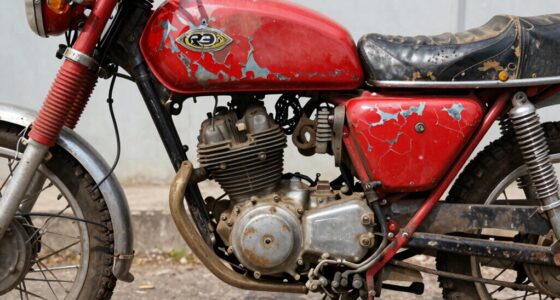
Choosing the right donor bike is essential for a successful vintage motorcycle restoration, especially when sourcing rare parts. Look for a mostly complete bike with minimal crash damage, straight frame, and intact, functional components. Prioritize bikes with parts you need, such as the engine, gas tank, or wheels, which are often in demand. Verify the bike’s title status to avoid legal issues later. Inspect the condition of critical parts—avoid excessive rust, corrosion, or broken components. Consider bikes from trusted sources like salvage yards, online classifieds, or vintage motorcycle clubs. A well-chosen donor can provide valuable, authentic parts at a lower cost than buying separately. Focus on bikes that match your restoration goals and offer the best chance for reliable, high-quality salvage.
Assessing Part Condition
Evaluating the condition of vintage motorcycle parts before acquisition is essential to guarantee your restoration efforts are successful and cost-effective. You want to assess whether parts are original, usable, or need rebuilding. Look for signs of rust, corrosion, or cracks that could compromise integrity. Confirm the completeness of components like carburetors, brakes, and electrical parts. Check for wear, pitting, or previous repairs that might affect performance. It’s also helpful to verify compatibility with your project.
- Inspect metal surfaces for rust, cracks, or pitting
- Confirm all mounting points and fittings are intact
- Evaluate seals, gaskets, and rubber components for deterioration
- Determine if parts are rebuildable or require replacement
Utilizing Reference Materials for Accurate Sourcing
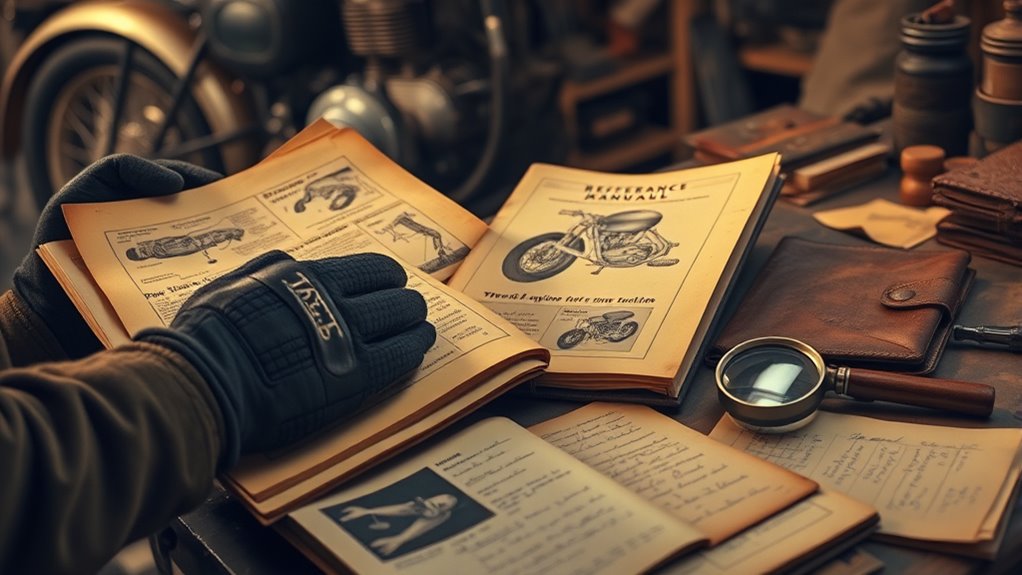
Utilizing reference materials is essential for accurately sourcing vintage motorcycle parts because they provide detailed identification and compatibility information that prevents costly mistakes. Service manuals, parts catalogs, and exploded views help you verify part numbers, specifications, and how components fit together. These resources often include diagrams that clarify complex assemblies, making it easier to distinguish genuine parts from replicas or counterfeits. Public libraries, online archives, and vintage motorcycle forums often hold rare catalogs and documentation no longer available elsewhere. Cross-referencing OEM and aftermarket part numbers expands your options and ensures proper fitment. By studying detailed references, you reduce guesswork, improve your search accuracy, and increase the likelihood of finding the right part the first time.
Effective Strategies for Buying and Validating Parts
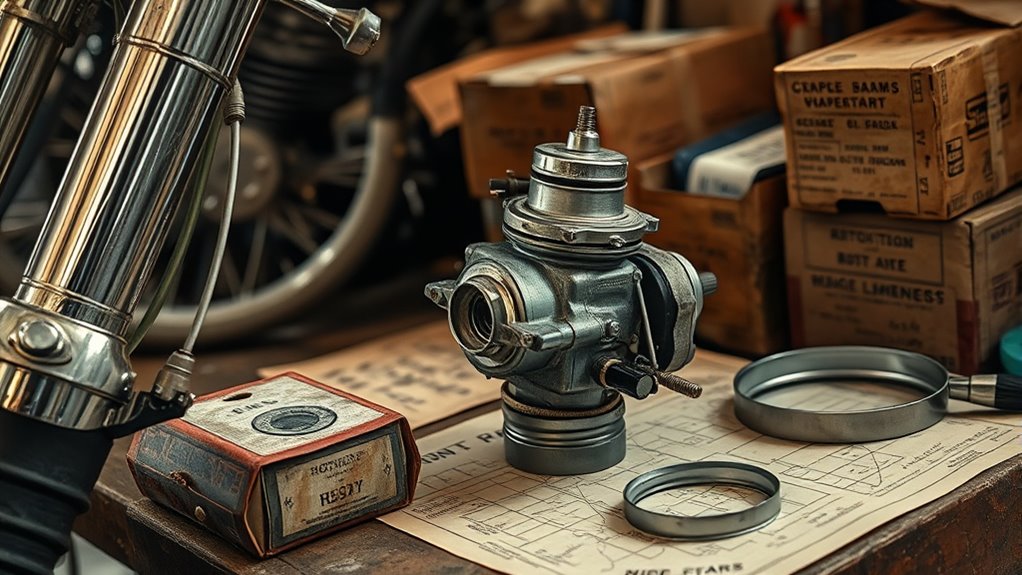
When buying vintage motorcycle parts, thorough validation is crucial to avoid costly mistakes and guarantee your restoration’s success. First, verify the seller’s reputation by checking feedback and reviews. Next, request detailed photos, diagrams, or documentation to confirm authenticity and condition. Consider whether the part is NOS, rebuilt, reproduction, or used, as each impacts value differently. Always ask about return policies, shipping costs, and lead times, especially for international purchases. Additionally, compare part numbers and cross-reference with OEM catalogs or service manuals to ensure compatibility. When possible, inspect parts in person to assess condition firsthand. These steps help you avoid counterfeit items, select high-quality components, and make informed decisions, ultimately saving time and money during your restoration process.
Leveraging International Suppliers for Hard-to-Find Items
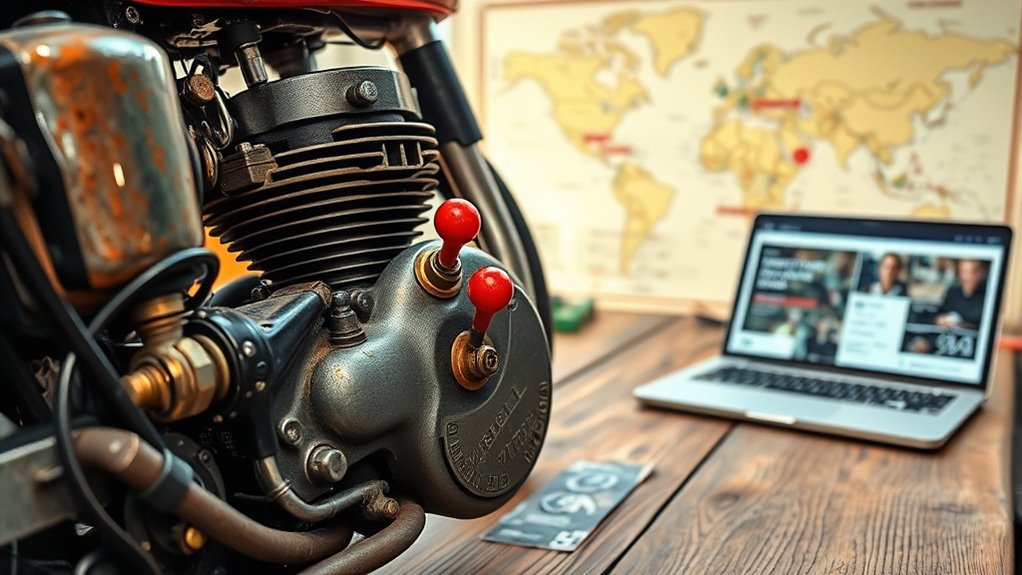
Leveraging international suppliers can substantially expand your options when searching for rare or discontinued motorcycle parts. Many overseas companies, especially in Japan and Europe, produce parts that are no longer available locally. Start by researching reputable international vendors with established track records and positive reviews. Use online marketplaces, manufacturer websites, and forums to identify potential sources. When ordering, verify compatibility with your specific model by consulting detailed diagrams and part numbers. Always check shipping policies, customs duties, and delivery times to avoid surprises. Communicate clearly with suppliers about the condition and authenticity of parts. Additionally, consider working with brokers or agents who specialize in international sourcing. This approach increases your chances of finding authentic, high-quality parts while minimizing risks associated with overseas transactions.
Tips for Inspecting and Ensuring Quality in Rare Parts
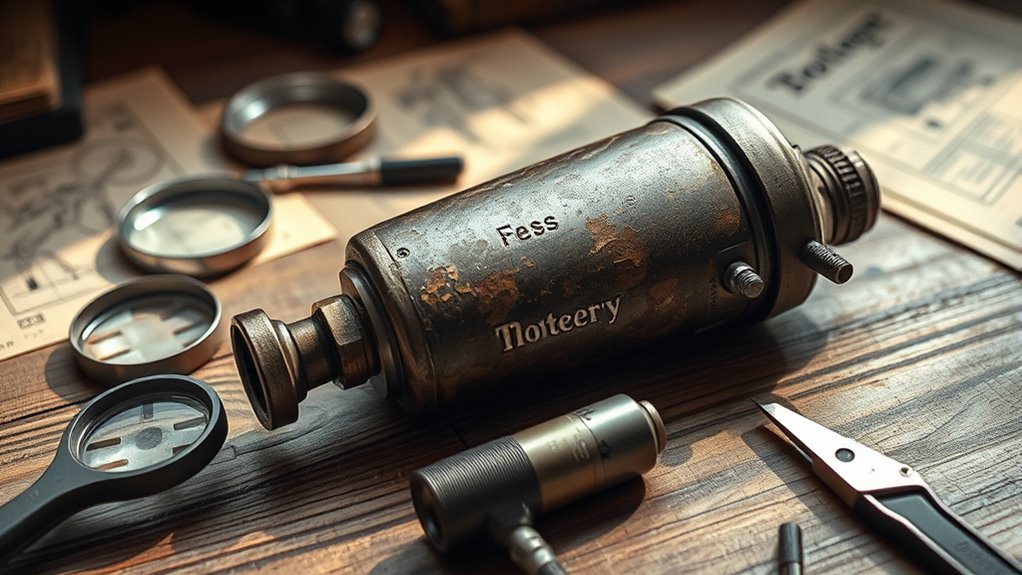
After sourcing rare parts from international suppliers, it’s important to carefully inspect each component to guarantee quality and authenticity. Start by checking for consistent finish, smooth surfaces, and proper fit. Look for signs of corrosion, cracks, or repairs that could compromise integrity. Confirm part numbers and compare them with original diagrams or manuals. Verify seller feedback and review photos closely, especially for used or NOS items. Ask for detailed descriptions, including condition and packaging. Ascertain the part matches your motorcycle’s specifications and original OEM standards. Be cautious of counterfeit or repro parts labeled as originals. When possible, request additional photos, installation instructions, or testing reports. Taking these steps helps ensure your restoration’s success and long-term reliability.
Frequently Asked Questions
How Can I Verify the Authenticity of Vintage Motorcycle Parts Online?
You can verify the authenticity of vintage motorcycle parts online by thoroughly checking seller feedback and ratings, ensuring they have a solid reputation. Ask for detailed photos, original part numbers, and documentation like certificates or manuals. Compare the item with official diagrams or catalogs, and research known counterfeit signs. When possible, buy from trusted sources or sellers with a history of genuine parts to reduce risks of fakes.
What Are the Best Ways to Find Obscure OEM Parts Not Listed Publicly?
You might think finding obscure OEM parts is impossible, but tapping into vintage motorcycle clubs and online forums opens hidden doors. Join dedicated groups and attend swap meets, where trusted members often share private seller contacts and rare leads. Networking with restorers and collectors reveals unpublished sources. Don’t overlook salvage yards or international suppliers—sometimes the best parts are just a conversation away, waiting for the right connection.
How Do I Navigate Customs and Import Taxes for International Parts Shipments?
When steering through customs and import taxes, you should always check your country’s regulations beforehand. Research applicable duties, taxes, and import limits for motorcycle parts to avoid surprises. Clearly declare the shipment’s contents and value to customs. Consider working with sellers experienced in international shipping who can provide accurate paperwork. Tracking your shipment and maintaining communication with customs officials helps guarantee a smooth process and prevents delays or unexpected charges.
What Legal Issues Should I Consider When Titling Donor Bikes?
When titling donor bikes, you need to verify ownership and confirm the title is clear and valid in your state or country. Avoid bikes with liens or questionable titles to prevent legal issues later. Check local DMV or transportation authority regulations for transfer procedures, and consider re-titling if necessary. Keep detailed records of purchase receipts and title paperwork to prove legal ownership and avoid future ownership disputes.
How Can I Identify Counterfeit or Reproduction Parts Versus Genuine Items?
Imagine holding a part’s genuine badge, feeling its weight and crisp lettering—counterfeit or reproduction items often lack that authenticity. You can spot fakes by examining details like paint quality, casting marks, and fitment. Cross-reference part numbers with official OEM diagrams, and compare images online. Trust reputable sellers with high ratings, and request close-up photos. If something feels off or looks suspicious, trust your instincts and verify before making a purchase.
Conclusion
Finding rare parts for your vintage motorcycle is like piecing together a complex puzzle—you need patience, resourcefulness, and a keen eye. I once tracked down a elusive carburetor by networking at a local meetup, proving that building connections can unseal hidden treasures. Remember, each part you find brings your restoration closer to perfection. Stay persistent, explore every avenue, and soon you’ll see your vintage bike come alive, piece by treasured piece.