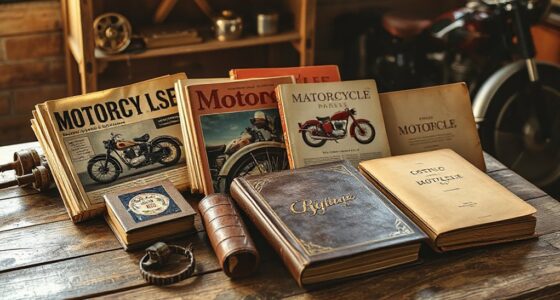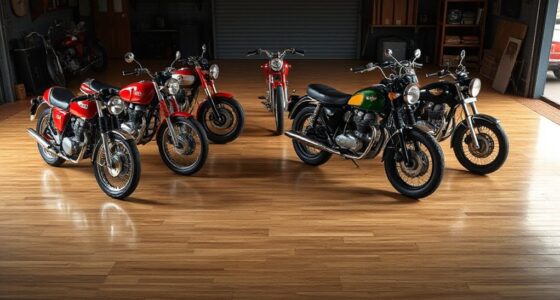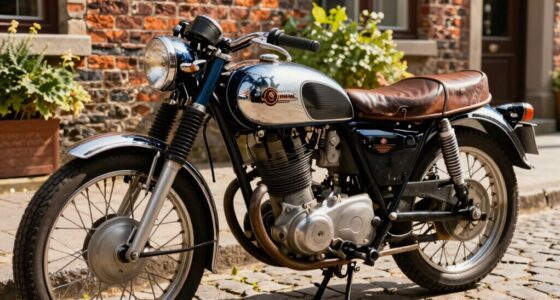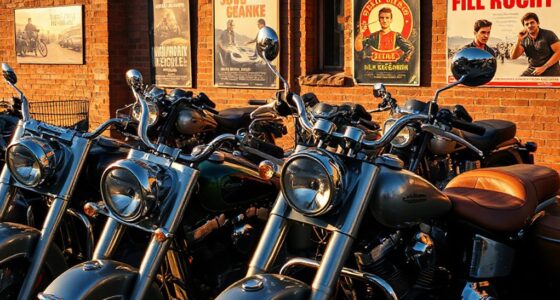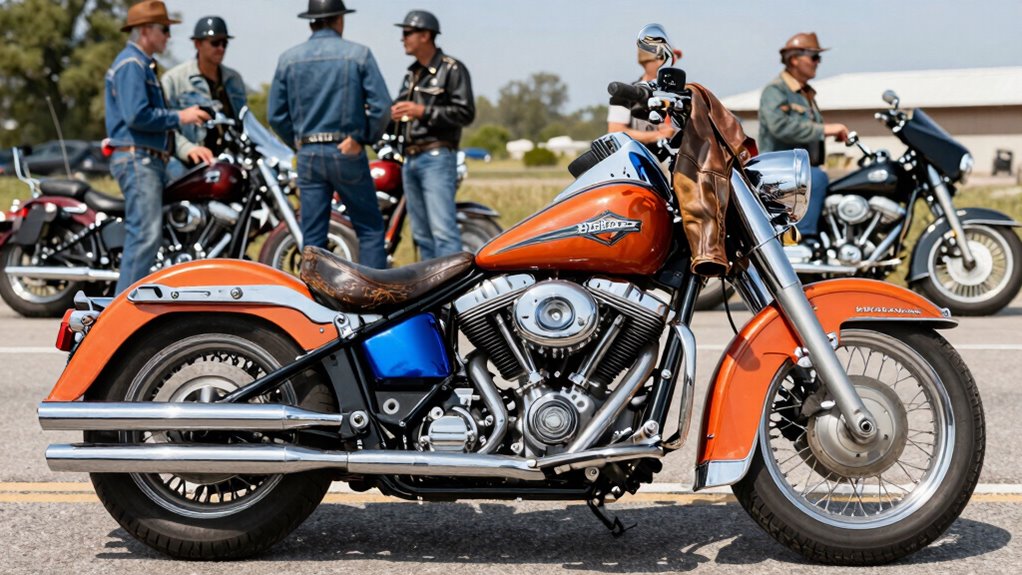
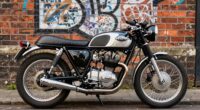
Classic motorcycles, especially Harley-Davidson, shaped American biker culture by symbolizing rebellion, brotherhood, and individualism. Their iconic designs, powerful V-twin engines, and bold finishes fostered a rugged identity that became central to the biker stereotype. Media like films and music reinforced this image, while motorcycle clubs built social bonds rooted in loyalty and tradition. These timeless bikes continue to influence attitudes and aesthetics, and if you keep exploring, you’ll discover how they helped define a unique American legacy.
Key Takeaways
- Classic motorcycles like Harley-Davidson’s models became symbols of rebellion, freedom, and rugged individualism in American biker culture.
- Iconic design elements such as V-twin engines and bold paint schemes fostered a distinct visual identity among bikers.
- Media portrayals and films popularized the outlaw image, shaping public perceptions of motorcycle riders.
- Biker clubs formed around classic bikes, emphasizing loyalty, brotherhood, and social support rooted in motorcycle aesthetics.
- Customization and personalization of classic bikes reflected individual identity and reinforced cultural values of independence.
The Post-War Roots of American Biker Identity
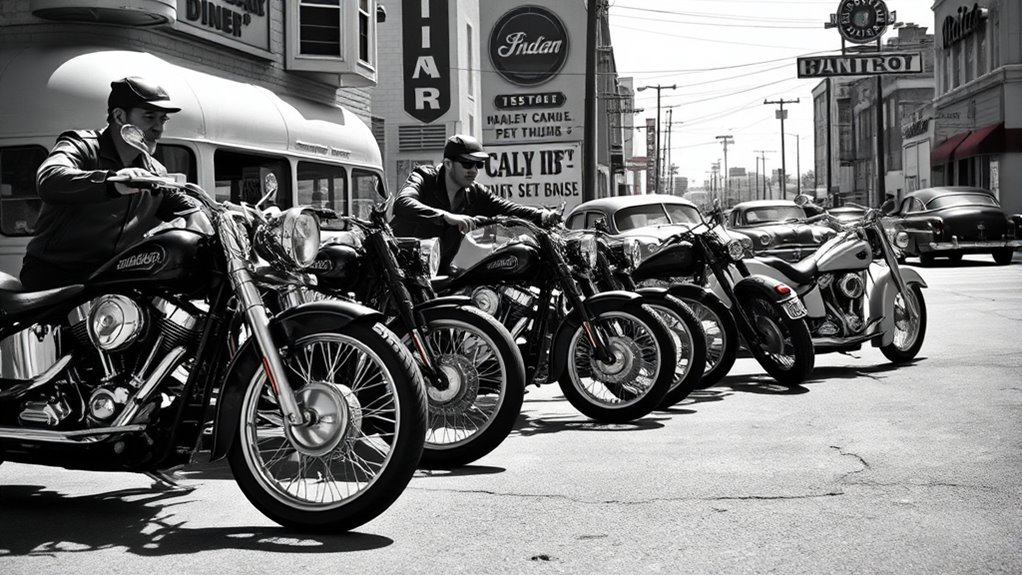
After World War II, many veterans brought their military motorcycle experience into civilian life, shaping the early American biker identity. You might have seen vets riding surplus bikes like the Harley-Davidson WLA, turning riding into a symbol of adventure and camaraderie. They formed motorcycle clubs to create social support networks, helping with civilian adjustment and fostering brotherhood. These clubs attracted men dealing with war trauma, unemployment, or boredom, cultivating a culture that valued rebellion and freedom. Lighter British motorcycles also became popular, encouraging more agile riding styles. Military experience added prestige and mechanical skills, embedding the motorcycle as a core part of personal and group identities. This post-war wave laid the groundwork for the rebellious, community-driven biker culture that would follow. Veterans’ military training also contributed to the development of riding skills and a sense of discipline that became characteristic of biker communities.
Harley-Davidson’s Role in Defining Cultural Symbols
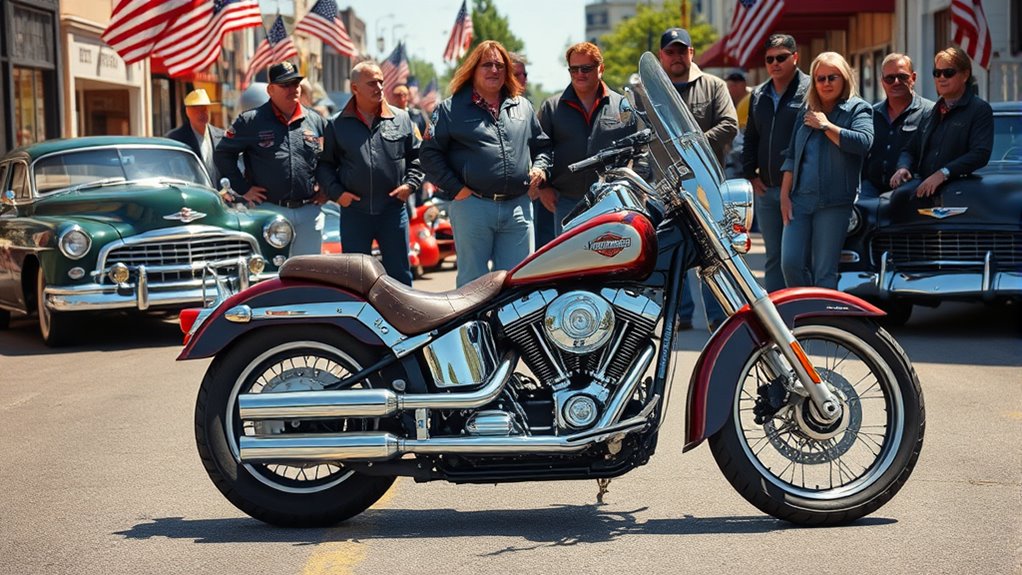
Harley-Davidson has played a pivotal role in shaping the symbols that define American biker culture. Its iconic logos and imagery carry powerful meanings:
Harley-Davidson’s symbols embody freedom, rebellion, and American pride, shaping the spirit of biker culture.
- The Bar & Shield logo, from 1903, symbolizes strength, endurance, and protection—core values of Harley’s identity. This logo was the company’s first official brand marker, establishing a recognizable identity early on.
- The skull logo, introduced in the 1930s, projects rebellion and outlaw spirit, reinforcing Harley’s edgy persona.
- The eagle logo highlights patriotism, courage, and American independence, tying Harley to national pride.
- Logo updates over decades, blending skulls and eagles, maintain a rugged, masculine appeal that resonates with biker culture’s core themes.
These symbols go beyond branding—they embody ideals of freedom, rebellion, and American heritage, making Harley a cultural icon.
The Rise of Motorcycle Clubs and Social Brotherhoods
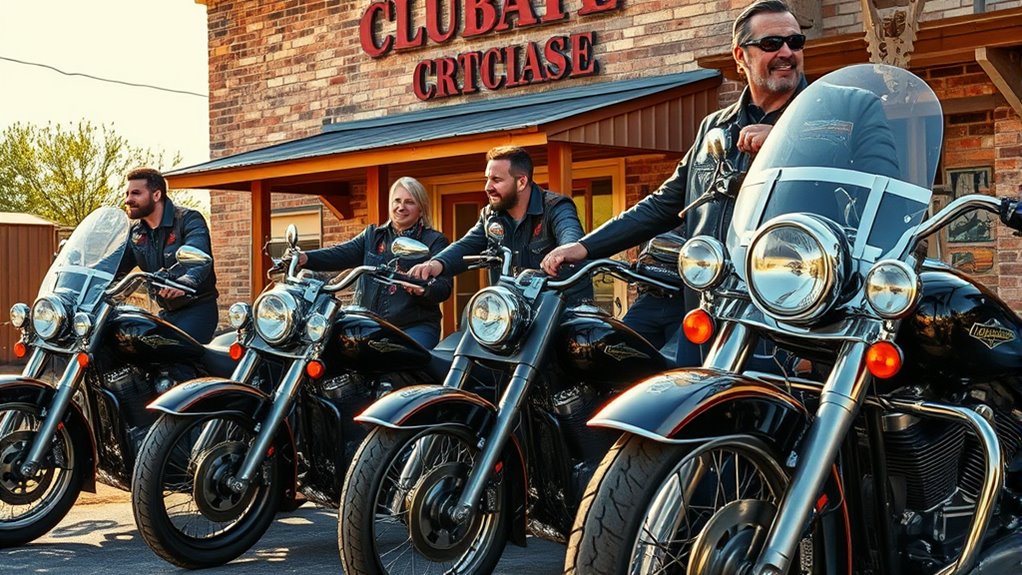
The rise of motorcycle clubs and social brotherhoods in America reflects a deep desire for camaraderie, identity, and shared purpose among riders. You can trace their origins back to the early 1900s, with clubs like the New York Motorcycle Club forming in 1903 and the Yonkers Motorcycle Club evolving from a bicycle group. These clubs organized races, rides, and social events that fostered loyalty and community. After World War II, returning veterans founded new clubs such as the Hells Angels and Boozefighters, seeking connection and a sense of belonging. Members developed codes of loyalty, hierarchy, and rituals like tattoos and patches, reinforcing bonds. Outlaw clubs emerged, challenging mainstream norms and creating a rebellious identity rooted in shared resistance and brotherhood. The influence of ancient cultural traditions can also be seen in some modern biker rituals and symbols.
Classic Motorcycles in Media and Countercultural Movements
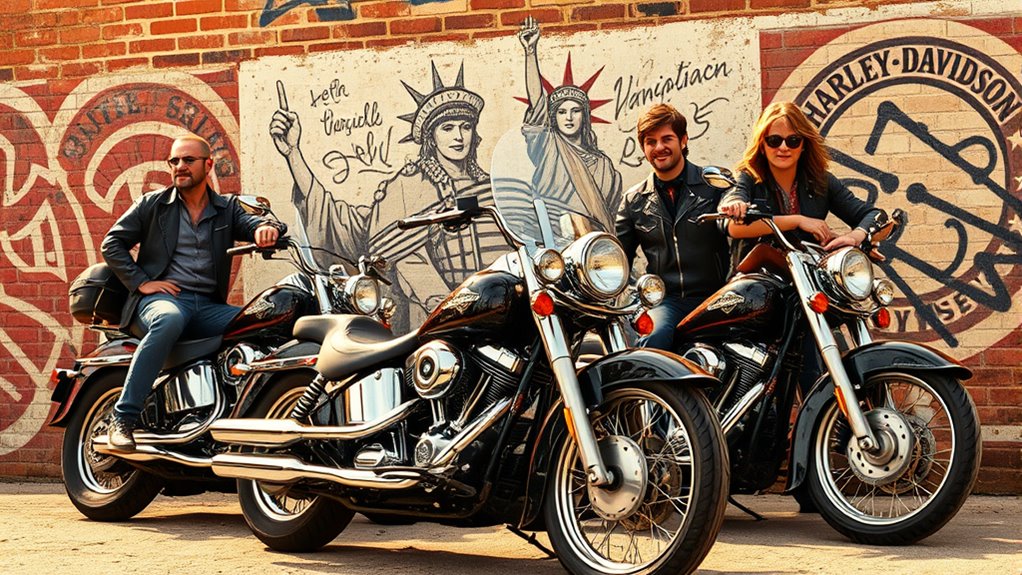
You see how movies like *The Wild One* and stars like Marlon Brando helped turn classic motorcycles into symbols of rebellion and youth defiance. Music scenes, especially with bands like the Rolling Stones, connected motorcycle culture to loud, countercultural attitudes. Fashion choices like leather jackets and boots became key identifiers, blending biker identity with broader movements of nonconformity. Incorporating elements of sound healing science, some enthusiasts believe that certain frequencies can enhance the sensory experience of riding and deepen the feeling of camaraderie among bikers.
Iconic Film Portrayals
- *The Wild One* established the outlaw biker archetype. This film, released in 1953, portrayed bikers as rebellious figures living on society’s fringes, influencing subsequent portrayals of motorcycle culture.
- The 1947 Hollister riot fueled the lawless reputation. This event, where a gathering of bikers turned unruly, was sensationalized by the media and contributed to the perception of motorcyclists as dangerous and uncontrollable public perception.
- Films like *Easy Rider* (1969) linked motorcycles to counterculture movements. The movie captured the spirit of rebellion and freedom associated with motorcycle riding, resonating with the youth of the era and solidifying bikes as symbols of nonconformity.
- Harley-Davidson became a cinematic icon representing American rebellion. Its presence in movies and television reinforced its status as a symbol of rugged individualism and resistance to authority.
Music and Motorcycle Nexus
Post-World War II, motorcycles and rock music became powerful symbols of youth rebellion and nonconformity, forging a strong cultural connection that resonated across media and social movements. You’d see American youth embracing artists like Chuck Berry alongside figures like James Dean and Marlon Brando, who embodied both biker style and rock rebellion. This link extended to Britain’s Rockers and Café Racers, who adopted leather jackets and stripped-down bikes as identity markers. In the 1960s, motorcycles and rock music challenged conservative values, symbolizing freedom and defiance. Rock bands even incorporated biker aesthetics, with some enlisting motorcycle clubs like the Hell’s Angels for concerts. Media portrayed classic bikes as symbols of independence, amplifying biker culture’s rebellious spirit through films, live events, and music icons.
Biker Fashion and Identity
Biker fashion has evolved from practical riding gear into a powerful symbol of identity and rebellion, deeply rooted in media representations and countercultural movements. You can see this shift through several key developments:
- Patches and insignia on jackets now communicate club membership, allegiance, and personal identity, transforming clothing into a statement. This practice reflects the cultural significance of biker attire as a form of non-verbal communication within the community.
- Personalization of vests and jackets in the 1960s reinforced outlaw images and group loyalty.
- Biker fashion influenced wider countercultures like punk rock, with bands like the Ramones adopting leather jackets as symbols of toughness.
- Mainstream media, films, and music popularized the iconic leather jacket and boots, turning biker style into global symbols of rebellion and resilience. Leather jackets became a staple in fashion beyond motorcycle culture, further cementing their iconic status.
Technological and Artistic Innovations in Motorcycle Design
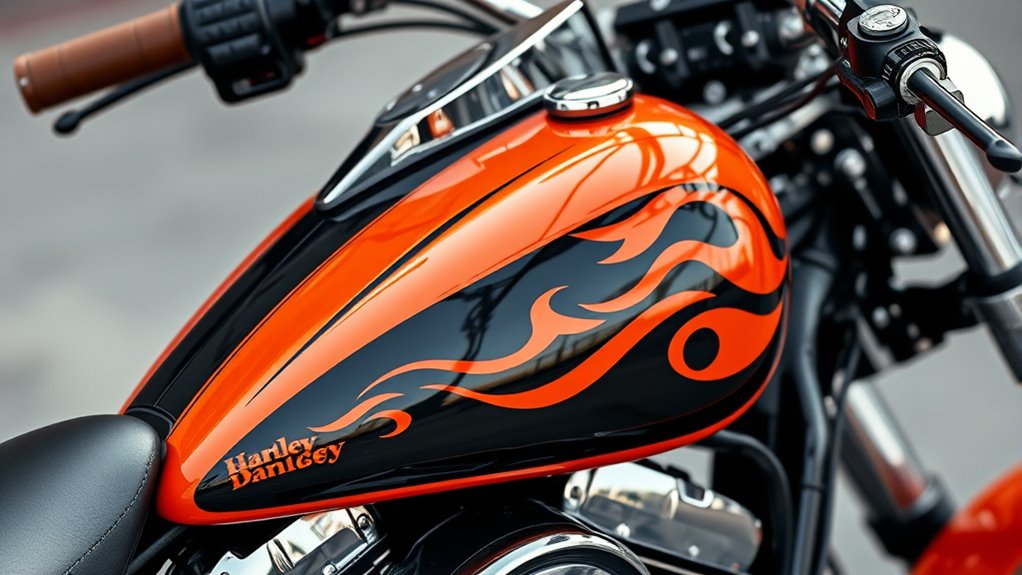
You’ll see how engineering breakthroughs like overhead valve engines and innovative suspension systems transformed motorcycle performance and ride quality. At the same time, iconic design elements such as large gas tanks and custom styling turned bikes into symbols of rebellion and individuality. These technological and artistic innovations together shaped the distinctive look and culture of American motorcycles. Additionally, color accuracy in design details contributed to the unique aesthetic appeal of classic bikes, making them instantly recognizable.
Iconic Design Elements
Iconic design elements in classic American motorcycles showcase a blend of technological innovation and artistic flair that defines the culture.
- The V-twin engine, pioneered by Harley-Davidson in 1909 and Indian in 1904, became a symbol of power and American engineering. Harley’s 1936 EL Knucklehead introduced the overhead-valve V-twin, creating the signature exhaust sound. Crocker’s 1936 models advanced this design with hemispherical heads for performance and style. This engine configuration remains a defining feature of American motorcycles, influencing design and performance standards for decades.
- Aesthetically, bold paint schemes like Crocker’s scalloped finishes and Harley’s wrinkle black conveyed rugged rebellion. Factory customization, exemplified by the Low Rider’s aluminum wheels and drag handlebars, encouraged individual expression.
- Frame designs evolved from early loop frames to sturdier structures accommodating larger engines. Kennedy’s diamond frame emphasized structural integrity, supporting personalization like bobbers and choppers.
- Accessories like cast-aluminum wheels and streamlined components enhanced both form and function, cementing iconic visual and acoustic signatures in American biker culture.
Engineering Breakthroughs
Innovations in motorcycle engineering have continuously pushed the boundaries of performance, comfort, and aesthetics, shaping the evolution of American biker culture. You’ve seen early breakthroughs like ACE’s inlet-over-exhaust engine design and aluminum pistons, which boosted power and efficiency. Crocker’s 1936 overhead valve V-twin set new performance standards, while Indian’s 1909 V-twin laid the foundation for future designs. Joseph Merkel’s atmospheric intake valves and spring frame suspension improved ride quality. Peerless introduced shaft drives and telescopic forks, transforming handling. Frame and suspension innovations, like Merkel’s spring frame and Harley’s Softail, enhanced comfort and style. Powertrain advances, including multi-speed transmissions and reliable magneto ignition, increased performance. Additionally, the development of lightweight, high-strength materials such as aluminum and steel alloys greatly influenced motorcycle design, enabling more agile and durable bikes. Customization trends like bobbers and choppers pushed engineering boundaries, blending function with striking aesthetics that defined American biker culture.
The Broader Impact of Motorcycle Culture on Society
Motorcycle culture has profoundly shaped broader American society by embodying ideals of rugged individualism and personal freedom. You see this influence in how riding communities foster lifelong bonds and pass down traditions, despite declining youth participation due to economic barriers and safety concerns. Veteran clubs post-WWII provided social support, helping society reintegrate returning veterans. Media reinforced biker archetypes, shaping public perceptions and attitudes. Additionally, regional and demographic shifts influence the culture’s reach:
- Smaller states like Montana and New Hampshire boast higher per-capita motorcycle registrations.
- The Midwest and New England sustain biker communities despite harsh climates.
- California and Texas have many motorcycles but lower cultural density.
- Changing demographics show younger riders decreasing, while older enthusiasts remain committed.
The cultural significance of motorcycles extends to their role in shaping regional identities and community cohesion. These factors highlight how societal values, stereotypes, and economic factors continuously reshape motorcycle culture’s broader impact. Moreover, the regional diversity in motorcycle participation demonstrates how local histories and environments influence biker communities across the country.
Frequently Asked Questions
How Did Military Motorcycles Influence Civilian Biker Culture?
Military motorcycles deeply influenced civilian biker culture by providing rugged, reliable bikes that veterans embraced for freedom and camaraderie. You likely noticed how these bikes inspired custom modifications like bobbers and choppers, shaping style and identity. Their durable design and battlefield innovations fostered a rebellious image, fueling a sense of independence. As a rider, you may feel connected to this history of resilience, rebellion, and the pursuit of individual expression through motorcycle culture.
What Role Did Women Play in Shaping Motorcycle Club Dynamics?
You see women transformed motorcycle club dynamics by fostering independence, leadership, and empowerment. They challenged stereotypes through founding all-female clubs like the Motor Maids, where they took on roles from riding to organization. Women promoted respectability, broke gender barriers, and built community—changing perceptions of women in biking. Their active participation and leadership reshaped club culture, proving that women could ride, lead, and influence just as strongly as men.
How Did Custom Motorcycle Design Evolve Culturally and Artistically?
You see, custom motorcycle design evolved from practical beginnings to a powerful form of artistic expression. You might notice how early builders stripped bikes for speed, then later added exaggerated features like extended forks and high handlebars to create bold, personalized statements. Modern builders blend tradition with technology, using digital art and advanced materials, making each bike a unique canvas that reflects your individuality, rebellion, and evolving culture.
In What Ways Did Motorcycle Events Impact Local Communities?
Motorcycle events boost local communities by attracting thousands of visitors, increasing revenue for hotels, restaurants, and shops. You’ll see more jobs, improved infrastructure, and stronger community ties through social gatherings and charity rides. These events also promote safety, foster local pride, and extend tourism beyond the event itself. As a participant or organizer, you help create vibrant, connected communities that celebrate motorcycle culture while supporting local economies.
How Did International Influences Shape American Motorcycle Innovation?
International influences act like a steady wind fueling your motorcycle’s engine, pushing American innovation forward. You see European design ideas and Japanese engineering breakthroughs shaping your rides, making them faster, more reliable, and stylish. As you ride, these global sparks ignite your desire to improve performance, electronics, and aesthetics. This cross-pollination transforms your motorcycle culture, blending international flair with American grit, creating a riding experience that’s constantly evolving and thrilling.
Conclusion
As you ride through history, classic motorcycles are like timeless beacons, guiding the evolution of American biker culture. They’re the roaring engines that echo rebellion and brotherhood, painting the open road with bold strokes of freedom. These machines, carved into society’s fabric, continue to inspire new generations, transforming asphalt into a canvas of identity and community. In this endless ride, the spirit of these bikes remains your compass, forever steering culture forward.