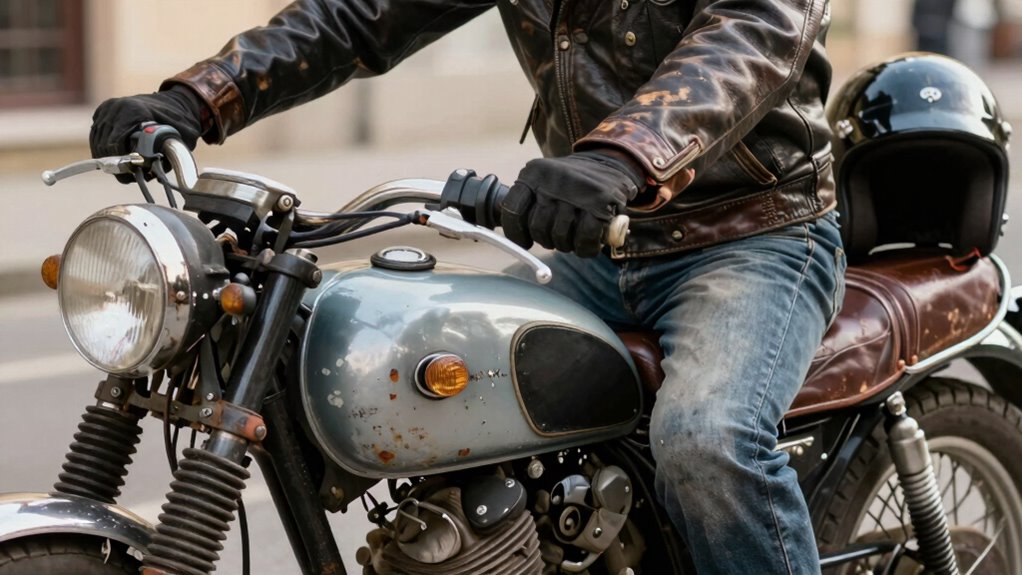

To build confidence riding an older motorcycle, start by ensuring it’s properly inspected and maintained for safety. Practice slow-speed maneuvers, turns, and stops in open spaces to familiarize yourself with its handling quirks. Wear high-quality, modern protective gear to boost your confidence and safety. Gradually increase your riding distance and complexity, sticking within your comfort zone while pushing boundaries slightly. Mastering these steps will help you feel more secure—continue exploring more tips for a smoother riding experience.
Key Takeaways
- Practice in open, low-traffic areas to gain control without pressure.
- Perform regular safety checks and maintenance to ensure reliable handling.
- Start with slow, deliberate maneuvers to build familiarity with the bike’s response.
- Wear modern, protective gear to boost confidence and safety during rides.
- Gradually increase riding distances and complexity as comfort and skills improve.
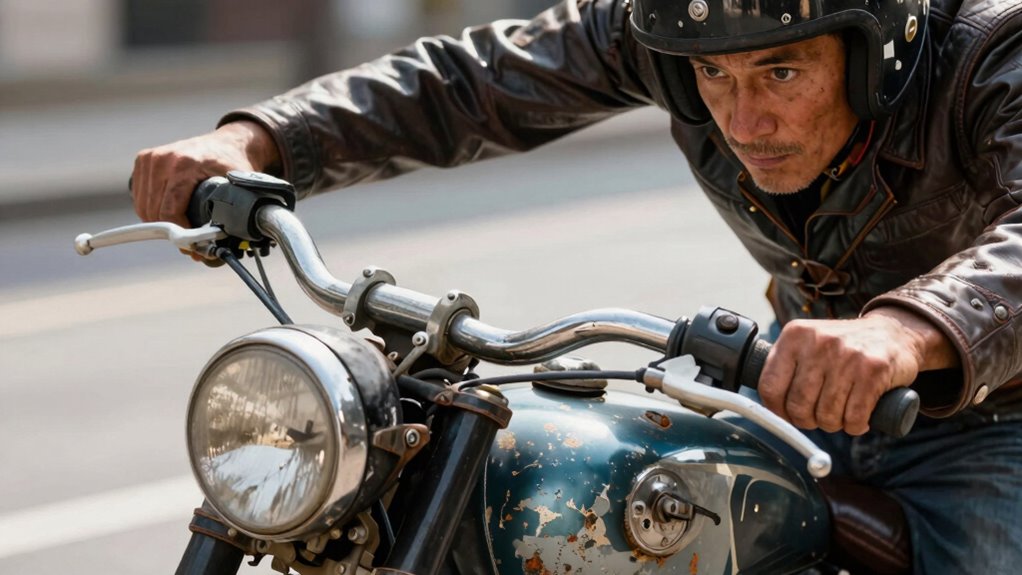
Have you ever wondered how to comfortably and safely ride an older motorcycle? It’s a common concern, especially when you’re eager to experience the nostalgic charm of vintage bikes but worry about their reliability. Building confidence on an older motorcycle involves a mix of careful preparation, technical understanding, and adopting safety practices that blend vintage restoration with modern safety standards. You want to enjoy the ride without feeling uncertain or compromised, and that begins with making sure your bike is in top shape.
Start by thoroughly inspecting your motorcycle. Vintage restoration isn’t just about aesthetics; it’s essential for safety and performance. Check the brakes, tires, suspension, and chain to guarantee they’re in proper working order. Replace worn parts with high-quality replacements, ideally using modern safety components designed for older models. Upgrading critical parts like brake pads, lighting, and reflectors can notably improve your confidence, knowing that your bike meets current safety standards. Regular maintenance is key—slick tires or worn brake pads can make even the most beautiful vintage bike risky to ride. Additionally, understanding your motorcycle’s handling characteristics is crucial for safe riding. Gaining knowledge about vintage motorcycle safety techniques can further enhance your riding experience and safety.
Thoroughly inspect and upgrade safety-critical parts for reliable, confident vintage riding.
Next, familiarize yourself with your motorcycle’s unique handling characteristics. Older bikes often have different weight distributions and steering responses compared to modern motorcycles. Spend time in a safe, open space, practicing slow-speed maneuvers, turns, and stops. This helps you understand how your bike responds and builds your confidence. If possible, consider taking a motorcycle safety course tailored for classic bikes or older models. These courses often include tips on handling vintage motorcycles, emphasizing safety techniques that incorporate modern safety features like ABS or improved braking systems. Learning about vintage motorcycle maintenance can also help you identify and fix issues before they impact your ride. Moreover, paying attention to vintage motorcycle history can provide valuable insights into common issues and how to prevent them. Furthermore, staying knowledgeable about the history of motorcycle safety can give you a broader perspective on best practices and improvements over time.
Comfort and confidence also come from proper gear. Invest in high-quality riding gear that offers contemporary safety benefits—think armored jackets, gloves, and helmets with advanced protective technology. Wearing the right gear not only protects you physically but also boosts your confidence, making you feel more secure on the road. As you become more comfortable, gradually increase your riding distance and complexity, always staying within your comfort zone while pushing just enough to improve your skills.

Scoyco Motorcycle Knee and Elbow Pads CE Level 1 Shin Guard Protective Gear
- Certification: EU CE Level 1 certified
- Impact Absorption: 3mm TPU shell with dual-density foam
- Flexible Fit: Allows 45°-180° knee movement
As an affiliate, we earn on qualifying purchases.
As an affiliate, we earn on qualifying purchases.
Frequently Asked Questions
How Often Should I Service an Older Motorcycle?
You should service your older motorcycle every 3,000 to 5,000 miles or at least once a year, whichever comes first. Regular classic maintenance guarantees your vintage accessories stay in top shape and helps identify issues early. Keep an eye on oil changes, brake checks, and tire wear. Consistent servicing not only prolongs your bike’s lifespan but also boosts your confidence, making every ride smoother and safer.
What Safety Gear Is Best for Riding Older Bikes?
You should prioritize wearing a DOT-approved helmet, sturdy gloves, and durable riding jackets for safety. Vintage riding techniques emphasize maintaining balance and smooth throttle control, so gear that allows freedom of movement is essential. Classic motorcycle accessories like reinforced riding boots and protective pants boost safety and comfort. Combining proper gear with these techniques makes riding your older motorcycle safer, helping you build confidence and enjoy your vintage ride to the fullest.
How Can I Improve My Riding Skills on Vintage Motorcycles?
To improve your riding skills on vintage motorcycles, practice regularly and focus on mastering the classic ergonomics. Embrace the vintage aesthetics by appreciating the bike’s unique feel and handling. Start slow, riding in safe, open areas to build confidence, and gradually challenge yourself with more complex maneuvers. Keep your body relaxed, and pay close attention to throttle control and braking. Over time, you’ll develop smoother riding skills and greater confidence.
Are There Specific Maintenance Tips for Older Motorcycle Models?
Think of your vintage motorcycle as a cherished relic, like a classic vinyl record. For maintenance, keep the vintage aesthetics in mind by regularly checking the chain, oil, and tires, and replacing worn parts with authentic or compatible components. During classic restoration, focus on preserving original features while ensuring safety. Regular lubrication, brake inspections, and electrical system checks are key to keeping your old bike running smoothly and reliably.
How Do I Handle Unexpected Breakdowns While Riding?
When an unexpected breakdown occurs, stay calm and safely move your motorcycle off the road if possible. Keep emergency preparedness items, like a phone and basic tools, handy. Call roadside assistance if you’re unsure about fixing it yourself or if the problem is serious. Knowing you have support and being prepared helps you handle breakdowns confidently, minimizing stress and ensuring your safety on the ride.

3 Sets Front Rear Brake Pads Sintered for Harley Davidson Road King Road Glide Street Glide Electra Glide 2008-2020 Ultra Limited 2014-2020 Street Rod Night Rod V-Rod Tri Glide
- Compatible Harley Models: Fits various Harley Davidson bikes 2008-2020
- Wide Model Compatibility: Suitable for multiple Harley models including V-Rod and Tri Glide
- Durable Sintered Material: Copper and tin formula for poor conditions
As an affiliate, we earn on qualifying purchases.
As an affiliate, we earn on qualifying purchases.
Conclusion
Remember, riding an older motorcycle is like dancing with a seasoned partner—you might stumble at first, but with patience and practice, you’ll glide smoothly. Each ride builds your confidence, turning those jitters into a steady rhythm. Embrace the quirks and character of your vintage machine; they’re part of the ride’s charm. Soon, you’ll feel the wind in your hair and the road beneath you, knowing you’ve mastered the art of riding with confidence.

NEIKO 20736A (6) Piece Set, Magnetic Tool & Telescoping Mirror Set, Adjustable Telescoping Magnetic Pickup Tool, Flashlight 15lb Retriever Tool, 360 Swivel, Magnet Mirror, Magnetic Tools for Mechanic
- Extendable Magnetic Pickup Tool: Up to nearly 3 feet long
- Built-in LED Flashlight: Hands-free illumination for retrieval
- Compact and Flexible Design: Telescopes, swivels 360 degrees
As an affiliate, we earn on qualifying purchases.
As an affiliate, we earn on qualifying purchases.

Proficient Motorcycling, Revised and Expanded 3rd Edition: The Ultimate Guide to Riding Well (CompanionHouse Books) Must-Have Manual to Confronting Fear, Sharpening Handling Skills, and Riding Safely
As an affiliate, we earn on qualifying purchases.
As an affiliate, we earn on qualifying purchases.