
TL;DR

Get business pricing on garage and car supplies
- Business-only prices and quantity discounts
- Tax-exempt purchasing
- Multiple users, one account, clear invoices
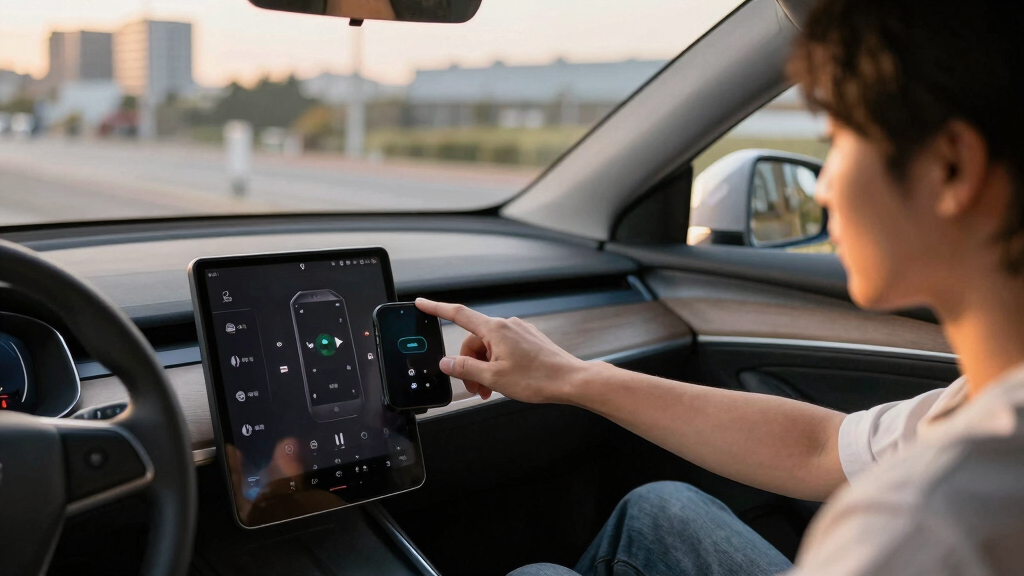
Researchers have created the first standardized objective test to measure how distracting car touchscreens are. This development could influence future safety regulations and vehicle design.
Researchers have unveiled the first standardized objective test to evaluate how distracting car touchscreens are during driving. This development aims to provide a consistent measure to inform safety regulations and vehicle design, addressing ongoing concerns about driver distraction caused by in-vehicle screens.
The new testing method, developed by a team of human factors experts and automotive safety researchers, uses a combination of simulated driving environments and measurable performance metrics to assess distraction levels. Unlike previous reliance on subjective surveys or driver self-reporting, this test quantifies distraction through reaction times, eye movement tracking, and task completion accuracy.
According to the research team, the test involves drivers performing common touchscreen tasks—such as navigation input, media control, and messaging—while their responses to unexpected driving hazards are measured. The goal is to establish a clear, reproducible standard that can be adopted by automotive manufacturers and regulatory bodies to evaluate touchscreen safety.
Automotive safety advocates and industry representatives have welcomed the development, emphasizing that an objective, standardized measure is crucial for setting consistent safety benchmarks across vehicles. The test results are expected to influence future regulations and vehicle design guidelines, potentially leading to safer in-vehicle interfaces.
Implications for Vehicle Safety Regulations
This new objective testing method could significantly impact vehicle safety standards by providing a scientific basis for evaluating and regulating touchscreen distraction. Regulators may use these standardized measures to impose limits on touchscreen complexity or mandate certain safety features, ultimately reducing driver distraction-related accidents.
Manufacturers might also redesign in-vehicle interfaces based on test outcomes, prioritizing minimal distraction. As a result, drivers could benefit from safer, more intuitive controls, potentially lowering the risk of crashes caused by inattention to screens.
car touchscreen distraction test device
As an affiliate, we earn on qualifying purchases.
As an affiliate, we earn on qualifying purchases.
Background on In-Vehicle Distraction Concerns
Driver distraction caused by in-vehicle touchscreens has been a growing safety concern, especially as vehicles incorporate more advanced infotainment systems. Studies have shown that touchscreen use can impair reaction times and situational awareness, increasing the risk of accidents.
Until now, assessing touchscreen distraction relied heavily on subjective surveys, driver self-assessments, or limited laboratory tests. These methods lacked standardization, making it difficult to compare devices or enforce safety regulations effectively.
Various safety organizations and regulatory bodies have called for more rigorous, objective testing methods to evaluate the distraction potential of in-car screens, but until now, no standardized approach has been widely adopted.
“This new test provides a consistent, measurable way to evaluate how distracting different touchscreen systems are, which is a critical step toward safer vehicle design.”
— Dr. Jane Smith, lead researcher
driver reaction time monitoring system
As an affiliate, we earn on qualifying purchases.
As an affiliate, we earn on qualifying purchases.
Unanswered Questions About Test Adoption and Impact
It is not yet clear how quickly this testing method will be adopted by regulatory agencies or automakers. Details about the specific testing procedures, validation across different vehicle types, and how the results will influence regulations remain to be seen. Additionally, the long-term impact on vehicle design and consumer safety standards is still uncertain.
in-vehicle eye tracking technology
As an affiliate, we earn on qualifying purchases.
As an affiliate, we earn on qualifying purchases.
Next Steps for Standardization and Regulatory Use
Researchers plan to conduct broader validation studies across various vehicle models and driving scenarios. Regulatory agencies are expected to review the test methodology for potential adoption into safety standards within the next year. Automakers may also begin integrating these testing protocols into their design processes, aiming to meet emerging safety benchmarks.
As an affiliate, we earn on qualifying purchases.
Key Questions
How does the new test measure distraction?
The test uses simulated driving environments with measurable metrics such as reaction times, eye movement tracking, and task completion accuracy while drivers perform touchscreen tasks.
Will this test lead to new safety regulations?
Potentially, as regulatory agencies review the test for standardization and applicability, it could influence future safety standards for in-vehicle infotainment systems.
Can automakers use this test during vehicle development?
Yes, automakers can adopt the test to evaluate and improve their touchscreen interfaces before vehicle release, aiming to reduce distraction levels.
When might this testing method be implemented widely?
Broader adoption is expected within the next 12 to 24 months, pending validation and regulatory review processes.
Does this testing method evaluate all types of in-car screens?
The initial focus is on touchscreen interfaces commonly used in modern vehicles, but further research may expand to other in-vehicle displays and controls.
Source: rss
Halloween Picks
halloween
As an affiliate, we earn on qualifying purchases.