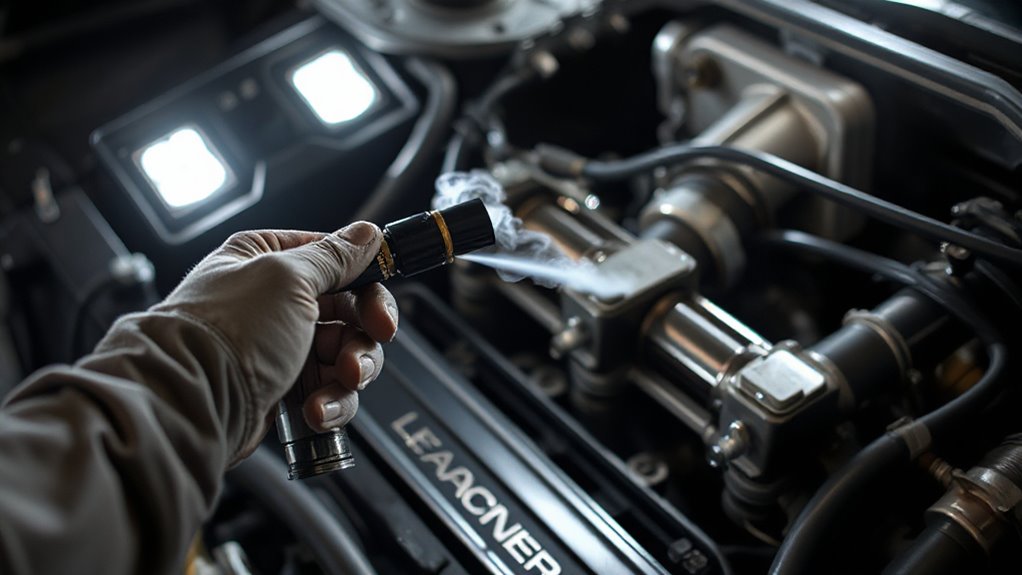
To find vacuum leaks causing lean running issues, start with a visual inspection of hoses, clamps, and gaskets for cracks or looseness. If you don’t spot anything, use a smoke machine or spray carb cleaner around suspected areas—if engine RPM changes or you see smoke escaping, you’ve likely found the leak. Learning how to systematically hunt down these leaks can help restore your engine’s performance and efficiency.
Key Takeaways
- Visually inspect all vacuum hoses, fittings, and gaskets for cracks, loose connections, or damage.
- Use a smoke machine or carb cleaner spray to detect leaks by observing engine RPM changes or smoke escape.
- Check sensors like MAF and oxygen sensors for signals indicating a lean condition caused by vacuum leaks.
- Listen for hissing sounds around hoses and intake components when the engine is running.
- Confirm leak locations with engine running, then replace damaged hoses, clamps, or gaskets to restore vacuum integrity.
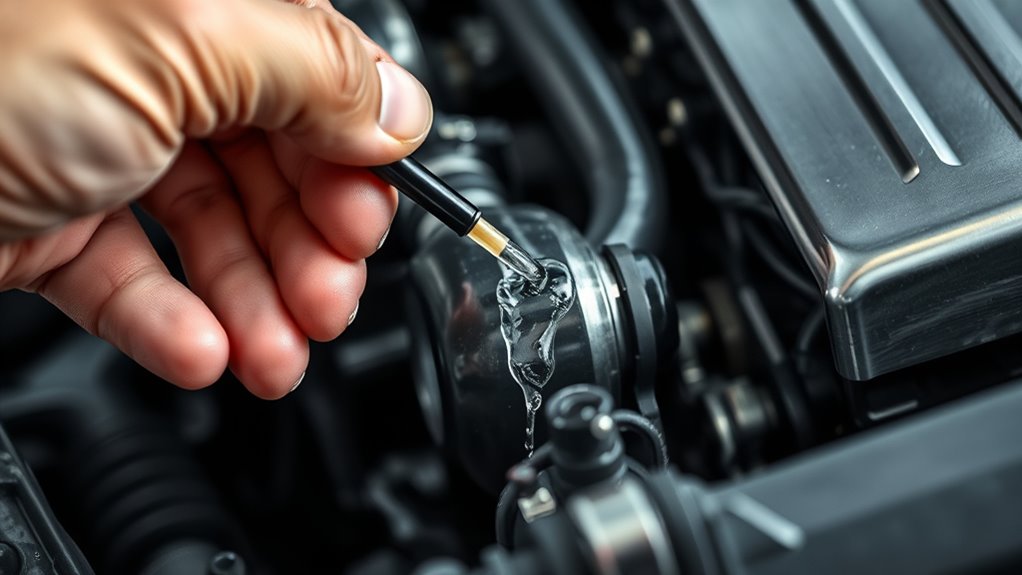
Have you ever noticed your engine running rough or your fuel efficiency dropping unexpectedly? These symptoms can be signs of a vacuum leak, which often leads to a lean running condition. When diagnosing these issues, sensor troubleshooting becomes a critical step. Modern vehicles are equipped with sensors that monitor various engine parameters, including the air-fuel mixture. If a vacuum leak allows extra air into the intake, sensors like the mass airflow sensor or oxygen sensors may send incorrect signals to the engine computer, causing it to adjust fuel delivery improperly. This can result in poor performance and increased emissions. To identify if sensor troubleshooting is part of the problem, you need to pay close attention to the sensor readings and error codes stored in the vehicle’s ECU. Using a scan tool, you can see real-time data and determine if any sensors are reporting abnormal values that might indicate a vacuum leak or related issues.
In addition to sensor troubleshooting, understanding the emission control system is crucial. A leak in the vacuum system can disrupt the emission control devices, such as the EGR valve or PCV system, which rely on a sealed vacuum to function correctly. When these components are compromised, emissions rise, and you might notice an increase in exhaust fumes or a failed emissions test. The vacuum leak itself can be located anywhere from cracked hoses, loose fittings, to damaged gaskets. Visual inspection often helps, but sometimes the leak is too small or hidden. An effective way to find it is by using a smoke machine or applying carb cleaner around suspected areas while the engine runs. If the engine RPM changes or the smoke escapes from a specific spot, you’ve likely found your leak. Additionally, understanding the role of contrast ratio can help in diagnosing related issues, as poor contrast can sometimes mimic symptoms of vacuum leaks in visual inspections.
Furthermore, addressing vacuum leaks quickly is essential to prevent further damage to emission control components. A persistent leak not only causes poor engine performance but also stresses the catalytic converter and other emission systems, potentially leading to costly repairs down the line. When hunting the source of a lean condition, it’s best to rule out common problem areas first, like cracked vacuum hoses or loose clamps. Once you locate the leak, replacing damaged hoses or gaskets restores the integrity of the vacuum system, improving both engine performance and emission compliance. Keep in mind that ongoing issues might involve faulty sensors or other engine management problems, so don’t overlook the importance of sensor troubleshooting. Maintaining a sealed, well-functioning vacuum system ensures your engine runs smoothly, efficiently, and within emissions standards, saving you money and helping the environment.

AutoLine Pro HyperSmoke™ Automotive Smoke Machine EVAP Vacuum Leak Tester – Adjustable Pressure – OEM Approved Smoke Fluid – Built-in Air Compressor Motor – Includes Cone and Gas Cap EVAP Adapter.
HyperSmoke Technology – Creates Thick Visible Smoke for Easy Leak Testing. Adjustable Pressure. Infinite Smoke. Instant Warmup. Built-In…
As an affiliate, we earn on qualifying purchases.
As an affiliate, we earn on qualifying purchases.
Frequently Asked Questions
Can Vacuum Leaks Cause Engine Stalling at Idle?
Yes, vacuum leaks can cause your engine to stall at idle. Deteriorated vacuum hoses or cracks in the intake manifold break the seal, letting unmetered air enter. This disrupts the air-fuel mixture, making your engine run lean and often stalling. You should inspect all vacuum hoses for deterioration and check the intake manifold for cracks to prevent idle stalling caused by vacuum leaks.
What Tools Are Best for Detecting Tiny Vacuum Leaks?
You should use smoke machines or ultrasonic detectors to detect tiny vacuum leaks effectively. Smoke machines introduce visible smoke into the intake system, revealing leaks with visible smoke escape. Ultrasonic detectors pick up high-frequency sound waves produced by escaping air, making tiny leaks easier to locate. Both tools are highly effective for pinpointing small leaks that are hard to detect with traditional methods, ensuring your engine runs smoothly and efficiently.
How Long Does It Typically Take to Find a Vacuum Leak?
It usually takes about 30 minutes to a few hours to find a vacuum leak, depending on the diagnostic duration and leak location. You’ll want to systematically inspect areas like hoses, intake manifold gaskets, and vacuum ports. Using tools like a smoke machine or carburetor cleaner accelerates the process. Be patient, as pinpointing tiny leaks can be tricky, but thorough testing guarantees you accurately identify the source.
Are There Any Risks in Using Chemical Spray for Leak Detection?
Using chemical spray for leak detection is like walking a tightrope—you must be careful. While effective, it poses chemical hazards if mishandled. You risk inhaling fumes or causing skin irritation. Always follow the proper spray technique, wear protective gear, and work in a well-ventilated area. If used improperly, chemicals can ignite or damage components, so exercise caution to avoid accidents and ensure safety.
Can a Vacuum Leak Affect Fuel Economy Significantly?
Yes, a vacuum leak can considerably affect your fuel economy. When there’s a leak, your engine has to work harder, using more fuel. During engine diagnostics, check the air filter and vacuum lines for leaks or damage. A compromised air filter or vacuum leak causes the engine to run lean, reducing efficiency. Fixing these issues improves fuel economy and engine performance, saving you money in the long run.

Gumout 800002231 Carb/Choke Carburetor Cleaner Spray, Carb Intake Valve Cleaner, Cleans Gum, Varnish & Dirt Inside & Outside Carburetor Chamber & Prevents Future Build Up Saving on Fuel Economy 14Oz.
Helps Overcome Hard Starting, Rough Idling, Stalling, And High Exhaust Emissions
As an affiliate, we earn on qualifying purchases.
As an affiliate, we earn on qualifying purchases.
Conclusion
By diligently detecting and deciphering vacuum leaks, you prevent persistent problems and promote perfect performance. Patience and precision pinpoint pesky leaks, preventing potential problems before they proliferate. Remember, methodical methods and meticulous inspections make maintenance more manageable and your machine more reliable. So, stay sharp, stay specific, and stop sneaky leaks in their tracks. With consistent care and clever clues, you’ll conquer your car’s quirkiest quirks and keep it cruising smoothly mile after mile.

84 PCS Vacuum Lines Automotive Kit, 6.6FT Silicone Vacuum hoses (1/4", 3/16", 5/32", 1/8") with 80 Vacuum Line Connectors, Engine Vacuum Hose Kit for Automotive Replacement Vacuum Hoses
Complete Kit for Multiple Applications: Includes 4 silicone vacuum hoses, each 6.6 feet long with inner diameters of…
As an affiliate, we earn on qualifying purchases.
As an affiliate, we earn on qualifying purchases.

FOXWELL NT301 OBD2 Scanner Live Data Professional Mechanic OBDII Diagnostic Code Reader Tool for Check Engine Light
【Your Personal CEL Doctor – Read & Clear Engine Codes】The NT301 OBD2 scanner lets you read diagnostic trouble…
As an affiliate, we earn on qualifying purchases.
As an affiliate, we earn on qualifying purchases.