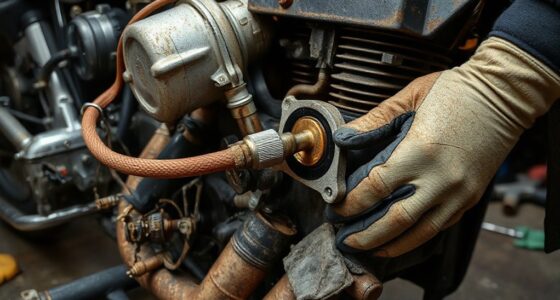
If your speedo or tach is dead or sticky, start by checking the wiring connections for corrosion, looseness, or damage. Inspect and replace any blown fuses related to the gauges, and use a multimeter to test voltage and sensor signals. If wiring looks good, the issue might be with the gauge itself, which may need replacement. Continuing with some careful troubleshooting steps will help you pinpoint and fix the problem effectively.
Key Takeaways
- Check and replace blown fuses related to the gauge circuit to restore power.
- Inspect wiring connections for corrosion, looseness, or damage; repair or replace as needed.
- Test the sensor signals with a multimeter to ensure proper input to the gauge.
- Remove and replace faulty gauges, ensuring proper wiring and compatibility.
- Verify voltage levels and proper connections after repair to confirm gauges function correctly.

Have you ever wondered why your gauges suddenly stop working or stick at a certain reading? It can be frustrating, especially when you’re trying to keep track of your vehicle’s crucial information. Often, the problem isn’t with the gauge itself but with the electrical system behind it. Electrical troubleshooting becomes your first step in diagnosing the issue. You’ll want to check the wiring connections, fuses, and the sensor signals that feed into the gauge. Sometimes, a loose or corroded connection causes the gauge to behave erratically or stop responding altogether. Using a multimeter, you can test the voltage and continuity along the circuit to spot any faults. If you find a damaged wire or a blown fuse, fixing or replacing that component might restore proper function. However, if the wiring looks intact and the problem persists, you might be facing a faulty gauge that needs replacement. Additionally, understanding the role of electrical systems in gauge operation can help you better troubleshoot and identify underlying issues.
Gauge replacement is often the last resort but can be straightforward once you identify the culprit. To replace a dead or sticky gauge, start by disconnecting the vehicle’s battery to prevent any electrical shocks. Then, locate the gauge in your dashboard or instrument cluster. Depending on your vehicle, you may need to remove the dash panel or cluster housing to access the gauge. Carefully disconnect the wiring harness attached to the back of the gauge, noting how everything is connected for reinstallation. Remove the faulty gauge and install the new one, ensuring all connections are secure and correctly oriented. Once installed, reconnect the battery and test the gauge. If it still doesn’t work properly, double-check your wiring and ensure the new gauge is compatible with your vehicle.
Top picks for "dead sticky gaug"
Open Amazon search results for this keyword.
As an affiliate, we earn on qualifying purchases.
Frequently Asked Questions
Can a Faulty Gauge Be a Sign of Larger Vehicle Issues?
Yes, a faulty gauge can signal larger vehicle issues. If your dashboard warning lights come on or the speedo and tach aren’t working properly, it could indicate problems with your vehicle’s wiring, sensors, or engine performance. Ignoring these signs may lead to more serious damage or breakdowns. Pay attention to any irregularities, get your gauges checked promptly, and guarantee your vehicle remains reliable and safe on the road.
How Long Does It Typically Take to Fix a Stuck Gauge?
Fixing a stuck gauge usually takes 1 to 3 hours, depending on the issue. You should start with electrical diagnostics to identify faulty wiring or sensors, then proceed to gauge calibration if needed. If you’re comfortable with DIY, you can save time by checking these components yourself; otherwise, a professional mechanic can quickly pinpoint and resolve the problem, ensuring your speedo or tach functions correctly again.
Are DIY Repairs Effective for Dead or Sticky Gauges?
You might feel hopeful, but DIY repairs for dead or sticky gauges often fall short. While calibration and electrical troubleshooting can sometimes fix the issue, complex wiring or sensor problems may require professional help. Attempting repairs yourself can save money, but if you lack experience, you risk further damage. For reliable results, consider consulting a mechanic, especially if the gauges are vital for safe driving.
What Tools Are Needed to Repair a Non-Working Speedo or Tach?
To repair a non-working speedo or tach, you’ll need diagnostic tools like a multimeter to test electrical connections and sensors. You might also require replacement parts such as a new speed sensor, gauge cluster, or wiring harness. Having screwdrivers, pliers, and possibly a soldering kit on hand will help with disassembly and repairs. These tools guarantee you accurately diagnose issues and effectively restore your gauges’ functionality.
Is It Safe to Drive With a Malfunctioning Gauge?
You might think driving with a malfunctioning gauge is safe, but gauge safety is essential. Without accurate speed or RPM readings, you risk speeding, missing engine issues, or violating traffic laws. This increases driving risks and can lead to accidents or costly repairs. It’s best to fix the gauge promptly or avoid driving until it’s properly repaired, ensuring you stay aware of your vehicle’s condition and stay safe on the road.
Conclusion
When your speedometer or tachometer stops working, it can feel like your vehicle has lost its heartbeat. By inspecting the wiring, replacing faulty sensors, or resetting the gauges, you can restore your dashboard’s importance. Don’t let a dead or sticky gauge turn your driving experience into a sluggish nightmare—treat it as a minor hiccup, not a catastrophe. With a little troubleshooting, you’ll have your gauges working perfectly, keeping your ride running smoothly and confidently.