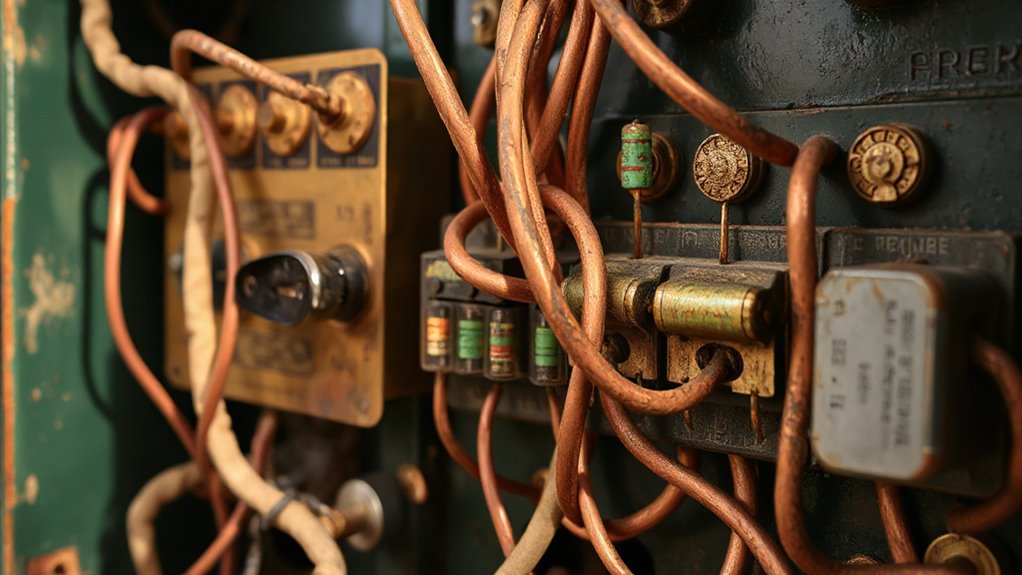

Troubleshooting old British wiring from Lucas involves checking all connections for corrosion, cracks, or broken wires. Use a multimeter to test circuits and identify issues like blown fuses or faulty grounds. Replacing damaged wiring or connectors with quality parts helps improve reliability. Upgrading to modern fuses and relays can prevent overheating and shorts. If you stay attentive and systematic, you’ll gain confidence in diagnosing and fixing vintage wiring—keep exploring for more detailed tips.

Get garage and car supplies delivered free — and shop member deals
- Fast, free delivery on millions of items
- Access to Prime Big Deal Days deals on October 6–7
- Prime Video, Amazon Music and more included
Key Takeaways
- Conduct a systematic inspection of all wiring, connections, and terminals for corrosion, damage, or wear.
- Use proper testing tools like multimeters to identify broken wires, shorts, or voltage drops.
- Replace brittle or damaged wiring with high-quality, compatible replacements to ensure reliability.
- Upgrade aged components with modern fuses, relays, and wiring gauges to improve safety and performance.
- Regularly maintain and inspect the system to prevent common issues like insulation cracks and corrosion.

Ever wondered why Lucas Electrics has become a legendary name among automotive enthusiasts? It’s because their vintage car wiring has withstood the test of time, serving as the backbone of countless classic British vehicles. When you’re restoring or maintaining an old British car, understanding Lucas’s electrical system is essential. Over the decades, their wiring harnesses and electrical components have become iconic, but they also pose unique challenges. The aging of these vintage systems often leads to issues like corroded connections, brittle wiring, and unreliable performance. That’s where troubleshooting and upgrading come into play, guaranteeing your classic runs smoothly and safely. Regular seasonal maintenance and inspections can help prevent many common problems associated with aging wiring systems, ensuring reliability and safety. If you’re dealing with vintage car wiring, you’ll notice that it’s quite different from modern systems. The wiring harnesses were originally built with materials that don’t withstand the test of time very well. Over years, exposure to heat, moisture, and vibration causes insulation to crack and connections to weaken. You might experience flickering lights, blown fuses, or intermittent power issues. These symptoms point to common problems like loose connections, corroded terminals, or broken wires. The good news is that diagnosing these issues requires patience and a systematic approach. Check each connection carefully, look for signs of corrosion or damage, and replace faulty sections with quality replacements. Restoring vintage wiring isn’t just about making it functional; it’s about guaranteeing it’s reliable enough to support your driving needs. Electrical system upgrades are often necessary to keep your classic car roadworthy and safe. Many enthusiasts opt to replace original Lucas wiring with modern, more durable alternatives that mimic the original layout but offer improved longevity. Upgrades might include installing modern fuses, relays, and wiring gauges that handle increased electrical loads—especially if you add accessories or upgrade lighting systems. These improvements help prevent common Lucas-era issues like overheating or shorts, which could lead to more significant damage or fire hazards. When upgrading, it’s important to preserve the vintage look while integrating modern technology seamlessly. This balance guarantees your car maintains its classic appeal without sacrificing reliability or safety. Troubleshooting Lucas’s vintage wiring requires patience, attention to detail, and a good understanding of your car’s electrical layout. Whether you’re fixing a broken wire, replacing corroded connectors, or upgrading your entire system, the goal is to create a dependable electrical setup. Modern upgrades can breathe new life into old wiring, making your vintage car safer and more enjoyable to drive. Remember, maintaining these systems preserves the character of your classic while ensuring it functions efficiently on today’s roads. With a bit of effort, you can keep the legendary reputation of Lucas Electrics alive in your own prized vehicle.
Top picks for "luca electric demystifi"
As an affiliate, we earn on qualifying purchases.
Frequently Asked Questions
How Can I Identify Original Lucas Wiring Components?
To identify original Lucas wiring components, start by examining vintage connector identification and wiring color codes. Look for authentic parts with period-specific markings, labels, or stamped numbers. Check the wiring color codes, which follow a consistent British standard, to verify authenticity. Compare your components with reference images from classic British car manuals or trusted sources. Genuine Lucas parts often have a distinct patina and craftsmanship that set them apart from reproductions.
What Safety Precautions Should I Take When Troubleshooting?
When troubleshooting, you should always prioritize safety. Before starting, disconnect the power and wear insulated gloves. Use a multimeter for voltage testing and check insulation resistance to guarantee wiring is safe. Avoid working on live circuits, and double-check connections before testing. Keep your workspace dry, and handle tools carefully. These precautions protect you from shocks and damage, ensuring a safe and effective troubleshooting process.
Are There Modern Replacements Compatible With Lucas Systems?
Yes, modern wiring alternatives are available that are compatible with Lucas systems. You can find modern replacements designed specifically for vintage British cars, making installation straightforward. These modern wiring options often feature improved durability and safety, ensuring better reliability. When choosing alternatives compatibility, always verify that the wiring matches your vehicle’s specifications. Upgrading to modern wiring can enhance your car’s electrical performance while maintaining its classic appeal.
How Often Should I Inspect Lucas Wiring for Maintenance?
You should inspect your Lucas wiring at least once a year to prevent issues. During inspections, check for corrosion and corrosion prevention, which can cause poor connections. Replace any worn or damaged connectors immediately to maintain reliable performance. Regular maintenance helps catch potential problems early, ensuring your vintage British wiring stays in good shape and functions safely. Consistent care minimizes the risk of electrical failures down the road.
What Tools Are Essential for Lucas Wiring Repairs?
Imagine fixing a vintage car’s wiring like tuning a fine instrument. You’ll need a multimeter to check continuity, wire strippers for precise cuts, and screwdrivers for connector types. For wire gauge selection, keep a gauge chart handy to match the original specs. These tools let you identify faults quickly and guarantee you use the right connectors, preventing future issues and keeping your Lucas wiring reliable and safe.
Conclusion
Think of your vintage wiring as a delicate river winding through a historic landscape. With patience and the right tools, you become the skilled engineer guiding the currents, clearing blockages, and restoring flow. Troubleshooting Lucas electrics isn’t just fixing wires—it’s reviving the heartbeat of your classic British masterpiece. Embrace the journey, and soon you’ll see your car’s electrical system flow smoothly again, like a well-tuned engine humming through time’s timeless countryside.
Halloween Picks
halloween
As an affiliate, we earn on qualifying purchases.