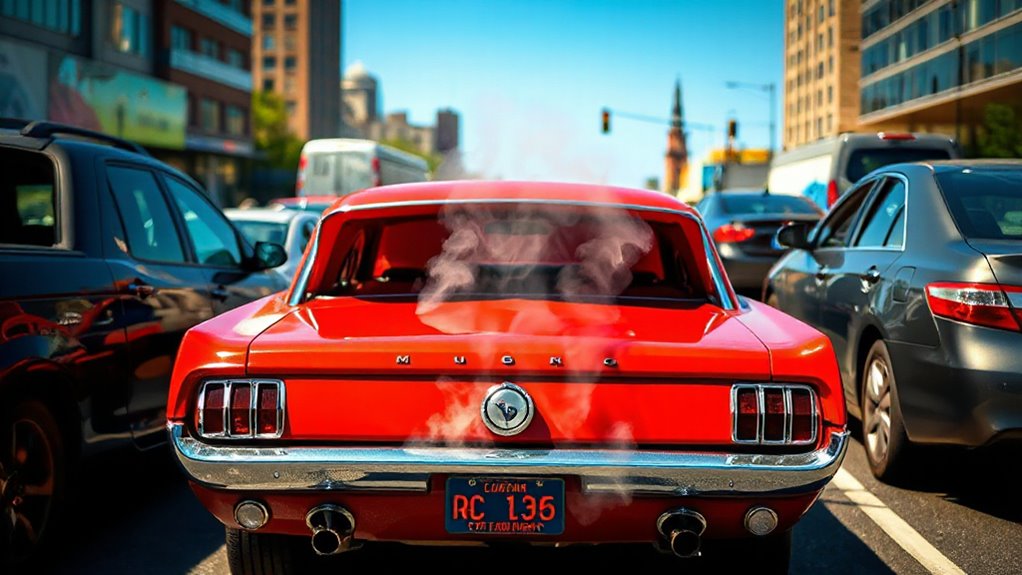

If your classic car runs hot in traffic, consider upgrading to a modern radiator with a larger core and better airflow. Adding thermal insulation around key components can also reduce heat transfer and keep engine temperatures stable. Make sure your cooling system is clean, your thermostat works correctly, and the radiator cap maintains proper pressure. These steps can markedly improve cooling—stick with us to discover more effective ways to keep your car cool during stop-and-go traffic.

Get garage and car supplies delivered free — and shop member deals
- Fast, free delivery on millions of items
- Access to Prime Big Deal Days deals on October 6–7
- Prime Video, Amazon Music and more included
Key Takeaways
- Upgrade to a modern, larger radiator with enhanced heat dissipation for better cooling in traffic.
- Install heat shields or insulating wraps to prevent engine bay heat from affecting other components.
- Ensure electric cooling fans are functioning correctly or upgrade to higher-performance fans for improved airflow.
- Use high-quality coolant, perform regular system flushes, and remove debris to maintain optimal cooling efficiency.
- Check and replace thermostats and hoses to ensure proper coolant circulation and prevent overheating.
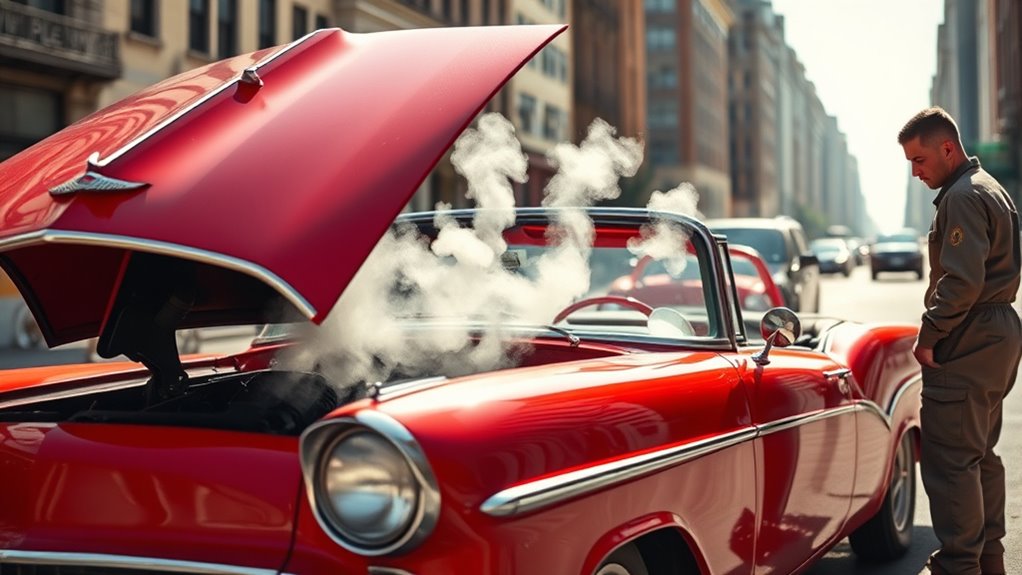
When your classic car starts overheating, taking quick and effective action is essential to prevent engine damage. Overheating, especially in traffic or slow-moving conditions, can cause serious issues if not addressed promptly. One of the best ways to improve your car’s cooling system is through radiator upgrades. Modern aftermarket radiators are designed to provide better heat dissipation, with larger cores, improved materials, and enhanced airflow capabilities. Upgrading your radiator ensures your engine stays cooler during those hot, stop-and-go moments when the stock system struggles to keep up. This not only prevents overheating but also increases your car’s overall reliability.
Upgrading your radiator boosts cooling efficiency and reliability during stop-and-go driving.
In addition to a radiator upgrade, you should consider thermal insulation around critical engine components. Thermal insulation helps to minimize heat transfer from the engine bay to other parts of your vehicle, such as wiring, hoses, and interior panels. Proper insulation keeps heat where it belongs—inside the cooling system—reducing the risk of heat soak and helping your engine maintain ideal operating temperatures. Installing heat shields or insulating wraps around high-temperature areas can make a significant difference, especially when stuck in traffic or during extended idling.
Another effective way to combat overheating is to ensure your cooling system is functioning at peak efficiency. Check that your radiator fans are working correctly and consider upgrading to electric fans if you haven’t already. These fans can be set to activate earlier, providing additional airflow when the car is at a standstill. Coupling this with a high-quality coolant and regularly flushing your cooling system keeps everything running smoothly. Debris and sediment can clog passages, reducing coolant flow and increasing the risk of overheating.
You also want to pay attention to your thermostat. A properly functioning thermostat ensures coolant circulates effectively through the radiator and engine. If it’s sticking or faulty, it could cause your engine to run hotter than necessary. Replacing an old thermostat with a high-performance or lower-temperature model can give your cooling system a boost, especially when combined with radiator upgrades and thermal insulation.
Finally, consider the placement and condition of your hoses and clamps. Old, cracked hoses can restrict coolant flow, contributing to overheating. Replacing them with high-quality, reinforced hoses ensures a steady flow of coolant. Tighten clamps securely to prevent leaks, which could lower system pressure and reduce cooling efficiency. Additionally, using radiator caps of the correct pressure rating can help maintain optimal system pressure and improve heat transfer. By focusing on these key upgrades and maintenance tips—radiator improvements, thermal insulation, and system checks—you’ll be better equipped to keep your classic car cool, even when traffic heats up.
Frequently Asked Questions
What Are Common Signs of an Overheating Classic Car?
You’ll notice your classic car running hot if the engine temperature gauge climbs or if the heater blows cool air. Watch for signs like engine block corrosion, which can cause overheating, or radiator leaks that reduce coolant levels. Unusual steam from the exhaust or a sweet smell from coolant can also indicate trouble. Address these issues promptly to prevent engine damage and keep your ride running smoothly.
How Often Should Cooling System Maintenance Be Performed?
You should perform cooling system maintenance every 2 to 3 years. During this time, you’ll want to do a coolant flush to remove debris and contaminants, ensuring peak cooling. Also, inspect the radiator for leaks, corrosion, or blockages, and check hoses for cracks or wear. Regular radiator inspections help prevent overheating issues, keeping your classic car running smoothly and reliably, especially during hot traffic conditions.
Can Upgrading the Radiator Improve Cooling Efficiency?
Upgrading your radiator can definitely improve cooling efficiency. Modern radiators with better materials like aluminum transfer heat more effectively than stock ones, helping your engine stay cooler. Pair it with a high-performance cooling fan for ideal airflow, especially in traffic. This combo reduces overheating risks and keeps your classic running smoothly. Investing in a quality radiator and fan upgrade can make a noticeable difference during those hot, slow drives.
What Role Does Coolant Type Play in Engine Temperature?
Did you know that choosing the right coolant chemistry can improve temperature regulation by up to 20%? Your coolant type plays a vital role in engine temperature because different formulas are designed for specific temperature ranges. Using the correct coolant guarantees peak heat transfer, prevents corrosion, and keeps your engine running cooler, especially in traffic. Always match your coolant to your vehicle’s specifications for the best temperature control.
Are There Aftermarket Solutions for Better Heat Management?
Yes, there are aftermarket parts and performance upgrades designed to improve heat management. You can install high-capacity radiators, electric fans, or upgraded cooling fans that help dissipate heat more effectively. Additionally, performance water pumps and thermostats can optimize coolant flow. These aftermarket solutions work together to keep your engine cooler during traffic, preventing overheating and ensuring your classic runs smoothly without losing performance.
Conclusion
As you finally think you’ve got your classic cooled down, a sudden shift in the engine’s hum hints that the story isn’t over yet. Will you catch the next warning before it’s too late? The thrill of the ride isn’t just in the journey but in knowing you’ve tamed that fiery beast beneath your hood. Keep your eyes peeled — the road ahead might just have one more surprise waiting for you.
Halloween Picks
halloween
As an affiliate, we earn on qualifying purchases.