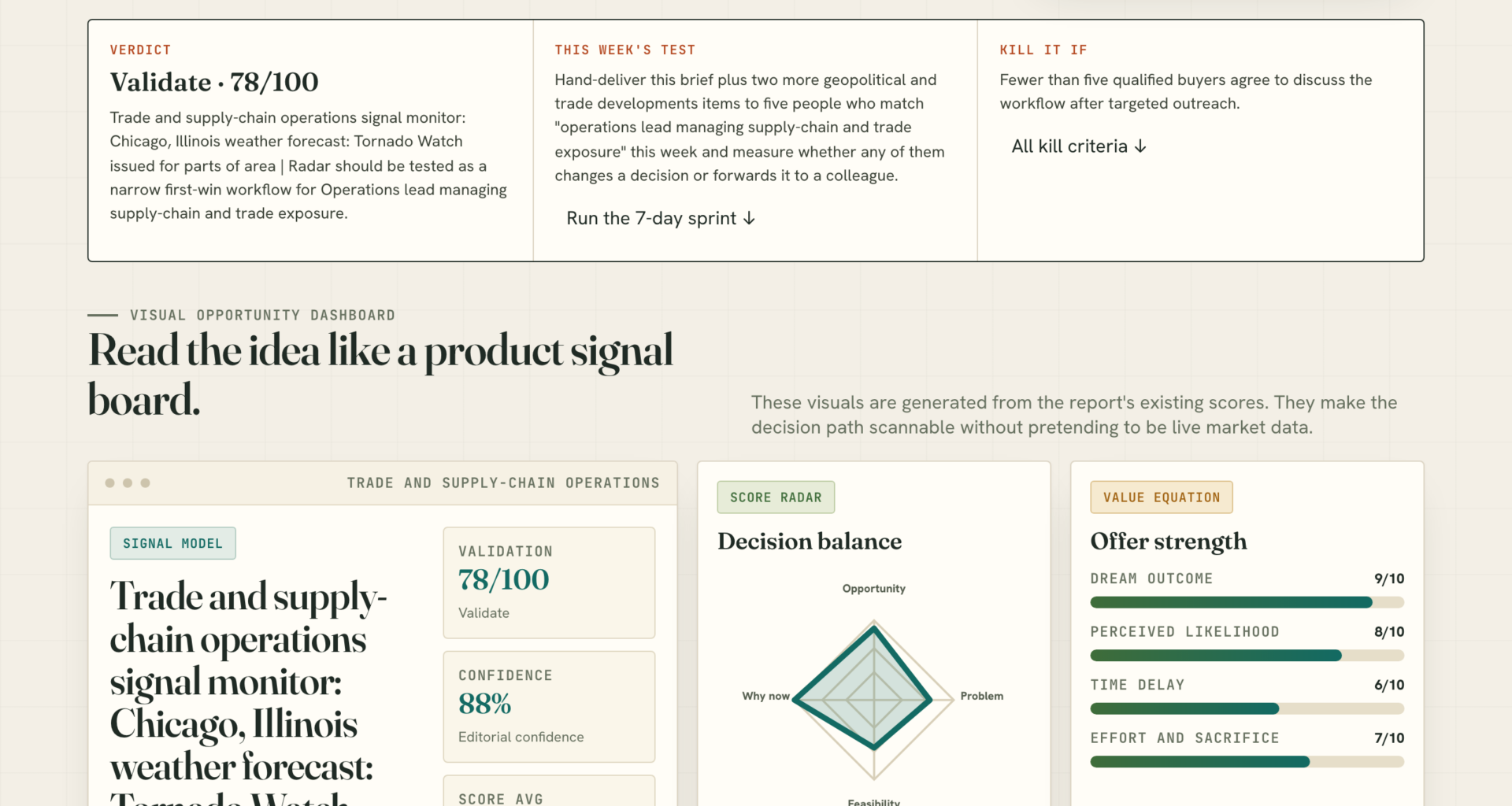

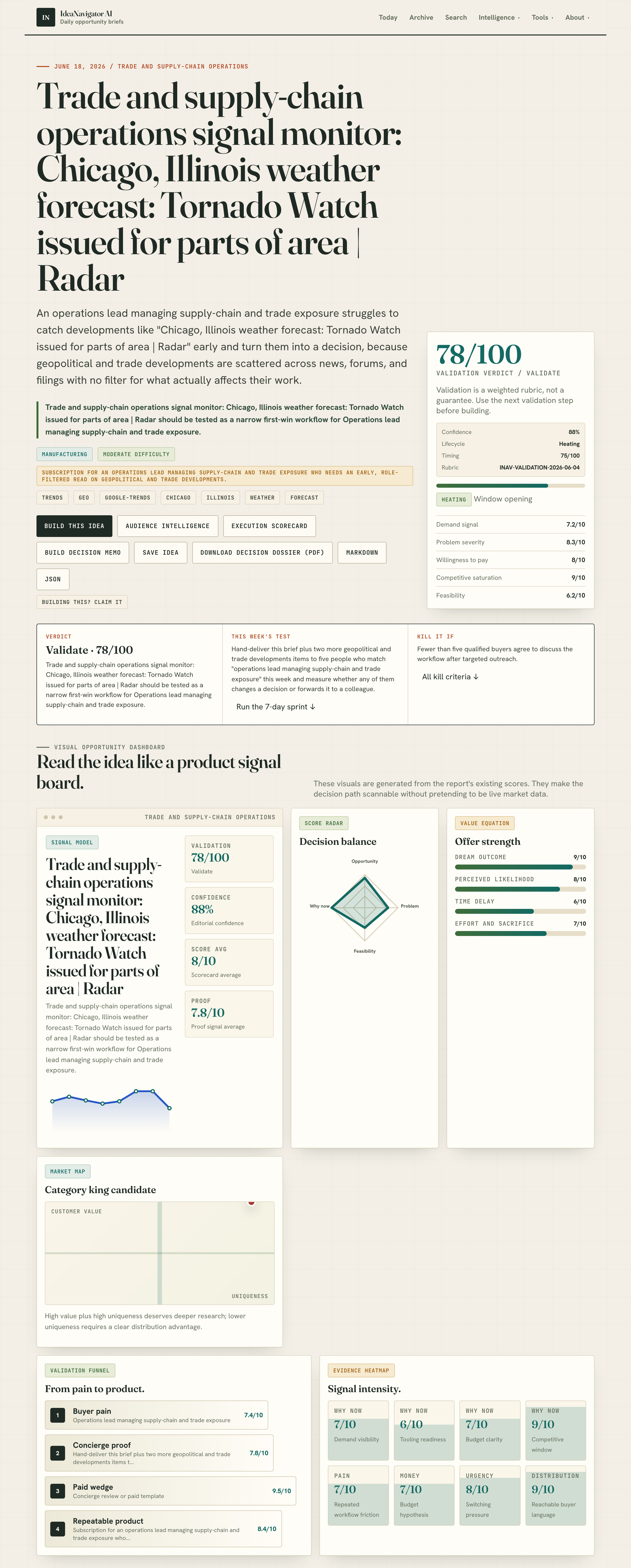
📊 Full opportunity report: Trade and supply-chain operations signal monitor: Chicago, Illinois weather forecast: Tornado Watch issued for parts of area | Radar on IdeaNavigator AI — validation score, market gap, and execution plan.

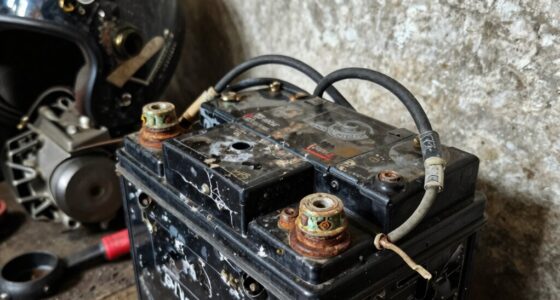
Get business pricing on garage and car supplies
- Business-only prices and quantity discounts
- Tax-exempt purchasing
- Multiple users, one account, clear invoices
TL;DR
A Tornado Watch has been issued for parts of Chicago, Illinois, prompting a supply-chain operations signal monitor to track weather developments. This helps operations leads manage trade exposure more effectively amid evolving weather threats.
A Tornado Watch has been issued for parts of Chicago, Illinois, prompting the activation of a specialized supply-chain operations signal monitor designed to assist managers in responding to weather threats that could disrupt trade and logistics.
The National Weather Service issued a Tornado Watch for several counties in the Chicago metropolitan area earlier today, as radar and weather models indicated a potential for tornado development. This alert has triggered a targeted signal monitor used by supply-chain operations managers to assess and respond to weather-related risks affecting trade routes and logistics.
This signal monitor leverages real-time weather data, including radar testing and updates, to provide role-specific briefings to operations leads. The focus is on enabling quick decision-making to minimize disruptions caused by severe weather events like tornadoes, which can impact transportation infrastructure and supply chain flows.
According to sources familiar with the process, the monitor filters broad weather alerts into actionable insights tailored for supply-chain managers, emphasizing the importance of early warning systems in mitigating potential logistical delays and trade exposure.
Impact of Weather Alerts on Supply-Chain Decision-Making
This development underscores the importance of role-specific weather monitoring in supply-chain management, especially in regions prone to severe weather. Early detection and targeted alerts help operations leads make informed decisions, reducing the risk of disruptions and financial losses. As trade routes and logistics are highly sensitive to weather events, such focused monitoring enhances resilience and response times for supply chains in the Chicago area and beyond.
weather alert monitoring system for supply chain
As an affiliate, we earn on qualifying purchases.
As an affiliate, we earn on qualifying purchases.
Chicago Weather and Supply-Chain Vulnerability Timeline
Chicago, Illinois, is a key logistics hub with extensive transportation infrastructure that is vulnerable to severe weather, including tornadoes and storms. Historically, weather events in the region have caused delays and disruptions in supply chains, prompting the development of specialized monitoring tools for logistics managers.
The recent issuance of a Tornado Watch marks a continuation of efforts to improve real-time decision support for supply-chain operations, especially as climate variability increases the frequency of severe weather. The integration of radar testing and weather signal filtering aims to provide timely, actionable intelligence to reduce trade exposure during critical events.
“The role-specific signal monitor is designed to give operations managers a quick, filtered view of weather threats that directly impact supply chains.”
— an anonymous source
As an affiliate, we earn on qualifying purchases.
Extent of Disruption from Current Weather Alerts
It is not yet clear how the current Tornado Watch will impact actual supply-chain operations in the Chicago area, as the weather threat remains under observation and no severe events have been confirmed. The effectiveness of the signal monitor in preventing disruptions is still being evaluated.
real-time weather data display for logistics
As an affiliate, we earn on qualifying purchases.
As an affiliate, we earn on qualifying purchases.
Next Steps for Weather-Driven Supply-Chain Monitoring
Authorities and logistics managers will continue to monitor radar updates and weather alerts, with a focus on assessing the development of severe weather. The role-specific signal monitor will provide ongoing updates, and decision-makers are expected to adjust logistics plans accordingly. Further developments will depend on weather evolution and the accuracy of radar testing.
supply chain disruption alert tools
As an affiliate, we earn on qualifying purchases.
As an affiliate, we earn on qualifying purchases.
Key Questions
How does the signal monitor improve supply-chain resilience?
The monitor filters broad weather alerts into targeted, role-specific briefings, enabling operations managers to respond swiftly and effectively to weather threats, thereby reducing disruptions.
What specific weather conditions trigger the monitor’s alerts?
The monitor primarily responds to severe weather warnings such as tornado watches, radar indications of storm development, and other critical alerts that could affect transportation infrastructure.
Will the monitor prevent supply-chain disruptions entirely?
While it improves early warning and response, it cannot eliminate all risks posed by severe weather. Its goal is to mitigate impact through timely decision-making.
Is this monitoring system used in other regions?
Yes, similar role-specific weather monitoring tools are increasingly adopted in other logistics hubs to enhance resilience against weather-related disruptions.
What should supply-chain managers do now?
Managers should stay updated with radar tests and weather alerts, and prepare contingency plans in case severe weather impacts transportation routes.
Source: IdeaNavigator AI
Fall Picks
fall essentials
As an affiliate, we earn on qualifying purchases.