
When diagnosing misfires and power loss, first consider ignition issues like weak coils or faulty spark plugs, which cause inconsistent sparks. Then check fuel delivery components such as injectors, pumps, or filters for clogs or failure. Pay attention to symptoms like rough idling, hesitation, or loss of power under load. Using diagnostic tools and analyzing engine codes can help pinpoint the problem. Keep exploring to learn how to accurately identify and fix these common issues.
Key Takeaways
- Observe engine behavior: misfires during acceleration suggest fuel issues; rough idle indicates ignition problems.
- Use diagnostic tools like OBD-II scanners and oscilloscopes to identify misfire patterns and system responses.
- Check ignition components (coils, plugs, wires) for wear or damage; poor sparks cause ignition-related misfires.
- Inspect fuel system elements (injectors, pump, filters) for clogs or malfunctions leading to power loss.
- Combine thermal analysis and response testing to differentiate ignition faults from fuel delivery problems.

ANCEL AD310 Classic Enhanced Universal OBD II Scanner Car Engine Fault Code Reader CAN Diagnostic Scan Tool, Read and Clear Error Codes for 1996 or Newer OBD2 Protocol Vehicle (Black)
CEL Doctor: The ANCEL AD310 is one of the best-selling OBD II scanners on the market and is…
As an affiliate, we earn on qualifying purchases.
As an affiliate, we earn on qualifying purchases.
Recognizing the Signs of Engine Misfires and Power Loss

Have you ever noticed your engine running rough or losing power unexpectedly? You might feel it as a stumble, hesitation, or a sudden jerk during acceleration. You could also hear knocking or sputtering sounds, especially under load. Sometimes, the engine may shake or vibrate more than usual, indicating misfires. You might see a check engine light flicker on or stay illuminated, which signals possible trouble codes. If your vehicle stalls or struggles to maintain speed, that’s another sign. Pay attention to uneven idle or engine surges. These symptoms often point to ignition or fuel system issues. Additionally, European cloud solutions are advancing to help monitor vehicle diagnostics more effectively and sustainably. Recognizing these early signs helps you diagnose problems before they worsen, ensuring smoother driving and preventing costly repairs down the line. Proper engine maintenance can also significantly reduce the risk of these issues occurring. Being aware of fuel quality and ensuring it meets required standards can also play a crucial role in engine performance. Moreover, understanding the ethnicity of key engine components and their origins can aid in selecting reliable parts for repairs. Regularly inspecting and replacing spark plugs and fuel filters is essential for maintaining optimal engine function.

SINGARO Inline Spark Plug Tester, Plug-in Engine Ignition Tester, Car Exterior Accessories, Automobile, Lawn Mower,Engine Verification-Armature Diagnostic Test Tool
Scope of application: The spark plug tester is universal and suitable for testing and troubleshooting small or large…
As an affiliate, we earn on qualifying purchases.
As an affiliate, we earn on qualifying purchases.
Common Causes of Ignition System Failures

You might experience misfires if your ignition coil weakens or fails to produce enough voltage to ignite the air-fuel mixture. Damaged spark plug wires or ignition cables can create electrical leaks, disrupting spark delivery. Worn distributor caps and rotors in older vehicles also hinder proper spark distribution, leading to engine misfires.
Ignition Coil Weakness
Weakness in ignition coils is a common cause of misfires and power loss in engines. Over time, heat, vibration, and electrical stress can weaken the coil’s internal components, reducing its ability to generate the necessary high voltage for a strong spark. When the coil weakens, the spark becomes inconsistent or insufficient, leading to incomplete combustion. You might notice engine hesitation, rough running, or misfires that only affect specific cylinders. Faulty coils may also produce visible cracks, corrosion, or carbon tracking on the exterior. Testing the coil with a multimeter or an oscilloscope can confirm weakness. Replacing a failing coil promptly restores proper ignition timing and spark strength, helping your engine run smoothly and efficiently. Proper maintenance of ignition components can help prevent unexpected failures and improve engine performance. Additionally, understanding ignition system failures can aid in diagnosing and addressing these issues more effectively.
Damaged Spark Wires
Damaged spark plug wires are a common cause of ignition system failures because they can break down over time due to heat, vibration, and exposure to the elements. Cracks, burns, or corrosion in the wires can create electrical leaks, preventing a strong spark from reaching the spark plugs. When this happens, misfires occur, especially in specific cylinders. You might notice rough running or hesitation. To diagnose, check for visible damage or test resistance with a multimeter. Replacing damaged wires often restores proper ignition. Here’s a quick overview:
| Cause | Symptoms | Solution |
|---|---|---|
| Cracks or burns | Misfires, rough idle | Replace spark wires |
| Corrosion | Weak or inconsistent sparks | Clean or replace wires |
| Age and wear | Engine hesitation | Replace wires proactively |
| Exposure to elements | Spark jumps or misfire | Protect or replace wires |
| Vibration damage | Intermittent misfires | Secure or replace wires |
Additionally, proper maintenance of the ignition system can help extend the lifespan of your spark wires and prevent unexpected failures. Regular inspections and timely replacements are essential to avoid unexpected failures, which can be exacerbated by environmental factors such as moisture or debris. Moreover, avoiding excessive vibration can reduce wear and tear on the wires, prolonging their effectiveness.
Faulty Distributor Components
Faulty distributor components are a common culprit behind ignition system failures, often causing misfires and rough engine performance. Worn or damaged distributor caps can crack or corrode, disrupting spark distribution to cylinders. The rotor inside may wear out, causing inconsistent spark timing. If the distributor’s internal contacts or brushes are faulty, sparks may fire at the wrong time or not at all. Additionally, a failing ignition control module or pickup coil can produce intermittent sparks or no spark, leading to engine hesitation or misfires. These issues prevent proper ignition timing, resulting in poor combustion. Regular inspection of the distributor cap, rotor, and related components helps catch problems early, ensuring reliable spark delivery and smooth engine operation.

THIKPO Universal Fuel Injector Tester and Cleaner Tool Kit, DIY Cleaning Tool Kit, 8 Pulse Modes, 4 Wire Dual Channel for 2 Fuel Injectors, 8 Size Cleaning Adapters, 12V/5V Output Power
Upgraded Universal Fuel Injector Tester and Cleaner Tool Kit—Operates injectors individually to diagnose fuel delivery problems on petrol…
As an affiliate, we earn on qualifying purchases.
As an affiliate, we earn on qualifying purchases.
Identifying Fuel System Issues That Lead to Power Problems

Fuel system issues that lead to power problems often stem from inadequate fuel delivery or improper combustion, which can cause the engine to struggle under load or acceleration. You should check fuel pressure with a reliable gauge to verify the pump and regulator are working correctly. Inspect fuel injectors for clogs or mechanical faults, as dirty or failing injectors can cause uneven fuel spray and misfires. Also, confirm that the fuel pump is providing sufficient pressure; a weak pump results in lean conditions and power loss. Examine sensors like the MAF and O2 sensors, because faulty readings can lead the engine control unit to mismanage fuel delivery. Finally, look for vacuum leaks that introduce unmetered air, disrupting the air-fuel mixture and reducing engine performance. Regularly monitoring fuel extraction techniques can help ensure consistent fuel flow and optimal engine operation.

OBDEMOTO Ignition Coil Tester Tool, Car Spark Plug Tester Relay Testers Pen, Automotive Electronic Magnetic, Ignition Diagnostic with LED, Generator Fuel Injector Fan Testers for Car Truck MC ATV
QUICK DETECT: This ignition coil tester tool instantly detects ignition and spark plug problems. It can also test…
As an affiliate, we earn on qualifying purchases.
As an affiliate, we earn on qualifying purchases.
Diagnostic Tools and Techniques for Accurate Troubleshooting

Using the right diagnostic tools is essential for accurately pinpointing misfire causes and avoiding unnecessary repairs. An OBD-II scanner helps retrieve Diagnostic Trouble Codes (DTCs), revealing specific system faults. Mode 6 data provides detailed live information on misfire frequency across cylinders, helping identify patterns. An oscilloscope connected to ignition coils or spark plugs displays voltage waveforms, allowing you to detect weak or inconsistent sparks. Fuel pressure gauges verify proper fuel delivery, highlighting pump or regulator issues. Vacuum gauges identify leaks that cause incorrect air-fuel mixtures. Also, testing ignition wires, coils, and sensors with multimeters ensures electrical integrity. Incorporating advanced diagnostic techniques enables more precise troubleshooting by analyzing real-time data and system responses. Being aware of sensor signals can help identify subtle issues affecting engine performance. Understanding thermal behavior can aid in diagnosing overheating or cooling-related problems. Additionally, paying attention to system responses during various engine loads can reveal underlying issues that are not immediately apparent. Combining these tools enables you to distinguish ignition faults from fuel system problems quickly, making troubleshooting more efficient and accurate.
Analyzing Cylinder-Specific Misfire Symptoms
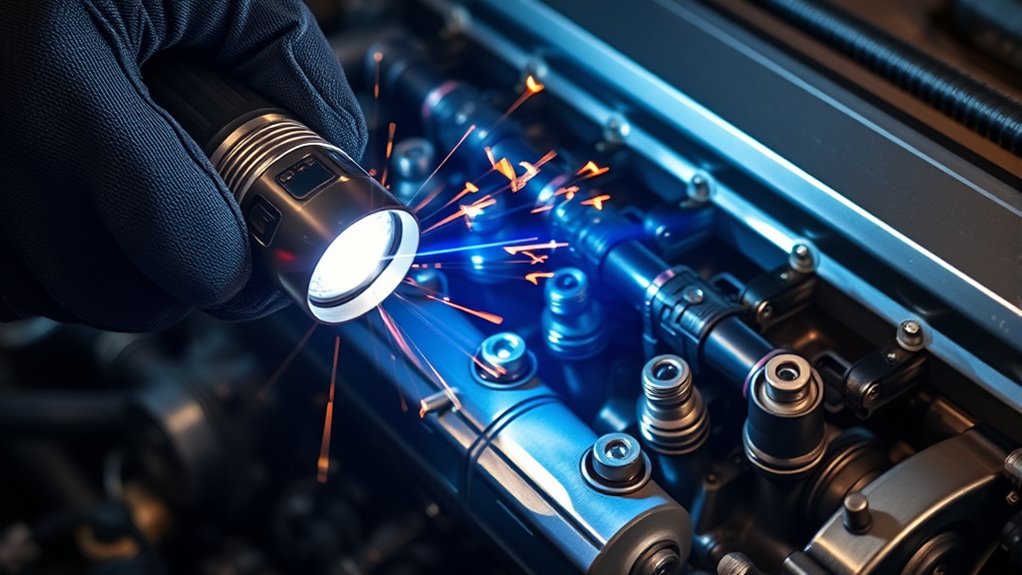
When diagnosing cylinder-specific misfires, paying close attention to the symptoms can help you determine whether the issue stems from ignition components or other sources. If the misfire is isolated to a single cylinder, it often points to ignition problems like a faulty coil, worn spark plug, or damaged wiring. Notice if the misfire worsens under load or during acceleration, which suggests ignition issues. Conversely, if the misfire occurs at idle and affects multiple cylinders, fuel delivery problems or vacuum leaks might be the cause. Pay attention to engine stumble, hesitation, or rough running. Using diagnostic tools like scan codes or oscilloscopes can confirm if the misfire correlates with ignition firing patterns or fuel system behavior, guiding your troubleshooting process. Additionally, inspecting the oil quality and ensuring proper maintenance can prevent issues that contribute to misfires by keeping internal components in optimal condition. Ensuring consistent fuel quality can also help mitigate fuel-related misfire problems and improve engine performance. Regularly checking the air intake system can further help identify sources of vacuum leaks or restrictions that may cause misfiring.
Differentiating Between Ignition and Fuel-Related Faults
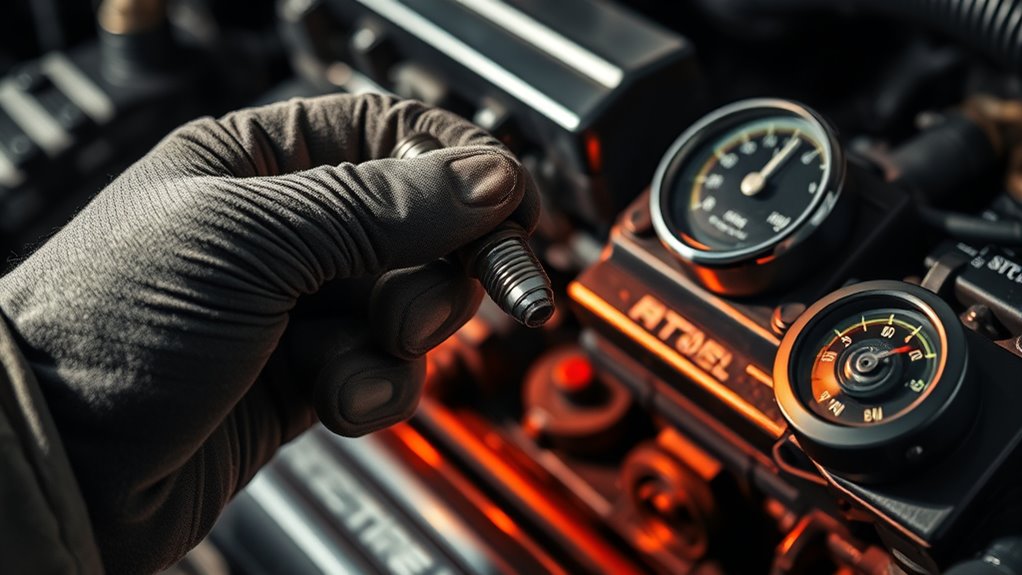
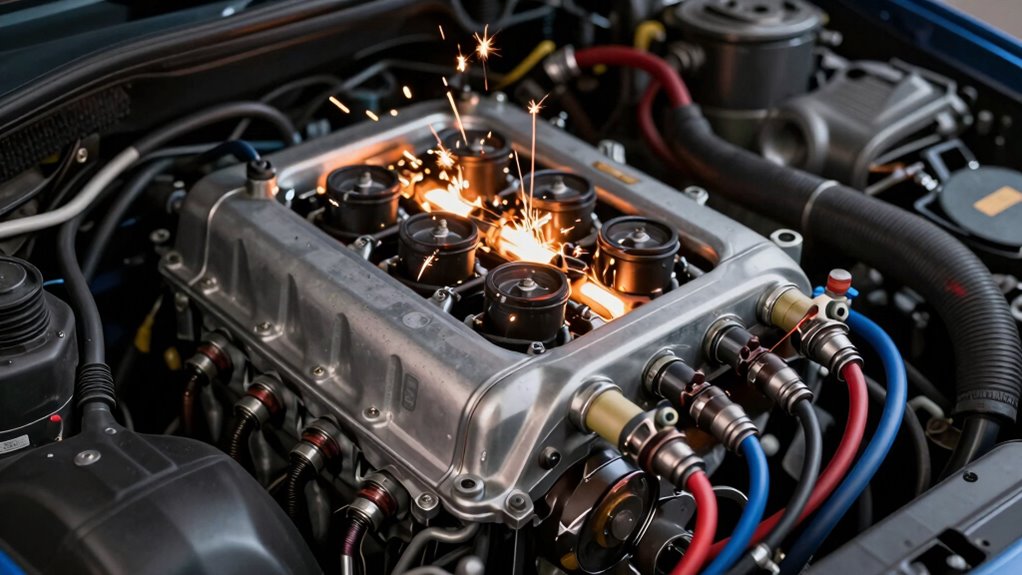
Distinguishing between ignition and fuel-related faults requires careful observation of engine behavior and diagnostic data. Ignition issues often cause misfires in specific cylinders, accompanied by hesitation, rough running, or electrical sparks near components. Fuel problems typically produce misfires across multiple cylinders, especially at idle or under load, with symptoms improving after injector cleaning or pressure correction. To help differentiate, consider this:
| Symptom | Likely Cause |
|---|---|
| Misfire localized to one cylinder | Ignition component failure |
| Misfire at idle and load | Fuel delivery issues |
| Rough running with electrical sparks | Ignition wiring/coil problems |
Use diagnostic tools and observe behavior under load versus idle to pinpoint the root cause accurately. Additionally, understanding the engine’s electrical system can aid in diagnosing ignition-related problems more effectively.
Inspecting and Maintaining Ignition Components

Regularly inspecting and maintaining your ignition components is essential for reliable engine performance. Start by checking the ignition coils for cracks or corrosion, ensuring they’re securely mounted. Test the spark plug wires or ignition cables for wear, cracks, or burns, replacing any damaged ones. Remove and examine the spark plugs, looking for fouling, wear, or signs of improper gap; replace as needed. Inspect the distributor cap and rotor for carbon tracking or corrosion, especially in older vehicles. Use a multimeter or scan tool to verify the ignition control module and pickup coil are functioning correctly. Keep all connections tight and free of corrosion. Proper maintenance of these components guarantees consistent spark delivery, reducing misfires and optimizing engine performance. Routine inspections help identify potential issues early and prevent unexpected failures. Additionally, checking the electrical system regularly ensures all connections are secure and reduces the likelihood of ignition failures. Regular diagnostic testing can further help detect underlying issues before they cause noticeable symptoms.
Checking Fuel Delivery and Fuel System Components
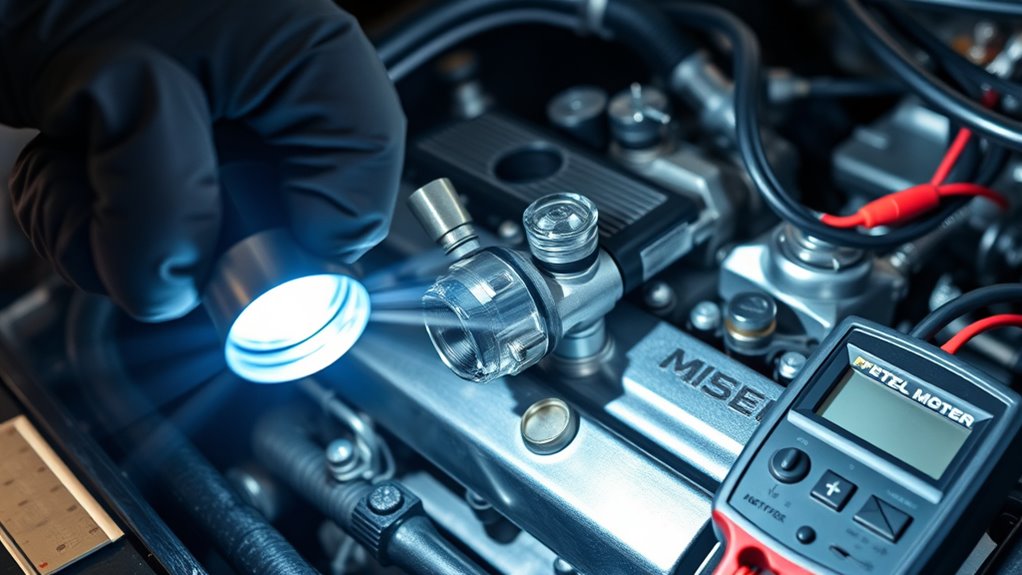
Ensuring proper fuel delivery is essential for maintaining smooth engine operation and preventing misfires caused by fuel system issues. Start by checking the fuel pressure with a reliable gauge to confirm the pump and regulator are working correctly. Inspect the fuel injectors for clogs or damage, and clean or replace them if necessary. Verify the operation of the fuel pump—weak or failing pumps can cause lean conditions leading to misfires. Examine fuel lines for leaks or blockages that disrupt flow. Also, guarantee the fuel filter isn’t clogged, as dirt and debris restrict fuel flow. Don’t forget to check sensors like the MAF and O2 sensors, since faulty readings can affect fuel delivery and cause inconsistent combustion. Proper fuel system maintenance helps keep your engine running smoothly. For optimal performance, understanding the field-of-view and imaging-scale can be useful when diagnosing related issues in complex systems. Additionally, regularly inspecting and maintaining the fuel tank can prevent contamination that might lead to performance issues.
Using Engine Codes and Live Data for Precise Diagnosis

How can you pinpoint the exact cause of misfires? Using engine codes and live data is your best bet. Start by scanning your vehicle’s computer for Diagnostic Trouble Codes (DTCs). These codes identify specific cylinders or systems involved, narrowing your focus. Mode 6 data offers real-time insights into misfire frequency and severity, helping you determine if the issue is ignition or fuel-related. Using an oscilloscope or ignition pickup, you can observe coil firing patterns and spark behavior directly. Monitoring live sensor data—like oxygen and MAF readings—reveals if fuel delivery is off. Comparing misfire behavior at idle versus under load also guides you toward the root cause. Combining codes and real-time data guarantees precise diagnosis, saving you time and unnecessary part replacements.
Preventative Measures to Minimize Future Misfires

You can reduce future misfires by performing regular system inspections to catch wear or damage early. Always use quality replacement parts to guarantee reliable performance and avoid introducing new issues. Staying proactive with maintenance helps keep your engine running smoothly and prevents avoidable misfires.
Regular System Inspections
Regular system inspections are essential for preventing misfires before they occur. Regularly check your ignition components like coils, wires, distributor caps, and rotors for signs of wear, cracks, or corrosion. Guarantee all electrical connections are secure and free of damage. Use diagnostic tools to scan for trouble codes and monitor live data, which can highlight potential issues early. Inspect the vacuum lines for leaks that could disturb the air-fuel mixture. Verify fuel pressure and check fuel injectors for clogs or leaks. Keep sensors such as MAF and O2 in good condition, as they directly impact fuel delivery. Consistent inspections help catch problems early, reducing the risk of misfires, improving engine performance, and extending the lifespan of your vehicle’s systems.
Use Quality Replacement Parts
Using high-quality replacement parts is essential for preventing future misfires and maintaining engine reliability. When you choose genuine or top-tier aftermarket components, you ensure that your ignition and fuel systems operate smoothly. Poor-quality parts can fail prematurely, causing electrical leaks, weak sparks, or inconsistent fuel delivery, all of which lead to misfires. Investing in quality parts helps maintain proper engine timing and combustion efficiency.
- Use OEM or reputable brand ignition coils, spark plugs, and wires for durability.
- Opt for high-grade fuel injectors and filters to prevent clogging and ensure consistent spray.
- Choose reliable sensors like MAF and O2 sensors to keep air-fuel ratios accurate.
Prioritizing quality minimizes downtime and costly repairs, keeping your engine running smoothly.
Frequently Asked Questions
How Can I Tell if My Misfire Is Caused by Ignition or Fuel Issues?
To determine if your misfire is from ignition or fuel issues, check if it affects only specific cylinders or occurs under load. Ignition problems usually cause misfires in one or a few cylinders and worsen after replacing parts like coils. Fuel issues often cause multiple cylinders to misfire, especially at idle or under load, and improve with fuel system repairs. Use diagnostic tools and codes to pinpoint the exact cause.
What Are the Early Warning Signs of Ignition Coil Failure?
You notice your engine misfiring, experiencing hesitation, or rough idling—these are early signs of ignition coil failure. You might feel a loss of power, see increased fuel consumption, or observe engine hesitation under load. You may also notice trouble starting or see engine warning lights flicker. These symptoms often appear gradually, signaling that your ignition coil isn’t delivering the proper voltage needed for smooth combustion.
Can a Faulty O2 Sensor Cause Misfires Without Other Symptoms?
Yes, a faulty O2 sensor can cause misfires even if you don’t notice other symptoms. When it sends incorrect data, your engine control unit might adjust fuel mixture improperly, leading to incomplete combustion. This can result in misfires, especially under certain conditions like idle or steady cruising. Keep in mind, though, you may also experience related issues like poor fuel economy or increased emissions, even without obvious signs.
How Does Vacuum Leakage Influence Misfire Diagnosis?
Vacuum leaks can feel like trying to shout into a tornado—they distort your engine’s breathing, making accurate diagnosis a nightmare. When unmetered air sneaks in, it throws off the air-fuel mixture, causing rough idling, stalling, or misfires. You’ll notice inconsistent engine behavior, especially at idle. To diagnose, spray carb cleaner around the intake and watch for engine speed changes—if it jumps, you’ve found your leak.
What Maintenance Steps Prevent Ignition and Fuel System Misfires?
You should regularly inspect and replace worn ignition components like coils, wires, distributor caps, and rotors to prevent misfires. Keep fuel system parts such as injectors, filters, and pumps clean and functioning properly. Use diagnostic tools to check fuel pressure, sensor operation, and scan for trouble codes. Maintaining these systems guarantees proper ignition and fuel delivery, reducing the likelihood of misfires and engine performance issues.
Conclusion
Remember, a stitch in time saves nine. By understanding the signs of misfires and power loss, and properly diagnosing ignition and fuel issues, you can keep your engine running smoothly. Regular inspections and maintenance help prevent bigger problems down the road. Don’t ignore small symptoms—they often point to bigger underlying issues. Stay proactive, stay safe, and keep your vehicle performing at its best. After all, prevention is the best cure.