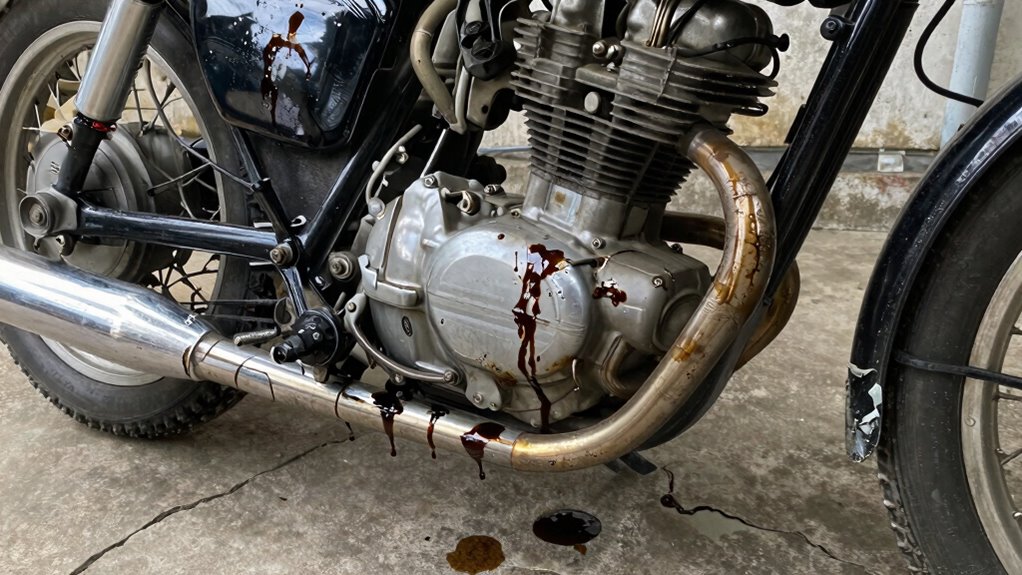

If you’re noticing oil leaks everywhere on your classic motorcycle, start by checking the valve cover gasket for cracks or loosened bolts. Next, inspect the cylinder head gasket and pushrod tunnels for seepage, and look at seals around the crankshaft and shift shaft, as they tend to wear over time. Don’t forget oil lines and connections—they can crack or loosen with age. Keep exploring, and you’ll find useful tips to keep leaks under control.
Key Takeaways
- Common leak spots include the valve cover gasket, pushrod tunnels, and crankcase gasket due to aging and wear.
- Seals around crankshaft and shift shaft are prone to drying, cracking, and hardening, causing leaks.
- Oil lines, hoses, and connection fittings can leak from cracks, loose fittings, or worn clamps.
- Gasket deterioration from heat and vibration often leads to seepage around the cylinder head and gasket areas.
- Regular inspection and timely replacement of gaskets, seals, and hoses prevent widespread leaks on classic bikes.
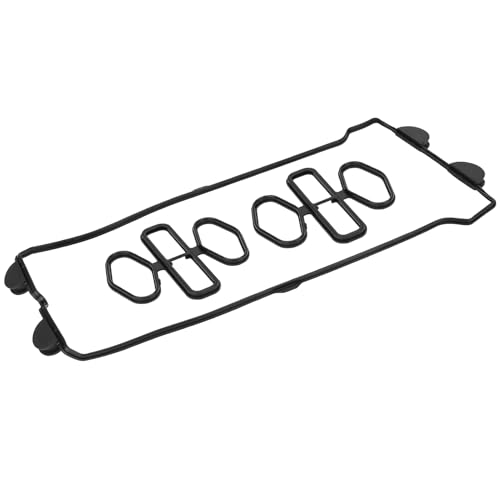
JAVIK Cylinder Head Valve Cover Gasket Kit for Suzuki GSX-R600 GSX-R750 2006-2024 O.E.M# 11173-01H00 11178-01H00
Fitment: Fit For Suzuki Motorcycle 2006-2024 GSX-R600; 2006-2024 GSX-R750
As an affiliate, we earn on qualifying purchases.
As an affiliate, we earn on qualifying purchases.
Valve Cover Gasket Leaks
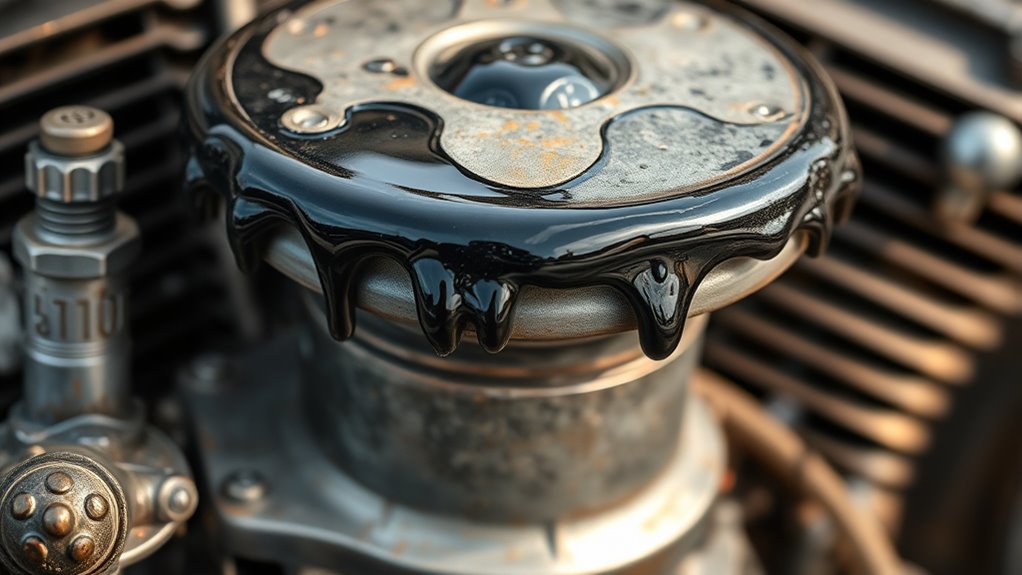
Valve cover gasket leaks are a common issue on classic motorcycles, especially as they age. Over time, the gasket material becomes brittle and loses its ability to create a tight seal. This allows oil to seep out from between the valve cover and cylinder head, often leaving a visible oil film or drip on the engine. You might notice oily spots around the valve cover bolts or see oil collecting on the cylinder head. Vibration from riding can also loosen the bolts, worsening the leak. To fix this, you should replace the gasket and tighten the bolts to the proper torque. Regular inspection and maintenance help prevent leaks from worsening and keep your engine clean and functioning smoothly. Proper gasket material selection can also improve longevity and sealing effectiveness. Additionally, using the correct torque specifications during reassembly ensures a reliable seal and reduces the chance of future leaks. Employing appropriate sealants can further enhance the seal and prevent recurring leaks over time. Being aware of common leak spots helps in early detection and effective maintenance. Paying attention to engine vibrations can also help identify loose components that contribute to leaks.

S&S Cycle Head Gasket, 4", TC Style, 2 Pack Compatible for Harley-Davidson FXD 99-16
Head gaskets are made from made with Kevlar fiber-reinforced premium graphite material with a steel core, stainless steel…
As an affiliate, we earn on qualifying purchases.
As an affiliate, we earn on qualifying purchases.
Cylinder Head Gasket and Top-End Seepage
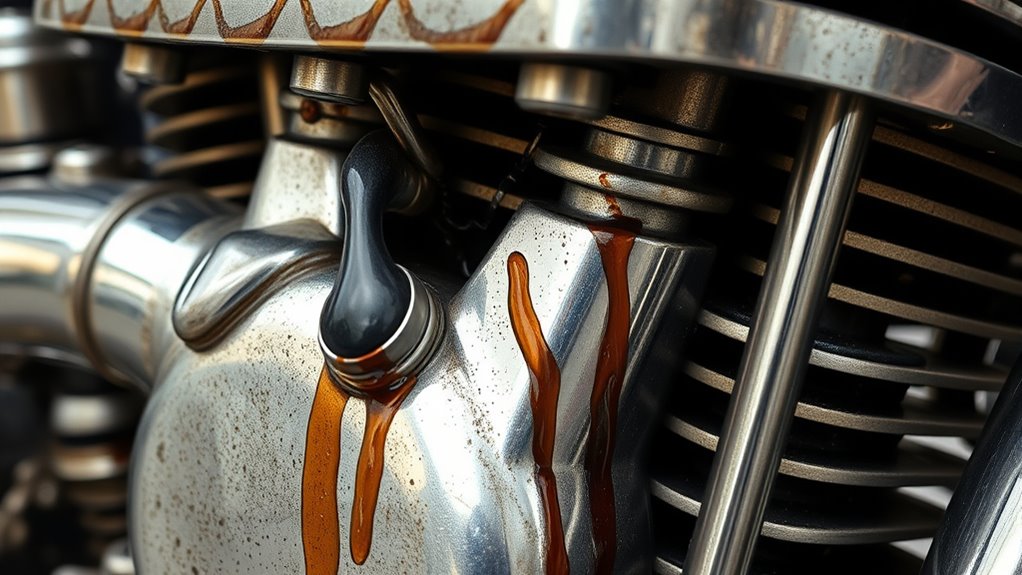
You’ll notice oil seeping from the top of your engine or white smoke in the exhaust, which signals head gasket trouble. Recognizing these signs early helps prevent serious engine damage. Keeping an eye on gasket health and addressing leaks promptly keeps your motorcycle running smoothly. Using energy-efficient components can also enhance overall engine reliability and reduce the risk of gasket failure. Additionally, understanding common leak spots can assist in targeted inspections and maintenance.
Signs of Head Gasket Failure
Head gasket failure often reveals itself through visible signs of oil seepage around the top end of your motorcycle’s engine. You might notice oil pooling around the cylinder head, especially near the valve cover or the bolt holes. Coolant mixing with oil can create a milky, frothy residue on the engine’s surface, indicating internal leaks. Excessive oil consumption or smoke from the exhaust, particularly bluish smoke, signals that oil is entering the combustion chamber through a compromised gasket. Overheating the engine frequently correlates with gasket failure, leading to warped or cracked components. If you observe oil leaks at the top of your engine or detect unusual engine behavior, it’s a clear sign you need to inspect the head gasket closely and address potential failure before significant damage occurs. Regular maintenance checks can help catch these issues early and prevent costly repairs. Recognizing the early warning signs of gasket failure is essential for prolonging your motorcycle’s lifespan and maintaining optimal performance.
Preventing Top-End Leaks
To prevent top-end leaks, regular maintenance and careful inspection are essential, especially as motorcycle engines age. Start by checking the cylinder head gasket for signs of deterioration, like oil seepage or gasket deformation. Always replace the gasket whenever you rebuild or overhaul the engine. Keep the cylinder head bolts torqued to the manufacturer’s specifications to maintain a proper seal. Regularly inspect the head area for oil leaks, especially around bolt holes and pushrod tunnels. Use high-quality gasket material during repairs, and avoid over-tightening bolts, which can crack the gasket. Maintaining proper cooling and avoiding engine overheating also helps prevent gasket failure. Incorporating proper engine cooling techniques can further extend the lifespan of your gasket seals. Additionally, ensuring that the engine oil is fresh and at proper levels can help reduce the likelihood of leaks. Regularly checking for signs of engine wear and addressing issues promptly can prevent leaks from worsening. Proper engine maintenance routines, including oil changes and system checks, play a crucial role in leak prevention. Being vigilant about early leak detection allows for timely repairs before issues become severe. By staying vigilant with inspections and timely replacements, you reduce the risk of top-end leaks and keep your classic motorcycle running smoothly.
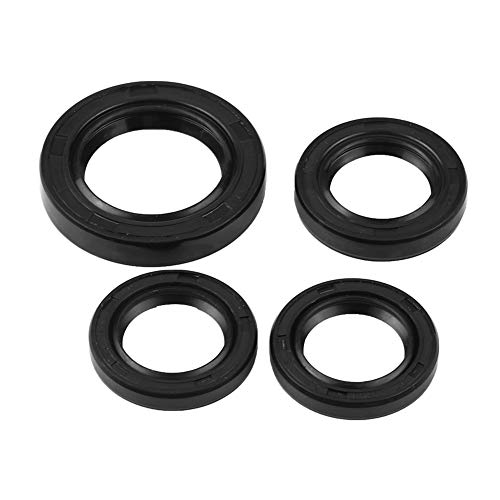
Gy6 Oil Crankshaft Seal,GY6 Oil Seal,4 Pcs Engine Oil Seal Kit Engine Crankshaft Gear Crank Case Oil Seal Rubber for GY6 125cc 150cc 152 157QMJ Hrc216 Seal
【Durable Construction】Engine Crank Case Oil Seal,Crafted from high-strength rubber, our product guarantees exceptional durability for long-lasting performance, ensuring…
As an affiliate, we earn on qualifying purchases.
As an affiliate, we earn on qualifying purchases.
Oil Pan Gasket and Drain Plug Issues

Oil pan gasket and drain plug issues are common sources of leaks on classic motorcycles, especially as these components age. Over time, the gasket can become brittle or crack, allowing oil to seep out. Drain plugs can loosen or the crush washers can deteriorate, causing leaks during oil changes or from vibration. Regular inspection and maintenance are key to preventing leaks. Tighten drain plugs properly with a torque wrench and replace crush washers every time you change the oil. Check the gasket for cracks or signs of wear, especially if you notice oil spots beneath your bike. The table below highlights common problem areas:
| Issue | Solution |
|---|---|
| Worn gasket | Replace gasket |
| Loose drain plug | Tighten properly |
| Damaged crush washer | Replace washer |
Additionally, monitoring oil leak sources can help you address issues promptly before they lead to more significant engine problems. Paying attention to gasket integrity is crucial, especially as the bike ages and components become more susceptible to wear. The use of visual and auditory cues in inspection routines can improve detection accuracy and ensure early intervention. Regularly inspecting these components can help prevent oil leaks from causing further damage. Incorporating preventive maintenance routines can extend the lifespan of your motorcycle and avoid costly repairs.

Bar's Leaks OS-1 Oil Seal Engine Oil Burning and Leak Repair, 16.9 oz.
REPAIRS LEAKING MAIN SEALS AND GASKETS: We have designed this product to work in all gasoline and diesel…
As an affiliate, we earn on qualifying purchases.
As an affiliate, we earn on qualifying purchases.
Crankcase Gasket and Seal Failures
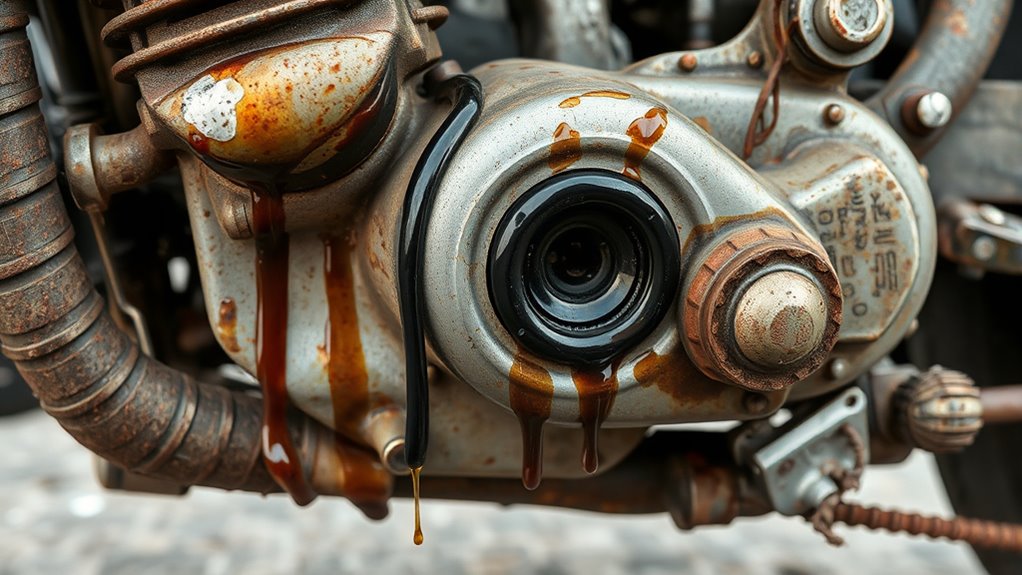
Crankcase gaskets and seals often fail as your motorcycle ages, leading to persistent oil leaks. Over time, heat, vibration, and wear weaken these components, allowing oil to escape. You should pay close attention to these common failure points: newborn skin, which is particularly vulnerable to damage from leaks and contaminants. 1. Crankcase gasket deterioration from heat and vibration, causing seepage around the engine. 2. Crankshaft seals drying out and cracking, especially on high-mileage bikes. 3. Shift shaft seals that become brittle and leak oil during extended use. 4. Seal edges around bolt holes or mating surfaces that lose integrity over time. Regular inspection and timely replacement of these gaskets and seals are critical to prevent ongoing leaks. Employing proper maintenance techniques can greatly extend the lifespan of these components and prevent leaks. Using appropriate lubrication and proper torque specifications can help maintain a tight seal and keep oil where it belongs. Additionally, understanding the material properties of these seals can aid in selecting the right replacements for your motorcycle’s specific operating conditions. Recognizing the importance of regular upkeep will ensure early detection of potential issues before leaks become severe.
Seals Around the Crankshaft and Shift Shaft
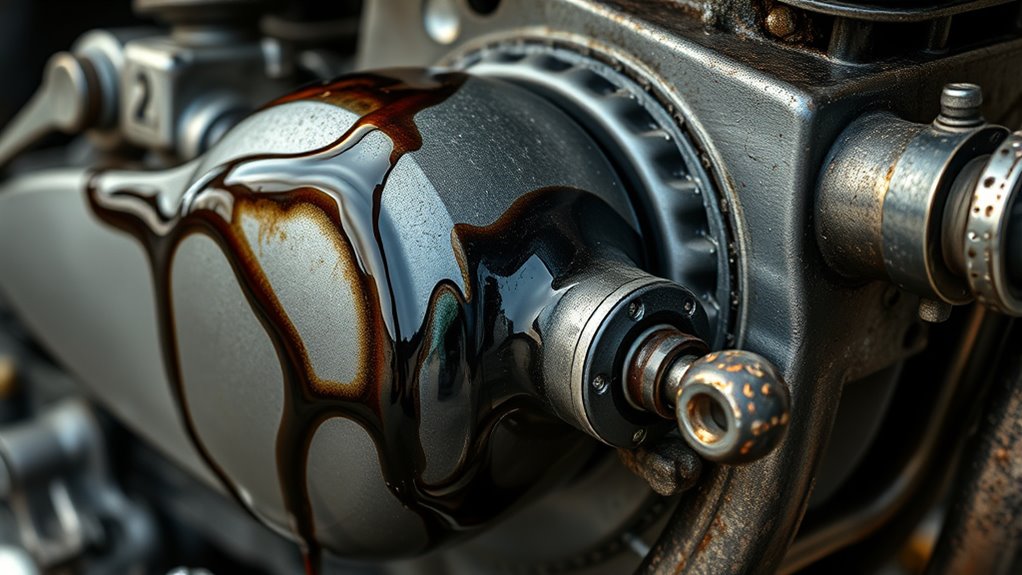
Seals around the crankshaft and shift shaft are common sources of oil leaks on classic motorcycles, especially as these components age. Over time, the rubber seals dry out, crack, or harden, losing their ability to contain oil effectively. The crankshaft seal prevents oil from leaking out of the main engine, while the shift shaft seal keeps oil inside the transmission. When these seals fail, you might notice oil seeping around the sides of the engine or near the shift lever. Vibration and heat accelerate deterioration, making leaks more likely. Regular inspection is essential. Proper seal installation and using quality materials can prevent leaks and extend the lifespan of these seals. Replacing these seals involves removing surrounding components, cleaning the area thoroughly, and installing new seals with proper tools to guarantee a tight fit, preventing ongoing leaks. Recognizing quality craftsmanship and the right materials can improve leak prevention.
Common Leak Points on Classic British Motorcycles
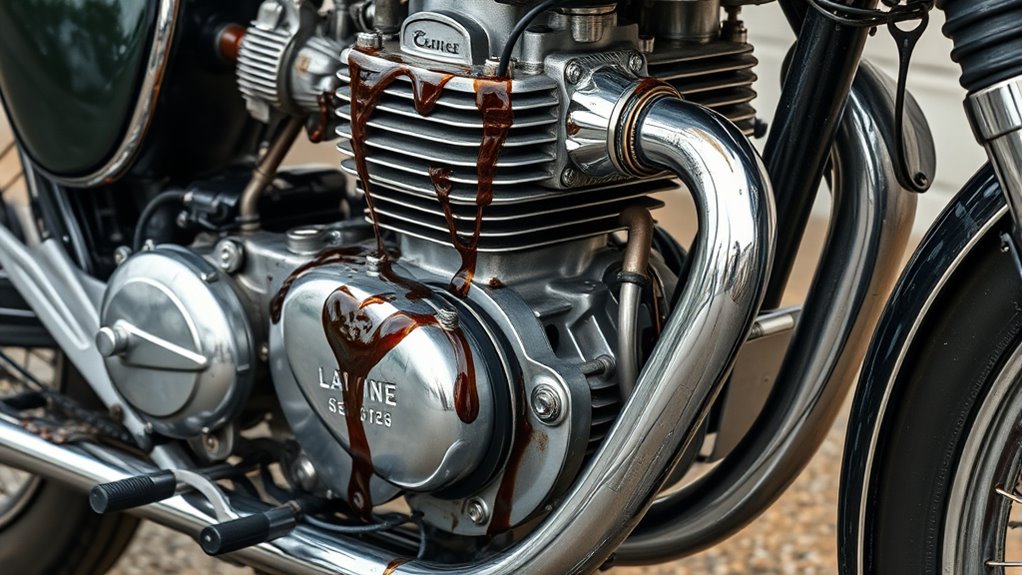
You’ll often find oil seeping around the head gasket and pushrod tunnels on classic British motorcycles. These areas are prone to leaks as gaskets age and seals wear out over time. Keeping an eye on these points helps prevent more serious engine issues down the line.
Head Gasket Seepage
Head gasket seepage is a common issue on classic British motorcycles, especially as they age. Over time, the gasket can weaken from heat, pressure, and corrosion, leading to oil seeping from the engine top. This seepage often appears around the head and cylinder joint, making it easy to spot. If ignored, it can cause more serious engine problems. To prevent or fix head gasket leaks, you should check for signs of oil around the gasket area regularly. Here are some common causes and locations:
- Gasket deterioration from age and heat cycles
- Improper torque on head bolts
- Cracks in the cylinder head or block
- Accumulation of dirt and oil that mask leaks
Pushrod Tunnel Leaks
As head gasket leaks become more apparent with age, attention shifts to other common trouble spots, like the pushrod tunnel area. Over time, oil can seep through the gaskets or cracks around the pushrod tunnels, especially on classic British motorcycles. These leaks often originate from worn or degraded gaskets that fail to seal properly. Vibration and heat cycles cause gasket material to shrink or crack, allowing oil to escape. You might notice oil seeping around the head, near bolt holes, or pooling on the cylinder head. Regularly inspecting the pushrod tunnel area helps catch leaks early. Replacing the gaskets with high-quality parts and ensuring proper torque during reassembly can prevent persistent leaks. Addressing these issues promptly keeps your engine cleaner and maintains ideal performance.
Primary Drive and Rocker Box Seals
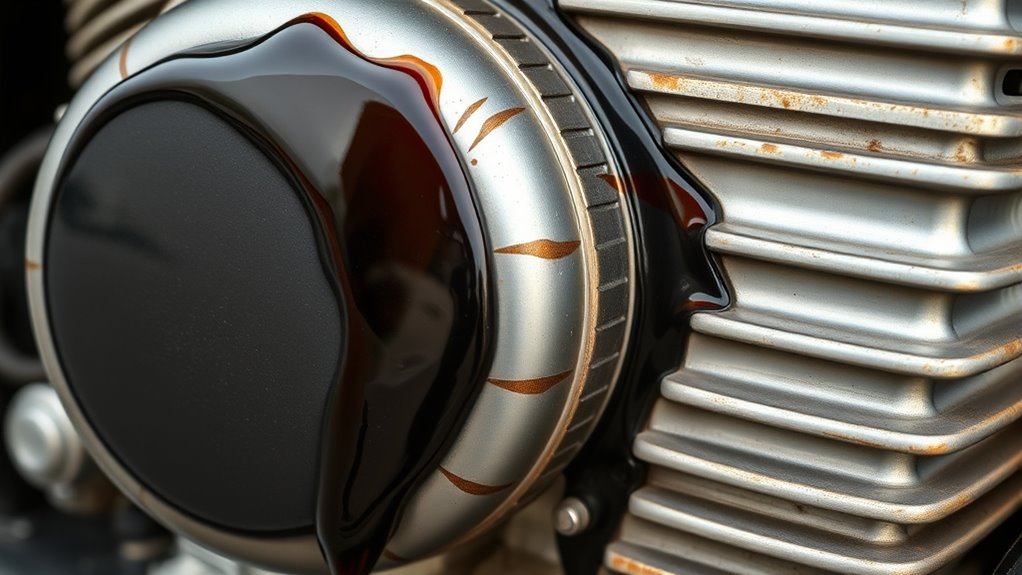
Primary drive and rocker box seals are common sources of oil leaks on classic motorcycles, especially as they age. Over time, the rubber seals deteriorate, allowing oil to seep out. You’ll often notice leaks around these areas during regular inspections. To prevent or fix leaks, consider the following:
- Replace worn seals regularly to maintain a good seal.
- Ensure correct installation with proper torque specifications.
- Check for cracks or damage in the seal housing.
- Use high-quality replacement seals designed for your motorcycle model.
Leaking primary drive seals can lead to oil loss and contamination, while rocker box leaks often result from worn gaskets or improper torque. Regular maintenance and timely replacement keep these leak points sealed and your engine running smoothly.
Oil Lines, Hoses, and Connection Points
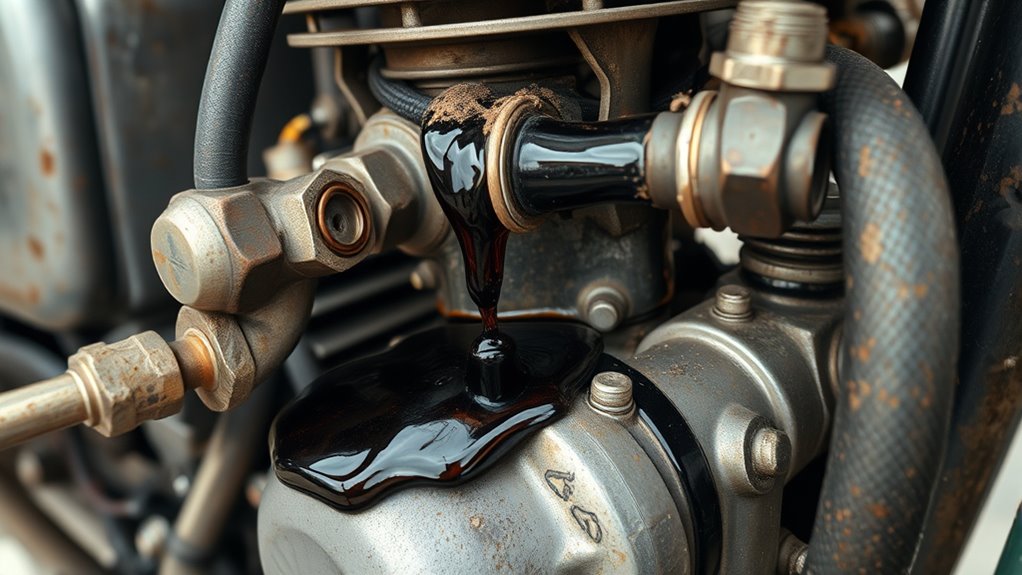
Oil lines, hoses, and connection points are common leak sources on classic motorcycles, especially as components age and endure heat cycling. Over time, hoses become brittle, crack, or develop small punctures, leading to oil seepage. Loose or worn fittings and clamps can also cause leaks, especially after vibration or impact. Connections between hoses and engine parts may loosen or deteriorate, allowing oil to escape. Visible signs like oil drips or wet spots near hoses and fittings help pinpoint issues. Regular inspection is essential—look for cracks, swelling, or soft spots in hoses, and ensure clamps are tight. Replacing old hoses and tightening connections prevent leaks and maintain proper oil flow, keeping your motorcycle running smoothly.
Engine Block Cracks and Structural Damage
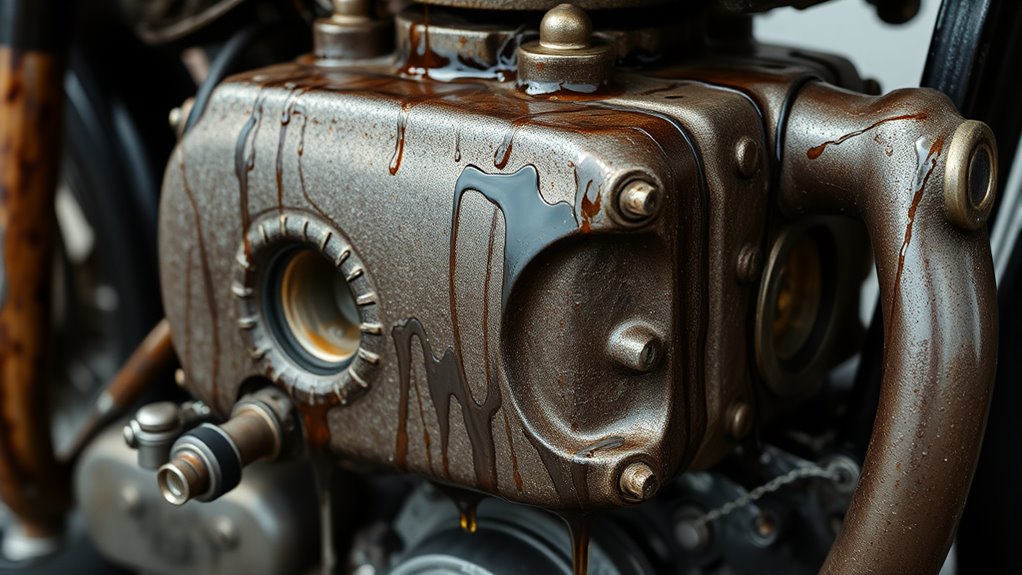
Engine block cracks are a serious concern on classic motorcycles, especially those subjected to overheating or prolonged heat cycles. When the engine overheats, thermal stress causes the metal to weaken and crack, leading to oil leaks. These cracks often appear along the sides of the engine block or near the cylinders. If unnoticed, they can cause significant oil loss and engine failure. To prevent this, monitor your engine’s temperature and avoid extended overheating. Regular inspections can help detect early signs of cracks before they worsen.
- Overheating causes thermal stress, weakening the engine block.
- Cracks often develop along the sides or near cylinders.
- Oil leaks from cracks can be severe, risking engine damage.
- Preventative maintenance and temperature management are essential.
Frequently Asked Questions
How Can I Identify a Leaking Valve Cover Gasket Early?
You can identify a leaking valve cover gasket early by checking for oil spots around the valve cover area, especially on the engine’s top. Look for oil buildup or a greasy residue on the outside of the gasket or the valve cover. You might also notice a burning smell if oil leaks onto hot engine parts, or see oil seeping from the gasket seal when inspecting the engine closely. Regular checks help catch leaks early.
What Are the Signs of a Failing Cylinder Head Gasket?
You’ll notice coolant mixing with engine oil, which often appears milky or frothy. Overheating or loss of power can also signal a failing cylinder head gasket. Additionally, you might see white smoke from the exhaust or oil leaks around the head area. Keep an eye out for these signs, as they indicate the gasket isn’t sealing properly and needs attention before more serious damage occurs.
How Often Should I Replace Crush Washers During Oil Changes?
Think of crush washers as tiny gatekeepers — they seal essential points to keep oil in check. You should replace them every time you change your oil, especially if they’re crushed or brittle. Reusing worn washers is like trying to patch a leaky dam with duct tape — it won’t hold. Using a torque wrench helps tighten drain plugs properly, preventing future leaks and ensuring your motorcycle runs smoothly.
What Causes Oil Leaks Around the Shift Shaft Seal?
Oil leaks around the shift shaft seal mainly happen because the rubber seal deteriorates over time, especially with frequent use and exposure to heat. Vibration and shaft movement can cause the seal to crack or shift, letting oil escape. If you don’t replace the seal when it shows signs of wear or damage, leaks will persist. Regular inspections and timely replacements guarantee your shift shaft seal stays tight and leak-free.
How Can I Detect Engine Block Cracks Before They Worsen?
You can detect engine block cracks early by regularly inspecting for visible oil leaks, especially around the engine’s sides. Look for cracks or oil seepage after overheating or rough rides. Keep an eye on unusual engine temperature fluctuations and increased oil consumption. Conduct a pressure test if you suspect a crack, and listen for unusual noises. Catching cracks early helps prevent costly repairs and keeps your motorcycle running smoothly.
Conclusion
Regularly checking these common leak spots can save you time and money on repairs. Did you know that nearly 60% of engine leaks on classic motorcycles originate from gasket failures? Staying vigilant about these issues helps keep your bike running smoothly and prevents costly damage. Keep an eye on these leak points, perform routine maintenance, and enjoy riding without worry. Your classic motorcycle will thank you for it!