Advanced jetting systems automatically adjust your engine’s fuel mixture based on weather changes and altitude, helping you maintain ideal performance. They use sensors to monitor temperature, humidity, and elevation, making real-time modifications so your engine runs smoothly no matter the conditions. This technology minimizes manual tweaks, improves efficiency, and prolongs engine life. If you want to discover how these smart systems keep your engine tuned perfectly in any environment, there’s more to learn ahead.
Key Takeaways
- Modern jetting systems automatically adjust fuel mixtures to compensate for temperature and humidity fluctuations.
- Altitude sensors enable real-time recalibration to maintain optimal engine performance at different elevations.
- Automated jetting reduces manual calibration efforts, ensuring consistent power and efficiency.
- Sensors monitor environmental conditions continuously, allowing instant adjustments for weather and altitude changes.
- Advanced jetting technology minimizes downtime and enhances engine lifespan by maintaining ideal tuning across diverse environments.

Have you ever wondered how modern jetting technology is revolutionizing industrial cleaning and maintenance? It’s all about precision tuning, especially when it comes to carburetor calibration and altitude adjustments. In environments where weather and altitude vary, maintaining ideal engine performance isn’t just about pulling the right levers anymore — it’s about smart, automated adjustments that keep your equipment running smoothly. Advanced jetting systems now analyze real-time conditions and adjust fuel mixtures accordingly, reducing downtime and boosting efficiency.
Modern jetting technology automates carburetor and altitude adjustments for optimal engine performance in changing environments.
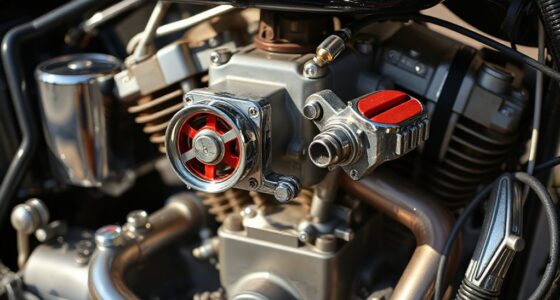
When dealing with changing weather conditions, especially temperature and humidity fluctuations, your engine’s air-fuel mixture can become off-balance. This imbalance can lead to poor combustion, increased emissions, and even damage over time. Carburetor calibration becomes vital here. Modern jetting tools incorporate sensors that monitor ambient conditions, allowing you to fine-tune the carburetor settings on the fly. Instead of manually adjusting jets or needles, you can rely on automated systems that respond instantly to weather shifts, ensuring your engine maintains peak performance. This not only improves fuel economy but also extends the lifespan of your equipment by preventing over- or under-rich mixtures.
Altitude adjustments are equally important, particularly if you operate in high-elevation areas. As you ascend, the thinner air means less oxygen is available for combustion. Without proper jetting adjustments, your engine can run too rich, leading to sluggish performance or increased fuel consumption. Advanced jetting technology simplifies this process by automatically recalibrating the carburetor jets to match the altitude. Some systems use GPS data or altitude sensors to determine your current elevation and adjust the jets accordingly. This real-time calibration ensures your engine maintains the correct air-fuel ratio, delivering consistent power and efficiency regardless of elevation changes.
These innovations greatly reduce the need for manual interventions, which can be time-consuming and prone to error. Instead, you get a seamless experience where your equipment self-adjusts for weather and altitude variations. This means less downtime, fewer repairs, and more reliable operation. It also opens the door for more complex applications, where precise jetting is critical for safety and performance. Whether you’re operating heavy machinery in mountainous terrain or working in fluctuating weather conditions, advanced jetting technology empowers you to keep everything running at ideal levels without constantly fiddling with carburetor screws or jets.
In short, modern jetting solutions are transforming how you approach engine tuning. By automating carburetor calibration and altitude adjustments, they make your work more efficient, reliable, and responsive to environmental changes. This isn’t just about better performance; it’s about smarter maintenance that adapts to the world around you, giving you peace of mind and a competitive edge. For example, cultural beliefs about weather and environment can influence how operators perceive and employ this technology, further highlighting its significance in diverse settings.
Frequently Asked Questions
How Often Should I Check My Jetting When Weather Changes Frequently?
You should check your jetting whenever the weather changes considerably, especially with frequent temperature and humidity shifts. During seasonal maintenance, it’s wise to revisit your jetting settings regularly to guarantee peak performance. If you’re at different altitudes, adapt your jetting accordingly. Keep an eye on your bike’s response and make adjustments as needed, so you maintain smooth operation despite weather fluctuations or altitude changes.
Can Incorrect Jetting Cause Engine Damage?
Incorrect jetting can certainly cause engine damage. When your fuel mixture is too rich or too lean, it stresses spark timing and engine components, leading to overheating or knocking. Poorly tuned jetting disrupts ideal combustion, which can cause long-term wear or failure. You need to monitor and maintain proper fuel mixture and spark timing to prevent potential damage, ensuring your engine runs smoothly, safely, and sustainably.
What Tools Are Essential for Jetting Adjustments?
You need essential tools like a set of screwdrivers, a carburetor calibration tool, and a tachometer to make precise jetting adjustments. These tools help you fine-tune the carburetor for altitude compensation and weather changes, ensuring ideal engine performance. With proper calibration, you can adjust the jetting to match current conditions, preventing performance issues and potential engine damage. Always double-check your settings after each change for the best results.
How Does Humidity Affect Jetting Requirements?
Humidity impact plays a significant role in jetting adjustment because higher humidity adds more moisture to the air, which can affect combustion. When humidity levels rise, you might need to slightly richen your mixture to compensate for the cooler, denser air. Conversely, low humidity can lean out your jetting. Pay attention to weather changes and tweak your jetting accordingly to maintain ideal engine performance.
Is There a Quick Way to Test Jetting Adjustments?
Think of your jetting adjustments like tuning a guitar; quick tests help you find the perfect note. To do a quick test, start your engine and let it idle slightly above normal, then give it a quick throttle. If it bogs or stalls, you need to adjust. This simple jetting test gives instant feedback, saving you time and helping you fine-tune your bike efficiently.
Conclusion
By mastering advanced jetting techniques, you can optimize your bike’s performance across different weather conditions and altitudes. Did you know that riding at higher altitudes requires up to 30% richer jetting to maintain power? Staying proactive with your jetting adjustments guarantees smoother rides and better throttle response, no matter where you go. Keep experimenting and tuning, and you’ll enjoy consistent, reliable performance every time you hit the road or trail.