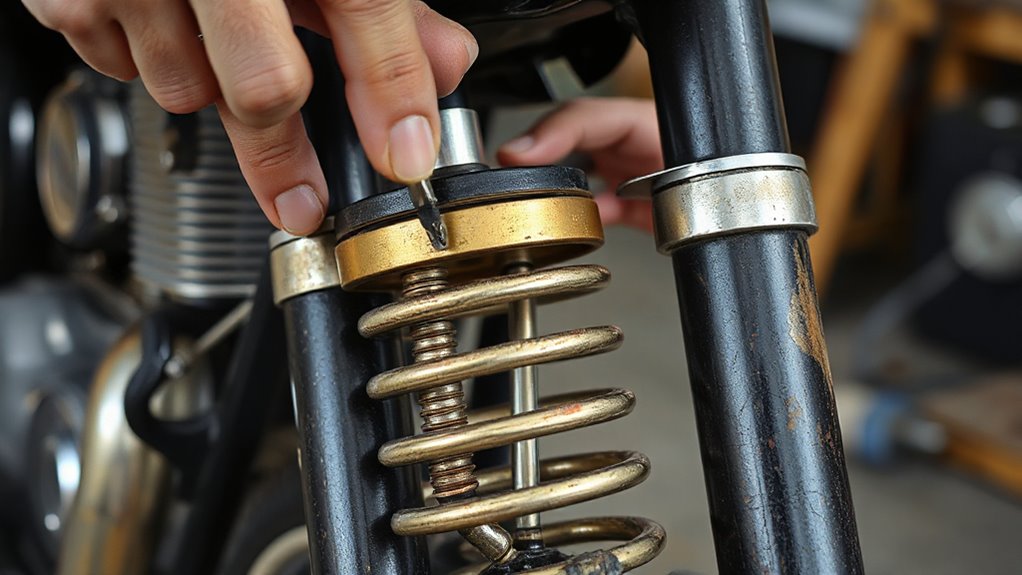

To fine-tune your vintage bike’s suspension, start by adjusting the sag to guarantee the bike compresses properly under your weight. Next, modify the fork oil level and viscosity to improve responsiveness—thicker oil provides more damping, while lower levels soften the ride. Experiment with spring preload for better balance. Small tweaks can make a huge difference, and if you keep exploring these adjustments, you’ll release smoother, more controlled rides tailored to your terrain.
Key Takeaways
- Adjust fork oil level and viscosity to optimize responsiveness and damping for smoother ride quality.
- Select appropriate spring rates based on rider weight and riding style to ensure proper sag and support.
- Set sag accurately by measuring suspension compression with the rider mounted, balancing comfort and handling.
- Fine-tune damping settings and preload to improve control and prevent harshness or excessive softness.
- Regularly inspect and experiment with adjustments to achieve harmony between fork compression, shock settings, and overall suspension performance.
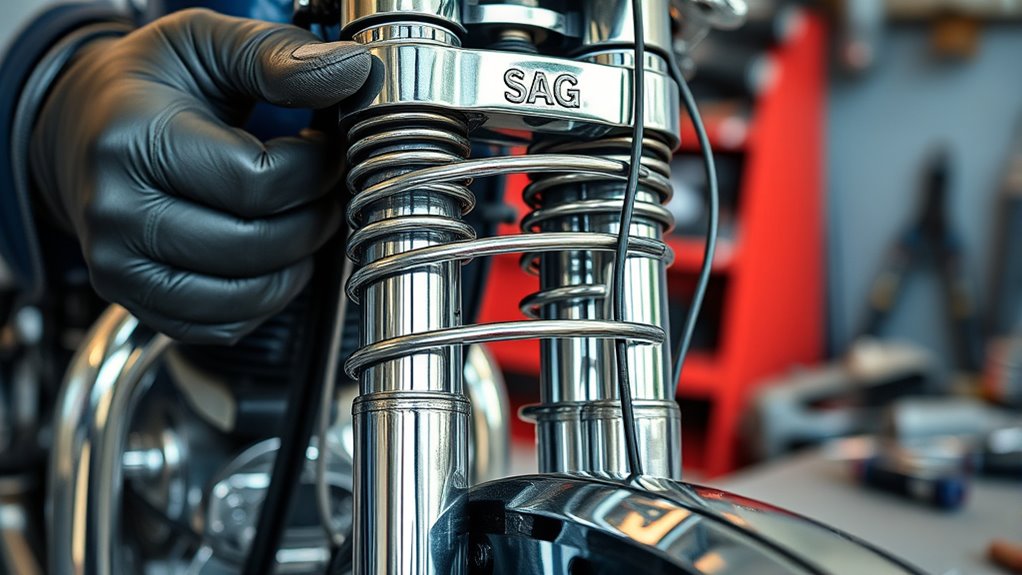
Have you ever wondered how suspension tuning can transform your driving experience? When you start paying attention to your vintage bike’s suspension, you’ll notice that small adjustments can make a big difference. The key lies in understanding how components like shock absorbers and fork compression work together to provide a smoother, more controlled ride. Your shock absorber isn’t just a bump absorber; it’s an essential part of the suspension system that manages the energy from bumps and dips, preventing them from jarring your entire bike. By tuning the shock absorber’s settings, you can control how stiff or soft the ride feels, improving handling and comfort. Adjusting the preload or damping settings affects how quickly the shock responds to terrain changes, giving you better control on rough roads or smooth pavement.
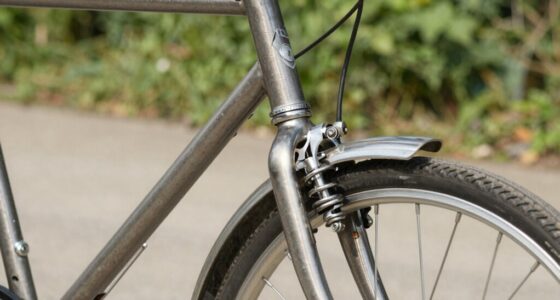
Focusing on fork compression is equally important. When you ride over uneven surfaces, the fork compresses to absorb shocks, but if it’s too stiff or too soft, your ride suffers. Too stiff, and you’ll feel every bump; too soft, and your front end may feel vague or unresponsive. To optimize fork compression, you can adjust the fork oil level and viscosity, which directly influences how the fork responds under load. If you notice your front end diving excessively when braking or cornering, it’s a sign to soften the fork compression. Conversely, if it feels too harsh or doesn’t absorb enough, stiffening the fork compression can improve stability. Additionally, understanding the importance of contrast ratio can help you appreciate how it affects the visual quality of your setup.
Balancing fork compression and shock absorber settings isn’t just about comfort; it’s about precision control. When you get it right, your vintage bike responds predictably and confidently, whether you’re cruising on a sunny day or tackling challenging terrain. Smaller adjustments, like changing fork oil thickness or tweaking the shock damping, can drastically improve your riding experience. It’s a process of trial and error, but with patience, you learn how each tweak affects your bike’s behavior. Remember, the goal is to find harmony between the suspension components so that you feel connected to the road without sacrificing comfort. Proper tuning allows you to enjoy your vintage ride as it was meant to be—responsive, smooth, and enjoyable every time you hit the road.
Top picks for "suspension adjust fork"
Open Amazon search results for this keyword.
As an affiliate, we earn on qualifying purchases.
Frequently Asked Questions
How Often Should I Check My Suspension Settings?
You should check your suspension settings, including suspension fluid and rebound adjustment, at least once every few months or after every 1,000 miles. Regularly inspecting these components guarantees peak performance. If you notice changes in ride quality, increased rebound time, or leaks, it’s time for a tune-up. Consistent checks help you maintain proper suspension balance and prevent uneven wear on your vintage bike.
Can I Tune Suspension Myself Without Professional Tools?
Tuning your suspension yourself is totally doable, even if you don’t have professional tools—it’s like trying to tame a wild beast! With some DIY adjustments, you can fine-tune your forks and shocks using basic suspension tools and patience. Start simple: adjust preload and rebound settings, but remember, for precise tuning, investing in proper tools and consulting guides is a smart move. You’ve got this!
What Are Signs of Worn Suspension Components?
You’ll notice worn suspension components if your bike feels excessively bouncy, or if handling becomes unpredictable. Signs include spring wear, which causes sag or uneven ride height, and oil degradation, leading to reduced damping and increased leaks. You might also hear knocking or feel roughness over bumps. Regularly inspect for leaks or corrosion, and if you notice these signs, it’s time to replace or service your suspension parts for peak performance.
How Does Ambient Temperature Affect Suspension Performance?
Did you know that a 10-degree Celsius change can alter suspension performance by up to 20%? Temperature effects profoundly influence how your vintage bike handles; warmer ambient influence makes the oil thinner, reducing damping control, while colder temps thicken it, increasing resistance. This variation impacts ride comfort and stability, so you should adjust your suspension settings accordingly to maintain ideal performance regardless of environmental changes.
Is It Necessary to Re-Tune After Every Ride?
You don’t need to re-tune your suspension after every ride, but it’s a good idea to check it regularly for peak ride comfort. If you notice the suspension feels less responsive or uneven, it may be a sign of suspension wear or changes in riding conditions. Small adjustments can improve performance, but frequent tuning isn’t necessary unless you experience noticeable issues or ride in varied terrains.
Conclusion
Now that you know how to adjust your vintage bike’s suspension, you hold the power to transform every ride into an exhilarating masterpiece. Tuning your fork oil, springs, and sag isn’t just maintenance – it’s revealing hidden potential and turning your bike into a blazing trail warrior. Don’t settle for average—your vintage beauty deserves nothing less than perfection. With these tweaks, you’ll feel like you’re riding a rocket, making every journey an unforgettable adventure!