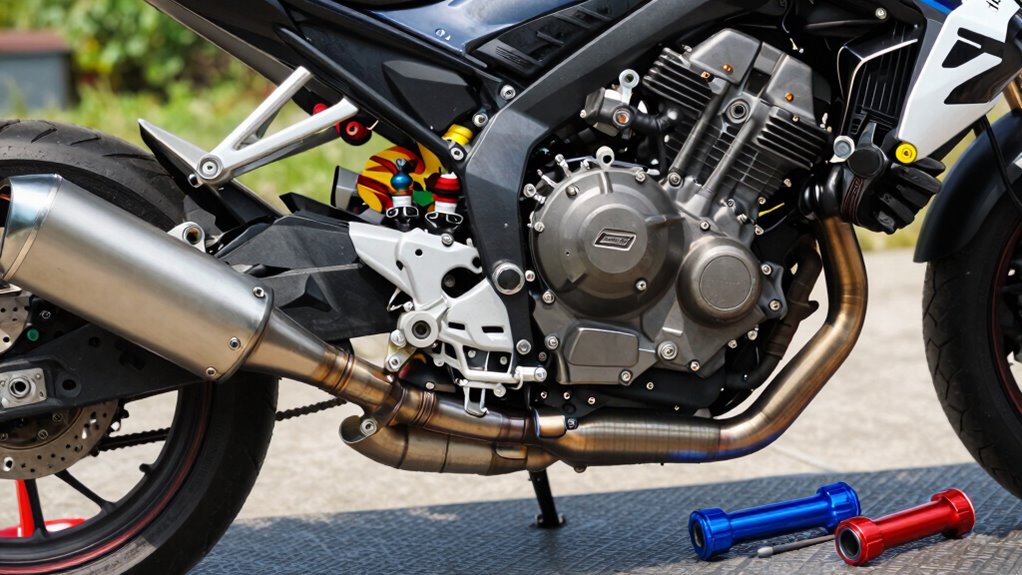

After installing a new exhaust, start your motorcycle and warm it up thoroughly. Adjust the air-fuel mixture using the screw—turn it slightly clockwise to lean the mixture and counterclockwise to enrich it—until you get a smooth idle. Test ride and tweak airflow or carb settings as needed to improve responsiveness and power. Rejet or reprogram your carb if necessary. To get the most out of your upgrade, keep tuning and fine-tuning your setup for peak results.
Prime for Young Adults — start your free trial
Fast free delivery, streaming and member deals for eligible 18–24 year olds.
As an affiliate, we earn on qualifying purchases.
Key Takeaways
- Warm up the motorcycle to normal operating temperature before starting adjustments.
- Adjust the air-fuel mixture screw in small increments for a smooth, steady idle.
- Test ride between adjustments to evaluate throttle response and prevent over-correction.
- Rejet or reprogram the carburetor or ECU to match the new exhaust setup.
- Fine-tune airflow and mixture to optimize power, efficiency, and engine responsiveness.
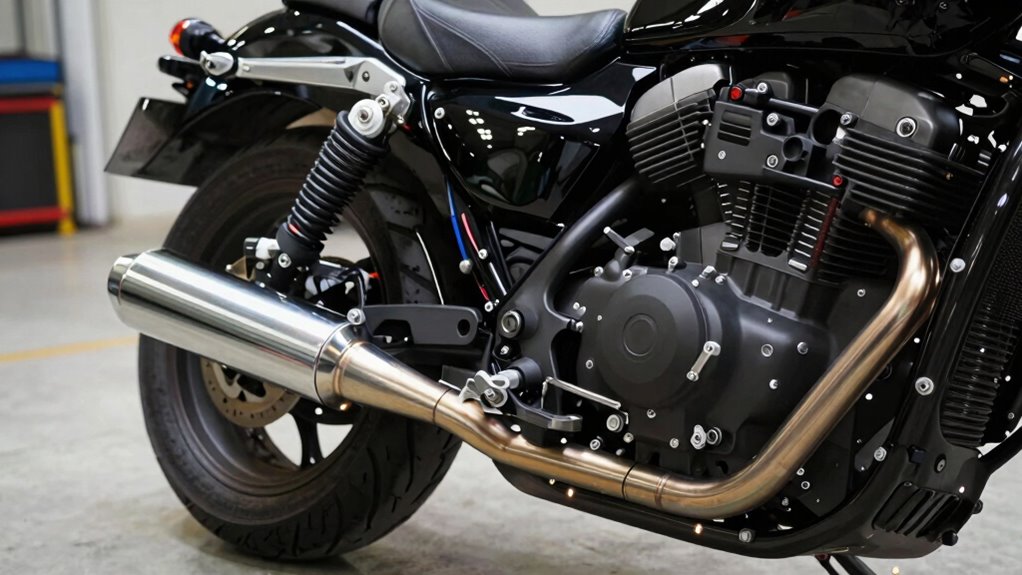
After installing a new exhaust on your motorcycle, tuning it properly is essential to guarantee peak performance and efficiency. The upgrade changes how exhaust gases escape, which impacts your bike’s overall airflow and how the engine runs. To get the most out of your new exhaust, you need to focus on adjusting the fuel mixture and airflow. These adjustments help your engine breathe better and run smoothly, preventing issues like rough idling or poor acceleration.
Start by warming up your motorcycle to its normal operating temperature. Once warm, you’ll want to check how it runs at idle and during acceleration. If you notice that the engine is running too rich—meaning there’s too much fuel and not enough air—it’s time to lean out the mixture. Many motorcycles have an air-fuel screw or a fuel adjustment screw, which you can turn slightly clockwise or counterclockwise to fine-tune the mixture. Turning the screw clockwise usually leans out the mixture (less fuel, more air), while turning it counterclockwise enriches it (more fuel, less air). Make small adjustments—about a quarter turn at a time—and listen to how the engine responds. A smooth, steady idle indicates your fuel mixture is correctly balanced.
Warm up your bike, then adjust the air-fuel screw for smooth idling and optimal performance.
Next, focus on airflow adjustment. Your new exhaust may require you to tweak the airflow to optimize performance. This could involve adjusting the air intake or modifying the air filter. If your motorcycle has an adjustable air intake or a carburetor with an airflow screw, make incremental changes to increase or decrease airflow. More airflow can improve throttle response and power, but too much can cause the engine to run lean, leading to knocking or overheating. Conversely, reducing airflow can help if the engine sounds rough or stalls under load. Remember, small changes can have significant effects, so make adjustments gradually and test ride between each tweak. Additionally, understanding how exhaust modifications influence overall engine tuning can help you make more informed adjustments. Proper tuning also requires understanding how to rejet or reprogram your carburetor or ECU, which is crucial after any exhaust change.
It’s also helpful to familiarize yourself with how air-fuel ratios impact engine performance and longevity to make more precise adjustments. Recognizing the importance of proper tuning techniques can ensure you avoid common pitfalls and maximize your motorcycle’s potential. It’s advisable to consult a tuning guide or professional if you’re unsure about the adjustments needed. Don’t forget about the importance of testing under different conditions—idle, acceleration, and cruising. Fine-tuning may require a few attempts to find the perfect balance. Using a fuel management system or a tuning app can also help if your motorcycle supports electronic adjustments. Keep in mind that after any exhaust change, you might need to rejet or reprogram your carburetor or ECU to match the new airflow and fuel requirements. Proper tuning ensures your motorcycle runs efficiently, delivers optimal power, and maintains good fuel economy. Once you get these adjustments right, you can enjoy the full benefits of your upgraded exhaust system with confidence in your bike’s performance.
motorcycle air-fuel mixture screw
As an affiliate, we earn on qualifying purchases.
As an affiliate, we earn on qualifying purchases.
Frequently Asked Questions
Do I Need to Re-Jet My Carburetor After an Exhaust Swap?
Yes, you should re-jet your carburetor after an exhaust swap to optimize fuel efficiency and manage noise levels. Changing the exhaust affects how air flows through your engine, which can cause it to run lean or rich. Re-jetting ensures proper fuel mixture, improving performance and reducing excessive noise. It’s an essential step to keep your motorcycle running smoothly and quietly after modifications.
How Do I Check if My Motorcycle Is Running Lean or Rich?
You can check if your motorcycle is running lean or rich by observing the fuel mixture and engine performance. If it’s running lean, you’ll notice the engine hesitating, overheating, or backfiring, and the fuel mixture will seem too sparse. A rich condition makes the engine run sluggish, produces black smoke, and the fuel mixture feels too thick. Use a plug chop and examine your spark plug to confirm, adjusting accordingly for peak performance.
Is Advanced Timing Necessary After Installing a New Exhaust?
Advanced timing isn’t always necessary after installing a new exhaust, but it can improve performance if your bike runs lean or sluggish. Adjusting ignition timing influences the fuel mixture’s efficiency, helping your engine run smoother and more powerfully. Before making changes, check your motorcycle’s current ignition timing and fuel mixture to make certain you don’t over-advance, which could lead to knocking or damage. Proper tuning helps maximize your exhaust upgrade benefits.
What Tools Are Essential for Tuning After an Exhaust Change?
You’ll need basic tools like a digital tuner or OBD2 scanner to fine-tune your motorcycle after an exhaust swap. These tools help you adjust fuel efficiency settings and noise levels, ensuring peak performance. A screwdriver, socket wrench, and possibly a colortune can help with idle adjustments. Proper tuning improves fuel efficiency, reduces noise levels, and keeps your bike running smoothly, preventing damage and enhancing your riding experience.
How Often Should I Retune My Motorcycle Post-Exhaust Upgrade?
You should retune your motorcycle after an exhaust upgrade every few rides or when you notice significant changes in noise levels or fuel efficiency. Think of it as fine-tuning a musical instrument—if you ignore it, performance drops dramatically. Regular retuning ensures peak fuel efficiency and keeps noise levels just right, preventing your bike from sounding like a jet engine. Stay proactive, and your ride will perform like a dream.
As an affiliate, we earn on qualifying purchases.
Conclusion
Now, with your motorcycle tuned perfectly after the exhaust upgrade, you’re ready to hit the road. Think of it like a symphony—each part working in harmony, the engine’s roar matching your confidence. Without tuning, it’s like a beautiful melody played out of sync. But now, every twist of the throttle sings with clarity and power, transforming your ride into a seamless dance of precision and adrenaline. The open road awaits, your machine ready to perform at its best.
carburetor rejet kit for motorcycles
As an affiliate, we earn on qualifying purchases.
As an affiliate, we earn on qualifying purchases.
motorcycle airflow adjustment tools
As an affiliate, we earn on qualifying purchases.
As an affiliate, we earn on qualifying purchases.
Fall yard work Picks
leaf blowers
As an affiliate, we earn on qualifying purchases.