
Upgrading your vintage bike’s suspension can give you a much smoother ride by ensuring compatibility and proper setup. Start by measuring your frame’s head tube diameter, axle standards, and brake mounts to find a modern fork that fits perfectly. Choose the right travel length and suspension type for your riding style, then fine-tune air pressure, damping, and sag for ideal performance. If you keep exploring, you’ll discover essential tips to maximize your classic bike’s comfort and handling.
Key Takeaways
- Verify compatibility of vintage fork steerer tube, axle type, and brake mounts with modern suspension components before upgrading.
- Choose appropriate travel length and suspension type (air or coil) based on riding style for optimal smoothness.
- Properly set suspension sag, damping, and air pressure to match rider weight and terrain for enhanced comfort.
- Upgrade to modern disc brake mounts and thru-axles to improve stopping power and wheel stability.
- Regularly maintain and fine-tune suspension components to ensure consistent performance and a smoother ride.
Assessing Compatibility of Modern Suspension Forks With Vintage Frames

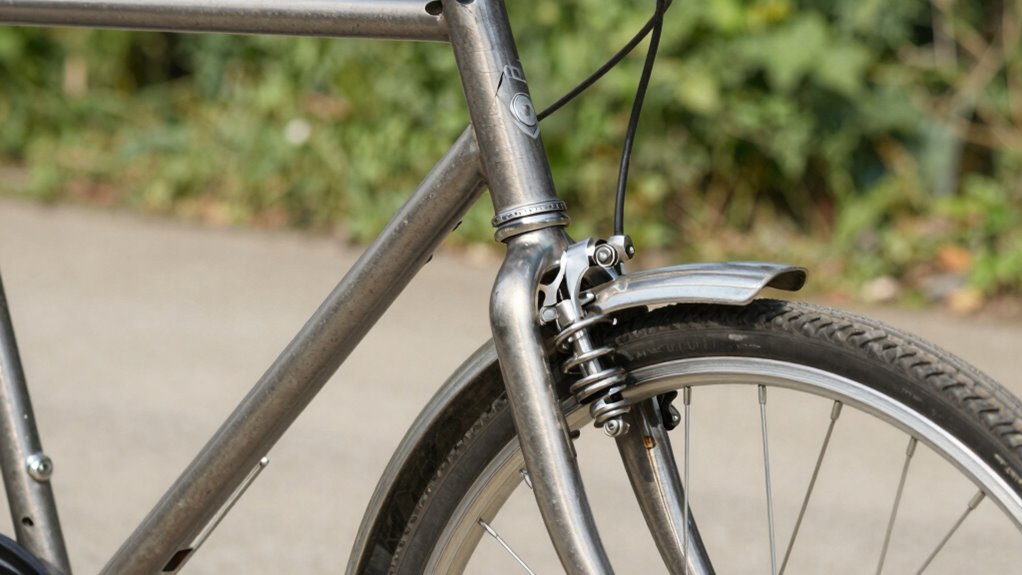
When considering upgrading a vintage bike with a modern suspension fork, the first step is to carefully assess compatibility with your frame. Check the steerer tube diameter—most vintage bikes have 1-inch or 1 1/8-inch steerers, while newer forks often use 1 1/8-inch or tapered options. Measure your head tube’s internal diameter to guarantee a proper fit. Verify the fork’s axle type—quick-release or thru-axle—and confirm it matches your wheel hubs. Examine the brake mounting style; vintage frames typically use I.S. mounts, whereas newer forks favor post mounts. Finally, confirm the fork’s travel length and axle-to-crown measurement align with your frame’s geometry to avoid handling issues or frame damage. Compatibility is vital for a safe, functional upgrade. Additionally, understanding the high contrast ratios of modern suspension forks can be important for ensuring clear handling information in various riding conditions. Considering the suspension travel can also help optimize comfort and performance based on your riding style and terrain. Reviewing the mounting standards ensures that your components will be fully compatible and secure during rides. Being aware of the warranty considerations associated with modern forks can help you make informed decisions and avoid potential issues. Furthermore, inspecting the damper cartridge type can influence the overall performance and adjustability of your suspension upgrade.
Selecting the Right Suspension Type and Travel for Your Riding Style
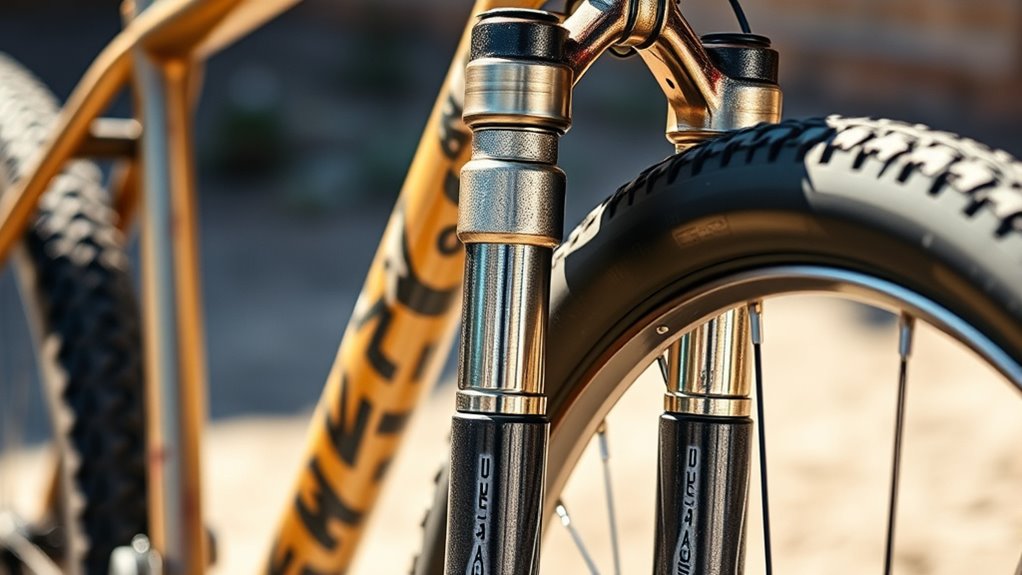
Choosing the right suspension type and travel length is essential to tailoring your bike’s performance to your riding style. If you prefer XC riding, opt for a lightweight air fork with 100-120mm of travel for efficiency and responsiveness. For trail riding or all-mountain adventures, consider a longer travel fork, around 130-160mm, to absorb rough terrain and improve control. Downhill or freeride riders need even more travel—sometimes upwards of 180mm—to handle extreme impacts. Your riding style also influences the suspension type; air forks are adjustable and versatile, making them suitable for most riders, while coil forks offer simpler setup and consistent performance for aggressive riding. Matching travel and suspension type guarantees ideal handling, comfort, and safety tailored to your specific terrain and riding goals. Understanding suspension travel and how it impacts ride quality can help you make more informed upgrades. Additionally, considering performance characteristics can further optimize your bike’s setup for your unique riding environment. Knowing how adjustability features work can also enhance your ability to fine-tune your suspension for different conditions, and staying informed about emerging technology advancements can lead to better long-term performance.
Understanding Brake Mounts and Compatibility When Upgrading
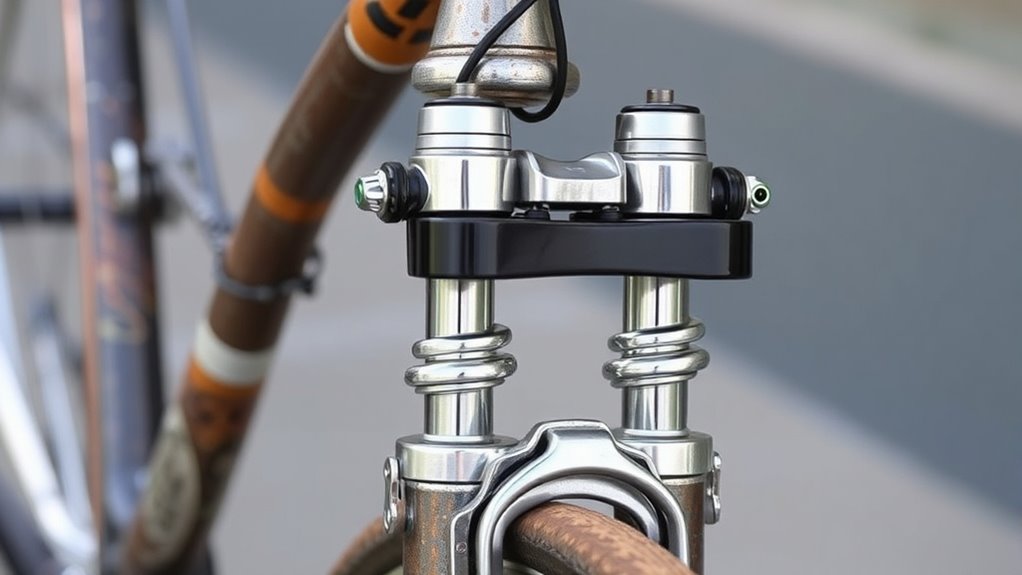
Understanding brake mounts and compatibility is essential when upgrading your vintage bike’s suspension or brakes. Your current setup may use I.S. (International Standard) mounts, common on older bikes, or brazed-on mounts specific to vintage frames. Modern forks often feature post mounts, which differ from older styles and require adapters. To guarantee proper fit and function, consider these key factors:
- Mount Type – Confirm if your frame supports I.S., post, or flat mounts.
- Rotor Compatibility – Match rotor sizes with mount types and caliper clearance.
- Axle Standards – Check if your hubs and forks use quick-release or thru-axles for proper alignment.
- Frame Material – Be aware that steel or aluminum frames respond differently to modifications, affecting compatibility and safety.
Additionally, understanding the Youngster Choice can help you make informed decisions about bike upgrades, ensuring both safety and performance. Matching these elements guarantees safe, effective braking performance with your upgraded suspension.
Navigating Technical Challenges in Upgrading Vintage Suspension Systems

Upgrading vintage suspension systems often presents compatibility and fitment challenges that require careful assessment. You’ll need to make certain components like steerer tubes, axle standards, and brake mounts align with your frame’s specifications. Addressing these technical hurdles early helps prevent costly modifications and ensures your upgrade performs safely and effectively.
Compatibility and Fitment
Matching the compatibility and fitment of vintage suspension systems can be complex, especially given the wide range of frame designs and standards from different eras. You need to contemplate several factors:
- Steerer tube diameter and length to match your frame’s head tube, avoiding damage or improper fit. Steerer tube compatibility is crucial for ensuring smooth steering performance and safety. A careful assessment of component standards helps ensure proper integration with modern parts.
- Axle standards—quick-release versus thru-axle—ensuring your wheels align securely.
- Brake mount compatibility—international standard (I.S.) or post mount—to support your existing or upgraded brakes.
- Travel length and geometry—matching your frame’s intended handling and clearance to prevent handling issues or frame stress. Proper understanding of these dimensions helps optimize ride quality.
- Compatibility issues can arise if you do not carefully measure and understand these elements, leading to costly mistakes and compromised performance.
Careful measurement and understanding of these elements help prevent costly mistakes, ensuring your suspension upgrade fits correctly and performs reliably.
Component and Frame Compatibility
Managing the technical challenges of component and frame compatibility is essential when upgrading vintage suspension systems. You need to verify new parts fit and function safely with your bike’s existing frame. Compatibility issues often involve steerer tube diameter, axle standards, brake mounts, and frame geometry. For example, modern forks often use different I.S. or post mounts, requiring adapters. Frame material influences how much modification is possible without damage. Here’s a quick overview:
| Aspect | Vintage Setup | Modern Compatibility |
|---|---|---|
| Steerer Tube | 1” or 1 1/8” | 1 1/8”, tapered, or thru-axle compatible |
| Brake Mounts | Brazed-on cantilever mounts | Post mount or I.S. standards |
| Axle Type | Quick-release or bolt-on | Thru-axle, boost spacing |
| Frame Material | Steel, aluminum, titanium, carbon | Varies; affects modification options |
Additionally, understanding frame geometry is crucial, as alterations can impact handling and safety. Proper assessment of frame compatibility ensures safe integration of modern components with vintage frames.
Proper Setup and Tuning for Optimal Suspension Performance
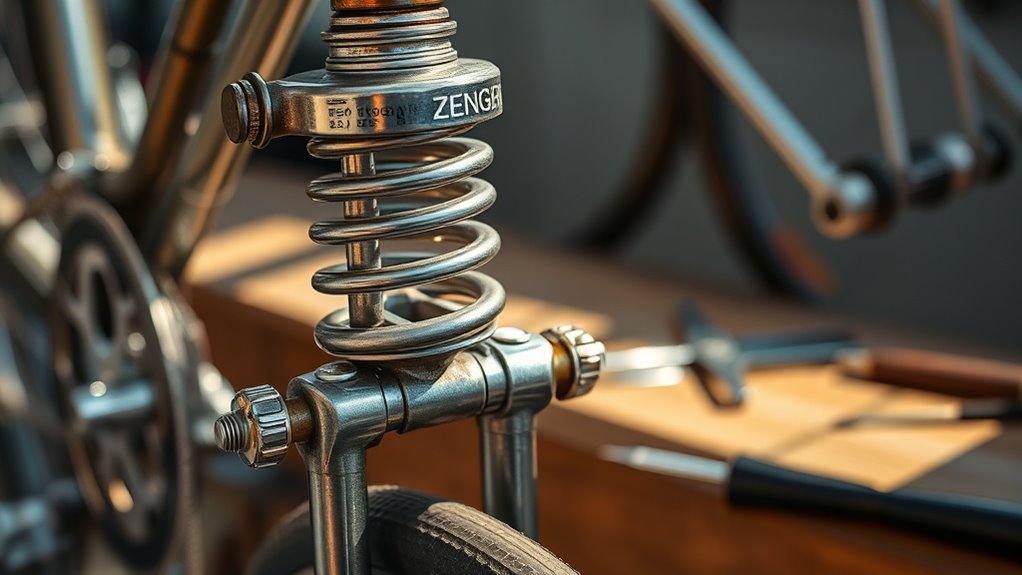
Achieving ideal suspension performance starts with proper setup and tuning, which guarantees your bike responds predictably and comfortably across different terrains. To get this right:
- Adjust air pressure or spring rate based on your weight to ensure proper sag.
- Set damping controls—compression and rebound—to match terrain and riding style.
- Test and refine your settings by riding, paying attention to how the suspension reacts to bumps.
- Keep a record of your adjustments to track what works best for specific conditions.
- Regularly maintain suspension components to ensure optimal performance and longevity.
Benefits of Modern Suspension Components on Classic Bikes
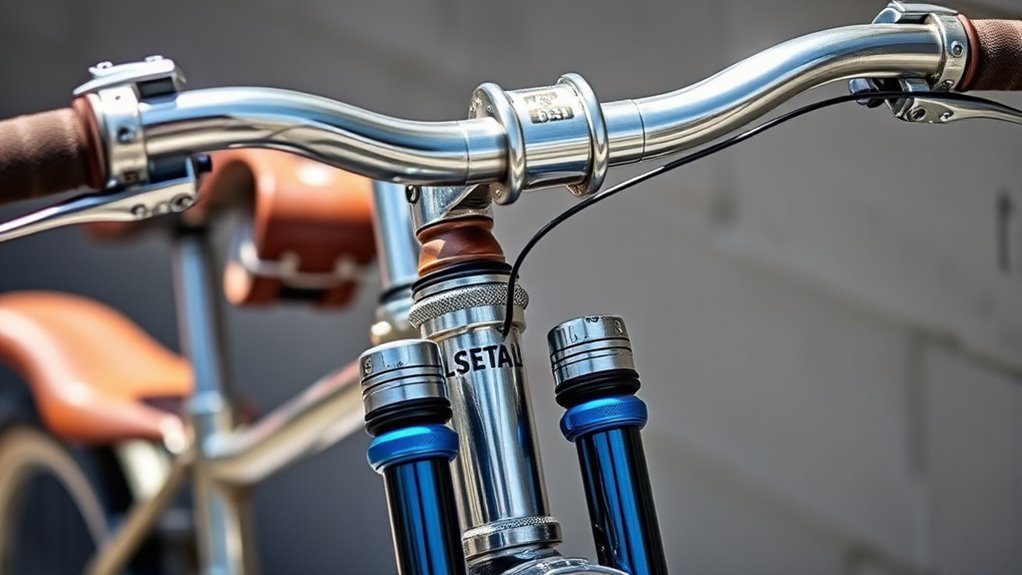
Upgrading to modern suspension components can make your vintage bike feel more comfortable and responsive on rough terrain. You’ll notice smoother handling and better stability, even on challenging trails. These improvements help you ride longer and more confidently, no matter the conditions. Additionally, selecting the right upgrade components can extend the lifespan of your bike’s suspension system, ensuring reliable performance over time. Incorporating safe installation practices can also prevent potential issues and maximize your upgrade’s effectiveness. Using vintage bike upgrades can also enhance the overall aesthetic and value of your classic bicycle, especially when choosing appropriate suspension parts tailored to your bike’s specifications. Integrating connected fitness technology into your maintenance routine can help monitor suspension performance and identify issues early, ensuring your bike stays in optimal condition.
Enhanced Ride Comfort
Modern suspension components can dramatically improve ride comfort on vintage bikes by absorbing shocks and smoothing out rough terrain. This means less jarring impacts and a more enjoyable ride. To maximize comfort, consider these key benefits:
- Enhanced Shock Absorption: Modern forks reduce vibrations from uneven surfaces, protecting your hands and arms. Vetted – wave and wind technologies contribute to more effective shock mitigation. Effective shock mitigation is often achieved through advanced damping systems that control suspension movement more precisely. Additionally, the use of glycolic acid in skincare exemplifies how modern materials improve performance and durability.
- Adjustable Settings: Air forks allow you to fine-tune firmness based on terrain and rider weight, providing a tailored feel.
- Increased Control: Smoother suspension helps maintain traction, making your ride more stable and confident.
- Reduced Fatigue: Better shock absorption minimizes rider fatigue, allowing longer, more comfortable rides.
- Material Science Advances: Modern suspension components benefit from material science advancements, leading to lighter, more durable, and more responsive parts.
Improved Handling Stability
Installing a suspension fork on a vintage bike can considerably improve handling stability by providing better control on rough and uneven terrain. Modern forks absorb shocks more effectively, reducing vibrations that can throw you off balance. With features like adjustable rebound and compression, you can fine-tune your bike’s response, ensuring it remains predictable and responsive. This enhanced stability means you can navigate rocky trails or root-filled paths with confidence, maintaining better steering precision. Upgraded suspension components also help keep tires in contact with the ground, improving traction and reducing the risk of slips or washouts. Additionally, bike maintenance becomes easier with modern suspension systems, as they often include features that facilitate regular upkeep. Overall, modern suspension forks make your vintage bike more predictable, stable, and capable of handling challenging terrain, transforming your riding experience.
Future-Proofing Your Vintage Build With Updated Standards

To guarantee your vintage bike remains relevant and performs reliably over time, adopting updated standards is essential. This ensures compatibility, safety, and improved performance. Consider these key points:
- Use modern disc brake mounts (post mount standards) for easier upgrades and better stopping power.
- Opt for thru-axles instead of quick-release skewers to boost wheel stiffness and security.
- Match fork travel and axle types with your frame’s geometry to prevent handling issues.
- Select wheel sizes (26″, 27.5″, 29″) compatible with current suspension forks for ideal performance.
Frequently Asked Questions
Can Vintage Frames Handle Modern Suspension Travel Safely?
Vintage frames can handle modern suspension travel, but you must check compatibility first. Confirm the frame’s head tube and geometry support the fork’s travel and axle standards. Be cautious with frame material, as some may not withstand the stresses of increased travel, risking damage. You might need adapters or custom modifications to fit the new suspension properly. Always consult a professional for safe installation and to prevent frame damage.
Are There Retrofit Kits for Disc Brakes on Older Frames?
Yes, you can find retrofit kits for disc brakes on older frames. These kits typically include adapters, calipers, and rotors designed to fit vintage braze-on mounts or post mounts. You’ll need to check your frame’s brake mounts and verify compatibility with the kit. Keep in mind, some modifications or custom mounts might be necessary, especially if your frame wasn’t originally designed for disc brakes.
How Does Suspension Upgrade Affect Bike Handling and Ride Quality?
Swapping out your vintage suspension actually transforms your bike’s handling, usually for the better—unless you’re nostalgic for that rigid, bump-jarring ride. Modern forks add plushness, better control, and adjustability, making every trail feel smoother. But beware: this upgrade can alter your bike’s original character and handling quirks. Still, if comfort and traction matter more than vintage charm, you’ll find that modern suspension turns rough rides into surprisingly fun adventures.
What Are Common Issues When Re-Spacing Vintage Wheel Hubs?
When you’re re-spacing vintage wheel hubs, you might encounter issues like weakened spokes or compromised wheel integrity if not done correctly. Misaligned hubs can cause uneven braking and handling problems. You could also risk damaging the rim or axle if the process isn’t precise. To avoid these issues, make sure to use proper tools, follow correct re-dishing techniques, and consider professional assistance for accurate re-spoking and tensioning.
Is It Worth Upgrading to Modern Standards on Very Old Bikes?
Yes, upgrading to modern standards on very old bikes is often worth it. It improves compatibility with newer components, boosts performance, and enhances safety. You get better brake options, easier maintenance, and more reliable hubs and axles. While it might require some modifications, the benefits of smoother rides, improved handling, and future-proofing your bike make the effort worthwhile. Plus, it keeps your vintage bike relevant in today’s cycling world.
Conclusion
Upgrading your vintage bike’s suspension is like giving it a new heartbeat—blending classic charm with modern comfort. By carefully choosing compatible components and tuning them right, you revive the spirit of your ride, much like a phoenix rising from the ashes. Embrace the journey of transformation, knowing you’re crafting a ride that honors the past while embracing the future. Your vintage bike’s rebirth awaits—ride it like never before.