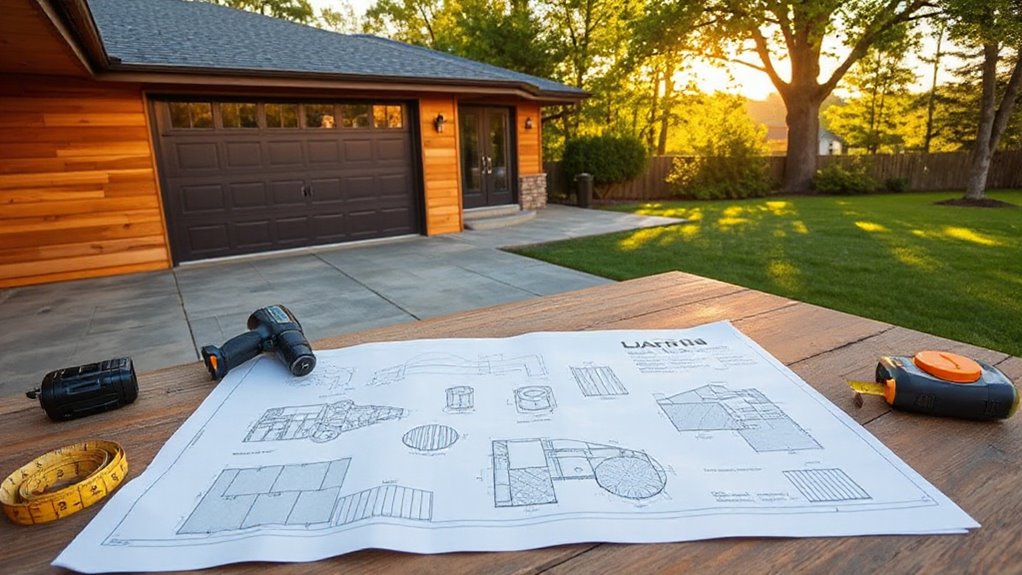

To successfully plan and execute a custom garage build in your backyard, start with detailed designs that match your aesthetic and storage needs. Gather essential tools like drills, saws, and levels, and prioritize safety by wearing gear and following instructions. Prepare the site thoroughly with proper foundation work, then assemble the structure carefully, focusing on secure joints and connections. Keep safety and precision in mind, and you’ll create a durable garage that complements your home. Explore more to guarantee your project’s success.
Listen free for 30 days with Audible
Thousands of audiobooks and originals — cancel anytime.
As an affiliate, we earn on qualifying purchases.
Key Takeaways
- Develop detailed plans including dimensions, door placement, and storage options to ensure a functional and aesthetic garage design.
- Prepare the site by clearing, leveling, and laying a solid foundation for structural stability and durability.
- Gather essential tools, focusing on safety gear and proper equipment for efficient construction and secure assembly.
- Follow best practices for framing, joint integrity, and proper fastener use to ensure a sturdy and long-lasting build.
- Prioritize safety throughout the project, adhering to manufacturer instructions and maintaining a clean, hazard-free workspace.

Creating a backyard custom build gives you the opportunity to transform your outdoor space into a functional and personalized retreat. When planning a garage-built custom, you’re taking on a project that’s both rewarding and demanding. To start, you need to gather the right DIY tools, which are essential for guaranteeing your work is efficient and precise. Basic hand tools like hammers, screwdrivers, and wrenches are a must, but don’t forget power tools such as drills, saws, and possibly a nail gun to speed up the process. These tools will help you cut, assemble, and secure materials more effectively. Before you plunge into construction, it’s critical to understand safety precautions. Working with power tools and heavy materials poses risks, so wearing safety gear—like goggles, gloves, and ear protection—is non-negotiable. Always read the manufacturer’s instructions for each tool and follow safety guidelines to prevent accidents.
When you’re planning your build, consider how your garage will fit into your backyard aesthetic and meet your practical needs. Sketch out a detailed design, including dimensions, door placements, and storage options. This planning phase helps avoid costly mistakes and guarantees your custom garage complements your home. Once you have a clear plan, you can start preparing the site. Clear the area, level the ground, and lay a solid foundation. Using DIY tools like a level and measuring tape ensures that your foundation is precise, which is crucial for a sturdy structure. During construction, keep safety precautions front and center; secure ladders properly, handle tools with care, and avoid rushing through steps. If you’re unfamiliar with certain processes, don’t hesitate to seek advice or consult tutorials to guarantee proper techniques. Additionally, understanding the importance of project planning can significantly improve your overall build quality and efficiency.
As you assemble the garage frame, pay close attention to the integrity of each joint and connection. Use the appropriate fasteners and tools to make sure everything is secure. When installing walls and roofing, take your time and double-check measurements to prevent errors. Throughout the build, maintain a clean workspace to avoid tripping hazards and to keep your tools in good condition. Remember, safety precautions aren’t just about personal safety—they also protect your project’s quality. If you encounter any issues or feel unsure about a step, pause and research or ask for help. Your goal is to build a durable, attractive garage that adds value and convenience to your home. With proper planning, the right tools, and strict safety measures, you can successfully execute your backyard custom build and enjoy the satisfaction of creating something truly personalized.
As an affiliate, we earn on qualifying purchases.
Frequently Asked Questions
What Permits Are Required for a Garage-Built Custom?
You’ll need permits that comply with local zoning regulations and building codes before starting your garage build. Check with your city or county’s planning department to understand specific requirements, such as setbacks and size restrictions. Submit detailed plans for review, and guarantee your project meets safety standards. Securing these permits beforehand helps prevent fines or delays, making your garage build smooth and compliant with all legal standards.
How Long Does a Typical Backyard Garage Build Take?
A typical backyard garage build takes about 4 to 8 weeks. You’ll start with site prep and foundation work, then move to framing, garage insulation, and roofing options. Depending on your choices, the timeline can vary, especially if you select custom roofing or insulation materials. Be sure to account for any permit approvals or inspections, which might add a little extra time to your project.
What Are the Best Materials for Durability and Cost?
Think of your garage as a fortress—durability is key. For strength and cost-effectiveness, concrete blocks or insulated steel panels work best, resisting weather and wear. To add character, choose decorative finishes like textured paint or siding. Insulation options like foam or batt insulation keep your space comfy year-round. You get a sturdy, budget-conscious structure that looks great and stays functional, no matter what challenges come your way.
How Can I Ensure My Garage Design Complies With Local Codes?
To guarantee your garage design complies with local codes, start by checking zoning regulations and setback requirements at your city or county office. Review specific rules for garage size, placement, and height. Obtain necessary permits before construction. Consult with a building inspector or a professional architect to verify your plans meet all safety and zoning standards, avoiding costly modifications later. Staying informed helps you build confidently and legally.
What Budget Should I Allocate for a Custom Backyard Garage?
Your budget for a custom backyard garage can vary wildly, but planning for at least $20,000 is wise to cover quality materials like garage insulation and driveway paving. Expect costs to increase with size and features. To avoid surprises, get detailed quotes from contractors, factor in permits, and leave some wiggle room for unforeseen expenses. Remember, investing in proper insulation and durable paving boosts your garage’s longevity and value.
safety gear for DIY construction
As an affiliate, we earn on qualifying purchases.
As an affiliate, we earn on qualifying purchases.
Conclusion
Ultimately, building your own garage transforms a simple backyard into a personalized sanctuary. While the project demands patience and effort, it offers a sense of pride and independence that’s hard to match. Just as a sturdy garage protects your tools, your dedication shields your vision from doubt. In blending craftsmanship with creativity, you create more than a structure—you craft a space that reflects your spirit, turning everyday building into an extraordinary achievement.
As an affiliate, we earn on qualifying purchases.
As an affiliate, we earn on qualifying purchases.
Flea & tick season Picks
flea and tick prevention
As an affiliate, we earn on qualifying purchases.