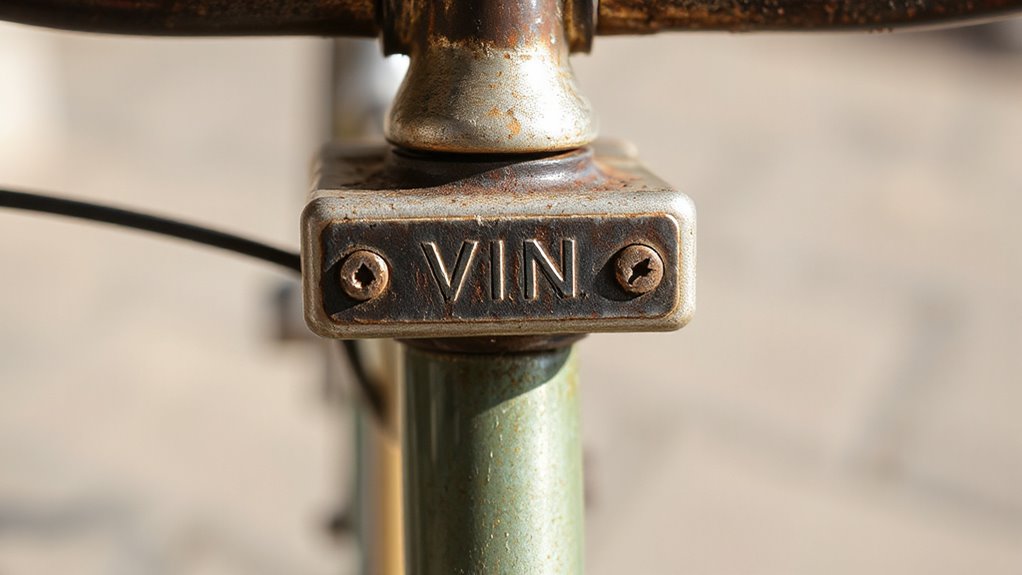

Before buying a vintage bike, checking its VIN is vital to determine if it’s stolen or has a questionable history. Locate the VIN on the frame and compare it carefully with the seller’s documents. Run a background check through official databases or law enforcement resources to uncover theft reports, liens, or accidents. This step helps you avoid legal issues and guarantees you’re making a safe, informed purchase—there’s more to contemplate, so keep exploring.

Get business pricing on garage and car supplies
- Business-only prices and quantity discounts
- Tax-exempt purchasing
- Multiple users, one account, clear invoices
Key Takeaways
- Verify the VIN on the bike matches official documentation and check for signs of tampering or damage.
- Run the VIN through official databases or law enforcement resources to uncover theft reports.
- Compare the VIN location and format with manufacturer specifications to ensure authenticity.
- Check for discrepancies that may indicate the bike is stolen or misrepresented.
- Conduct comprehensive background checks for liens, accidents, or previous thefts to confirm the bike’s legality.
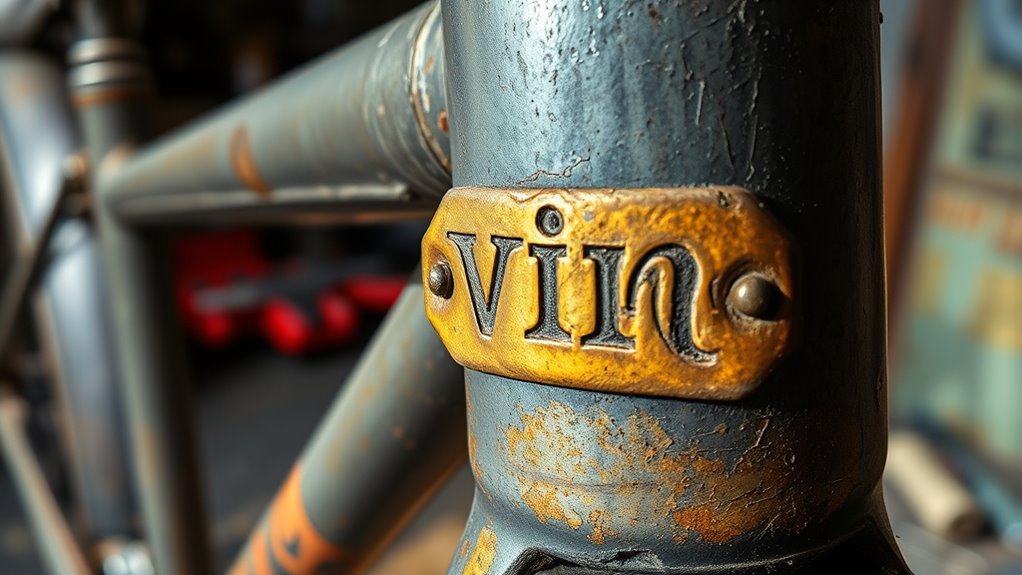
When you’re inspecting a vintage bike, checking its Vehicle Identification Number (VIN) is an essential step to verify its authenticity and history. This number acts as the bike’s digital fingerprint, revealing details about its origin, previous owners, and whether it’s reported stolen. Before you get too caught up in the excitement of a potential purchase, take the time to locate and scrutinize the VIN carefully. It’s usually found on the frame, near the steering head, on the engine, or sometimes under the seat. Once you find it, compare it with the documentation provided by the seller. Any discrepancies could indicate a problem, such as a stolen bike or a misrepresented history.
Verifying the VIN isn’t just about avoiding legal trouble—it’s also essential for making smart restoration tips. Knowing the bike’s true background helps you decide what parts and techniques will be appropriate for restoration. For example, if the bike has a storied history or rare factory features, you might want to preserve original components rather than replacing them with aftermarket parts. Furthermore, understanding the bike’s history can guide you in sourcing authentic parts, which can greatly increase the bike’s value once restored.
Additionally, a thorough VIN check can reveal information about the projected lifespan and durability of the bike, helping you plan for future maintenance and restoration efforts. Insurance considerations are another key reason to check the VIN thoroughly. When you go to insure the bike, the insurance company will use the VIN to verify its identity, history, and whether it’s been reported stolen. If the VIN shows a theft report or inconsistent data, you might face higher premiums or even difficulty getting coverage. Conversely, a clean history can make it easier and more affordable to insure the bike. Some insurance providers also offer specialized policies for vintage bikes, which often require detailed VIN checks to determine coverage options and premiums.
In addition to checking the VIN itself, it’s wise to run a detailed background check through official databases or law enforcement resources. Doing so can uncover hidden issues, such as previous thefts, accidents, or liens. This step ensures you’re not inheriting someone else’s legal headaches and helps you negotiate a fair price. Remember, a thorough VIN check is fundamental in protecting your investment—both financially and emotionally—when buying a vintage bike.
Ultimately, taking the time to verify the VIN before you buy isn’t just about avoiding theft; it’s about making an informed decision. Properly inspecting the VIN supports smart restoration tips, helps you understand the bike’s value, and ensures smoother insurance processes. It’s a small step that can save you from big problems down the road, so don’t skip it. Approach it with thoroughness and patience, and you’ll be well on your way to owning a genuine, well-documented vintage bike.
As an affiliate, we earn on qualifying purchases.
Frequently Asked Questions
How Do I Decode a VINtage Bike’s VIN?
To decode a vintage bike’s VIN, start by locating the VIN, usually on the head tube or frame. Use online vin decoding tools or vintage bike registries to interpret the code. These resources reveal details like the manufacturing date, model, and original specifications, helping you understand the vintage bike’s history. Proper vin decoding guarantees you get accurate information about the bike’s background before making a purchase.
Can a Stolen Bike’s VIN Be Altered or Removed?
Think of a stolen bike’s VIN like a secret code; it can be tampered with or removed, much like a master forger erasing a signature. VIN tampering involves altering or removing the VIN to hide bike registration history or theft. To safeguard yourself, always verify the VIN against official records and look for signs of tampering. If suspicious, consult professionals to ensure the bike’s true history before making a purchase.
What Should I Do if the VIN Is Missing or Unreadable?
If the VIN is missing or unreadable, you should consider vin replacement options carefully. Contact local authorities or a trusted mechanic for guidance, as tampering with or replacing a VIN can have legal considerations. Always verify the bike’s history through official records before proceeding. Avoid purchasing until you confirm its legitimacy, ensuring you’re not unknowingly buying a stolen or altered vehicle.
Are There Specific Signs Indicating a VIN Has Been Tampered With?
Imagine peeling back layers of paint on a vintage bike; signs of alteration reveal themselves like cracks in old glass. Watch for uneven surfaces, mismatched rivets, or scratched-off areas—these are telltale signs of VIN tampering. If the VIN plate looks suspicious or altered, it’s a red flag for potential theft or fraud. Trust your instincts and investigate further before making that vintage bike yours.
How Reliable Are VIN Checks for VINtage Bikes?
Vin checks for vintage bikes are fairly reliable for authenticity verification, but they aren’t foolproof. You can access vin history reports to uncover previous ownership, theft records, and modifications. However, vintage bikes often lack detailed records, so use vin checks as a starting point. Always combine this with a thorough inspection and expert advice to guarantee the bike’s legitimacy and avoid potential issues.
bike VIN verification database subscription
As an affiliate, we earn on qualifying purchases.
As an affiliate, we earn on qualifying purchases.
Conclusion
Before you buy that vintage bike, always check its VIN—think of it as the bike’s fingerprint. I once helped a friend avoid a stolen classic, and catching the red flags early saved him from losing hundreds. Just like you wouldn’t buy a house without a title, don’t ride off on a vintage bike without verifying its history. A quick VIN check keeps your ride safe and your wallet happy—so don’t skip this essential step!
As an affiliate, we earn on qualifying purchases.
As an affiliate, we earn on qualifying purchases.
Fall Picks
fall essentials
As an affiliate, we earn on qualifying purchases.