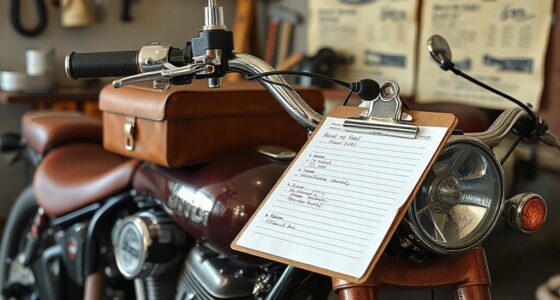

To export your motorcycle abroad, you need to navigate customs clearance, choose the best shipping method, and get proper insurance to protect your bike. Make sure you prepare the motorcycle by draining fuel, securing parts, and cleaning it for smoother inspection. Working with customs brokers and insurers can streamline the process and prevent delays or unexpected costs. For detailed tips on handling paperwork, shipping options, and avoiding pitfalls, explore the next steps carefully.
Key Takeaways
- Research and comply with the destination country’s import regulations, tariffs, and paperwork requirements.
- Choose a suitable shipping method, balancing cost, security, and insurance coverage.
- Properly prepare the motorcycle by draining fuel, securing parts, and cleaning for smooth customs clearance.
- Obtain comprehensive shipping insurance to protect against damage, theft, or loss during transit.
- Work with experienced customs brokers or freight forwarders to streamline documentation and ensure efficient clearance.
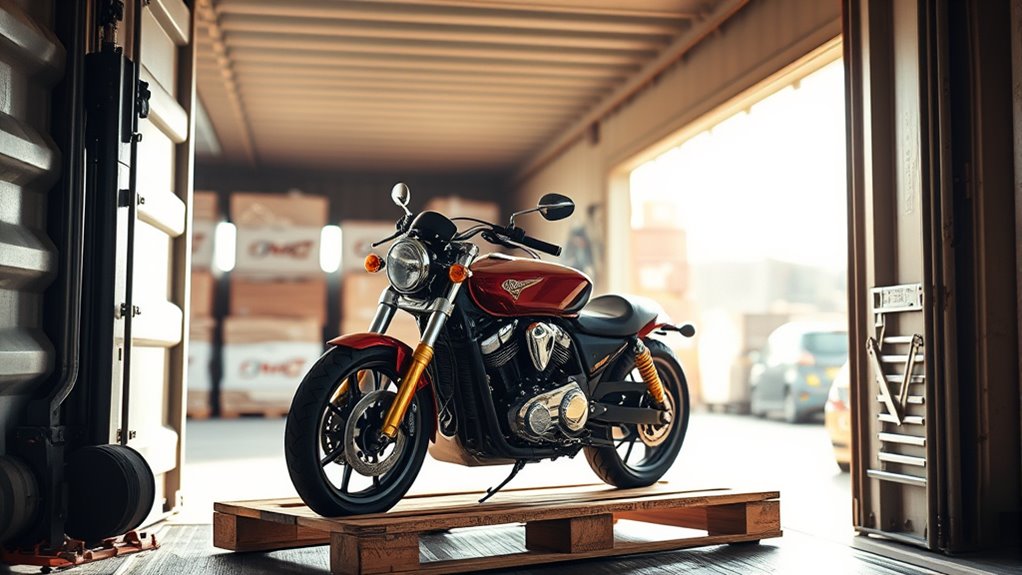
Thinking about exporting your motorcycle? You’re about to set out on an exciting journey that can open up new markets and opportunities. But before you get too far ahead, it’s essential to understand the key steps involved, especially when it comes to handling customs clearance and securing shipping insurance. These are critical for ensuring your bike arrives safely and without unnecessary delays or costs.
When exporting your motorcycle, customs clearance is one of the first hurdles you’ll face. Every country has its own regulations, import duties, and paperwork requirements. You need to prepare all necessary documents, such as the bill of sale, proof of ownership, and possibly an import permit. Working with a customs broker or an experienced freight forwarder can simplify this process. They’ll help you navigate the paperwork, ensure compliance with local laws, and avoid costly mistakes. Proper customs clearance not only speeds up the shipping process but also prevents your motorcycle from being held up at the border or subjected to unexpected tariffs.
Proper customs clearance speeds shipping and prevents delays or tariffs.
Shipping insurance is another essential aspect you shouldn’t overlook. When you ship your motorcycle overseas, it’s exposed to risks like damage, theft, or loss during transit. Insurance provides peace of mind by protecting your investment. You’ll want to choose extensive coverage that accounts for all potential risks, including accidents during loading and unloading, weather-related damage, or mishandling by carriers. While insurance adds to your shipping costs, it’s a small price to pay for the security it offers. Without it, you could be left covering repairs or replacement costs if something goes wrong.
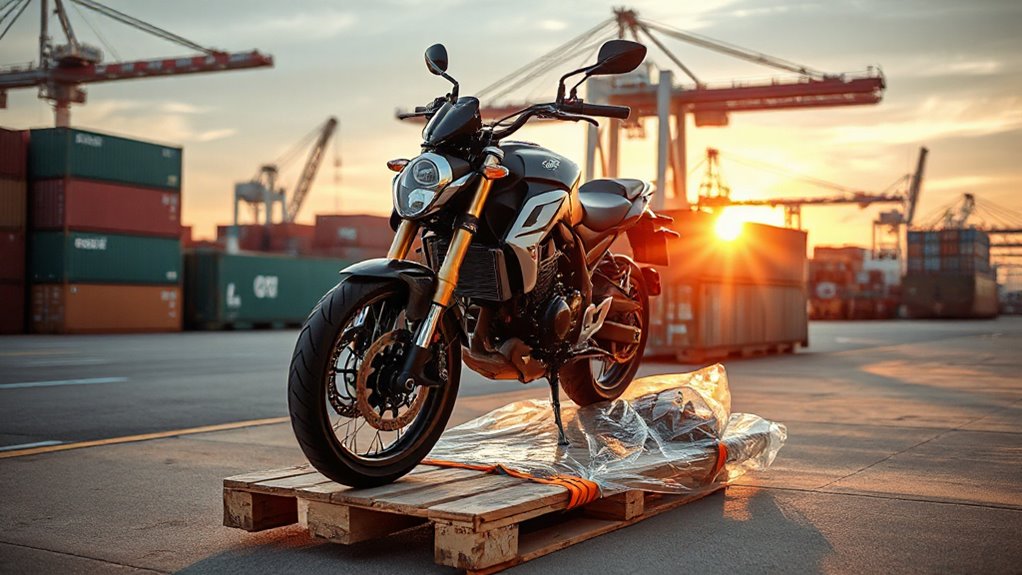
Additionally, selecting the right shipping method is important. Whether you opt for container shipping or roll-on/roll-off (RoRo), each has its pros and cons regarding cost, security, and convenience. Container shipping provides better protection for your motorcycle, especially if you add shipping insurance. RoRo can be more affordable but offers less protection during transit. Whichever method you choose, make sure your motorcycle is properly prepared for shipping—drained of fuel, secured, and cleaned—to prevent issues during customs inspection and to facilitate smooth clearance. Being aware of the high-quality projection technology options can also help if you plan to display or showcase your motorcycle during the process, ensuring it looks its best for potential buyers or exhibitions.

CANOPUS Car Registration and Insurance Holder, Car Document Holder, Vehicle Registration and Insurance Card Holder, Wallet for Auto, Trailer, Motorcycle, Truck, Vehicle Paperwork Organizer (2 Pack)
PROTECT YOUR DOCUMENTS: Car registration and insurance holder protects documents from wear and tear, takes up little space…
As an affiliate, we earn on qualifying purchases.
As an affiliate, we earn on qualifying purchases.
Frequently Asked Questions
What Are the Import Restrictions in Different Countries?
You need to check each country’s import restrictions, including customs tariffs and import quotas, before shipping your motorcycle. Some countries impose high tariffs or limit motorcycle imports through quotas, which can affect your costs and chances of approval. Make sure to research specific regulations, documentation requirements, and potential restrictions. Staying informed helps you navigate import rules smoothly, avoiding delays or extra charges when sending your motorcycle abroad.
How Do I Insure My Motorcycle for International Transport?
While it might seem intimidating, insuring your motorcycle for international transport is straightforward. You should explore insurance options that specifically cover shipping risks, offering peace of mind during transit. Focus on coverage considerations like damage, theft, and delays. Contact your insurer or a specialized shipping company to get a policy that suits your needs, ensuring your bike is protected every step of the way. This way, you safeguard your investment effortlessly.
What Documents Are Required for Customs Clearance?
You need to prepare a customs declaration and export documentation for customs clearance. The customs declaration details your motorcycle’s value, origin, and destination, while export documentation includes the bill of sale, title, registration, and any permits required. Make certain all documents are accurate and complete to avoid delays. Providing these documents promptly helps smooth the process and ensures your motorcycle clears customs without issues.
Are There Specific Packaging Requirements for Shipping?
You should use proper crating techniques and high-quality packaging materials to guarantee your motorcycle ships safely. Wrap delicate parts with foam or bubble wrap, and secure the bike firmly inside a sturdy crate that prevents movement. Use strong wood or metal crates, and reinforce corners and edges. Proper packaging minimizes damage risks and complies with shipping standards, giving you peace of mind during transit.
How Long Does the Entire Export Process Typically Take?
The entire export process usually takes between 2 to 6 weeks, depending on factors like customs procedures and shipping deadlines. Notably, customs procedures alone can add up to 2 weeks if paperwork isn’t prepared correctly. You can streamline your process by ensuring all documents are in order and understanding international shipping deadlines. This way, you avoid delays and get your motorcycle overseas faster.

Nilight – TL-35 12PCS Motorcycle RGB Led Light Kit Waterproof Multi-Color Atmosphere Lights Lamp with Dual RF Wireless Remote Controllers for Harley Davidson Honda Kawasaki Suzuki, 2 Years Warranty
multi-color mode: rgb 5050 smd with brightness & color adjustable function. it can create 16 static color combinations,…
As an affiliate, we earn on qualifying purchases.
As an affiliate, we earn on qualifying purchases.
Conclusion
Exporting your motorcycle can be a rewarding experience, but it’s essential to understand the process and regulations involved. Did you know that the global motorcycle export market is expected to grow by 5% annually? By staying informed and prepared, you can navigate international shipping or selling smoothly. Remember, proper documentation and choosing the right shipping method guarantee your bike arrives safely. Your adventure abroad starts with the right steps—happy riding and exporting!

Gas Bladder Tank Handheld – Portable Oil Container Bag For Cars, Foldable Gas Bladder For Motorcycle Handheld | Sealing Oil Transport Container For SUVs Cars Motorcycles
Advanced Leak-Proof Design: Engineered with leak-proof technology and multi-layered seals to maintain integrityaa during extended periods of storage,…
As an affiliate, we earn on qualifying purchases.
As an affiliate, we earn on qualifying purchases.
roll-on roll-off motorcycle shipping
As an affiliate, we earn on qualifying purchases.
As an affiliate, we earn on qualifying purchases.