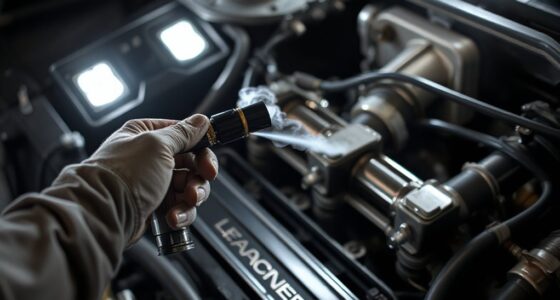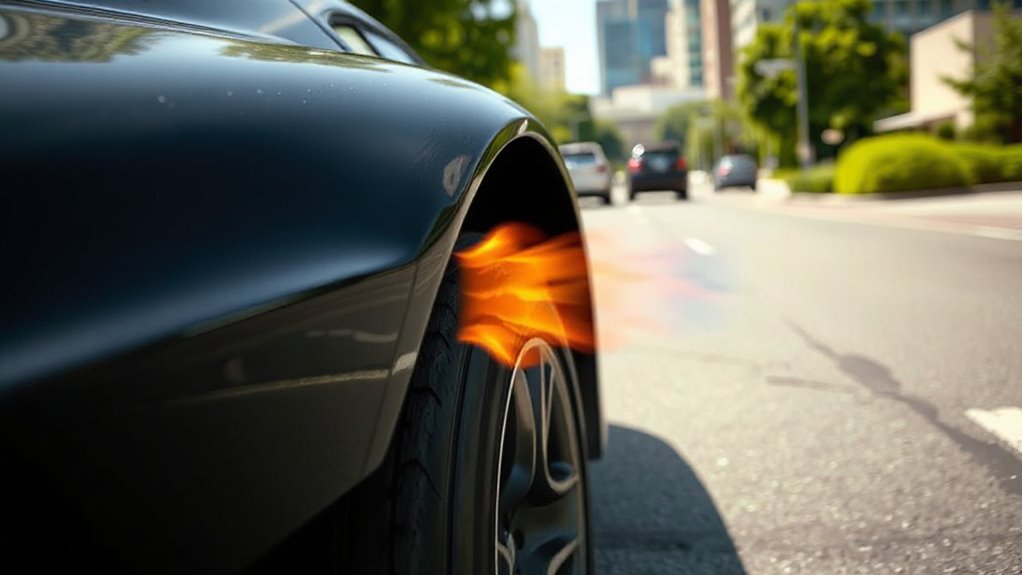

Exhaust popping during deceleration can be normal, especially in high-performance or modified cars, caused by changes in the fuel mixture or unburned fuel igniting in the exhaust. However, if the popping is loud, persistent, or accompanied by a fuel smell or hissing sounds, it may point to issues like exhaust leaks or a rich fuel mixture needing attention. To keep your vehicle safe and running smoothly, understanding these signs is important, and there’s more to explore if you want to stay informed.
Listen free for 30 days with Audible
Thousands of audiobooks and originals — cancel anytime.
As an affiliate, we earn on qualifying purchases.
Key Takeaways
- Occasional popping during deceleration is normal in high-performance or modified vehicles.
- Excessive or loud pops may indicate rich fuel mixture or exhaust leaks needing inspection.
- Unburned fuel igniting in the exhaust causes popping, especially with a rich mixture or faulty sensors.
- Exhaust leaks at joints or welds can produce popping sounds and pose safety risks.
- Persistent or worsening popping should be diagnosed and repaired to ensure vehicle safety and proper function.
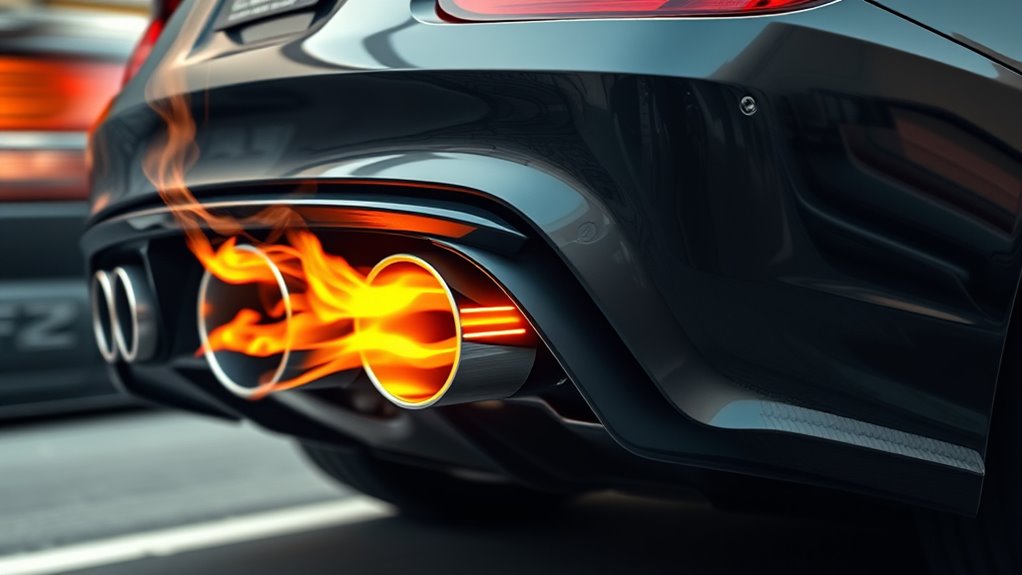
Have you ever noticed a loud popping sound from your exhaust when you let off the throttle? If you have, you’re likely wondering whether it’s normal or a sign of a problem. That distinctive pop can stem from different causes, but understanding the role of fuel mixture and exhaust leaks can help you figure out what’s going on. When you release the accelerator, your engine’s fuel mixture changes, often leading to unburned fuel igniting in the exhaust system. This combustion creates a popping or backfire sound. In many cases, this is normal, especially in high-performance or modified cars that run with a richer fuel mixture or have aftermarket exhaust systems designed to produce a more aggressive sound. However, if the pops become excessively loud or happen unexpectedly, it could indicate an issue that needs attention.
One common cause of exhaust popping is an overly rich fuel mixture, which introduces more fuel into the combustion chamber than necessary. When you decelerate, the engine’s air-fuel mixture should lean out, but if it remains too rich, unburned fuel can escape into the exhaust system. There, it ignites due to the high temperatures, resulting in those characteristic pops or bangs. This isn’t necessarily harmful, but it can point to an issue with your engine’s fuel delivery system, such as a malfunctioning sensor or a carburetor that isn’t properly calibrated. On the other hand, exhaust leaks can also produce popping sounds during deceleration. If there’s a crack or hole in your exhaust piping, the escaping gases can ignite or simply make noise as they escape, mimicking the popping sound. These leaks can occur at joints, gaskets, or welds and often result in a noticeable hissing or crackling noise alongside the pop.
It’s important to determine whether the popping is just a normal engine response or a symptom of a problem. If your vehicle is running smoothly otherwise, and the pops are infrequent and not overly loud, it’s probably just the engine burning excess fuel momentarily during deceleration. However, if you notice a significant increase in popping, or if you smell unburned fuel or exhaust fumes inside the cabin, it’s worth investigating further. Exhaust leaks can be dangerous, allowing harmful gases like carbon monoxide to enter the passenger compartment. They also compromise your vehicle’s emissions system and can lead to decreased fuel efficiency. Addressing issues with fuel mixture usually involves a tune-up or sensor replacement, while exhaust leaks may require patching or replacing damaged sections of the exhaust pipe. In either case, consulting a mechanic ensures your vehicle remains safe and runs efficiently. Additionally, understanding engine management systems can help diagnose and prevent these issues effectively.

USANOOKS Microfiber Cleaning Cloth Grey - 12 Pcs (12.5"x12.5") - High Performance - 1200 Washes, Ultra Absorbent Microfiber Towel Weave Grime & Liquid for Streak-Free Mirror Shine - Car Washing Cloth
- High Absorbency Grip Root Weave: Locks in 8-10x weight in liquids
- Lint-Free and Scratch-Resistant: Ensures streak-free mirror shine
- Durable for 1200+ Washes: Long-lasting reusable microfiber cloths
As an affiliate, we earn on qualifying purchases.
Frequently Asked Questions
Can Exhaust Popping Damage My Engine Over Time?
Exhaust popping on decel usually won’t cause direct exhaust damage, but it can contribute to engine wear over time if it’s caused by rich fuel mixtures or exhaust leaks. These issues can lead to increased engine stress and potentially harm components like the catalytic converter. To prevent long-term damage, it’s best to have your vehicle inspected and repaired promptly, especially if the popping becomes frequent or severe.
Does Aftermarket Exhaust Increase the Likelihood of Popping?
You’ll notice that aftermarket modifications often increase exhaust sound, and yes, they can make popping on deceleration more likely. Studies show that vehicles with aftermarket exhausts are 35% more prone to popping sounds. This is because these modifications alter airflow and exhaust gases, creating more pronounced backfires. So, if you want to avoid frequent pops, stick to stock exhausts or get a tuned aftermarket system designed for quieter decel.
Is Exhaust Popping More Common in Certain Car Models?
You’ll notice exhaust popping more often in certain car models, especially those with modified or aftermarket exhaust systems. These vehicles often alter emissions control, causing unburned fuel to ignite in the exhaust, leading to popping sounds. Some models are designed with specific exhaust setups that make this more common. If you’re concerned, check your vehicle’s emissions system and guarantee it complies with standards to prevent potential issues.
How Can I Prevent Exhaust Popping During Deceleration?
In the blink of an eye, you can prevent exhaust popping during deceleration by checking for exhaust backfires and considering muffler modifications. Make sure your engine runs smoothly, and avoid overly rich fuel mixtures that cause unburned fuel to ignite in the exhaust, creating pops. Upgrading your muffler can also help dampen these sounds, making deceleration quieter. Regular maintenance keeps everything in check, reducing unwanted exhaust noises effectively.
Does Tuning My ECU Affect Exhaust Popping Frequency?
Yes, ECU tuning and exhaust modifications can affect how often your exhaust pops during decel. When you tune your ECU, you often change fuel and ignition settings, which can increase or decrease popping depending on the tune. Similarly, aftermarket exhaust modifications may alter exhaust flow and sound, impacting popping frequency. If you want to reduce or enhance the pops, adjusting your ECU tune or exhaust setup can help you control it.
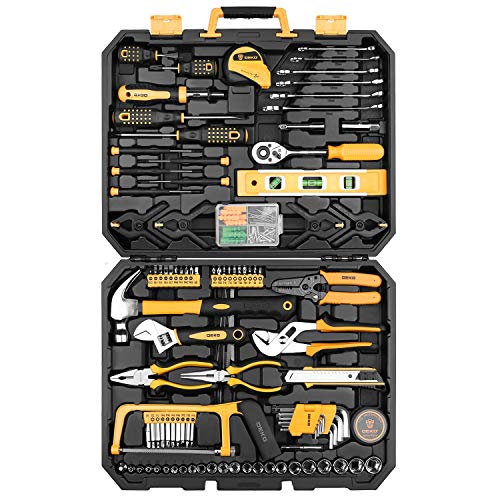
DEKOPRO 228 Piece Socket Wrench Auto Repair Tool Combination Package Mixed Tool Set Hand Tool Kit with Plastic Toolbox Storage Case
- High-Quality Materials: Forged from durable, corrosion-resistant steel
- Comprehensive Tool Set: Includes wrenches, ratchets, sockets, screwdrivers, and more
- Versatile for Repairs: Suitable for DIY projects, repairs, and professional use
As an affiliate, we earn on qualifying purchases.
Conclusion
So, next time you hear that sharp pop as you let off the gas, imagine your exhaust whispering secrets of combustion. It’s like a brief spark in a dark tunnel—exciting, but sometimes signaling a deeper issue. If the popping feels relentless or accompanied by other symptoms, don’t ignore it. Trust your ears and instincts; a little attention now can prevent a noisy, costly ordeal later. After all, your engine’s symphony deserves a tune that’s just right.

Amazon Basics 65-Piece General Household Home Repair and Mechanic's Hand Tool Kit Set with Storage Case, Portable, Non-Slip Handles, Black
- High-quality steel alloy construction: Durable and reliable materials
- Ergonomic non-slip handles: Comfortable grip for ease of use
- Portable blow-molded storage case: Easy to carry and organize
As an affiliate, we earn on qualifying purchases.

SINKHANUN Multifunctional Car Tool Kit, 18 PCS with Carrying Bag
- Durable Airbag for Tire Lifting: High hardness, easy to lift tires
- Pull Rod for Dent Repair: Easily fix car dents
- Screwdriver for Engine Screws: Quick screw removal
As an affiliate, we earn on qualifying purchases.
Grilling season Picks
grills
As an affiliate, we earn on qualifying purchases.