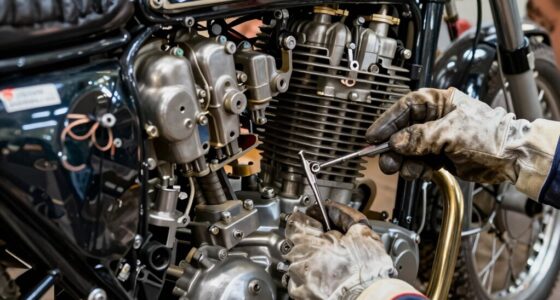
To stop corrosion before it ruins your build, start with proper surface preparation by cleaning and removing rust. Apply protective coatings like paints or sealants that form a barrier against moisture and chemicals. Control the environment by reducing humidity and ensuring proper ventilation. Regularly inspect and maintain coatings, repairing any damage promptly. For harsh conditions, consider using corrosion-resistant alloys or specialized protective layers. Keep these strategies in mind, and you’ll discover even more ways to safeguard your project from deterioration.

Get business pricing on garage and car supplies
- Business-only prices and quantity discounts
- Tax-exempt purchasing
- Multiple users, one account, clear invoices
Key Takeaways
- Apply appropriate protective coatings and ensure proper surface preparation for optimal adhesion.
- Control environmental factors like humidity and temperature to minimize moisture exposure.
- Conduct regular inspections to detect early signs of corrosion and address damage promptly.
- Use corrosion-resistant materials or alloys in high-risk or harsh environments.
- Implement environmental controls and shielding to reduce exposure to corrosive elements.
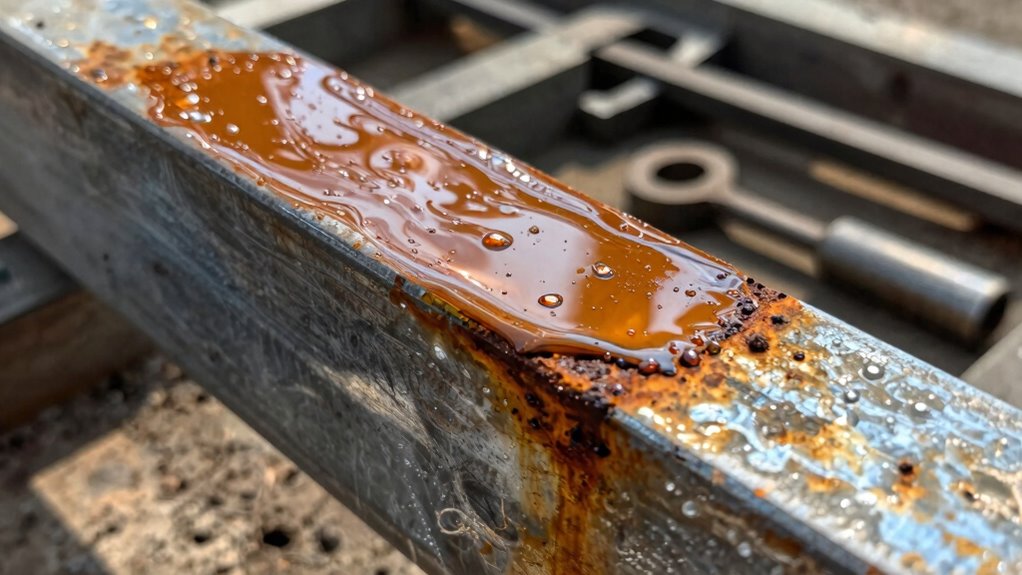
Corrosion can quickly damage metal surfaces if left unchecked, but stopping it is straightforward with the right approach. One of the most effective methods involves applying protective coatings that form a barrier between the metal and corrosive elements like moisture, oxygen, and chemicals. These coatings, such as paints, primers, or specialized sealants, prevent direct contact and considerably slow down the oxidation process. When you choose the right protective coatings, make sure they are suitable for your environment and the specific metal you’re working with. Proper surface preparation before applying these coatings is essential; clean the metal thoroughly to remove dirt, grease, or rust, ensuring the coating adheres well and provides maximum protection. Additionally, selecting appropriate protective coatings tailored for your specific environment can significantly enhance durability and resistance against corrosion.
Applying suitable protective coatings and preparing surfaces properly are key to preventing metal corrosion effectively.
Environmental control also plays an essential role in preventing corrosion. By managing the conditions around your metal surfaces, you reduce the likelihood of rust formation. For instance, controlling humidity levels in storage areas or using dehumidifiers can lower moisture exposure, which is a primary driver of corrosion. If your environment has high humidity or is prone to condensation, consider installing ventilation or dehumidification systems. Additionally, controlling temperature fluctuations helps prevent condensation that accelerates corrosion. Keeping metals dry and at stable temperatures minimizes the risk greatly.
You should also consider implementing regular maintenance routines. Inspection allows you to catch early signs of corrosion, such as discoloration or pitting, before they become major issues. Promptly cleaning and reapplying protective coatings in affected areas can extend the lifespan of your metal components. If you notice any damage to existing coatings, repair or recoat those sections immediately to maintain an effective barrier against corrosive elements.
In environments where exposure to salt, chemicals, or other aggressive substances is high, additional measures are necessary. Using corrosion-resistant alloys or applying specialized protective coatings designed for harsh environments can provide extra security. Furthermore, employing environmental control strategies like shielding or enclosures can further reduce exposure to damaging elements.
Ultimately, preventing corrosion involves a combination of protective coatings, environmental management, and regular upkeep. You have the tools and knowledge to safeguard your structures, ensuring they stay functional and durable over time. By proactively controlling environmental factors and maintaining protective barriers, you prevent corrosion from taking hold and causing costly damage. Staying vigilant and taking timely action keeps your investments protected and your projects running smoothly.
corrosion resistant paint for metal
As an affiliate, we earn on qualifying purchases.
As an affiliate, we earn on qualifying purchases.
Frequently Asked Questions
What Are the Most Common Materials Prone to Corrosion?
You should be aware that metals like iron, steel, aluminum, and copper are most prone to corrosion. To protect these, you can use surface coatings and proper material selection to inhibit rust and deterioration. Regular maintenance and choosing corrosion-resistant alloys help extend their lifespan. By applying effective surface coatings and selecting materials wisely, you prevent corrosion from compromising your build’s integrity and guarantee long-lasting durability.
How Does Humidity Influence Corrosion Rates?
Humidity effects markedly influence corrosion rates, as higher moisture levels accelerate the process. When humidity rises, it creates an environment conducive to rust and other forms of corrosion, especially on metals like steel and iron. You’ll notice corrosion acceleration in humid conditions because moisture acts as an electrolyte, facilitating chemical reactions that weaken the material. To protect your build, control humidity levels and guarantee proper sealing to minimize corrosion risks.
Can Corrosion Be Completely Prevented or Only Slowed Down?
Corrosion can’t be completely prevented, only slowed down, and the battle is ongoing. You can deploy environmental barriers and protective coatings to substantially reduce its progress. But keep in mind, no method is foolproof—corrosion always has a chance to breakthrough over time. Stay vigilant, regularly inspect, and update your defenses. The true challenge lies in maintaining these barriers, because once corrosion gains ground, stopping it becomes increasingly difficult.
Are There Eco-Friendly Corrosion Prevention Methods?
Yes, eco-friendly corrosion prevention methods exist. You can use biodegradable coatings that form a protective barrier without harming the environment. Natural inhibitors, derived from plants or other organic sources, also help prevent corrosion naturally. These methods are safer for you and the planet, reducing chemical waste and toxicity. Incorporating biodegradable coatings and natural inhibitors into your maintenance routine is an effective way to protect your build sustainably.
How Often Should Corrosion Inspections Be Performed?
Did you know that corrosion costs industries over $2.5 trillion annually? You should perform corrosion detection inspections at least once a year for critical structures, but more frequent inspections—every six months—are recommended in harsh environments. Regular inspection frequency helps catch corrosion early, preventing costly damage. Stay proactive by adjusting your inspection schedule based on environmental conditions and the age of your equipment to guarantee long-term durability.
As an affiliate, we earn on qualifying purchases.
Conclusion
To keep corrosion at bay, stay proactive with regular inspections and proper maintenance. Some believe applying protective coatings or galvanization creates an invincible barrier, but truthfully, no method is foolproof. Instead, combining these techniques with environmental control can markedly delay rust. Remember, preventing corrosion isn’t just about short-term fixes—it’s about understanding how moisture and exposure cause damage over time. Stay vigilant, and you’ll preserve your build’s integrity far longer.
As an affiliate, we earn on qualifying purchases.
protective coatings for metal surfaces
As an affiliate, we earn on qualifying purchases.
As an affiliate, we earn on qualifying purchases.
Halloween Picks
halloween
As an affiliate, we earn on qualifying purchases.