Before buying a vintage two-stroke street bike, you should consider the difficulty of finding original parts and expect possible custom fabrication, which can increase costs and turnaround time. Be aware that maintenance costs are ongoing, involving tune-ups, carburetor cleaning, and sourcing rare parts from specialty suppliers or salvage yards. Make sure you assess the bike’s condition thoroughly and understand that older models may be less reliable. If you’re prepared for these challenges, you’ll be better equipped for a successful purchase; explore further to uncover essential tips.
Key Takeaways
- Assess the availability and potential costs of sourcing original or compatible replacement parts.
- Be prepared for higher maintenance needs, including frequent tune-ups and carburetor cleaning.
- Understand that vintage two-strokes may be less reliable and require mechanical expertise or professional help.
- Research common issues specific to the model through online forums and vintage bike communities.
- Evaluate restoration scope, costs, and time, especially for engine, electrical, and frame components.
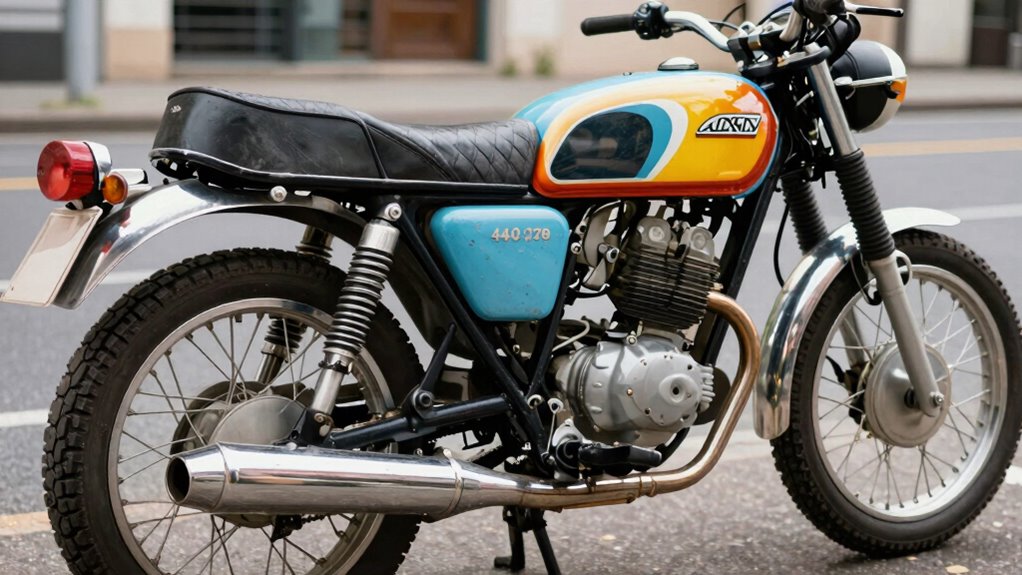
If you’re considering purchasing a vintage two-stroke street bike, there are key factors you need to keep in mind to make a smart investment. These bikes are known for their distinctive sound and performance, but they also come with unique challenges that can catch even seasoned enthusiasts off guard. One of the first things to consider is the restoration challenges associated with vintage models. Older bikes often have parts that are difficult to find or may require custom fabrication, which can drive up both the cost and the time needed for restoration. You’ll want to evaluate the bike’s overall condition carefully, paying close attention to the engine, frame, and electrical components. Restoring a vintage two-stroke can be rewarding, but it’s essential to understand the scope of work involved before making a purchase.
Vintage two-stroke bikes pose restoration challenges, with hard-to-find parts and costly, time-consuming repairs.
Another critical aspect is understanding the maintenance costs associated with these bikes. Two-stroke engines, while simple and lightweight, often demand more frequent upkeep compared to modern four-stroke counterparts. Expect to spend on regular tune-ups, carburetor cleaning, and replacing wear parts like piston rings or seals. Some models may also require specialized knowledge or tools to service properly, which can add to your expenses. It’s wise to factor in these ongoing costs when budgeting for your purchase. Additionally, because vintage bikes are often no longer in production, finding replacement parts can be a challenge and may involve sourcing from specialty suppliers or salvage yards, further increasing maintenance costs. Being aware of the parts sourcing process can help you better plan for potential delays or expenses. Moreover, understanding vintage bike maintenance routines can help prevent costly repairs down the line.
You should also consider your experience level and whether you’re comfortable working on older machinery. If you’re a beginner, the maintenance and restoration challenges might be overwhelming without professional help. Conversely, if you have mechanical skills or access to a knowledgeable mechanic, owning a vintage two-stroke can be more manageable and even enjoyable. Also, keep in mind that these bikes can sometimes be less reliable than modern bikes, especially if they haven’t been properly maintained or restored. This means you should be prepared for occasional breakdowns or issues that might require immediate attention.
Finally, research is essential before making a purchase. Join online forums or local clubs dedicated to vintage bikes to gather firsthand insights and advice. Learn about common issues specific to the model you’re interested in and ask experienced owners about their maintenance routines and restoration experiences. By doing your homework, you’ll be better equipped to evaluate whether a particular vintage two-stroke is a worthwhile investment and can enjoy the riding experience without unnecessary surprises.
vintage two-stroke motorcycle carburetor rebuild kit
As an affiliate, we earn on qualifying purchases.
As an affiliate, we earn on qualifying purchases.
Frequently Asked Questions
How Do I Verify the Authenticity of Vintage Two-Stroke Parts?
You verify vintage two-stroke parts’ authenticity by inspecting markings, serial numbers, and logos for consistency with original specs. Use restoration tips like comparing parts to factory photos to spot reproductions. Check for signs of wear that match age, and consult expert forums or catalogs to distinguish original vs. reproduction parts. Authentic parts often have unique manufacturing marks, so confirming these details ensures you get genuine components for your vintage bike.
Are Vintage Two-Stroke Bikes Legal to Ride on Modern Streets?
Vintage two-stroke bikes can be legal to ride on modern streets if you guarantee they meet current emission regulations. During your vintage restoration, check local laws and obtain necessary inspections or modifications to reduce emissions. Some areas have restrictions on older two-strokes, so it’s essential to verify compliance. Staying informed about emission regulations helps you enjoy your vintage bike legally and responsibly on today’s roads.
What Are Common Electrical Issues in Vintage Two-Stroke Street Bikes?
You’ll often face electrical issues like faulty wiring, weak connections, or worn-out switches in vintage two-stroke street bikes. During electrical troubleshooting, check for corrosion, frayed wires, and blown fuses. Wiring modifications are common to improve reliability, but always make certain they’re done properly to avoid further problems. Regularly inspecting and maintaining your bike’s electrical system helps prevent issues and keeps your ride running smoothly on the street.
How Does Fuel Mixture Affect Vintage Two-Stroke Engine Performance?
They say, “You are what you eat,” and that’s true for your vintage two-stroke engine. The fuel ratio and mixture adjustments directly impact engine performance—too rich, and it stalls; too lean, and it overheats. Properly tuning the mixture guarantees smooth power, better acceleration, and longevity. Regularly check and adjust the fuel mixture to keep your bike running at its best, preserving its vintage charm and performance.
What Are the Best Storage Practices for Long-Term Preservation?
To preserve your vintage two-stroke street bike long-term, use proper storage techniques like cleaning it thoroughly, draining the fuel system, and disconnecting the battery. Keep it in a cool, dry place away from direct sunlight and humidity. Cover it with a breathable cloth to prevent dust buildup. Follow these preservation tips regularly to avoid rust and deterioration, ensuring your bike stays in top condition until you’re ready to ride again.
two-stroke motorcycle piston rings replacement
As an affiliate, we earn on qualifying purchases.
As an affiliate, we earn on qualifying purchases.
Conclusion
Imagine yourself cruising down an open road, the roar of a vintage two-stroke bike echoing through the air, memories of past adventures fueling your passion. Before you take that ride, remember to check its history, maintenance needs, and overall condition. With a little care and knowledge, you’ll not only own a piece of motorcycle history but also create new stories on every twist and turn. Embrace the journey — your vintage treasure awaits.
vintage motorcycle electrical parts
As an affiliate, we earn on qualifying purchases.
As an affiliate, we earn on qualifying purchases.
custom motorcycle parts fabrication tools
As an affiliate, we earn on qualifying purchases.
As an affiliate, we earn on qualifying purchases.