
TL;DR

Get business pricing on garage and car supplies
- Business-only prices and quantity discounts
- Tax-exempt purchasing
- Multiple users, one account, clear invoices
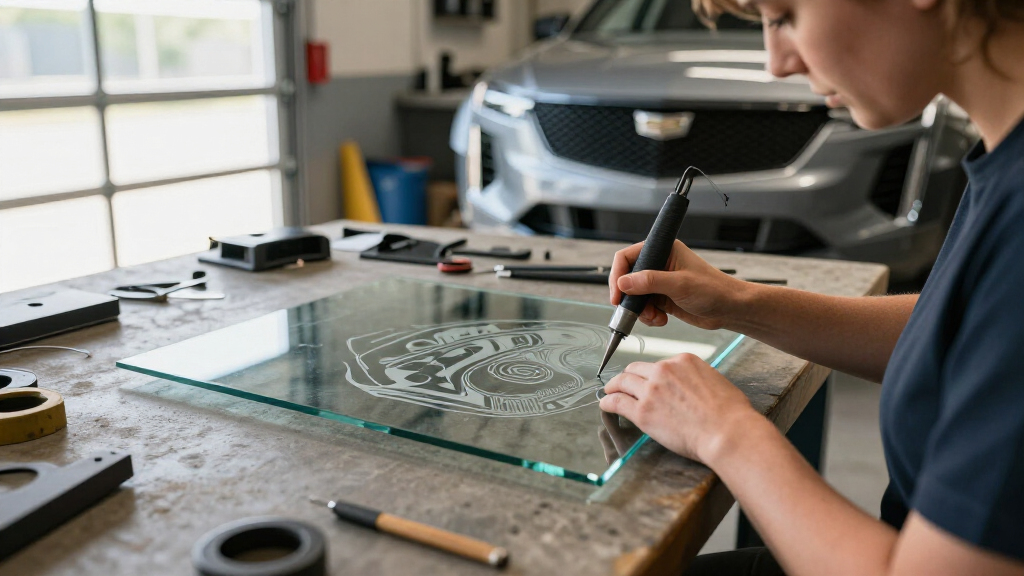
Cadillac chose to etch the Optiq display glass rather than applying a low-cost sticker, a decision that has sparked attention. The move raises questions about manufacturing costs and design priorities.
Cadillac has confirmed that it opted to etch the glass of its Optiq display instead of applying a simple $2 sticker, a decision that has drawn scrutiny over manufacturing costs and design priorities.
The decision to etch the glass of the Optiq display instead of using a low-cost sticker represents a significant shift in manufacturing approach. Sources familiar with the process indicate that this choice was deliberate, aiming to improve durability and aesthetic appeal, though it has raised questions about cost efficiency.
Manufacturers typically use stickers or decals to label or brand components at minimal cost, often costing just a few dollars per unit. In this case, Cadillac’s choice to etch the glass—an irreversible, more complex process—has been estimated to cost substantially more, with some industry insiders suggesting it could be hundreds of dollars per unit. The precise reason for this decision remains unclear, but it appears to be driven by branding or quality considerations rather than cost savings.
Cadillac has not publicly detailed the rationale behind this manufacturing choice, and representatives declined to comment on the specific costs involved. The move has nonetheless attracted industry attention, as it signals a willingness to prioritize aesthetic and branding elements over strict cost minimization in certain components.
Implications of Cadillac’s Manufacturing Choice
This decision highlights a broader industry trend where automakers balance cost, branding, and durability. The choice to etch glass instead of applying a sticker indicates a focus on long-term quality and visual appeal, which could influence manufacturing standards across the sector. However, it also raises concerns about increased production costs, potentially impacting vehicle pricing or profit margins.
For consumers, this may translate into higher vehicle prices or perceived value based on premium design features. For competitors, Cadillac’s approach could set a precedent for prioritizing aesthetic permanence over minimal costs, especially in high-end models.
Overall, this decision underscores ongoing debates within automotive manufacturing about the trade-offs between cost efficiency and brand image, especially as vehicles become more digitally integrated and visually complex.
Products Worth Considering

Chemical Guys 14-Piece Arsenal Builder Car Wash Kit with Foam Blaster

Chemical Guys 16-Piece Arsenal Builder Car Wash Kit with Foam Cannon & Bucket

Milwaukee 2697-22 M18 18-Volt Lithium-Ion Cordless Hammer Drill/Impact Driver XC Combo Kit (2-Tool)
As an affiliate, we earn on qualifying purchases.
Industry Trends in Manufacturing and Branding
Automakers routinely use stickers, decals, or etching techniques to label or brand vehicle components. Typically, these are low-cost, removable, or semi-permanent methods. The choice to etch glass is less common and usually reserved for high-end or luxury applications where durability and aesthetics are prioritized.
Recent discussions in the industry suggest that automakers are increasingly investing in premium finishes and branding elements, even if they come at higher costs. This trend aligns with a broader push toward differentiating products through design and quality, especially in the luxury segment.
The specific case of Cadillac’s Optiq display reflects this broader context, though the decision’s uniqueness and cost implications are still under scrutiny.
Unclear Motivations Behind Cadillac’s Decision
It is not yet confirmed why Cadillac opted for glass etching over a simple sticker. The official rationale remains undisclosed, and industry insiders are speculating about branding, durability, or aesthetic factors. The exact cost difference and whether this approach will be adopted broadly across models are still unknown.
Future Impact and Industry Response
Cadillac’s manufacturing choice may influence other automakers to reconsider their branding and labeling techniques. Industry analysts will likely monitor whether this approach becomes more widespread or remains a unique case. Additionally, further details about the cost impact and consumer reception are expected to emerge in upcoming reports or earnings calls.
Manufacturers may also evaluate whether the aesthetic and durability benefits justify the higher costs, potentially leading to new standards in vehicle branding and component finishing.
Key Questions
Why did Cadillac choose to etch the glass instead of using a sticker?
Cadillac has not publicly disclosed the specific reason, but industry sources suggest it was to enhance durability, aesthetic appeal, or branding permanence, despite higher costs.
How much more does etching the glass cost compared to a sticker?
While exact figures are not confirmed, estimates indicate that etching can cost hundreds of dollars per unit, significantly more than the roughly $2 cost of a sticker.
Will this manufacturing choice affect vehicle pricing?
It is possible that increased manufacturing costs could be passed on to consumers through higher vehicle prices, but official details have not been released.
Is this approach common in the automotive industry?
Etching glass is less common and typically reserved for high-end or luxury vehicles. Most automakers prefer stickers or decals for cost efficiency.
Could other brands adopt similar techniques?
Industry observers will watch whether Cadillac’s approach influences competitors, especially if the aesthetic or durability benefits are deemed valuable enough to justify the costs.
Source: rss