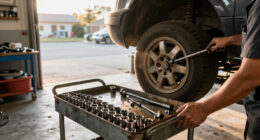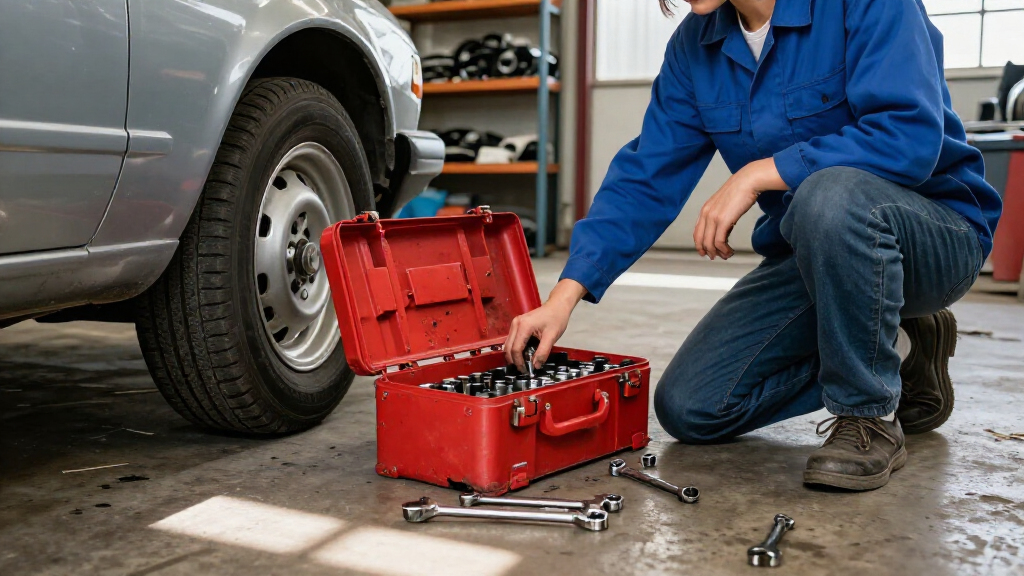
Choosing an automotive garage tool set comes down to whether you need broad hand-tool coverage or equipment for a narrower set of vehicle repairs. A general mechanic’s set typically centers on sockets, ratchets, wrenches and bits; an automotive specialty set adds tools aimed at tasks such as brake service, electrical checks or oil-filter removal. The distinction matters because a large piece count does not mean a kit can handle every repair. General sets suit owners building a useful garage foundation, while specialty sets make more sense when you already know which jobs you perform repeatedly. Product contents vary, so compare the inventory rather than relying on the label. A retailer’s buying guide likewise treats a general mechanics set as a starting point and specialty tools as additions for specific automotive work (Lowe’s automotive tool guide).

Get business pricing on garage and car supplies
- Business-only prices and quantity discounts
- Tax-exempt purchasing
- Multiple users, one account, clear invoices

Craftsman 262-Piece Mechanic Tool Set with 3-Drawer VERSASTACK Box
- ✔ Piece count: 262
- ✔ Measurement standard: SAE and metric
- ✔ Material: Alloy steel

VEVOR Mechanics Tool Set and Socket Set, 1/4" 3/8" 1/2" Drive, 450 PCS
- ✔ Piece count: 450
- ✔ Measurement standard: SAE and metric
- ✔ Drive sizes: 1/4 in, 3/8 in, 1/2 in

MECHMAX 161-Piece Mechanics Tool Set with SAE Metric Sockets
- ✔ Piece count: 161
- ✔ Measurement standard: SAE and metric
- ✔ Socket types: Deep and shallow
At a Glance
| Criteria | General mechanic’s tool set | Automotive specialty tool set | Winner |
|---|---|---|---|
| Core tool coverage | Sockets, ratchets, wrenches and bits for common fastening tasks | May include common hand tools, with space devoted to service-specific items | A |
| Repair specificity | Limited; typically few tools for dedicated service procedures | Designed around selected automotive jobs or systems | B |
| Vehicle compatibility | Useful across cars, household jobs and general mechanical work | Can be highly useful for targeted work, but coverage is narrower | Depends |
| Access and reach | Depends on included drive sizes, extensions and low-profile ratchets | Specialty shapes or tools may solve access problems on intended jobs | Depends |
| Organization and portability | Often a compact case; contents and fit vary | May use job-based trays or inserts; can take more dedicated space | A |
| Long-term value | Strong starting value if you need many basics | Worth the premium when its specific tools see regular use | Depends |
Craftsman 262-Piece Mechanic Tool Set with 3-Drawer VERSASTACK Box
For a garage set that needs to handle a wide range of routine work without losing sight of access and storage, Craftsman is our best overall pick. Its 262 pieces include SAE and metric sockets, ratchets, wrenches, and specialty bits, and its three-drawer case keeps those categories separated. That organization can save time when a job calls for switching between socket sizes or tool types.The most useful distinction from the VEVOR set is the ratchet design. Craftsman specifies 90-tooth ratchets with a 5-degree arc swing, which lets the handle move through a smaller angle before engaging. In cramped areas, that can make a fastener more workable when a full swing is blocked. The low-profile benefit applies to the 1/4- and 3/8-inch ratchets, however, so buyers should not assume every ratchet in the kit has the same clearance advantage.The case also gives Craftsman a practical edge over MECHMAX for buyers who already use VERSASTACK storage: it can nest with compatible pieces and its locking dial is designed for one-handed operation. The tradeoff is weight. At 27.5 pounds, it is much less convenient to carry than MECHMAX’s 10-pound kit, and it does not reach VEVOR’s 450-piece count. We would choose it for a stationary or occasionally moved garage setup where fine ratchet movement and modular organization matter more than the biggest assortment or lightest case.
Pros:
- 90-tooth ratchets allow a 5-degree arc swing for confined spaces.
- Includes SAE and metric sockets, wrenches, ratchets, and specialty bits.
- Three-drawer case has a one-handed locking dial and VERSASTACK compatibility.
- Full lifetime warranty is specified.
Cons:
- At 27.5 pounds, it is less portable than MECHMAX.
- Low-profile ratchet heads apply only to the 1/4- and 3/8-inch drives.
- Its 262-piece count is lower than VEVOR’s 450 pieces.
Best for: Home mechanics who want broad SAE and metric coverage, fine-arc ratchets, and storage that fits a VERSASTACK setup.
Not ideal for: Buyers who need the lightest roadside kit, want the largest stated piece count, or expect low-profile ratchets across every drive size.
Bottom line: Choose Craftsman for a well-rounded garage kit when tight-space ratcheting and stackable storage matter more than maximum piece count or low carry weight.
“Choose Craftsman for a well-rounded garage kit when tight-space ratcheting and stackable storage matter more than maximum piece count or low carry weight.”
VEVOR Mechanics Tool Set and Socket Set, 1/4" 3/8" 1/2" Drive, 450 PCS
VEVOR makes the most sense when breadth is the priority. Its 450-piece assortment is the largest here and spans 1/4-, 3/8-, and 1/2-inch drives, alongside SAE and metric sockets, wrenches, bits, and accessories. Compared with Craftsman’s 262 pieces and MECHMAX’s 161, that stated count suggests more tools to draw on across varied repair jobs. It does not, by itself, tell us which sizes are included, so we would check the itemized contents before relying on it for a specific vehicle or task.The three-drive range is a useful difference from MECHMAX, which lists only 1/4- and 3/8-inch ratchets. A 1/2-inch drive can give buyers another option for larger fasteners, while the smaller drives remain useful for less demanding or more confined work. VEVOR lists chrome-vanadium steel tools with a polished finish and a three-drawer PE-HD case. Its stated torque range is broad, but without a corresponding breakdown by tool, we would not use that figure alone to decide whether a particular fastener is within a tool’s intended use.There is a substantial portability cost: 40.4 pounds makes VEVOR the heaviest set in this comparison, nearly four times MECHMAX’s stated weight. The three drawers help organize a large kit, but the case is still a sizable load to carry from vehicle to vehicle. Compared with Craftsman, it gives up the specified fine 5-degree ratchet swing and VERSASTACK compatibility. We would pick it for a garage bench where a large assortment matters more than moving the kit often.
Pros:
- 450-piece assortment is the largest of the three sets.
- Includes 1/4-, 3/8-, and 1/2-inch drive sizes.
- SAE and metric sockets, wrenches, bits, and accessories are included.
- Chrome-vanadium steel tools are housed in a three-drawer case.
Cons:
- At 40.4 pounds, it is the heaviest and least portable option.
- The supplied details do not list individual socket sizes, so coverage should be checked.
- No fine-arc ratchet specification is provided for comparison with Craftsman.
Best for: Garage owners who want the broadest stated assortment and three drive sizes in one organized case.
Not ideal for: Roadside users, frequent movers, and buyers who value compact handling or a specified fine-arc ratchet.
Bottom line: Choose VEVOR when you want the largest stated assortment and three drive sizes for a mostly stationary garage setup.
“Choose VEVOR when you want the largest stated assortment and three drive sizes for a mostly stationary garage setup.”
MECHMAX 161-Piece Mechanics Tool Set with SAE Metric Sockets
MECHMAX is the easy-carry choice for buyers who expect to bring their tools to the vehicle or store them away after a job. At 10 pounds, it is far lighter than Craftsman’s 27.5-pound case and VEVOR’s 40.4-pound kit. Its 161 pieces include SAE and metric sockets in deep and shallow formats, plus quick-release 1/4- and 3/8-inch ratchets. That gives it a focused set of useful options without matching the breadth claimed by the larger two kits.The deep and shallow sockets are a practical point of comparison: they offer different reaches for fasteners and studs, helping make the selection more versatile for common automotive tasks. The two drive sizes also cover a useful range, but VEVOR adds a 1/2-inch drive and Craftsman specifies a finer 5-degree ratchet swing. Since MECHMAX does not provide a tooth count or arc-swing figure in the supplied details, buyers who regularly work in cramped engine bays may prefer Craftsman’s more explicit access specification.A chrome finish over alloy steel and a rugged blow-molded case suit a kit that may travel between a garage, driveway, or roadside repair. Still, portable does not mean small enough for every storage nook: the set is 16.93 inches long, and the product description itself calls it bulky. Its smaller piece count also means buyers should confirm socket sizes and any specialty tools they need before treating it as a primary all-purpose garage set. We rank it third for breadth, but first for people who value carrying comfort over an expansive inventory.
Pros:
- Lightest set in this comparison at 10 pounds.
- Includes both deep and shallow SAE and metric sockets.
- Dual 1/4- and 3/8-inch quick-release ratchets.
- Chrome-finished alloy steel tools come in a blow-molded case.
Cons:
- 161 pieces offer less stated breadth than Craftsman or VEVOR.
- No 1/2-inch drive is listed in the supplied specifications.
- At 16.93 inches long, the case may still be bulky for compact storage.
Best for: Drivers and DIY mechanics who need core SAE and metric socket coverage in a lighter case for garage, driveway, or roadside use.
Not ideal for: Buyers who want the widest selection, a 1/2-inch drive, or a stated fine-arc ratchet specification.
Bottom line: Pick MECHMAX when a lighter, moveable socket set matters more than maximum coverage or specialized ratchet access.
“Pick MECHMAX when a lighter, moveable socket set matters more than maximum coverage or specialized ratchet access.”
As an Amazon Associate we earn from qualifying purchases.
Key Differences
The general set’s advantage is breadth. A socket and wrench assortment can handle many routine fastening jobs, and the same tools may serve household repairs. That makes it a sensible first purchase for a garage with mixed needs. Its weakness is that it can leave a job unfinished when the repair calls for a purpose-built tool. A large assortment can still omit a brake tool, electrical tester or filter wrench.
The specialty set trades some general coverage for tools selected around automotive tasks. If those tasks match the work you actually do, the kit can save time and reduce improvised workarounds. If they do not, much of its value stays unused. Neither category guarantees compatibility with every make, model or procedure; check vehicle requirements and the exact contents before buying.
For many home garages, the practical path is to buy a sound general set, then add specialty tools as repair needs become clear. A dedicated specialty set is a better fit when a particular system or repeated job defines the work. The best value depends less on the printed piece count than on whether the included tools cover your likely repairs.
Detailed Comparison
Core tool coverage (General mechanic’s tool set wins — moderate)
Winner: A; moderate gap. General mechanic’s sets usually devote most of their contents to sockets, ratchets, wrenches and bits, so they cover a broad range of ordinary fastening work. A specialty set may include these basics, but its selection can be narrower or organized around a particular service task. In practice, choose A when you need a foundation for varied garage jobs. Check drive sizes and metric or SAE coverage before purchase; a high part count alone does not prove useful range. Many current mechanic sets, for example, list sockets and ratchets as their central contents (Craftsman set contents).
Repair specificity (Automotive specialty tool set wins — major)
Winner: B; major for targeted work. Specialty tools are designed to address a particular operation or system, which can make a difficult step more controlled than trying to substitute a general-purpose tool. A broad set is more versatile but may not include the tool a procedure calls for. For repeat brake, electrical or filter work, B can save time and frustration. For occasional, unrelated repairs, its specific tools may sit unused. Confirm that the kit matches the actual procedure and vehicle.
Vehicle compatibility (moderate difference)
Winner: Depends; moderate gap. A general set can be used across many vehicles when its sizes and drive formats match the fasteners at hand. A specialty set can be an exact match for one job, yet offer little help outside its intended applications. Neither category is automatically universal. Owners of newer or less common vehicles should check the manufacturer’s service information for required sizes and tools, then compare that list with the kit contents. This prevents buying a set that looks automotive but lacks a needed fit.
Access and reach (moderate difference)
Winner: Depends; moderate gap. General sets may include extensions, deep sockets, multiple drive sizes or a low-profile ratchet, which help reach recessed fasteners. Specialty sets may include a tool shaped for access in a particular automotive location. The winning kit is the one designed for the clearance problem you face. If your work is mostly routine fastening, broad extension and socket coverage is useful; if a repeated repair has an awkward access point, a purpose-shaped tool may matter more than another standard socket.
Organization and portability (General mechanic’s tool set wins — minor)
Winner: A for compact portability; minor gap. General sets often arrive in a single carrying case that keeps a starter assortment together. Specialty tools may be sold in job-specific trays or in a larger collection that needs dedicated storage. Packaging differs considerably, so inspect the case and how securely tools stay in place. A well-organized specialty kit can still be easier to manage than a crowded general set. For mobile or occasional work, favor a case you can carry and return tools to without mixing sizes.
Long-term value (major difference)
Winner: Depends; major gap when tools go unused. A general set can provide better value for a new garage because its core pieces apply to many tasks. A specialty set can justify a higher price when it replaces repeated tool borrowing, avoids unsuitable substitutes or supports work performed regularly. Paying more for a feature-rich kit is sensible only if its specific tools match jobs on your schedule. Compare the cost of the complete set with buying the needed specialty items separately, and account for duplicated sockets or accessories.
General mechanic’s tool set: Pros and Cons
Pros:
- Broad selection for common fastening tasks
- Useful beyond automotive work
- Practical first set for a home garage
Cons:
- May lack tools required for a specific repair
- Piece count can mask gaps in useful sizes
- Quality and case fit vary by product
Automotive specialty tool set: Pros and Cons
Pros:
- Tools target defined automotive service jobs
- Can improve access and control on intended repairs
- Useful when the same procedure comes up often
Cons:
- Narrower usefulness outside its target tasks
- May duplicate tools already owned
- Higher cost pays off only when the specialty items are used
Who Should Choose What
Choose General mechanic’s tool set if:
- You are building a first garage kit for varied routine repairs.
- You want sockets, ratchets and wrenches that can serve household jobs too.
- You are unsure which vehicle repairs you will take on and want a flexible base.
Choose Automotive specialty tool set if:
- You regularly perform a known service task that calls for dedicated tools.
- You have confirmed the kit covers the procedure and vehicle you work on.
- You already own core hand tools and want to fill a specific capability gap.
Skip both if: Skip a bundled set if you only need one missing tool, already own most of either kit, or cannot confirm that the contents meet the vehicle’s service requirements. Buy the exact tools your work calls for.
Value for Money
A general mechanic’s set is usually the better first purchase when you need a collection of basic tools: one kit can support many ordinary jobs, and its contents have broader use. The price premium for a specialty set is worthwhile when the included tools solve a recurring repair need that your basic kit cannot address. It is poor value when the job is rare, the kit duplicates tools you own, or its applications do not match your vehicle. Compare actual contents, warranty terms and the cost of buying only the needed specialty tools. For example, dedicated automotive quick-service kits can combine hand tools with application-specific items, but their value depends on using that mix (BoxoUSA quick-service set).
Final Verdict
For most people starting an automotive garage, choose a general mechanic’s tool set with useful metric coverage, practical socket sizes, more than one drive size and secure storage. It gives you a flexible base for routine repairs and other projects. Choose an automotive specialty set if you already know which repair you perform often and have confirmed that its tools match the vehicle and procedure. The deciding factor is whether you need broad everyday coverage or a solution to a specific recurring job. Pay more for specialty coverage only when it will see regular use; otherwise, buy the general set and add individual tools as needed.
Frequently Asked Questions
Is a general mechanic’s set enough for car repairs?
It can cover many routine fastening tasks, but it does not guarantee that you have every tool a repair requires. Check the service procedure and compare its tool list with the set’s inventory before starting.
Does a higher piece count mean a better automotive tool set?
No. Piece counts may include duplicate sizes, bits or small accessories. Compare drive sizes, socket ranges, wrench coverage and the tools needed for your own jobs. A smaller set with the right contents can be more useful than a larger one with gaps.
Should I buy a specialty set before I know what repairs I will do?
Usually not. Start with a general set if you need broad basic coverage, then buy specialty tools when a specific job calls for them. That keeps your spending tied to actual repair needs.
Is paying more for an automotive specialty set worth it?
It can be, when you perform the supported repair regularly and the kit includes the correct tools for your vehicle. For occasional work, compare the set’s price with buying or borrowing the few specialty tools required.