TL;DR

Get business pricing on garage and car supplies
- Business-only prices and quantity discounts
- Tax-exempt purchasing
- Multiple users, one account, clear invoices
An automotive garage tool set is a collection of hand tools, usually sockets, ratchets, extensions, and wrenches, for vehicle maintenance and repair. Choose by drive size, metric and SAE coverage, socket fit, storage, and replacement support—not headline piece count—and add a torque wrench and rated jack stands when your work calls for them.
A case marked “300 pieces” can still leave you reaching for the one socket your car needs. When you’re halfway through a battery replacement and the right size is missing, the number on the lid feels a lot less impressive.
An automotive garage tool set is a collection of hand tools for vehicle work, often built around sockets, ratchets, extensions, and wrenches. The right choice depends on your vehicle and the jobs you expect to tackle, whether that means checking a battery, changing spark plugs, or keeping an older car on the road.
This guide explains how to compare drive sizes, socket types, metric and SAE coverage, and the less flashy details that matter after the first use: fit, storage, warranties, and safety. You’ll also see where a starter kit ends and a specialty tool or certified mechanic should take over.
Choose drive sizes around your planned repairs: 1/4-inch for confined spaces, 3/8-inch for many general jobs, and 1/2-inch for larger, higher-torque fasteners.
Check the actual metric and SAE size ranges; most newer vehicles use metric fasteners, while older cars and some equipment may need SAE.
Use socket depth and point style to match the space and fastener: deep sockets reach recessed nuts, while six-point sockets grip securely.
Compare readable markings, smooth ratchets, secure storage, warranty terms, and replacement pieces instead of relying on the piece count.
Use rated jack stands on a stable surface, use a torque wrench when a specified final torque matters, and leave safety-critical repairs to a certified mechanic.
Know what a garage tool set can handle
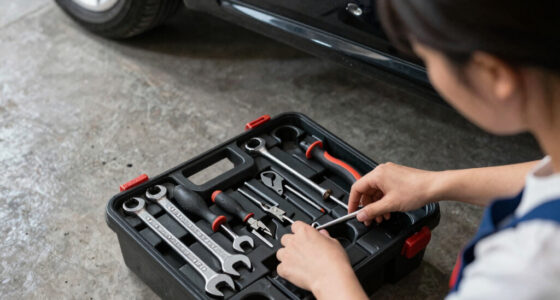
An automotive garage tool set is a collection of hand tools for common fastening jobs, usually including sockets, ratchets, and extensions. Larger kits may add wrenches, pliers, screwdrivers, hex and Torx bits, or spark-plug sockets. Those tools help with routine maintenance, but no general-purpose case covers every vehicle repair.
Think of the set as a well-stocked kitchen drawer: it makes everyday jobs easier, but it doesn’t contain every specialized tool a chef or mechanic might need. If you’re removing a battery clamp, a socket and ratchet may be enough. A diagnostic warning light, by contrast, may call for scan equipment and a procedure specific to your car. The distinction matters when you budget: a larger hand-tool kit can make familiar jobs more convenient, but it won’t necessarily help you identify an electrical fault or safely handle a component that needs a dedicated tool.
For example, a new owner doing oil checks and replacing a battery may get good use from a modest socket set. Someone restoring a 1970s vehicle may also need SAE sizes and specialty pullers, while newer vehicles commonly use metric fasteners. Before you buy, list three jobs you expect to do in the next year and check whether the set covers their fasteners. This turns an abstract feature list into a practical test: if none of the listed tools solves a likely job, that extra piece count has little value to you.
The piece count can mislead you because manufacturers may count each bit, adapter, and duplicate item. A set with fewer, clearly marked sockets that you can find quickly may serve you better than a crowded case with gaps in the sizes you need. The useful question is simple: can you identify the tool for the job you plan to do? A complete, usable range reduces interruptions and the temptation to force a near-fit socket, which can damage a fastener and make the repair harder.
Products Worth Considering

Milwaukee M18 FUEL Automotive Combo Kit, 1/2-Inch High-Torque and 3/8-Inch Impact Wrenches

DEWALT 20V MAX XR Cordless 1/2-Inch Impact Wrench Kit (DCF900P1)

Autel MaxiSYS MS906 MAX Automotive Diagnostic Scanner, 10.1-Inch
As an affiliate, we earn on qualifying purchases.
Match drive sizes to the jobs you plan to do
Drive size tells you which ratchet or wrench head fits the socket, and 1/4-inch, 3/8-inch, and 1/2-inch drives cover different scales of work. A 1/4-inch drive fits smaller fasteners and cramped spaces, 3/8-inch tools suit many general repairs, and 1/2-inch tools are intended for larger, higher-torque fasteners. A set that combines sizes gives you more flexibility than one drive alone.
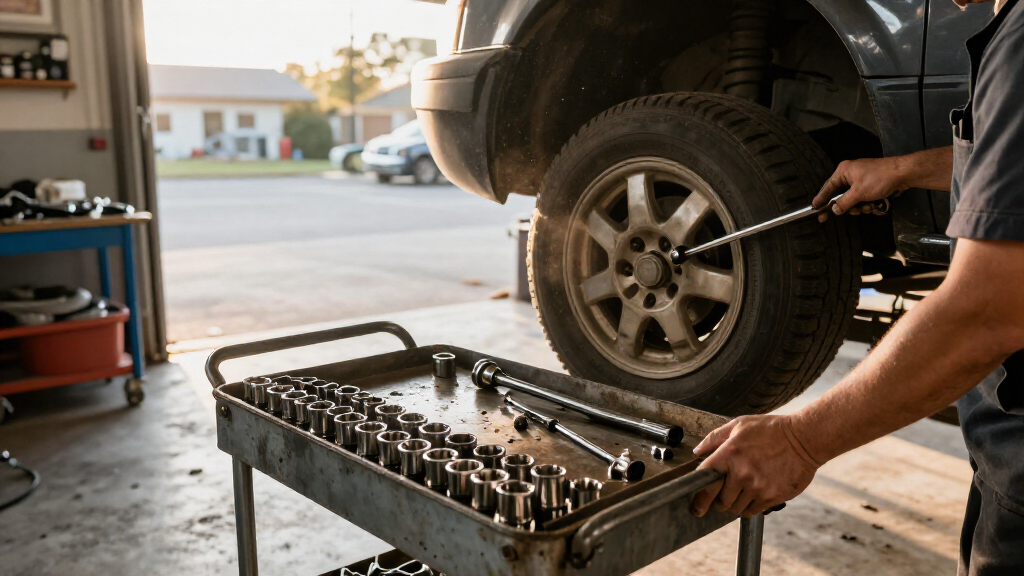
Imagine reaching behind an engine cover to loosen a small fastener: the compact 1/4-inch ratchet can move where a larger head cannot. For many everyday jobs, a 3/8-inch ratchet is the workhorse. When you face a large fastener, such as one associated with wheel service, a 1/2-inch drive may be more appropriate, though the correct procedure and tool depend on the vehicle and task. This is a tradeoff between access and leverage: a smaller ratchet fits tight clearances, while a larger drive handles loads that may strain smaller tools. Using the smallest tool that safely suits the job also gives you better control in confined spaces.
Here’s a quick comparison to guide your shopping:
| Drive size | Typical fit | What to check |
|---|---|---|
| 1/4 inch | Small fasteners and tight spaces | Does the kit include useful short and long extensions? |
| 3/8 inch | Many general maintenance jobs | Are the common socket sizes included? |
| 1/2 inch | Larger, higher-torque fasteners | Do you need a breaker bar or separate torque wrench? |
For a first kit, a combined 1/4-inch and 3/8-inch set can cover many basic jobs without filling your garage shelf. Add a 1/2-inch setup when your planned work calls for it. Owning every drive size from the start adds cost and storage, so it makes sense to buy for the jobs you can name and expand when a real gap appears. Don’t use a standard ratchet as a substitute for a torque wrench when the vehicle specifies a final torque value.
Check socket shapes, sizes, and fit before you buy
Socket coverage matters as much as drive size: you need the right size and shape to grip the fastener without slipping. Six-point sockets grip the flats of a fastener securely, while twelve-point sockets are easier to position when space limits how far you can turn the tool. Deep sockets reach recessed nuts; shallow sockets fit where clearance is tight. Those are useful tradeoffs because a socket that technically fits the size may still be too bulky to reach the fastener, or may not grip it well enough for the force needed.
Say you’re working on a nut tucked inside a narrow engine bay. A shallow socket may fit the opening, but a deep one may be needed if a stud extends past the nut. A twelve-point socket can give you more starting positions in a cramped spot, while a six-point socket is often the steadier choice when the fastener is stubborn or worn. If a fastener has rounded edges, prioritizing a secure six-point grip can reduce the chance of slipping and turning a straightforward removal into a more difficult repair.
Check whether the kit covers both metric and SAE sizes. Most newer vehicles use metric fasteners, but older cars and some equipment still use SAE measurements. If you maintain a family’s mix of vehicles, a set that lists both size ranges can save a frustrating trip to the store; don’t assume “full coverage” means both systems are included. Buying both systems can cost more and leave some sockets unused, so use the vehicles you actually maintain to decide whether that extra range is worth it.
Fit and visibility also deserve a hands-on check if you can inspect the set. Size markings should be easy to read under garage lighting, and the sockets should sit firmly on their fasteners. Chrome-vanadium steel is common in hand tools, but the material label alone doesn’t prove good fit or a durable reversing mechanism. A smooth ratchet with a dependable direction switch is more useful than impressive packaging. Clear markings also save time and help prevent choosing a close-but-wrong size, especially when you’re working in poor light or putting tools away between steps.
Use accessories to reach awkward fasteners
Accessories extend what a socket set can reach, so check the case for the pieces that match your planned work. Extensions reach fasteners set back from an opening, universal joints help when the tool and fastener aren’t aligned, and adapters let compatible drive sizes connect. These pieces can turn an awkward angle into a manageable job. They also add joints and length to the tool, which can make it harder to feel how much force you’re applying; when access allows, a direct fit gives better control.
For instance, a spark plug sits down inside many engines, where a regular socket may not reach. A spark-plug socket and extension can help you access it, but you still need to follow the vehicle’s service procedure and use the specified torque if one is given. An extension is a reach tool; it doesn’t make a regular ratchet a torque wrench. The right accessory helps you reach without dismantling extra parts, but choosing one that is too long or angled can make it harder to keep the socket aligned and avoid cross-threading during installation.
A breaker bar gives you more leverage for a stubborn fastener, but leverage can also damage a fastener or component if you force the wrong one. A ratchet is built for turning; it isn’t always designed to take the same load as a breaker bar. Likewise, cordless impact wrenches and electric ratchets can speed repetitive work, but they’re often sold separately from hand-tool sets and don’t provide reliable final torque control. More speed and force can save effort, but they leave less room to notice a fastener binding, so controlled hand pressure is often the better choice near delicate parts.
Before buying, confirm which accessories are actually included. Some listings show a breaker bar, extension, or universal joint in promotional photos even when the specific kit excludes it. A clear inventory can tell you more than a glossy picture, and verified owner feedback can help reveal whether the case holds the tools securely after repeated use. If a needed accessory is sold separately, compare that cost with a kit that includes it; the cheaper case may not be the better value once you add the tools your planned repair requires.
Choose a case that keeps missing tools obvious
A useful case keeps tools organized, visible, and easy to return to the right spot. Secure trays and clear size labels help you spot a missing socket before you close the hood or put the car back together. A high piece count offers little value if the case turns into a rattle-filled jumble after a few trips across the garage. Organization also affects repair quality: when the right tool is easy to find, you’re less likely to improvise with one that fits poorly.
Consider a familiar scene: you’re finishing a battery swap as the light fades, and the 10 mm socket has vanished under a rag. A tray with a labeled empty slot makes the problem obvious; loose tools in a deep case turn a five-second check into a search through cold metal and grime. That small difference can shape how often you use the set. It can also help you notice a tool left in the engine bay before starting the car, making the case part of a simple cleanup check.
Look for a latch that closes firmly, hinges that don’t flex badly, and storage that fits the space you have. If you work at different locations, a case that stays shut in the trunk matters. If you work at a bench, rails or modular organizers may make frequently used sockets easier to grab and expand over time. A portable case favors keeping everything together, while modular storage favors quick access and growth; the better choice depends on whether you move the set or use it mostly in one place.
Also check the warranty and replacement options. A warranty’s value depends on its terms, and a practical way to replace one lost or damaged socket can matter more over years of use than a broad promise on the box. Before purchasing, see whether the maker sells individual replacement pieces and explains how to request service. That support can keep a useful set in service without making you buy a whole new kit when one frequently used socket goes missing or wears out.
Buy for your next three repairs, then add tools
The best way to choose a starter kit is to match its contents to your next few planned jobs, then fill specific gaps as they appear. Write down your vehicle and likely repairs, check the fastener sizes and procedures, and compare those needs with the kit’s inventory. That approach keeps you from paying for dozens of pieces you won’t touch. It also helps separate essentials from convenience: buy the tools that let you do the job safely and correctly first, then add accessories that save time once you know where you need them.
Try this simple buying sequence:
- Name your jobs: battery service, spark plugs, or another routine task.
- Check the vehicle’s requirements: consult its manual or reliable service information for tool sizes and torque specifications.
- Compare the kit: confirm drive sizes, metric or SAE coverage, socket depths, and included accessories.
- Inspect the practical details: look for readable markings, secure storage, a clear warranty, and replacement parts.
- Add separate tools as needed: a torque wrench, breaker bar, or specialty tool may be the right purchase for a specific job.
For example, if your first project is changing spark plugs, a kit with the correct socket size and a suitable extension may be more useful than one with a big assortment of screwdriver bits. If you plan to rotate tires, check the vehicle’s wheel-fastener procedure and torque specification; the hand-tool set alone may not include the torque wrench you need. Thinking in terms of complete jobs keeps a low kit price from masking extra purchases you’ll need before you can finish safely.
A modular kit can grow with you. You might start with 1/4-inch and 3/8-inch drives, then add a separate torque wrench once a job requires a specified final torque. This makes the set a collection you build around real work, rather than a bet on a large box solving every repair. Adding tools after you learn your own work habits also reduces duplicate purchases and helps keep your storage manageable.
Protect yourself when a repair moves beyond the toolbox
Tools don’t make every repair safe to do at home, and a hand-tool set can’t replace proper support equipment or professional training. Never rely on a jack alone to support a raised vehicle: use rated jack stands on a stable surface, placed at the vehicle’s approved support points. If you don’t have the right equipment or aren’t sure where a stand belongs, pause and get help. The reason is straightforward: a jack can shift or fail, and a falling vehicle can cause fatal injuries; the right equipment and placement are part of the repair, not optional accessories.
Picture a tire change on a sloped driveway. Even a good socket can’t stop a vehicle from shifting on unstable ground, and a jack is meant to lift rather than serve as your only support. Work on a flat, stable surface, follow the vehicle and equipment instructions, and keep your body out from under a vehicle supported only by a jack. If the surface or support points make the setup uncertain, changing the location or asking a professional is safer than trying to compensate with extra caution.
Safety-critical work calls for extra care. Brakes, airbags, and high-voltage EV systems can cause serious injury or affect how the vehicle protects you on the road. If you lack the training, tools, or service information, take those jobs to a certified mechanic; for an EV, avoid high-voltage components and follow its manufacturer’s instructions. These systems have consequences beyond whether a fastener is tight: an incorrect repair can compromise occupant protection or braking, so the cost of a mistake is much higher than the cost of specialist service.
Before paying for repairs, check whether your vehicle has an open recall through the National Highway Traffic Safety Administration (NHTSA). A recall may affect a safety-related component, and a general tool set won’t address a manufacturer’s repair campaign. Use your kit for work you can perform safely, and let the right professional handle work where a mistake could have severe consequences. This keeps the boundary clear: home tools are useful for suitable tasks, while a recall repair or high-risk system calls for the manufacturer’s process and qualified service.
Frequently Asked Questions
What should a beginner automotive tool set include?
Start with ratchets and sockets in useful drive sizes, extensions, and clear metric coverage for your vehicle. Add SAE sizes if you work on older vehicles or equipment. Check the actual inventory and storage rather than judging the kit by piece count.
Is a 3/8-inch drive set enough for basic car maintenance?
A 3/8-inch set covers many general repair and maintenance jobs, but it may not reach very tight spaces as easily as 1/4-inch tools or suit larger, higher-torque fasteners like a 1/2-inch setup. Match the set to your vehicle and the procedures for your planned work.
Do I need both metric and SAE sockets?
Most newer vehicles use metric fasteners, while SAE sizes remain useful for older vehicles and some equipment. If you maintain several vehicles, check their manuals or service information and compare those sizes with the kit’s listed range.
What is the difference between six-point and twelve-point sockets?
A six-point socket grips the fastener flats securely, which can help when a fastener is stubborn or worn. A twelve-point socket offers more positions for starting on a fastener in a tight space. Choose based on access and condition, and use the correct size to reduce slipping.
Do I need a separate torque wrench?
Yes, when the vehicle’s procedure specifies a final torque value. A standard ratchet and an impact wrench don’t reliably control final torque. Check the service information for the job and use a suitable torque wrench as directed.
What safety equipment do I need to work under a car?
Use rated jack stands on a stable, flat surface at the vehicle’s approved support points; never rely on a jack alone. Follow the vehicle and equipment instructions, and get professional help if you lack the right setup. Leave brake, airbag, and high-voltage EV repairs to a certified mechanic if you aren’t trained for them.
Conclusion
Buy the set that covers the next repairs on your vehicle, with the right drive sizes, socket range, and storage you can trust. Then add a torque wrench or specialty tool when the job calls for one.
A good toolbox is less like a trophy case and more like a well-used map: every tool should help you find the next safe step.