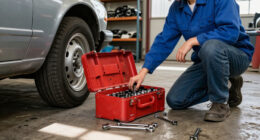
Choose and set up an automotive garage tool set that matches the vehicles you service, the jobs you plan to do, and your available workspace. This guide is for beginners building a first kit or replacing an incomplete set. Allow about 1-2 hours to compare coverage, check the tools, and organize them. A suitable set helps with routine repairs; it does not replace vehicle-specific service information or specialized equipment for hazardous work.

Get business pricing on garage and car supplies
- Business-only prices and quantity discounts
- Tax-exempt purchasing
- Multiple users, one account, clear invoices

Craftsman 262-Piece Mechanic Tool Set with 3-Drawer VERSASTACK Box
- ✔ Piece count: 262
- ✔ Measurement standard: SAE and metric
- ✔ Ratchet: 90-tooth; 5-degree arc swing

VEVOR Mechanics Tool Set and Socket Set, 1/4, 3/8, 1/2-Inch Drive, 450 Pieces
- ✔ Piece count: 450
- ✔ Drive sizes: 1/4, 3/8, and 1/2 inch
- ✔ Measurement standard: SAE and metric

CRESOLVIA 328-Piece Tool Kit with Drawer Storage Case for Home, DIY and Auto Repairs
- ✔ Piece count: 328
- ✔ Brand: CRESOLVIA
- ✔ Model number: RD105328
Difficulty: Beginner | Time: 1-2 hours
What You’ll Need
Tools & Materials:
- List of vehicles you plan to service
- Vehicle owner’s manuals or service information
- Tape measure and notes for drawer or storage space
- Safety glasses and mechanic’s gloves
- Budget range
Knowledge:
- Ability to identify basic hand tools
- Basic understanding of whether a vehicle uses metric or SAE fasteners
- Willingness to check repair procedures before working
Most modern passenger vehicles use metric fasteners, but older vehicles and some imported or modified vehicles may require SAE sizes. Check the fasteners on your actual vehicles and the service information before buying. Tool sets vary widely: a large piece count can include many duplicates or small accessories, so compare the included sizes and tool types instead.
Craftsman 262-Piece Mechanic Tool Set with 3-Drawer VERSASTACK Box
For a garage set centered on vehicle maintenance, Craftsman is our best-balanced pick. Its 262-piece assortment includes SAE and metric sockets, ratchets, wrenches, and specialty bits, so the set is presented as a mechanic-focused collection rather than a general household toolbox. The standout is the 90-tooth low-profile ratchet: on the 1/4- and 3/8-inch drives, its 5-degree arc swing can help when a full handle stroke is blocked by nearby parts. That specific access advantage is more directly relevant to under-hood work than CRESOLVIA’s general emphasis on a large assortment.Storage is another differentiator. The three-drawer VERSASTACK box has a one-handed locking dial and can connect with the broader storage platform, which suits a garage where tools need to stay sorted or travel together. Compared with VEVOR’s 450-piece set, Craftsman gives up piece count and the listed 1/2-inch drive range, but weighs 12.9 pounds less. Its own tradeoff is the 27.5-pound case, and the low-profile benefit is limited to the two smaller drives. This is the strongest choice for a buyer who values controlled access and organized automotive basics over the largest possible kit.
Pros:
- Includes SAE and metric sockets, ratchets, wrenches, and specialty bits.
- 90-tooth ratchets provide a 5-degree arc swing on the listed low-profile drives.
- Three-drawer case works with the VERSASTACK storage platform.
- One-handed locking dial secures the drawers.
Cons:
- At 27.5 pounds, it is heavier to carry than CRESOLVIA.
- Low-profile access applies only to the 1/4- and 3/8-inch ratchets.
- It has fewer pieces than the VEVOR set and no listed 1/2-inch drive.
Best for: Automotive enthusiasts who want SAE and metric coverage, fine ratchet movement in tighter spaces, and modular drawer storage.
Not ideal for: Buyers who need the broadest assortment, a listed 1/2-inch drive, or a light kit to carry frequently.
Bottom line: We recommend Craftsman for a focused, organized automotive set where ratchet access matters more than maximum piece count.
“We recommend Craftsman for a focused, organized automotive set where ratchet access matters more than maximum piece count.”
VEVOR Mechanics Tool Set and Socket Set, 1/4, 3/8, 1/2-Inch Drive, 450 Pieces
When we want the broadest stated coverage in this group, VEVOR’s 450-piece set stands out. It lists SAE and metric sockets, wrenches, bits, and accessories across 1/4-, 3/8-, and 1/2-inch drives. That larger drive size gives it a clearer fit for buyers expecting to work on bigger fasteners than either the Craftsman or CRESOLVIA descriptions specifically establish. Its chrome-vanadium steel construction and polished finish add to the appeal for a set intended to cover automotive, DIY, and professional repair tasks.That breadth comes with a cost in handling: the case weighs 40.4 pounds, almost 13 pounds more than Craftsman and more than three times CRESOLVIA’s listed weight. Its compact three-drawer case helps keep the assortment organized, but compact dimensions do not make a heavy load easy to carry. The supplied torque range is broad, though it does not by itself tell us how the set handles in a particular repair. Compared with Craftsman’s fine-swing ratchet emphasis, VEVOR’s case for choosing it is more about drive-size range and assortment. We would choose it for a stationary garage with varied jobs, and skip it if regular transport or easy lifting is central.
Pros:
- 450-piece assortment includes SAE and metric tools.
- Lists 1/4-, 3/8-, and 1/2-inch drive sizes.
- Chrome-vanadium steel tools have a polished finish.
- Three-drawer case organizes the assortment.
Cons:
- At 40.4 pounds, it is the heaviest set in this comparison.
- The broad piece count may be more than needed for routine maintenance.
- The provided details do not specify ratchet tooth count or swing angle.
Best for: Garage owners seeking a large SAE and metric assortment across three drive sizes for varied repair work.
Not ideal for: Anyone who frequently carries tools between locations or prioritizes a lighter, more focused set.
Bottom line: VEVOR is the coverage-first choice for a garage that can keep a heavy, wide-ranging set close at hand.
“VEVOR is the coverage-first choice for a garage that can keep a heavy, wide-ranging set close at hand.”
CRESOLVIA 328-Piece Tool Kit with Drawer Storage Case for Home, DIY and Auto Repairs
CRESOLVIA is the lightest and most general-purpose choice in this comparison. The 328-piece kit is aimed at home, DIY, and auto repairs, and its sliding drawer offers a straightforward way to separate tools and reach them without unpacking a single open compartment. At 13.3 pounds, it is far easier to move than Craftsman’s 27.5-pound box or VEVOR’s 40.4-pound case. For someone who handles occasional vehicle fixes alongside household jobs, that mix of portability and organization may matter more than specialized mechanic features.The supplied specifications list carbon steel tools with heat treatment and a rust-proof coating, along with metric sockets, hex keys, and precision screwdrivers. But the product information does not detail the same SAE and metric socket range, drive sizes, or ratchet access features presented for Craftsman and VEVOR. We would therefore treat its large piece count as broad utility, not proof that it covers every automotive fastener we may encounter. The plastic toolbox keeps weight down, yet its stated drawback is a lower tolerance for hard drops or impacts. Choose CRESOLVIA for mixed household and lighter garage use; choose Craftsman for more explicitly mechanic-focused features.
Pros:
- 328-piece assortment spans home, DIY, and auto repair tasks.
- Sliding drawer makes tools easier to organize and access.
- Listed weight of 13.3 pounds is the lowest among these three sets.
- Forged carbon steel tools are heat-treated and rust-proof coated.
Cons:
- Plastic toolbox may not withstand heavy drops or impacts.
- The supplied details do not establish a comparable SAE and metric mechanic assortment.
- Drive sizes and ratchet specifications are not listed in the provided details.
Best for: Homeowners who want one portable, organized kit for household projects and occasional lighter automotive repairs.
Not ideal for: Mechanics needing clearly specified drive-size coverage, frequent heavy-duty use, or an impact-resistant case.
Bottom line: CRESOLVIA makes the most sense when portability and all-purpose organization outweigh specialized automotive coverage.
“CRESOLVIA makes the most sense when portability and all-purpose organization outweigh specialized automotive coverage.”
As an Amazon Associate we earn from qualifying purchases.
Before You Start
Decide whether this kit is for occasional maintenance, regular repair work, or a professional shop. A home kit can start with sockets, ratchets, combination wrenches, screwdrivers, pliers, and a torque wrench. Do not treat a general tool set as a complete repair system: lifting a vehicle requires correctly rated lifting equipment and stands, and work on brakes, springs, airbags, fuel systems, or high-voltage systems may require training and special procedures. Never work under a vehicle supported only by a jack.
Check your storage location before choosing a large chest. Keep tools dry, leave room to access drawers, and plan a secure spot for heavy cases. Confirm the seller’s return policy and warranty, since fit, finish, and missing pieces can only be judged after inspecting the actual set.
Step-by-Step Instructions
Step 1: List the jobs and vehicles the set must cover
Write down the vehicles you expect to service, including model year, make, and model. List the jobs you will do, such as battery replacement, interior work, oil service, or suspension work. Use the vehicle service information to note common fastener sizes, torque requirements, and any special tools called for. Separate occasional tasks from work you expect to do often.
Tip: If you maintain more than one vehicle, record whether each uses metric or SAE fasteners and note any unusual fasteners or access needs.
Check: You have a short list of vehicles and likely jobs, with specific sizes or special tools to check before buying.
Step 2: Set a budget and storage limit
Choose a spending limit and measure the shelf, cabinet, or floor space where the set will live. Include room to open drawers or remove cases. Decide whether you want a portable case, modular boxes, or a rolling tool chest. Reserve part of the budget for safety gear and tools that may not be included, such as a torque wrench, inspection light, or vehicle-specific socket.
Tip: Do not choose a set by piece count alone. Many pieces may be duplicates, bits, or accessories that do not help with the jobs on your list.
Check: Your budget and storage measurements are written down, and your preferred storage format fits the space.
Step 3: Compare the set’s actual contents
Read the itemized contents list for each candidate set. Check for a useful range of metric and, if needed, SAE sockets; shallow and deep sockets; 1/4-inch and 3/8-inch drive ratchets; extensions; combination wrenches; screwdrivers; and pliers. Look for clear size markings and a layout that makes missing tools easy to spot. Confirm whether the set includes six-point sockets for fasteners that may be tight or corroded.
Tip: A 1/2-inch drive set can help with larger fasteners, but it does not replace a properly rated breaker bar or torque wrench when the repair procedure calls for one.
Check: You can match the listed tools to your job list and identify what you would still need to buy separately.
Step 4: Check quality, fit, and warranty details
Compare the manufacturer’s material, finish, ratchet mechanism, size markings, and warranty terms. If possible, handle the tools or inspect a returned or display set. Check that sockets sit firmly on the ratchet, the reversing switch works, handles feel secure, and the storage tray holds pieces in place. Read the warranty for coverage limits, replacement steps, and exclusions.
Tip: Avoid using ordinary hand-tool sockets with impact tools. Impact work requires sockets marked for impact use and compatible equipment.
Check: The tools appear intact and clearly marked, the storage system keeps them organized, and you understand how warranty claims are handled.
Step 5: Inspect the set when it arrives
Lay out the tools and compare each item with the contents list before using them. Check for cracks, bent parts, loose handles, damaged ratchets, unreadable markings, and missing sizes. Test the ratchet direction switch and confirm sockets engage securely. Contact the seller about missing or defective pieces while the return or replacement period is active.
Tip: Keep the packaging and receipt until you have checked the full set. Do not use a damaged tool to test whether it will hold under load.
Check: Every listed piece is present, the tools operate normally by hand, and defects have been reported before the set is put into service.
Step 6: Organize the tools for the work you do
Arrange tools by type and drive size, keeping sockets in size order and returning each piece to its marked slot after use. Store heavier items low in a chest, and keep frequently used tools easy to reach. Put specialty tools and vehicle-specific adapters in labeled compartments. Add a written inventory or mark empty slots so you can spot a missing socket before leaving a job.
Tip: Keep tools clean and dry. Wipe off oil or moisture and apply a light protective coating to bare steel if the storage area is damp.
Check: You can find a common socket or wrench quickly, and an empty slot makes a missing tool obvious.
Step 7: Use the set with the right safety equipment
Before a repair, confirm the procedure and torque values for the exact vehicle. Wear eye protection, support the vehicle with rated stands on a firm, level surface when lifting is required, and use the specified tool for each fastener. Use a torque wrench for fasteners with published torque specifications, and return it to its storage setting as directed by its manual. Stop if a component is damaged, a fastener will not move safely, or the procedure calls for equipment or training you do not have.
Tip: Do not use a ratchet or torque wrench as a substitute for a breaker bar, and do not add a pipe to a tool handle unless its maker specifically allows it.
Check: The vehicle is supported as specified, the tools match the repair instructions, and every fastener requiring a torque value is tightened to that specification.
Common Mistakes to Avoid
- Choosing the largest piece count without checking sizes or tool types. — Compare the itemized contents with your vehicle and job list; count useful size coverage, not marketing totals.
- Buying metric-only or SAE-only tools without checking the vehicles. — Check the service information and actual fasteners on each vehicle before selecting a set.
- Using ordinary sockets with an impact wrench. — Use sockets specifically marked for impact service and follow the tool maker’s instructions.
- Working under a vehicle held only by a jack. — Use correctly rated stands on a firm, level surface and follow the vehicle lifting points and equipment instructions.
Troubleshooting
Problem: A socket does not fit a fastener.
Solution: Stop before turning it. Check whether the fastener uses metric or SAE sizing, clean debris from the head, and confirm the socket is fully seated. Use the correct size to reduce the chance of rounding the fastener.
Problem: A fastener is stuck or begins to round.
Solution: Stop applying force with a short ratchet. Confirm the correct socket is fully engaged, consult the service procedure for an approved loosening method, and use penetrating oil only where appropriate. Get help if access, corrosion, or the repair procedure makes the work unsafe.
Problem: The set arrives with missing or damaged pieces.
Solution: Compare it with the inventory sheet, photograph the issue, and contact the seller or manufacturer within the stated return or warranty period. Avoid substituting an incorrectly sized tool.
Problem: Tools rust or become difficult to find.
Solution: Dry them after use, store them in a low-moisture location, and return each piece to its marked slot. Use labeled organizers for additions that do not fit the original case.
What Success Looks Like
The finished kit covers the common sizes and tool types needed for your listed jobs, fits the available storage space, and has no missing or defective pieces. Tools are labeled and organized so you can locate and return them quickly. Before each repair, you can identify the correct tool, follow vehicle-specific instructions, and use the required safety equipment and torque specifications.
Next Steps
Keep the inventory with the set and update it whenever you add or replace a tool. After each job, clean and return the tools, then check for damage or missing pieces. Add specialty tools only when a repair procedure calls for them. If a job involves high-voltage components, airbags, springs, or other systems you are not trained to service, use a qualified repair professional.
Frequently Asked Questions
Should I buy a metric set, an SAE set, or both?
Check the fasteners and service information for the vehicles you will work on. Metric tools cover many modern passenger vehicles, while older, domestic, modified, and some other vehicles may need SAE sizes. Buy the sizes your jobs require rather than assuming one system covers every vehicle.
Is a large piece count a sign of a better set?
No. Compare the included sizes, drive types, useful accessories, markings, storage, and warranty. A smaller set with the sizes you need can be more useful than a larger set with duplicates or low-use accessories.
Does a garage tool set include everything for car repairs?
Usually not. Many sets focus on hand tools and omit items such as a torque wrench, jack stands, specialty sockets, diagnostic equipment, and vehicle-specific tools. Check the repair procedure and equipment requirements before starting a job.
Can I use the set’s ratchet to loosen any fastener?
No. Use a correctly sized tool and avoid overloading a ratchet. For tight fasteners, follow the service information and use a suitable breaker bar when appropriate. Never extend a handle with a pipe unless the tool maker permits it.