
This guide explains how to choose and use an auto repair tool kit to perform basic vehicle maintenance and repair tasks. It is designed for beginners or car owners interested in DIY repairs, with clear, step-by-step instructions to help you get started quickly and safely.

Get garage and car supplies delivered free — and shop member deals
- Fast, free delivery on millions of items
- Access to Prime Big Deal Days deals on October 6–7
- Prime Video, Amazon Music and more included

TLGREEN 95 Piece Tool Set with Plastic Toolbox
- ✔ Number of Pieces: 95
- ✔ Material: Heat-treated carbon steel
- ✔ Includes: Adjustable wrench, pliers, screwdrivers, bits, wrenches, level, socket set, and more

Egofine 46 Pieces 1/4 Inch Drive Socket Ratchet Wrench Set with Bit Socket and Extension Bar
- ✔ Material: Chrome Vanadium Steel
- ✔ Number of Sockets: 46 pieces
- ✔ Socket Sizes: 4-14mm (metric), various bit sizes
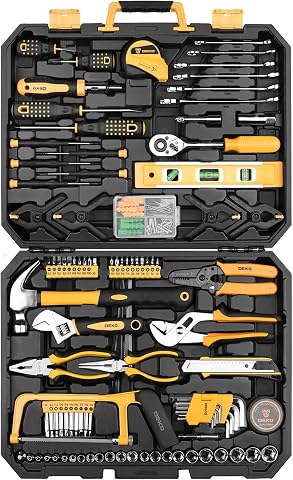
DEKOPRO 228 Piece Socket Wrench Auto Repair Tool Set with Plastic Toolbox
- ✔ Number of Pieces: 228
- ✔ Material: High-quality steel
- ✔ Finish: High-polish chrome
Difficulty: Beginner | Time: 30-60 minutes
What You’ll Need
Tools & Materials:
- Basic hand tools (screwdrivers, pliers)
- Car jack and jack stands
- Work gloves
- Flashlight
Knowledge:
- Basic understanding of vehicle parts and safety precautions
Ensure your vehicle is on a flat, stable surface and the engine is off before starting any repairs.
TLGREEN 95 Piece Tool Set with Plastic Toolbox
<p>This set stands out for its broad selection of essential tools, making it a versatile choice for everyday household repairs and DIY projects. Compared with more specialized kits, the <strong>TLGREEN 95 Piece Set</strong> is more accessible for beginners or casual users who need reliable tools without the complexity. Its heat-treated carbon steel construction ensures durability, but the tools are somewhat basic, limiting its use for professional auto repairs. The plastic toolbox offers portability, though it may not withstand heavy daily use.</p>
Pros:
- Wide variety of essential hand tools
- Portable plastic toolbox for easy storage
- Durable heat-treated carbon steel construction
Cons:
- Tools may be too basic for professional use
- Limited to smaller repairs and DIY tasks
- No detailed warranty information
Best for: Beginners, DIY homeowners, light repair projects
Not ideal for: Professional mechanics or those needing specialized or heavy-duty tools
Bottom line: A solid, budget-friendly choice for casual DIYers seeking a comprehensive starter toolkit.
“A solid, budget-friendly choice for casual DIYers seeking a comprehensive starter toolkit.”
Egofine 46 Pieces 1/4 Inch Drive Socket Ratchet Wrench Set with Bit Socket and Extension Bar
<p>This pick makes the most sense for auto enthusiasts and those needing a reliable, compact set for frequent use. The <strong>Egofine 46 Piece Socket Set</strong> offers a focused selection, including a variety of metric sockets, extension bars, and a quick ratchet handle, all made from durable chrome vanadium steel. It’s easier to handle than larger sets, with a comfortable rubber grip and a mirror chrome finish that resists corrosion. However, its extensive assortment may overwhelm casual users, and the lack of detailed warranty info means buyers should consider potential longevity issues.</p>
Pros:
- Durable chrome vanadium steel construction
- Includes a comprehensive set of sockets and extensions
- Easy to operate with quick release and reversible mechanism
Cons:
- Set may be too extensive for occasional use
- No specific warranty or guarantee info
- Some may find the variety overwhelming
Best for: Auto repair, household projects, DIY enthusiasts with some experience
Not ideal for: Complete beginners or those needing a broad range of tools for diverse projects
Bottom line: A highly reliable, focused set perfect for auto repair and frequent DIY tasks, but may be overkill for casual users.
“A highly reliable, focused set perfect for auto repair and frequent DIY tasks, but may be overkill for casual users.”
DEKOPRO 228 Piece Socket Wrench Auto Repair Tool Set with Plastic Toolbox
<p>For those needing the most comprehensive tool collection, the <strong>DEKOPRO 228 Piece Set</strong> delivers. It combines an extensive range of wrenches, ratchets, sockets, screwdrivers, and pliers, all forged from high-quality steel with a high-polish chrome finish that resists corrosion. This set is ideal for DIYers with ambitious projects or even professional mechanics who require versatility and durability. Its weight and size, however, might be cumbersome for casual users or those with limited storage space, and the sheer number of tools might be more than necessary for simple tasks.</p>
Pros:
- Massive variety of tools for diverse repairs
- High-quality, corrosion-resistant steel
- Sturdy, portable plastic toolbox
Cons:
- Heavy and bulky, less portable
- Overkill for simple repairs
- Case design may not be compact enough for tight spaces
Best for: Professional mechanics, serious hobbyists, those tackling multiple repair projects
Not ideal for: Casual users or anyone needing a compact or lightweight kit
Bottom line: The most complete kit here, perfect for extensive or professional repair work, but overly large for casual or infrequent use.
“The most complete kit here, perfect for extensive or professional repair work, but overly large for casual or infrequent use.”
As an Amazon Associate we earn from qualifying purchases.
Before You Start
Gather your vehicle’s repair manual or specifications for specific parts, and ensure you have enough space to work safely. Confirm you have the correct tools for your vehicle model.
Step-by-Step Instructions
Step 1: Identify needed repairs or maintenance tasks
Determine which repairs or maintenance tasks you want to perform, such as changing oil, replacing brake pads, or changing a tire. Consult your vehicle manual for specific procedures.
Tip: Make a checklist of tools and parts you’ll need for each task to stay organized.
Check: You clearly know what repairs you will perform and have noted the required tools and parts.
Step 2: Select the appropriate auto repair tool kit
Choose a kit that includes essential hand tools such as screwdrivers, socket wrenches, pliers, and specialty tools relevant to your tasks. Verify the quality and compatibility with your vehicle.
Tip: Opt for a comprehensive kit with a variety of sizes and types to cover common repairs.
Check: Your selected kit contains the necessary tools for your planned repairs, and tools are in good condition.
Step 3: Prepare your workspace and safety equipment
Set up your workspace by parking your vehicle on a flat surface, setting the parking brake, and placing wheel chocks if available. Don work gloves and safety glasses. Arrange your tools and repair parts nearby.
Tip: Ensure adequate lighting and ventilation in your workspace.
Check: Your workspace is safe, organized, and ready for repairs.
Step 4: Lift the vehicle safely if needed
Use a car jack to lift the vehicle at the manufacturer-recommended lift points. Position jack stands under the vehicle for support. Never rely solely on the jack.
Tip: Double-check the stability of the vehicle before working underneath.
Check: Vehicle is securely elevated and stable, allowing safe access underneath.
Step 5: Perform the repair or maintenance task
Follow your vehicle’s repair manual step-by-step, using the appropriate tools from your kit. Keep track of fasteners and parts as you remove them.
Tip: Work slowly and methodically; avoid forcing parts or tools to prevent damage.
Check: The repair is completed as per instructions, with no leftover parts or loose fasteners.
Step 6: Reassemble and lower the vehicle
Reinstall any removed parts, tighten all fasteners to manufacturer torque specifications, and carefully lower the vehicle from the jack stands.
Tip: Double-check all fasteners and connections before lowering.
Check: Vehicle is reassembled correctly, and all tools and parts are accounted for.
Step 7: Test your repair
Start the vehicle and verify the repair by inspecting for leaks, unusual noises, or warning lights. Conduct a test drive if applicable.
Tip: Monitor vehicle behavior during initial driving to confirm the repair was successful.
Check: Vehicle operates normally, with no warning indicators or issues related to the repair.
Common Mistakes to Avoid
- Using incorrect or low-quality tools — Choose a reputable, complete kit with appropriate sizes and types of tools for your vehicle.
- Not securing the vehicle properly when lifted — Always use jack stands on solid, designated lift points and double-check stability before working underneath.
- Over-tightening or under-tightening fasteners — Use a torque wrench to apply the correct torque values specified in your vehicle manual.
- Ignoring safety precautions — Wear safety gear, work on a flat surface, and disconnect the battery if working on electrical components.
Troubleshooting
Problem: Vehicle still has issues after repair
Solution: Review each step for correctness, check for missed fasteners or connections, and consult your repair manual.
Problem: Tools do not fit fasteners properly
Solution: Verify the tool sizes match the fastener sizes; switch to the correct socket or screwdriver bit.
Problem: Vehicle is unstable after lifting
Solution: Ensure the vehicle is on a level surface, recheck jack stand placement, and confirm all supports are secure.
What Success Looks Like
The repair or maintenance task is completed correctly, vehicle functions normally, and no safety issues are present. You have used the appropriate tools effectively, and the vehicle shows no signs of unresolved issues.
Next Steps
Clean and organize your tools for future use. Keep a record of repairs performed. Schedule regular vehicle maintenance checks. Seek professional help if issues persist or if repairs are beyond your skill level.
Frequently Asked Questions
What should I include in my auto repair tool kit?
A basic kit should contain screwdrivers, socket wrenches, pliers, a torque wrench, a jack, and safety gear. Expand as needed for specific repairs.
Can I perform repairs without a full toolkit?
Some basic repairs are possible with minimal tools, but a comprehensive kit makes most tasks easier and safer. Consider investing in a versatile set.
How do I know if my tools are good quality?
Look for tools from reputable brands, with corrosion-resistant finishes, and check for proper fit and smooth operation.
When should I replace my auto repair tools?
Replace tools that are damaged, worn, or no longer fit properly. Regularly inspect your tools for cracks, rust, or deformation.
Halloween Picks
halloween
As an affiliate, we earn on qualifying purchases.