To securely tie down a motorcycle on a trailer, start by choosing high-quality straps and attaching them to reinforced tie-down points, avoiding delicate parts. Position the bike upright at the front, using wheel chocks to stabilize it. Attach straps to the front and rear suspension, crossing front straps over the handlebars for extra stability. Tighten straps evenly, check for tension, and test for movement. For detailed steps, keep going to learn how to guarantee your motorcycle stays safe during transit.
Key Takeaways
- Use high-quality straps attached to reinforced tie-down points, securing suspension rather than handlebars or body panels.
- Attach straps to the motorcycle’s frame or rear axle, avoiding sensitive components.
- Cross front straps over the handlebar area for added stability during transit.
- Tighten straps evenly to eliminate slack, checking tension regularly during transport.
- Conduct a final stability check by gently pushing the motorcycle to ensure it doesn’t shift or tilt.

Have you ever wondered how to securely transport your motorcycle to prevent damage or accidents? The key lies in proper loading and effective tie-down techniques. To start, loading tips are essential—you want to confirm your motorcycle is stable before you even begin securing it. Before you load, check your trailer’s weight capacity and make sure it’s suitable for your bike. Trailer selection plays a critical role here; choose a trailer with a sturdy frame, non-slip flooring, and appropriate tie-down points. This foundation makes the entire process safer and easier.
Proper loading and secure tie-downs are essential for safe motorcycle transport.
When you’re ready to load, position your motorcycle at the front of the trailer, ideally facing forward. Use gentle riding to guide it onto the trailer, avoiding abrupt acceleration or braking that could cause instability. Once your motorcycle is centered and upright, place wheel chocks behind the front and rear tires to prevent rolling. These chocks are indispensable for maintaining stability during transport. Secure the wheels with straps or blocks, ensuring they won’t shift unexpectedly.
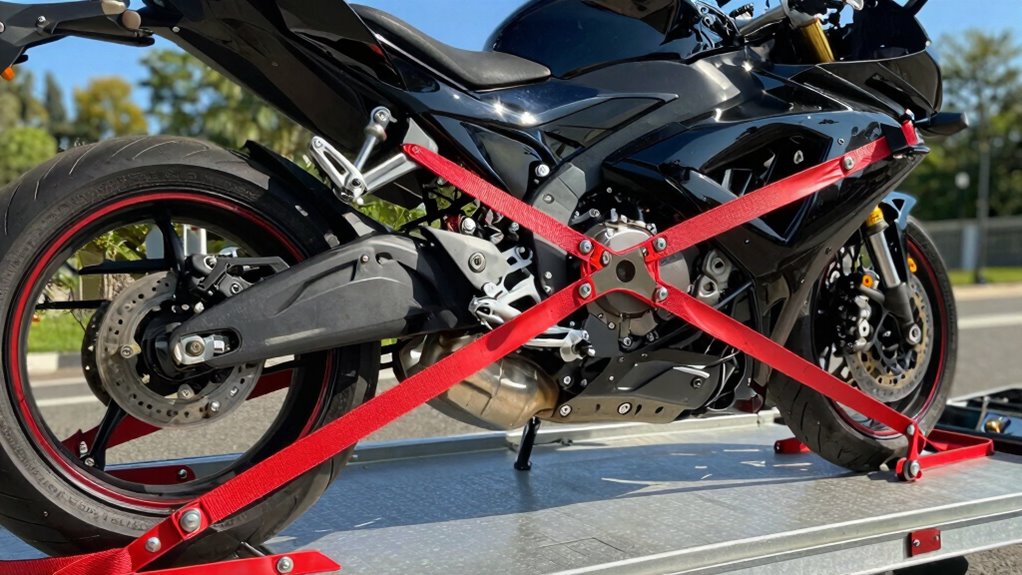
Now, it’s time to focus on the tie-down process. Use high-quality motorcycle straps that are designed for this purpose—avoid generic bungee cords or weak straps. Attach the straps to the trailer’s tie-down points, which are usually reinforced rings or hooks built into the trailer frame. When you’re securing the bike, focus on the suspension points rather than the handlebars or body panels, as this prevents damage. Use at least four straps: two to hold the front of the motorcycle and two for the rear. Cross the front straps over the handlebar area and connect them to the trailer’s front tie-down points, pulling tight to keep the bike upright and steady.
For the rear, attach straps to the rear axle or frame, avoiding sensitive parts. Tighten all straps evenly, making sure there’s no slack but also avoiding over-tightening, which could damage the bike’s components. Check the tension frequently as you tighten, and give the straps a quick tug to confirm they’re secure. It’s also helpful to ensure the straps are properly rated for motorcycle transport and designed to withstand the stresses of travel. Using proper securement techniques is essential to prevent accidents during transit. Proper securement techniques are vital for safe transportation. Once everything is in place, inspect the motorcycle from multiple angles to verify stability. Test the trailer’s movement by gently pushing it; if the motorcycle shifts or tilts, readjust the straps until it’s firmly secured.

Rhino USA Ratchet Straps Heavy Duty Kit (4-Pack) – 1.6 Inch x 8 Feet Min Break Strength (5,000) – Ultimate Tie Down Straps with Safety S Hooks for Trucks, ATV, UTV, Motorcycle, Cargo & More – Black
AMERICAN OWNED, FAMILY OPERATED – Join the Rhino USA Family and Support a Father/Son Business With the Best…
As an affiliate, we earn on qualifying purchases.
As an affiliate, we earn on qualifying purchases.
Frequently Asked Questions
What Type of Straps Are Safest for Motorcycle Transport?
You should use high-quality, ratchet-style straps with a weight rating that exceeds your motorcycle’s weight for safe transport. Look for straps with secure hooks and durable webbing, specifically designed for trailer accessories. These straps guarantee your bike remains stable, preventing damage during transit. Regular bike maintenance includes checking strap integrity before each trip. Always tighten straps properly, and avoid cheap, weak materials that could fail and compromise your motorcycle’s safety.
How Tight Should the Tie-Down Straps Be?
You should tighten the straps enough to secure the motorcycle firmly without overloading the trailer or causing load imbalance. Make certain of even load distribution by tightening straps gradually and evenly, considering trailer compatibility to avoid stressing specific points. Check that the motorcycle doesn’t shift or wobble when you gently push it, and make sure straps aren’t so tight they risk damaging the bike or trailer. Proper tension keeps everything safe during transit.
Can I Tie Down My Motorcycle by the Handlebars?
Think of your motorcycle as a delicate sculpture; tying it by the handlebars is like gripping its head to hold it steady. While handlebar stability may seem enough, it risks damaging your frame and sacrificing safety. For proper frame protection and stability, secure the bike through designated tie-down points on the frame, not just the handlebars. This guarantees a safe, balanced ride without risking damage or instability.
What Is the Best Position to Secure My Motorcycle on the Trailer?
You should position your motorcycle upright, centered on the trailer, with the front wheel secured to the tie-down points near the front of your trailer. Use loading ramps compatible with your trailer type for easy loading and unloading. Make certain the motorcycle’s weight is evenly distributed, and avoid placing it at an angle. This position keeps your motorcycle stable during transit, minimizing risk of movement or damage.
How Often Should I Check the Tie-Downs During Transit?
Imagine your motorcycle riding smoothly like a steady heartbeat. You should check the tie-downs every 15 to 30 minutes during transit, ensuring they stay tight and secure. Trailering regulations often require frequent inspections, and maintaining your motorcycle’s safety helps protect your motorcycle insurance coverage. Regular checks prevent surprises on the road, keeping your motorcycle secure and your journey worry-free. Stay vigilant, and you’ll arrive just as you started—safely and sound.

JY PERFORMANCE Motorcycle Wheel Chock, Universal Heavy Duty Front Wheel Stand for Trailer, Cruiser, Sports & Dirt Bikes, 1800 lb Capacity Adjustable Wheel Stand for 15"-22" Wheels
Dimensions: 16 1/8 "high, 36 3/5" long, 35 2/5 wide. Supports up to 1800 pounds. Maximum width of…
As an affiliate, we earn on qualifying purchases.
As an affiliate, we earn on qualifying purchases.
Conclusion
Tying down your motorcycle securely is like anchoring a ship in rough waters—your bike’s safety depends on it. With the right techniques and equipment, you’ll keep your motorcycle steady and your mind at ease during the trip. Remember, a well-secured bike isn’t just about safety; it’s about peace of mind, so don’t rush the process. Follow these steps, and your journey will be smooth sailing from start to finish.

KJE Heavy Duty Car Trailer Tie Down Straps 4 Pack Kit – 2" x 8' Ratchet Straps + J-Hooks with Clip, 2" x 36'' Axle Straps – 10,000lbs Break Strength – Use for Car, Truck, UTV Transport
2023 NEW STYLE PROFESSIONAL TRAILER STRAP – Used for Car, Truck, UTV Transportation.
As an affiliate, we earn on qualifying purchases.
As an affiliate, we earn on qualifying purchases.

Motorcycle Tie Down Strap (4PK) – 2,100lb Break Strength Premium 15ft Ratchet Tie Down Straps Set, Soft Loop Ratchet Straps for Moving Appliances, Lawn Equipment, Cargo Straps for Trucks
【Reflective Thread & Durability】 – All our ratchet straps are designed with unique reflective thread to make it…
As an affiliate, we earn on qualifying purchases.
As an affiliate, we earn on qualifying purchases.