
TL;DR

Get business pricing on garage and car supplies
- Business-only prices and quantity discounts
- Tax-exempt purchasing
- Multiple users, one account, clear invoices
A September 22 Bruegel policy brief estimates that requiring EU-made battery cells could add €2,100 to the production cost of an EV with a 60-kWh battery. Buyers could pay more if carmakers pass those costs on, but the final impact depends on the rules, subsidies and pricing decisions. Bruegel argues that protections should be temporary and give European manufacturers time to build lower-cost electric cars.
A September 22 policy brief from Brussels-based think tank Bruegel estimates that requiring European-made battery cells could add €2,100 to the cost of an electric vehicle with a 60-kilowatt-hour battery. Buyers could face higher prices if manufacturers pass those costs on, though the final effect depends on how any rules are written, whether governments provide subsidies and how automakers respond.
Bruegel calculates that the cell requirement could raise battery costs from €50 to €85 per kilowatt-hour. Applied to a 60-kWh battery, that €35-per-kWh difference produces the estimated €2,100 increase. The brief also estimates that a proposed low-carbon steel requirement could add €200 per vehicle, while simplifying vehicle approval could save manufacturers about €61 per car.
Those figures are estimates, not confirmed retail-price increases. The brief’s underlying concern is that policies designed to support European production could shift costs to consumers and taxpayers. How much customers would pay is not settled: manufacturers might absorb some expense, pass it through to prices, or receive public support that offsets it.
Bruegel says the burden could fall hardest on buyers shopping at the lower-priced end of the EV market, where an added cost may be harder to absorb. The report argues that industrial protection should be temporary and give European carmakers time to develop more affordable electric vehicles, rather than insulating them indefinitely from competition.
The Cost at the Showroom
The policy debate involves a trade-off between building local supply chains and keeping electric cars affordable. EU-made batteries could support European jobs and manufacturing capacity and reduce reliance on suppliers abroad. But if local production costs remain higher, rules requiring it may raise vehicle costs or increase the need for public subsidies.
That matters to consumers because price affects which vehicles they can afford and whether they choose an EV at all. Bruegel cites French research finding that EVs excluded from purchase subsidies experienced a 60% sales decline relative to eligible models. The brief uses that finding to argue that subsidy design can affect demand; it does not establish that the proposed battery rules would cause the same sales change.
The broader stakes extend beyond individual purchases. The automotive sector employs around 14 million people, according to the source material, while European manufacturers face pressure from global competitors. A policy that supports factories but makes entry-level EVs less accessible could create tension between industrial goals and the push to expand electric-car adoption.
Products Worth Considering
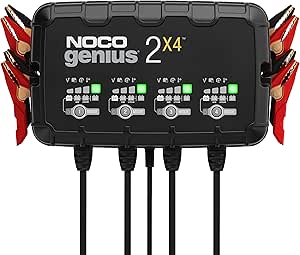
NOCO GENIUS2X4 6V/12V Four-Bank Battery Charger and Maintainer

Chemical Guys 10-Piece Car Wash Kit with Foam Gun

Milwaukee M12 FUEL 1/4-Inch Hex Impact Driver Kit
As an affiliate, we earn on qualifying purchases.
Europe’s Industrial Pressure
The policy discussion comes as Europe seeks to strengthen its position in electric vehicles and batteries. The source material reports that EU car production has fallen 19% since 2019 and that buyers purchased 2.2 million fewer new cars in 2025 than in 2019. It also points to continued exports and roughly €3 billion in quarterly investment in battery and EV factories, showing that the sector’s picture includes both pressure and ongoing investment.
Building battery capacity locally has proved difficult. The report cites Northvolt’s failure, Porsche’s retreat from manufacturing at Cellforce and shelved ACC factories as examples of the challenges of competing with China on cost. It also notes that overseas firms own a substantial share of capacity: South Korean companies own 65% of European battery-cell manufacturing capacity, while Chinese companies own 55% of capacity under construction, according to the supplied report.
Trade measures are part of the same debate. The European Union has imposed additional duties on Chinese electric vehicles of up to 35.3%, while excluding plug-in hybrids, the source material says. Bruegel points to flattening battery-electric vehicle imports from China alongside rising hybrid imports. It proposes that a temporary agreement with China to limit electric-car and plug-in-hybrid shipments could give European manufacturers time to develop cheaper models, with a defined end date and tighter restrictions if China broke the deal.
“Requiring EU-made cells could raise costs from €50 to €85 per kilowatt-hour.”
— Bruegel policy brief
Rules and Retail Prices
The estimates do not show what a finished EU rule would require or how much of the added production cost would reach buyers. The final policy design, the availability of subsidies and automakers’ pricing choices are all unresolved in the supplied material. The €2,100 figure is tied to a specific battery size and estimated cell-cost difference; it is not a confirmed increase in the sticker price of every EV.
It is also unclear whether a temporary shipment limit with China will be adopted, how it would be enforced or how it might affect prices and competition. Bruegel’s estimates and policy proposals are analysis, not enacted rules or guaranteed outcomes. The source material does not provide a final timetable for decisions.
Policy Choices Ahead
The immediate next step is for EU policymakers to settle the design of any local-content or low-carbon-material requirements, including their scope, timing and potential exemptions or subsidies. Until those details are established, the cost estimates remain possible production impacts, not a forecast of a fixed price increase for consumers.
Policymakers will also have to weigh whether to pursue Bruegel’s proposed temporary arrangement with China and what conditions it would include. For buyers, the key developments to watch are the final rules, government support and the prices manufacturers set for their vehicles. The brief’s central recommendation is that any protection give European producers time to become more competitive while avoiding a lasting increase in costs for consumers.
Key Questions
Could EU-made battery cells add €2,100 to every electric car?
No. Bruegel estimates a €2,100 cost increase for a 60-kWh battery based on its assumed rise in cell costs from €50 to €85 per kilowatt-hour. The amount would vary with battery size and the final rules, and it is not a confirmed retail-price increase for every EV.
Will buyers definitely pay more?
That is not known. Buyers could pay more if automakers pass on the extra costs, but subsidies and manufacturers’ pricing decisions could change the effect on retail prices.
What other policy costs does the brief estimate?
The brief estimates that a proposed low-carbon steel requirement could add €200 per vehicle. It also says simplified vehicle approval could save manufacturers about €61 per car.
Why does Bruegel support temporary protection?
The think tank says temporary protection could give European manufacturers time to develop cheaper electric cars. It warns that lasting protection could leave consumers and taxpayers carrying costs, while its proposed temporary limits on shipments from China remain a policy suggestion rather than an adopted measure.
Source: insideevs.com