

TL;DR
Open a free Amazon Business account
Business pricing, bulk buying and tax-exempt orders.
As an affiliate, we earn on qualifying purchases.
Cambodia and Thailand’s strengthening relations are emerging as the key factor shaping ASEAN’s immediate future. Experts suggest their cooperation will have a greater impact than Myanmar’s ongoing conflicts.
Cambodia and Thailand’s improving diplomatic ties are poised to define ASEAN’s immediate future, overshadowing ongoing conflicts in Myanmar, according to recent analyses. This shift highlights the influence of bilateral relations within the regional bloc and signals a potential realignment of ASEAN priorities.
Recent diplomatic efforts between Cambodia and Thailand have resulted in a marked improvement in their bilateral relations, including resumed high-level talks and cooperation on regional issues. Analysts from The Diplomat emphasize that this rapprochement will significantly influence ASEAN’s policy direction in the near term. Meanwhile, Myanmar’s ongoing crisis and internal conflicts continue to pose challenges for ASEAN, but experts suggest that the Cambodia-Thailand dynamic will be more decisive in shaping the bloc’s policies and unity. This perspective marks a shift from previous focus on Myanmar’s instability as the primary regional concern.Sources indicate that Cambodia and Thailand are engaging in confidence-building measures, including border security cooperation and economic exchanges, signaling a move toward greater regional stability. These developments come amid ASEAN’s efforts to maintain unity despite internal disagreements, especially over Myanmar’s military-led government and its crackdown on dissent. The evolving Cambodia-Thailand relationship is viewed as a strategic pivot that could influence ASEAN’s stance on regional security and economic integration.However, it remains uncertain how deeply this bilateral rapprochement will influence ASEAN’s collective policies, especially given Myanmar’s persistent crisis and the divergent interests among member states.
Impact of Cambodia-Thailand Relations on ASEAN Unity
The strengthening of Cambodia-Thailand relations could reshape ASEAN’s strategic priorities, potentially fostering greater regional stability and economic cooperation. This development may also shift the focus away from Myanmar’s crisis, affecting how ASEAN addresses internal conflicts and human rights issues. For readers, this signifies a possible change in regional dynamics, with bilateral ties influencing the bloc’s collective approach to security and development.
Cambodia Thailand border security equipment
As an affiliate, we earn on qualifying purchases.
As an affiliate, we earn on qualifying purchases.
Regional Tensions and ASEAN’s Internal Divisions
ASEAN has long struggled with internal divisions over how to handle Myanmar’s ongoing crisis, which has caused internal disagreements and hampered collective action. Meanwhile, Cambodia and Thailand have historically maintained complex relations, often marked by border disputes and diplomatic tensions. Recently, however, their efforts to improve relations have gained momentum, with both countries engaging in dialogue and cooperation at multiple levels.
This shift comes amid broader regional tensions, including disputes in the South China Sea and concerns over regional stability. Analysts note that ASEAN’s ability to maintain unity depends heavily on the evolving relations among its member states, especially those with strategic importance like Cambodia and Thailand.
“The improved relations between Cambodia and Thailand are likely to have a more immediate impact on ASEAN’s policy directions than the ongoing crisis in Myanmar.”
— an anonymous researcher
Asean-China Cooperation on Regional Connectivity & Sustain (Series on Asian Regional Cooperation Studies)
As an affiliate, we earn on qualifying purchases.
As an affiliate, we earn on qualifying purchases.
Unclear How Deep Cambodia-Thailand Impact Will Be
It is still unclear how deeply Cambodia and Thailand’s improved relations will influence ASEAN’s collective policies, especially regarding Myanmar’s ongoing crisis. The extent to which this bilateral rapprochement will translate into regional consensus remains uncertain, as internal divisions and external pressures persist.
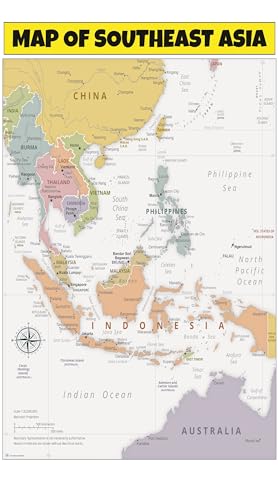
Map of Southeast Asia 18×24 – Laminated Wall Map Poster Print Perfect for Classrooms and Homes – Vivid Imagery with Bright Colors
- Map Size: 18×24 inches laminated poster
- Design Quality: Created by professional cartographers
- Visuals: Vivid imagery with bright colors
As an affiliate, we earn on qualifying purchases.
As an affiliate, we earn on qualifying purchases.
Next Steps for ASEAN and Cambodia-Thailand Cooperation
Further diplomatic engagements between Cambodia and Thailand are expected, including high-level meetings and joint initiatives. ASEAN officials are likely to monitor these developments closely, with potential shifts in regional policy discussions. The bloc’s next major test will be how effectively it can incorporate these bilateral improvements into a unified approach toward regional stability, particularly in addressing Myanmar’s crisis.

Lonely Planet Thailand Planning Map: Durable Waterproof Travel Map with Easy-Fold Format, Itineraries & Transport Guide for Bangkok, Chiang Mai, Phuket & More
- High-quality durable map: Waterproof and long-lasting material
- Meets production standards: Ensures reliable quality and accuracy
- Practical and intuitive design: Easy to use for travelers
As an affiliate, we earn on qualifying purchases.
As an affiliate, we earn on qualifying purchases.
Key Questions
Why are Cambodia and Thailand’s relations important for ASEAN?
Their improved relations could influence ASEAN’s policy direction, promote regional stability, and shift focus away from Myanmar’s ongoing crisis, affecting the bloc’s unity and effectiveness.
How might Myanmar’s situation impact ASEAN’s future?
Myanmar’s crisis remains a significant internal challenge, but analysts suggest that Cambodia-Thailand relations may have a greater immediate influence on ASEAN’s regional policies.
What are the main developments between Cambodia and Thailand?
Recent efforts include resumed diplomatic dialogues, border security cooperation, and economic exchanges aimed at fostering regional stability.
Could Cambodia and Thailand’s relationship influence other ASEAN countries?
Yes, their cooperation could serve as a model for regional diplomacy and encourage other member states to prioritize bilateral relations for broader ASEAN unity.
What are the potential risks of this shift in focus?
If ASEAN relies too heavily on bilateral improvements, it may struggle to address internal conflicts collectively, especially in crises like Myanmar’s.
Source: The Diplomat
College move-in / dorm season Picks
dorm essentials
As an affiliate, we earn on qualifying purchases.