
To keep your Shovelhead running strong, regularly inspect and clean the carburetor and fuel lines to prevent gum buildup, and replace worn gaskets to avoid leaks. Adjust the carburetor for the correct air-fuel mixture and keep spark plugs clean and properly gapped. Change your oil frequently, check valve clearances, and keep the electrical system in top shape. Attention to these details will improve performance and longevity—stick around to discover more tips for ideal engine care.
Key Takeaways
- Regularly inspect and clean the carburetor and fuel lines to prevent gum buildup and ensure smooth fuel flow.
- Keep spark plugs clean, properly gapped, and replace them when worn for reliable ignition.
- Change engine oil frequently with recommended oil to reduce wear and maintain engine longevity.
- Adjust valve clearances and carburetor settings to optimize engine performance and efficiency.
- Maintain electrical components and ignition timing for consistent spark delivery and reliable operation.
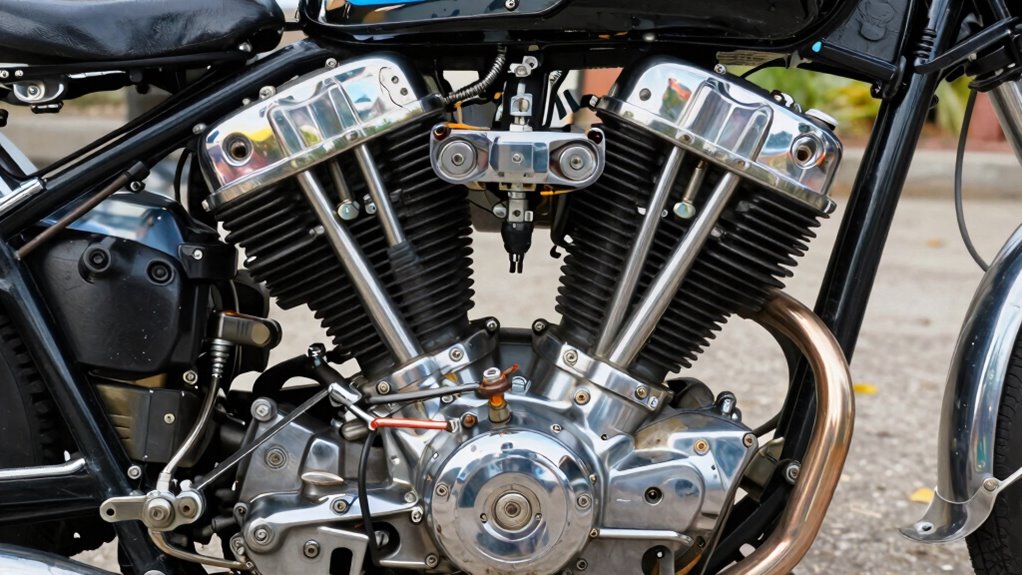
Keeping a Shovelhead running strong requires regular maintenance and attention to detail. This classic Harley-Davidson engine is a symbol of vintage restoration, and maintaining its performance means understanding its unique needs. One of the most essential aspects is ensuring maximum fuel efficiency, which not only saves you money but also prolongs the life of your bike.
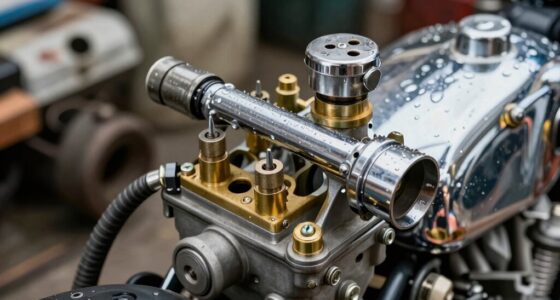
To start, focus on keeping your fuel system clean. Old fuel tends to gum up carburetors and fuel lines, so regularly inspecting and cleaning these parts is necessary. When you do a vintage restoration, replacing worn-out gaskets and seals helps prevent leaks that can affect fuel delivery. Using high-quality fuel and stabilizers can also improve fuel efficiency, making sure your engine burns cleaner and runs smoother for longer periods.
Next, pay attention to your carburetor adjustments. Proper tuning ensures your Shovelhead receives the right mixture of air and fuel, which directly impacts both power and fuel efficiency. If your engine feels sluggish or stalls, it’s a sign that your carb needs a cleaning or adjustment. Regularly checking the spark plugs is also indispensable; clean, properly gapped plugs promote efficient combustion, which enhances performance and saves fuel. Remember, a well-tuned engine runs more efficiently and produces fewer emissions, contributing to your vintage restoration goals.
Oil changes are another key factor in keeping your Shovelhead in top shape. Use the recommended oil type and change it at regular intervals. Fresh oil reduces friction and wear, making the engine run smoother and more efficiently. Keep an eye on oil levels and leaks; a low oil level can lead to increased wear, which ultimately impacts fuel economy. During maintenance, inspecting the valve clearances and timing can also boost overall efficiency. Proper valve adjustment ensures the engine breathes optimally, translating into better fuel combustion and improved performance.
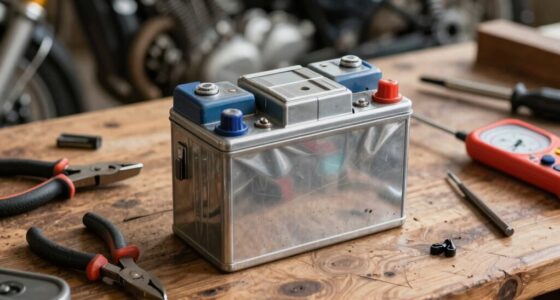
Additionally, maintaining the electrical system is often overlooked but equally important. A reliable ignition system ensures consistent spark delivery, which is essential for efficient fuel burning. When parts like points, condensers, or coils show signs of wear, replace them promptly to keep your engine running smoothly. This not only improves fuel efficiency but also preserves the vintage charm of your restoration project. Understanding the fuel system and how it interacts with other components can help you troubleshoot issues more effectively and maintain peak performance. Furthermore, a thorough understanding of the engine’s ignition timing can significantly enhance overall efficiency and reliability.
Harley Davidson Shovelhead carburetor rebuild kit
As an affiliate, we earn on qualifying purchases.
As an affiliate, we earn on qualifying purchases.
Frequently Asked Questions
What Are Common Signs of a Failing Shovelhead Engine?
You’ll notice your Shovelhead engine failing if it starts overheating frequently or if the spark plugs foul quickly. Engine overheating can cause loss of power and potential damage, while fouling indicates poor combustion or fuel mixture issues. You might also hear knocking sounds, see exhaust smoke, or experience rough idling. Address these signs promptly by checking cooling systems, adjusting fuel settings, and inspecting spark plugs to keep your engine running smoothly.
How Often Should I Change the Oil in a Shovelhead?
You should change your shovelhead’s oil every 1,500 to 2,000 miles or every three months, whichever comes first. Think of it like a morning routine that keeps everything flowing smoothly. Regular oil changes boost fuel efficiency, prevent buildup, and extend engine life. Keep an eye on oil quality and level; it’s a small habit that makes a big difference in performance and longevity.
What Type of Fuel Is Best for a Shovelhead?
You should use high-octane, ethanol-free fuel for your Shovelhead to avoid corrosion and carburetor issues. Adding fuel additives can help prevent engine knocking and keep your fuel system clean. Regular carburetor cleaning is essential to maintain peak performance, especially if you notice rough idling or poor acceleration. Stick to quality fuel, incorporate fuel additives, and keep your carburetor clean to guarantee your Shovelhead runs smoothly and reliably.
Are There Specific Tools Recommended for Shovelhead Maintenance?
When performing vintage restoration on your Shovelhead, having the right tools is crucial. For example, a quality set of spark plug wrenches and timing lights guarantees precise maintenance. You should store these tools properly to prevent rust and damage, especially in your dedicated tool storage. Invest in specialty tools like bearing pullers and feeler gauges, which make repairs easier and help keep your bike running smoothly for years.
How Do I Troubleshoot Starting Issues With My Shovelhead?
To troubleshoot starting issues with your Shovelhead, first check the ignition system—ensure the spark plug is firing and the ignition switch works properly. Next, examine your carburetor adjustment; if it’s too rich or lean, your engine won’t start smoothly. Clean or replace spark plugs if needed, and verify fuel flow. Proper ignition timing and carburetor tuning are key to getting your bike running reliably again.
vintage motorcycle spark plugs
As an affiliate, we earn on qualifying purchases.
As an affiliate, we earn on qualifying purchases.
Conclusion
Keeping your Shovelhead running strong isn’t just about routine maintenance; it’s about understanding your bike’s unique needs. Regular oil changes, timely part replacements, and attentive tuning will guarantee longevity and peak performance. Did you know that Harley-Davidson Shovelheads, produced between 1966 and 1984, are among the most collectible motorcycles today? By giving your Shovelhead the care it deserves, you’re not only preserving its legacy—you’re enjoying a ride that can last for thousands of miles to come.
Harley Shovelhead oil filter
As an affiliate, we earn on qualifying purchases.
As an affiliate, we earn on qualifying purchases.

E-cowlboy Valve Clearance Adjustable Wrenches, 2218 Small Engine Valve Tappet Adjusting Tool 6 Piece Set Tappet Adjuster,For Motorcycles ATV`S And ATC`S
Set includes , 3 Offset Wrenches+3 Knurled Knob Tools.8, 9 & 10mm and three adjusters: screw type and…
As an affiliate, we earn on qualifying purchases.
As an affiliate, we earn on qualifying purchases.