If you find a barn find bike with no title, start by verifying the VIN on the frame or engine with official documentation. Contact your local DMV to explore options like applying for a bonded title or submitting an affidavit of ownership. You may need to have the bike inspected and gather any existing receipts or records. Following these steps guarantees you can establish legal ownership. Keep going to discover all the essential details for securing proper paperwork.
Key Takeaways
- Check for existing ownership documents, such as titles or receipts, in personal storage or from previous owners.
- Contact your local DMV to understand specific procedures for registering a bike without a title.
- Obtain a VIN verification through authorized inspection or online services to establish legal ownership.
- Apply for a bonded title if no original documents are available, following jurisdiction-specific bonding procedures.
- Gather all available proof of purchase, maintenance, and identification to support your registration application.
Verify the Bike’s VIN for Authenticity and Legality
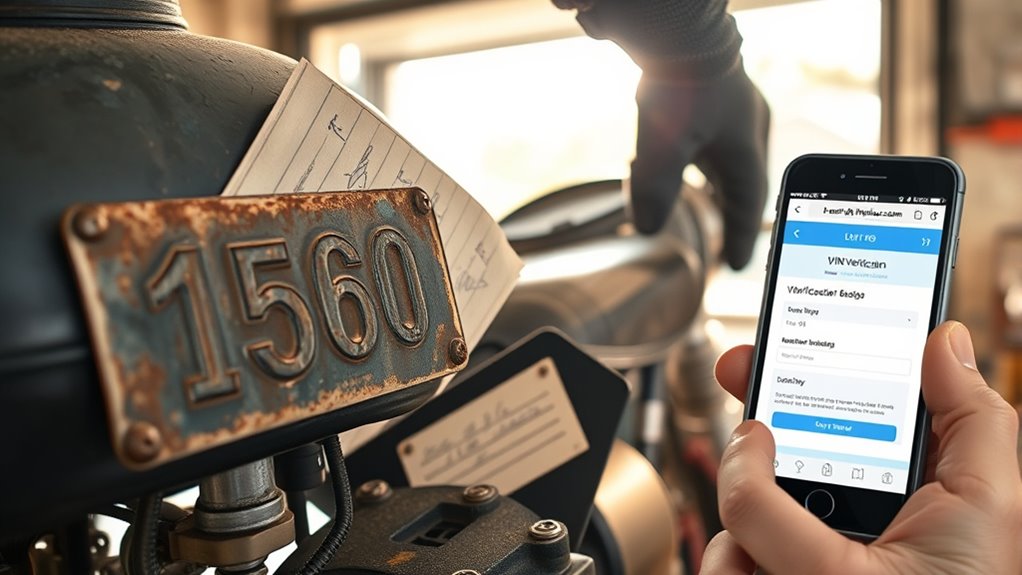
To verify your barn find bike is genuine and legally registered, start by thoroughly verifying its VIN. Check the typical locations, such as the dashboard near the windshield and the driver’s side door post. Look for additional VIN imprints on the engine block or vehicle frame, which can help confirm authenticity. It’s vital to compare the VIN physically on the bike with any documentation you have. Ensure the VIN hasn’t been tampered with or altered, as this confirms the bike’s true identity. This physical check helps prevent theft and confirms the bike matches official records. Remember, a proper inspection by an authorized person is essential to validate that the VIN is legitimate and unaltered, ensuring you’re on the right track before moving forward with registration. VIN verification involves physical inspection by authorized personnel, which further ensures the accuracy and legality of the vehicle’s identity before proceeding. Additionally, consulting official vehicle registration databases can help verify that the VIN corresponds with existing records, providing extra peace of mind.
Conduct an Official VIN Check to Confirm History

Conducting an official VIN check is a essential step in verifying your barn find bike’s history and guaranteeing its legitimacy. By inputting the 17-character VIN into a trusted online service, you’ll uncover key details like accident records, theft history, odometer readings, and title status. This helps confirm whether the bike has a clean record or if issues could complicate paperwork. The VIN’s accuracy is crucial, as any discrepancies can indicate tampering or misrepresentation. Accurate VIN verification ensures reliable vehicle information, which is essential for legal ownership. Here’s what to do:
Verifying your barn find bike’s history with an official VIN check ensures a legitimate and worry-free purchase.
- Locate the VIN on the bike’s frame or engine, guaranteeing it’s clear and legible.
- Record the full 17 characters accurately.
- Use reputable online VIN lookup tools or DMV websites.
- Review the detailed history report for any red flags.
- Cross-check VINs on the frame, engine, and documents for consistency.
This step guarantees you’re making an informed, legal purchase.
Gather and Organize All Existing Ownership Documents

Start by locating all existing paperwork related to the bike, including titles, registration, and previous sales receipts. Organize these documents chronologically or by type to create a clear ownership history. This helps verify the bike’s background and guarantees you have the necessary proof for future transfers. Proper paperwork is essential for establishing legitimacy and ensuring smooth transactions. Having these documents in order also facilitates the ownership transfer process when you decide to sell or register the bike later.
Locate Existing Paperwork
Gathering all existing ownership documents is a crucial first step in properly processing a barn find bike. Start by searching through personal or family storage areas like garages, barns, or boxes—you never know where those papers might be hiding. Contact previous owners if possible to request copies or originals, making sure signatures are verified. Check with your state DMV or title offices to see if any records or duplicate titles exist. Review insurance policies or service records, as they might reference ownership papers. Also, look through manuals, cases, or lockers related to the bike, as some documents may be tucked inside. These steps help you gather essential proof of ownership and set the stage for proper registration or titling. Ensuring that you have valid title documentation is essential for legal transfer and registration of the bike.
Document Bike History
To accurately document a barn find bike’s history, you need to collect and organize all existing ownership records systematically. Start by verifying titles and ownership documents, ensuring signatures are clear and titles are signed by the seller. Gather bills of sale with buyer and seller info, sale date, price, odometer reading, and any lien releases. Collect the Manufacturer’s Certificate of Origin if available, along with VIN verification, especially for out-of-state or untitled bikes. Compile maintenance records, registration certificates, insurance policies, odometer disclosures, accident reports, and salvage titles. Include state registration forms, proof of insurance, driver’s license with motorcycle endorsement, and safety or emissions certificates. Consider European cloud innovation and its influence on digitizing vehicle history documentation to enhance record security and accessibility. Organize everything chronologically in a secure file to streamline registration, resale, or resolving ownership issues.
Reach Out to the Local DMV or Motorcycle Registry for Guidance
Reaching out to your local DMV or motorcycle registry is an essential step to make sure you understand the specific paperwork and requirements for registering your barn find bike. Every state has different rules, so getting guidance directly from authorities helps you avoid surprises. They can tell you exactly what’s needed, such as ownership proof, insurance, or VIN verification. Legal requirements and registration procedures vary by state, so consulting with local officials ensures you comply with all regulations. Here are some tips:
Contact your local DMV to understand specific registration requirements and avoid surprises.
- Confirm which ownership documents are accepted, like a title or bill of sale
- Ask about specific insurance or surety bond requirements
- Find out if a VIN inspection is necessary
- Learn about any state-specific forms to complete
- Check if you can handle anything online before visiting in person
- Understanding ownership verification procedures can streamline the process and prevent delays.
Explore Options for a Bonded Title if Documentation Is Missing
If you’re missing essential ownership documents for your barn find bike, pursuing a bonded title can be a practical solution. You’ll need to obtain a surety bond, which usually equals 1.5 times the vehicle’s appraised or market value to protect against future claims. For salvage bikes, some states allow lower bond amounts, like 25% of the MSRP. The bond must be maintained for three years, after which it can often convert to a regular title if no claims arise. To get the bond, you’ll work with a licensed provider or insurance company, often through an online application, paying a premium upfront. You’ll also need a notarized appraisal of your bike’s current value, issued by a licensed professional. Once the bond is in place, submit it along with your application to the DMV for the bonded title. Ensuring accurate valuation can be critical, as auditory processing plays a role in assessing and communicating the bike’s condition effectively.
Complete Necessary Vehicle Inspections and Fill Out Required Forms
Once you’ve secured a bonded title, the next step is to guarantee your barn find bike passes all necessary inspections and paperwork requirements. You’ll need to perform thorough vehicle inspections, documenting the condition of the frame, engine, and drivetrain. Check for rust, alignment, leaks, and wear, noting any issues with detailed photos. Next, complete the required inspection forms, ensuring they accurately reflect your findings. This paperwork typically covers structural, mechanical, and safety aspects. To streamline this process, it’s helpful to review the inspection guidelines provided by your local motor vehicle department beforehand, so you know exactly what to look for and how to document it properly. Collect all inspection reports and attach photos for documentation.
Submit Your Application and Supporting Documents for Title Issuance
To successfully obtain a title for your barn find bike, you need to submit a complete application along with all supporting documents required by your state or jurisdiction. Fill out the specific application form, including details like VIN, make, model, year, and engine size. All owners listed on the current title must sign the form, and you should disclose any lienholder information, attaching supplementary lien forms and fees if needed. Provide proof of ownership with a clean, properly assigned title, or other acceptable documents like a Manufacturer’s Certificate of Origin or out-of-state titles. Submit proof of insurance showing coverage is active at the time of application. In Maryland, auto insurance is mandatory before driving any vehicle, including newly titled bikes. One helpful tip is to verify your state’s specific title application requirements to ensure a smooth process. Mail or deliver everything, including fees, to the designated DMV office, keeping copies of all submitted documents and receipts for your records.
Register and Insure the Motorcycle Once the Title Is Obtained
Once you’ve secured the title, it’s time to register your barn find motorcycle and get it insured. You’ll need to visit the DMV with proof of insurance, ID, and the title to complete registration. Ensuring your bike is properly insured and registered keeps you legal and protected on the road. Registration is necessary to comply with state laws and avoid legal issues. Additionally, verifying your bike’s safety features and ensuring proper documentation can help streamline the registration process.
Finalize Registration Steps
After you’ve obtained the motorcycle’s title, the next step is to register and insure the bike so it’s legally on the road. First, complete your state’s DMV registration application form and gather all required documents like proof of ownership or bonded title paperwork. Pay the registration fees using accepted payment methods, and provide proof of identity and residency. You can usually submit in person, online, or by mail, depending on your state’s options. Registering the motorcycle properly ensures compliance with local laws and helps prevent legal issues. – Fill out the registration form accurately – Submit proof of ownership or bonded title – Pay registration fees with approved methods – Provide proof of identity and residency – Follow specific inspection or documentation requirements
Obtain Motorcycle Insurance
Getting your barn find bike insured is a crucial step before hitting the road, as most states require motorcycle liability coverage to operate legally. You’ll need to choose coverage options like liability, collision, or all-encompassing, depending on your bike’s value and condition. Insurance costs vary based on age, safety features, and storage. To help you navigate, here’s a quick overview:
| Coverage Type | What It Covers | Typical Cost Impact |
|---|---|---|
| Liability | Bodily injury & property damage | Usually mandatory, baseline premium |
| Collision | Damage from accidents | Varies with bike value |
| Comprehensive | Theft, weather, vandalism | Often optional but recommended |
| Specialty Policies | Vintage/collectible coverage | Can lower premiums for classics |
Contact insurers specializing in vintage bikes to get quotes and ensure proper coverage.
Maintain Records and Follow Up to Ensure a Smooth Title Process
Maintaining thorough records and following up consistently can substantially streamline the title process for your barn find bike. You should keep copies of all submitted forms, proof of ownership, and DMV correspondence. Regularly check your application status online or by contacting the DMV to guarantee it’s progressing. Respond promptly to any additional requests, inspections, or clarifications to prevent delays. Tracking your progress helps you stay organized and ready to act when needed. This proactive approach can prevent unnecessary delays and help ensure your paperwork moves smoothly through the system. – Save copies of bills of sale, notarized documents, and proofs of ownership. Log all communication with the DMV and previous owners. Track deadlines for inspections or additional paperwork. Keep a record of fees paid and receipts. Understanding the importance of proper documentation and how it impacts ownership transfer] is crucial in avoiding future legal issues. Follow up periodically until your title is finalized.
Frequently Asked Questions
How Long Does the Entire Title Process Usually Take?
The entire title process usually takes between 2 and 6 weeks, but it can vary depending on your state and circumstances. If you have all your paperwork ready and your application is complete, it moves faster. Delays happen if there’s lien verification, lost titles, or additional inspections needed. Expedited services exist for quicker processing, often within a few days, but standard timelines generally apply unless issues arise.
Can I Get a Title Without a VIN Check?
Yes, you can get a title without a VIN check in some states. You’ll typically need a bill of sale, proof of ownership like an MSO or MCO, and possibly a bonded title or court action like a Quiet Title. The process varies by state, so check your local DMV requirements. Be prepared for additional paperwork, lien releases, and sometimes legal steps, which can take extra time.
What if the Original Paperwork Was Lost or Destroyed?
If your original paperwork was lost or destroyed, you can apply for a duplicate title through your state’s DMV. Fill out the required application (like Form REG 227), provide proof of ownership, and pay the fee. You may need a vehicle verification or notarized lien release if applicable. Once submitted, wait 15–30 days for processing, and keep all records to prevent delays or issues with legal ownership.
Are There Specific Forms Required for Barn-Find Motorcycles?
Think of the paperwork as the skeleton that gives your barn-find motorcycle its legal heartbeat. You’ll need specific forms like a bill of sale, VIN verification, and a title application, tailored to your state’s rules. If no title exists, a title bond or affidavit might be your compass. Always check local DMV requirements, gather supporting documents, and keep photographic proof to help your motorcycle’s story come alive legally.
Is Motorcycle Insurance Mandatory Before Receiving a Title?
Yes, motorcycle insurance is mandatory before receiving a title in most states. You need proof of insurance, like an ID card or policy declaration, to register your bike and eventually get the title. Without insurance, you can’t legally register or operate your motorcycle. Make sure to maintain continuous coverage to avoid registration suspension or penalties, as insurance is a key step in the legal ownership process.
Conclusion
Getting proper paperwork for your barn find bike might seem tricky, but with patience, it’s feasible. Did you know that over 20% of vintage motorcycles nationwide are unregistered? Taking the right steps ensures you legally enjoy your find and protects your investment. Stay organized, follow the process, and don’t rush—your classic bike’s history will be verified, and you’ll soon be riding with confidence and peace of mind.