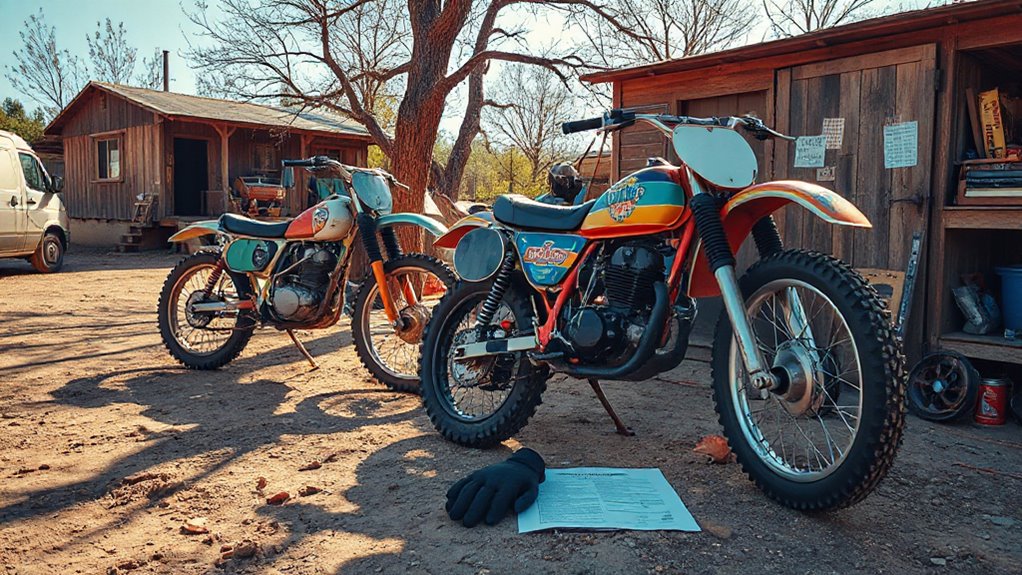

To register and insure your track-only or off-road classic race bike, start by checking local regulations since rules vary by region. You’ll need proof of ownership, detailed documentation of restorations, and possibly an inspection to confirm safety compliance. Look for specialized insurance policies designed for vintage or race bikes that cover repairs, theft, and accidents, ensuring your bike is protected during events. Continuing will help you understand the specific steps to get everything sorted smoothly.
Key Takeaways
- Verify local regulations to determine if track-only or off-road bikes qualify for special registration categories.
- Prepare detailed documentation of restoration, modifications, and proof of ownership for registration approval.
- Ensure the bike meets safety standards through inspections, especially for vintage or heavily modified race bikes.
- Obtain specialized insurance policies covering damage, theft, and race-specific risks, aligning coverage with registration status.
- Confirm that registration and insurance are compatible with intended use, such as track days or off-road events, to ensure legal and financial protection.
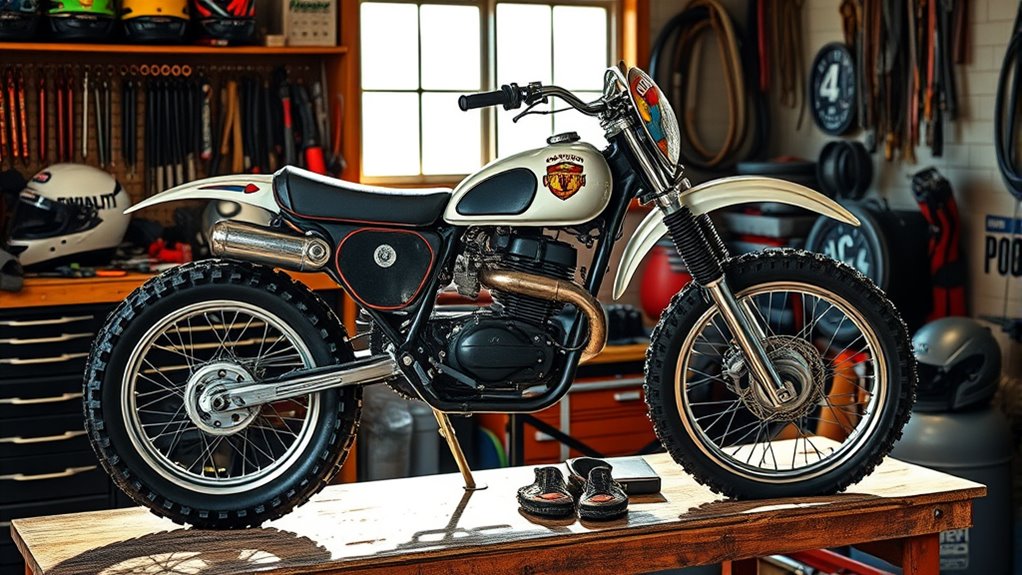
Are you unsure about how to register and insure your race bike? Navigating the process can seem daunting, especially if you’ve invested time and money into a vintage restoration or are prepping a classic for track days. First, you need to understand that registering your race bike depends heavily on its classification and intended use. For a vintage restoration, you might be working with a bike that’s not originally designed for modern registration standards, so it’s essential to verify whether your state or country allows historic vehicles on public roads or if they’re strictly for track use. If the bike is primarily for track day prep, it may fall under special registration categories designed for competition or off-road use, which often have distinct requirements.
To start, check with your local Department of Motor Vehicles or equivalent authority. You’ll likely need to provide proof of ownership, such as a title or bill of sale, along with detailed documentation of your bike’s vintage restoration. Some regions may require an inspection to confirm the bike’s condition and safety features, especially if it’s a classic bike that’s been heavily modified. For vintage bikes, ensuring your restoration meets safety standards can be essential for registration approval. Keep detailed records of all work done, including parts replaced or upgraded, as these can support your case during inspections. Additionally, understanding motorcycle safety standards can help ensure your bike meets regulatory requirements.
Check with your DMV and keep detailed records of your vintage restoration for registration approval.
When it comes to insuring your race bike, the process can vary depending on its classification and usage. For a vintage restoration, you might want specialized insurance that covers classic or collectible vehicles, which often includes coverage for damage during track days or events. If your bike is strictly for track day prep and not street-legal, consider a track-day insurance policy that specifically covers racing activities, including crash damage or theft while on the track. Many insurance providers offer tailored policies for race bikes, so shop around and compare coverage options.
Having proper insurance is vital because race bikes, especially vintage or heavily modified ones, can be costly to repair or replace. Make sure your policy covers the specific risks associated with track use or off-road riding, and clarify whether it includes liability coverage, which protects you if you’re involved in an incident. Before finalizing any policy, double-check that it aligns with your bike’s registration status and intended use. With the right paperwork and coverage in place, you’ll be free to enjoy your vintage restoration or track day prep without worry, knowing your race bike is properly registered and insured.
Frequently Asked Questions
Can I Register a Race Bike for Street Use?
Yes, you can register a race bike for street use if it meets local street legality requirements. You’ll need to go through the registration process, which involves providing proof of ownership, safety inspections, and possibly modifications to meet emissions or lighting standards. Check with your local DMV or motor vehicle department to verify your bike complies with all regulations, and obtain the necessary license plates and insurance before hitting the road.
What Insurance Options Are Available for Off-Road Race Bikes?
Imagine rugged off-road trails versus sleek city streets—your off-road race bike needs specialized insurance. You can opt for specialized off-road or dirt bike coverage that considers helmet laws and emission standards, ensuring compliance and protection. These policies often include liability, collision, and all-encompassing options. While traditional motorcycle insurance might not cover off-road adventures, dedicated policies safeguard your ride, giving you peace of mind when tackling challenging terrains.
Are There Special Registration Processes for Vintage Race Bikes?
Yes, vintage registration for classic bikes often involves a special process. You’ll need to provide proof of age, like an original title or registration, and sometimes submit photos of the bike. Many states have a classic or vintage registration option, which may offer reduced fees or specific restrictions. Check your local DMV’s requirements for vintage registration, ensuring your classic bike qualifies and you follow all necessary steps for proper registration.
How Do I Insure a Bike Used Only for Track Days?
Ever wonder how to guarantee a bike used only for track days? You can typically find specialized insurance policies designed for track and race bikes, which often have simplified registration procedures. Contact providers that offer track-day coverage and explain your bike’s use. They’ll guide you through the process, helping you choose the right coverage. Do your research to ensure your bike is properly protected without overpaying.
What Legal Requirements Differ for Race Bikes in Different States?
You need to check your state’s licensing requirements and emission standards, as they vary. Some states require special registration or titles for race bikes, while others may not recognize them as street-legal. You might also face different emissions testing rules, especially if your bike isn’t intended for regular road use. Always verify local regulations to confirm your race bike complies with state laws before riding or registering.
Conclusion
Guiding the world of race bikes is like steering through a complex maze, but with the right knowledge, you’ll find your way smoothly. Registering and insuring your bike may seem intimidating at first, but it’s just the foundation for adrenaline-fueled adventures ahead. Keep your paperwork in order and your passion fueled, and you’ll be racing through off-road or track-only terrains with confidence. Remember, preparation is the key to opening your true racing potential.