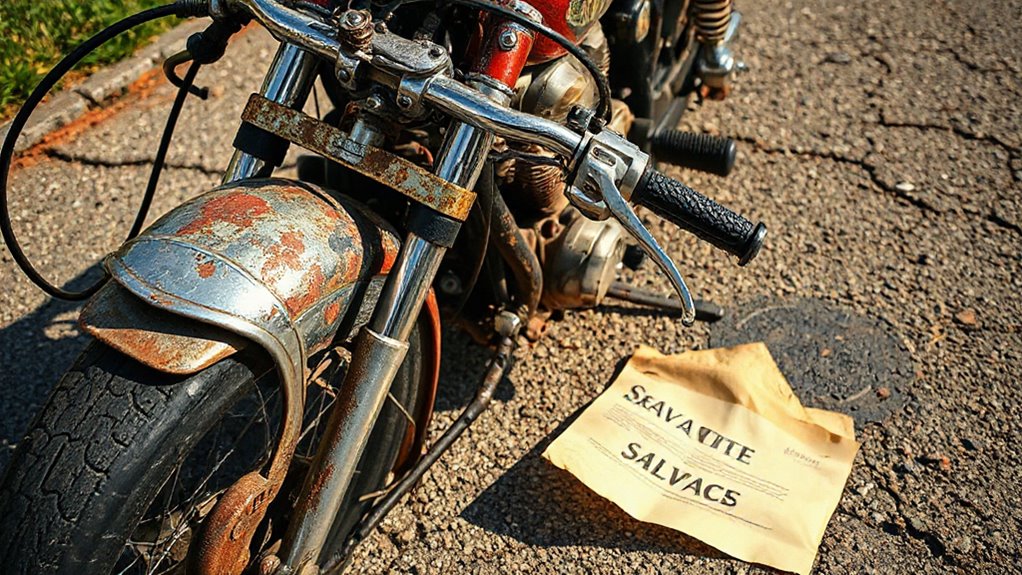

When your bike is declared a “total loss,” it means an insurance company considers repair costs too high compared to its value, resulting in a salvage title. This affects your ability to sell, insure, and register the bike legally. To rebuild it, you’ll need to work with insurers and authorities, undergo inspections, and get a reconstructed title. Understanding these steps can help you navigate the process smoothly—learn more as you explore further.
Key Takeaways
- A salvage title indicates the bike was declared a total loss due to extensive damage or wear.
- Rebuilding a salvage bike requires passing inspections and obtaining a reconstructed or rebuilt title.
- Proper documentation and collaboration with insurers and DMV are essential for legal registration.
- Insurance options may be limited or require additional certification before full coverage is available.
- Transparency about the salvage history and quality repairs helps maintain resale value and safety.

If your motorcycle has been damaged in an accident or suffered significant wear, you might encounter a salvage title when registering it. A salvage title indicates that the bike has been declared a total loss by an insurance company, usually because the repair costs exceed the vehicle’s value or there are substantial damages. This status can complicate insurance claims and legal considerations, so it’s imperative to understand what it means for your bike and your responsibilities moving forward.
When your motorcycle receives a salvage title, it typically means the insurance company has deemed it uneconomical to repair or that the repairs needed are extensive. If you’re planning to rebuild the bike, you’ll need to work closely with your insurer and the DMV to guarantee proper documentation and compliance with local laws. Insurance claims related to salvage bikes are often more complex; some insurers hesitate to cover vehicles with salvage titles, or they may only offer limited coverage. If you intend to insure a rebuilt bike, it’s vital to clarify with your insurer whether they will accept a salvage title and what conditions apply. Sometimes, you might need to get the bike inspected and certified as rebuilt before it can be insured fully, which adds an extra step to the process.
A salvage title signals extensive repairs; working with insurers and DMV ensures proper documentation and legal compliance.
Legal considerations also play a significant role when dealing with salvage titles. Laws vary by state, but generally, your rebuilt bike must pass a thorough inspection to be deemed roadworthy and eligible for a reconstructed title. This inspection verifies that the repairs meet safety standards and that the bike is properly restored. Failing to follow these legal steps can result in penalties or difficulty registering the motorcycle. Additionally, a salvage title can affect the bike’s resale value and how much you might get if you decide to sell it later. Buyers are often wary of salvage titles because they may carry hidden damages or latent issues, which means you need to be transparent about the bike’s history.
Rebuilding a salvage motorcycle can be rewarding and cost-effective if you’re willing to put in the effort, but it’s not without its hurdles. You should understand the legal requirements, especially regarding inspections and documentation, and be prepared for potential insurance challenges. Knowing these legal considerations and working with your insurer can help you navigate the process smoothly, ensuring your rebuilt motorcycle is safe, legal, and ready to hit the road once again. Additionally, understanding the high-quality components involved in repairs can improve the bike’s safety and longevity.

HOMEXCEL Microfiber Cleaning Cloth 12 Pack, 12.5 x 12.5 inch Microfiber Towels for Cars, Ultra Absorbent Washing Cloth, Lint Free Streak Free Cleaning Rags for Car, Kitchen, and Window (Grey)
Unparalleled Cleaning Performance: Our microfiber towels provide outstanding water absorption and adhesion; effortlessly absorb dirt and liquid, delivering...
As an affiliate, we earn on qualifying purchases.
Frequently Asked Questions
Can I Insure a Rebuilt or Salvage-Title Motorcycle?
Yes, you can insure a rebuilt or salvage-title motorcycle. Your insurance options depend on the insurer, but many offer coverage for salvage bikes, often with specific requirements. They typically use valuation methods like actual cash value or replacement cost to determine coverage and premiums. Keep in mind, some insurers might charge higher rates or have restrictions, so it’s vital to compare policies and verify your bike qualifies for insurability.
How Do Salvage Titles Affect Resale Value?
Having a salvage title lowers your motorcycle’s resale value because it increases resale depreciation. Buyers often see salvage titles as a sign of potential issues or past damage, which makes them hesitant. As a result, you might have to accept a lower salvage value when selling. This depreciation can considerably impact what you get back if you decide to sell or trade your bike, making it less attractive to future buyers.
Are There Legal Restrictions on Riding Rebuilt Bikes?
You might wonder if you can legally ride a rebuilt bike, and the answer isn’t straightforward. Liability concerns and safety regulations vary by state, so restrictions could surprise you. Some places require inspections, certifications, or specific paperwork before hitting the road. Ignoring these rules risks fines or insurance issues. Before riding, check local laws carefully—because riding a rebuilt bike without proper clearance could lead to serious legal and safety complications.
What Is the Process to Register a Salvage-Title Motorcycle?
To register a salvage-title motorcycle, you first complete the salvage process by repairing or rebuilding the bike. Next, gather necessary documents like the repair receipts, proof of ownership, and a completed registration application. Then, visit your DMV to submit these papers, pay the required fees, and pass any inspections. Follow the registration steps carefully, and once approved, you’ll receive a rebuilt title allowing you to legally ride your bike.
How Can I Verify a Salvage Title’s Authenticity?
Think of verifying a salvage title’s authenticity like inspecting a rare coin; you need to check its details carefully. Start by requesting the title verification from your state’s DMV or motor vehicle agency. Confirm the VIN matches the one on the title, and review the title for any signs of tampering or inconsistencies. This process guarantees the title’s authenticity, helping you avoid fraudulent or fake salvage titles.

USANOOKS Microfiber Cleaning Cloth Grey - 12 Pcs (12.5"x12.5") - High Performance - 1200 Washes, Ultra Absorbent Microfiber Towel Weave Grime & Liquid for Streak-Free Mirror Shine - Car Washing Cloth
10x GRIP-ROOT WEAVE - TRAP MORE, WORK LESS: Ultra-absorbent microfiber towels for car Grip Root weave works like...
As an affiliate, we earn on qualifying purchases.
Conclusion
So, now you know what it means when your bike gets a salvage title and how rebuilding can be a smart move. But before diving in, ask yourself: is saving money worth the potential hassle and limited value? Salvage rebuilds aren’t for everyone, but if you’re willing to do the work, they can be a great way to get back on the road. Will you take the chance to restore your ride and save some cash?

AIDEA Microfiber Cleaning Cloth, 50PK, Microfiber Towels for Cars, Premium Wash Cloths, Dusting Cloth Cleaning Rags, Absorbent Towels for SUVs, House, Kitchen, Window, Cleaning Supplies12×12"
Super Absorbent: Experience the excellent quality of AIDEA all-purpose microfiber cleaning cloths; made from premium materials; offering exceptional...
As an affiliate, we earn on qualifying purchases.

Lifan KPM RS 200cc KPMCafe-4V, 6-Speed Motorcycle, 4-Valve LF200-3C, Road-Ready, Fuel-Injected, Digital Speedometer, LED Lights, Cafe Racer Chopper, Street Legal, Made by LIFAN, 2-Year Warranty
Advanced 200cc EFI Four-Valve Engine – Delivers 20.4 horsepower at 9,000 rpm for robust performance.
As an affiliate, we earn on qualifying purchases.