To restore a WWII military motorcycle like a WLA or army bike, focus on meticulous detail, starting with stripping and matching authentic military paint in matte olive drab or dull green hues. Overhaul the engine with period-correct parts, then carefully reassemble everything. Authentic sourcing and precise craftsmanship are key to preserving wartime history and achieving an accurate, functional machine. Keep going to discover expert tips on sourcing parts, paint techniques, and restoring your motorcycle to its original glory.
Key Takeaways
- Assess and strip old paint to prepare the surface, matching authentic military colors for an original wartime appearance.
- Match original paint codes and apply matte or dull finishes for historical accuracy and vintage aesthetic.
- Disassemble, inspect, and replace worn engine parts with OEM or period-correct components for reliable performance.
- Source authentic parts and meticulously fit each component to preserve historical integrity and craftsmanship.
- Reassemble, test the engine and overall functionality, then restore the vintage paint for an authentic WWII military motorcycle.

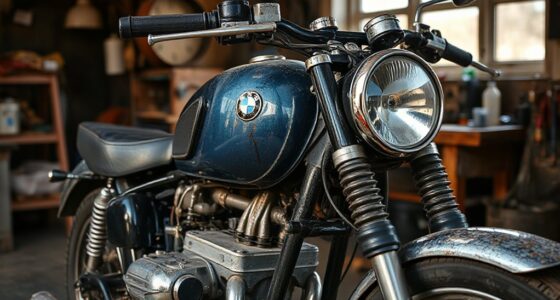
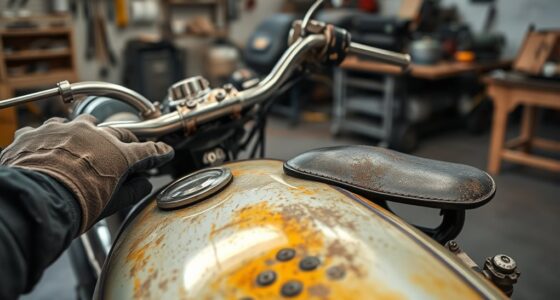
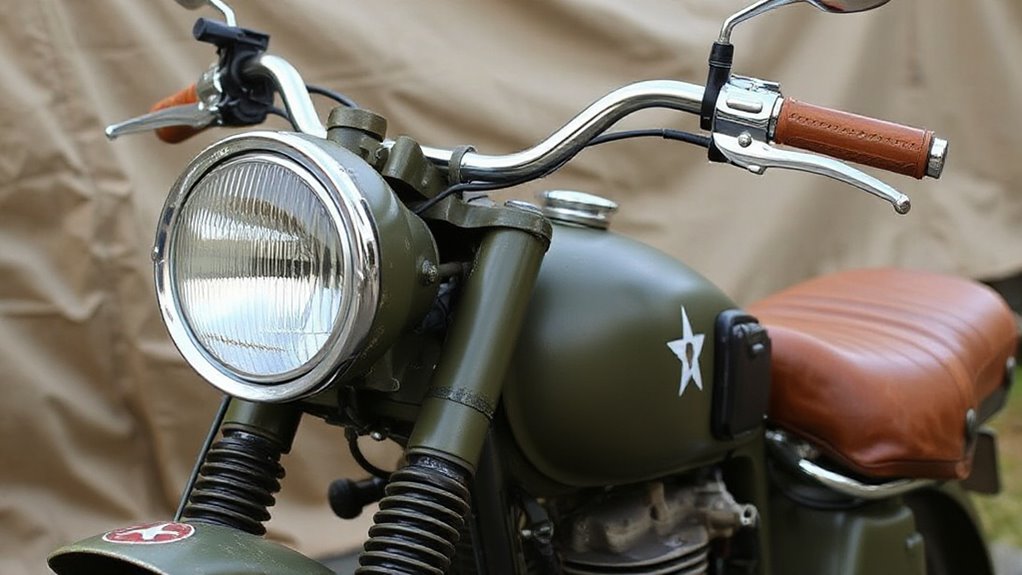
Restoring World War II military motorcycles is a rewarding hobby that combines history, craftsmanship, and adrenaline. When you set out to bring these historic machines back to life, you’re not just repairing an old bike—you’re preserving a piece of history. The process starts with careful inspection, as you assess the condition of the motorcycle’s frame, engine, and parts. One of your first tasks might involve stripping old paint, revealing the original metal beneath. Restoring the vintage paint is a delicate step; you want to match the authentic military colors, often matte olive drab or dull green, to retain the motorcycle’s wartime authenticity. Achieving the right vintage paint finish requires patience and precision, but it’s rewarding to see the bike’s historic appearance emerge.
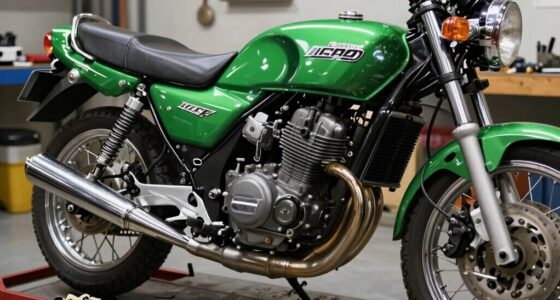
Once the aesthetic foundation is set, your focus shifts to the engine overhaul. Restoring the engine is critical for both authenticity and functionality. You’ll need to disassemble it carefully, inspecting every component for wear or damage. Replacing worn-out parts with period-correct or OEM replacements ensures the engine’s integrity. Cleaning and rebuilding the engine requires a good understanding of mechanical systems, but the satisfaction comes when you see it come back to life. Once reassembled, tuning the engine to peak performance is essential, as it will be the heartbeat of your restored motorcycle. Whether you’re aiming for a display piece or a running tribute, a well-overhauled engine not only looks great but performs reliably. Additionally, applying energy-efficient techniques during restoration can contribute to more sustainable project practices.
Throughout the restoration, attention to detail is key. Restoring vintage paint and completing an engine overhaul demand patience, but they also deepen your connection to the motorcycle’s history. You’ll find yourself researching original paint codes, sourcing authentic parts, and meticulously fitting each piece. This process transforms a rusty relic into a striking piece of wartime machinery, ready to roll or be displayed with pride. Restoring WWII military motorcycles also means embracing the challenge of sourcing rare parts, understanding historical accuracy, and troubleshooting mechanical issues. The result is a machine that stands as a tribute to craftsmanship and history, offering you a tangible link to the past. When you finally see your motorcycle restored with vintage paint gleaming and the engine purring smoothly, you’ll know all the effort was worth it.
Frequently Asked Questions
How Do I Verify the Authenticity of a WWII Military Motorcycle?
To verify a WWII military motorcycle’s authenticity, start with document verification—check for original ownership papers, manuals, and service records. Next, examine historical documentation like factory stamps, serial numbers, and markings that match known records. Consult experts or reputable sources to compare these details. Authentic bikes often have unique features consistent with the era, so thorough research and cross-referencing help confirm its legitimacy.
What Are the Most Common Issues Faced During Restoration?
Don’t let restoration challenges discourage you; sourcing authentic parts is often the biggest hurdle. You might face issues like finding original components, dealing with rust, or worn-out electrical systems. To overcome these, network with fellow enthusiasts, join specialized forums, and scour reputable suppliers. Patience and persistence are key. With careful research and dedication, you’ll successfully restore your WWII military motorcycle to its authentic glory.
Are Original Parts Available for Wla/Army Bikes?
Yes, original parts for WLA/Army bikes can be challenging to locate, but you still have options. You can source aftermarket parts or reproduction components that closely match the originals, guaranteeing your restoration stays authentic. While genuine parts are rare and often expensive, high-quality reproductions allow you to preserve the look and feel of the bike without compromising authenticity. Always verify the quality before purchasing to ensure durability and accuracy.
How Much Does a Full Restoration Typically Cost?
A full restoration of your WLA or Army bike typically costs between $8,000 and $15,000. Restoration cost estimates depend on sourcing authentic parts, which can be pricey but essential for originality. You’ll need to factor in labor, paint, and any rare parts. By carefully budgeting and working with experienced restorers, you can bring your vintage motorcycle back to its historic glory without overspending.
What Safety Precautions Are Recommended During Restoration?
You should always wear protective gear like gloves, goggles, and a respirator to shield yourself from chemicals and debris. Keep a fire extinguisher nearby and avoid open flames when working with flammable substances. Confirm proper ventilation in your workspace to reduce inhalation risks. Handling tools carefully and following safety guidelines minimizes accidents. Prioritize safety first to prevent injuries and ensure a smooth, secure restoration process.
Conclusion
Restoring these WWII military motorcycles is like breathing life back into a piece of history’s soul. Each nut and bolt you tighten whispers stories of courage and adventure, turning rusted relics into roaring legends. As you bring them back to their former glory, you become a time traveler, reviving the spirit of brave soldiers and daring missions. Your hands craft more than a bike — you revive a powerful chapter of history, riding it into the future.