When deciding if a bike is worth restoring or better as a parts bike, assess the frame’s condition first. If it’s solid with no cracks and retains most original parts, it’s a good restoration candidate. However, if the frame is damaged or heavily compromised, it’s likely better to part it out. Your skills, tools, and goals also matter—if time is short or authenticity isn’t critical, parts might be the way to go. Keep exploring to learn more.
Key Takeaways
- Assess the frame’s condition; a solid, uncracked frame favors restoration, while a compromised one leans toward parts use.
- Determine if the bike retains most original components; high originality supports restoration, missing parts suggest parts bike.
- Consider your skills, tools, and time; limited resources make parts bikes a more practical choice.
- Clarify your long-term goals—preserving authenticity favors restoration, customization may lead to parts bikes.
- Be honest about repair costs and effort; extensive repairs often mean the bike is better suited for parts.
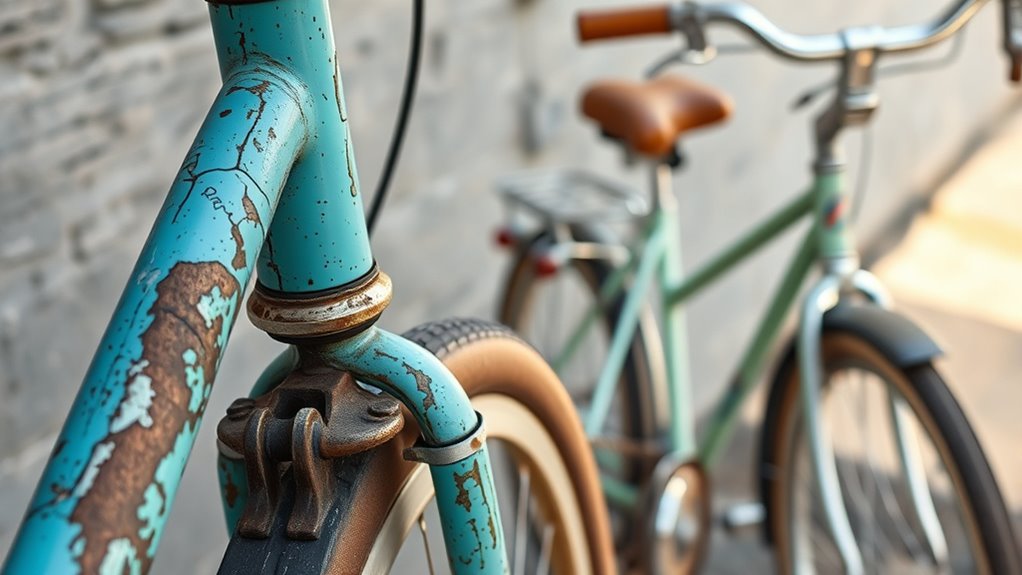
When deciding between a parts bike and a restoration candidate, you need to weigh the pros and cons of each option carefully. A parts bike typically means you’re purchasing a vehicle with significant issues or missing components, often valued for its spare parts rather than its complete, operational state. A restoration candidate, on the other hand, is usually a bike that retains much of its original structure but needs attention to bring it back to its former glory. The key difference lies in the potential for preservation versus replacement. If your main goal is to keep the bike’s originality intact, especially the frame, you’ll want to contemplate how much of the original frame integrity remains. A restoration candidate with a solid, uncracked frame is more likely to be worth the effort, as you can preserve its authenticity and value. Conversely, a parts bike may have a compromised frame that’s beyond repair, making it less suitable for restoration, but useful for parts to restore another bike.
You should also think about your skills, tools, and time. Restoring a bike requires patience, mechanical know-how, and a willingness to invest significant effort. If you have a passion for preserving original components and maintaining the bike’s historical integrity, a restoration candidate is often the better choice. It allows you to carefully preserve and restore the originality of the parts, especially the frame, which is central to the bike’s identity. However, if you’re limited in time or expertise, a parts bike might be more practical, provided it offers usable components. Just keep in mind that parts bikes tend to lack the potential for true preservation, as they often come with missing or heavily damaged parts that can’t be restored. Additionally, understanding the role of original parts can help determine whether a bike is worth restoring or serving primarily as a parts donor.
Another factor to contemplate is your long-term goals for the bike. If you want a fully functional, show-worthy restoration that retains as much of the original as possible, starting with a candidate that has good frame integrity makes sense. You’ll be able to focus on restoring and preserving its originality, which adds value and sentimental appeal. If, however, you’re more interested in building a project from parts or customizing, a parts bike might suit your needs better, but it’s unlikely to retain its original look or feel. Ultimately, the decision hinges on the condition of the frame, the importance you place on originality preservation, and your capacity to undertake a full restoration. Recognizing when to say when involves honestly appraising these factors to ensure your efforts lead to a satisfying, authentic result.

Ultrafashs Bike Cleaning Kit – 13-Piece Complete Set with Bike Cleaner 19oz, Degreaser 10oz, Wet Lube 2oz, Chain Scrubber & Brush
Complete Kit Value: Complete 13-Piece Bicycle Cleaning System – Includes 19oz bike cleaner, 10oz chain degreaser, 2oz wet…
As an affiliate, we earn on qualifying purchases.
As an affiliate, we earn on qualifying purchases.
Frequently Asked Questions
How Do I Determine if a Parts Bike Has Salvageable Components?
To determine if a parts bike has salvageable parts, you should carefully inspect its donor bike components for rust, corrosion, or damage. Look for intact frames, functional engines, and good-condition parts like wheels and seats. If the majority of parts are in decent shape, it’s worth salvaging. Avoid bikes with severe rust or bent frames, as those parts won’t be reliable for your restoration project.
What Are Signs That a Restoration Project Is Too Advanced?
A restoration project is too advanced when rust damage eats away at the frame, compromising its integrity like a sinking ship. If you notice extensive rust, cracked welds, or a compromised frame that’s beyond repair, it’s time to reconsider. When the cost of fixing these issues outweighs the bike’s value or safety, you should say when and look for a project with a stronger foundation to build on.
Can I Combine Parts From Multiple Bikes for a Custom Restore?
Yes, you can combine parts from multiple bikes for a custom restore, but you should prioritize frame integrity and address any compatibility issues. Keep in mind that originality concerns might arise if the bike’s value depends on authenticity. Make sure all parts fit properly, and consider how these modifications impact the bike’s overall look and performance. Balancing creativity with respect for the bike’s original design helps create a unique yet functional restoration.
How Do I Estimate the Total Restoration Costs Accurately?
Estimating restoration costs is like mapping a treasure hunt—you need a clear plan. You start by listing parts replacement costs and then add labor costs, considering whether you’ll do it yourself or hire professionals. Research prices for parts, factor in unexpected expenses, and allocate extra for unforeseen issues. Keep detailed records of each step to stay on budget and guarantee your project remains financially manageable from start to finish.
When Should I Consider Selling a Bike Instead of Restoring It?
You should consider selling your bike when its valuation no longer justifies the restoration costs or if seller motivations shift towards quick profit rather than restoration. If the bike’s market value is low compared to repair estimates, or you’re no longer passionate about restoring it, selling becomes a smart choice. Recognizing these signs helps you make a financially sound decision, ensuring you maximize your investment and avoid unnecessary expenses.

COTOUXKER Bike Repair Stand, Bicycle Repair Stand for Bike Maintenance and Repair Space Saving Hold Up to 44 Ibs
Adjustable and Non-Damaging Clamp: The sturdy bike stand repair clamp accommodates bike tubes from 1.2 inch to 2.5…
As an affiliate, we earn on qualifying purchases.
As an affiliate, we earn on qualifying purchases.
Conclusion
So, next time you’re torn between parts and restoration, remember—what seems like a hopeless heap might just be your next masterpiece. Ironically, that battered bike could be a diamond in the rough, waiting for your touch. Sometimes, knowing when to let go is the real skill. But if you’re about to toss it, just think: maybe, just maybe, you’re discarding potential perfection for another project. The irony? You’re never really done, are you?

Finish Line Bike Brake Cleaner Spray Can, Disc Rotor Cleaner, Acetone Formula, Extends Part Life (10 Fl OZ, Gray)
PERFORMANCE BOOST: Unleash the potential of your ride with our bike brake cleaner, a product designed to refresh…
As an affiliate, we earn on qualifying purchases.
As an affiliate, we earn on qualifying purchases.

AACGIN Bike Seat Clamp Bicycle Mountain Bike Spare Parts Aluminium Alloy Bicycle Seat Clamp 1 Pack
High quality materials: The bicycle seat clip is made of high-quality aluminum alloy, which is sturdy, durable, rust…
As an affiliate, we earn on qualifying purchases.
As an affiliate, we earn on qualifying purchases.