To achieve a mirror finish on aluminum engine cases, start by carefully sanding with coarse grit abrasives like 220 or 320 to remove imperfections. Gradually move to finer grits, such as 600, 800, and 1500, for a smooth surface. Apply aluminum-specific polishing compounds with soft cloths or a rotary tool, then buff with a dedicated wheel for extra shine. Keep practicing these steps to master a stunning, reflective finish that also protects against corrosion.
Key Takeaways
- Begin with coarse abrasives (220-320 grit) to level the surface, then gradually move to finer grits (600-1500) for smoothness.
- Use polishing compounds with soft cloths or rotary tools, working in small sections with consistent, light pressure.
- Progress through multiple polishing stages, from initial abrasives to fine compounds, to eliminate micro-scratches and enhance shine.
- Finish with a buffing wheel and dedicated aluminum polish to achieve a reflective, mirror-like surface.
- Wear protective gear and practice patience to ensure a professional, durable, and aesthetically appealing mirror finish.
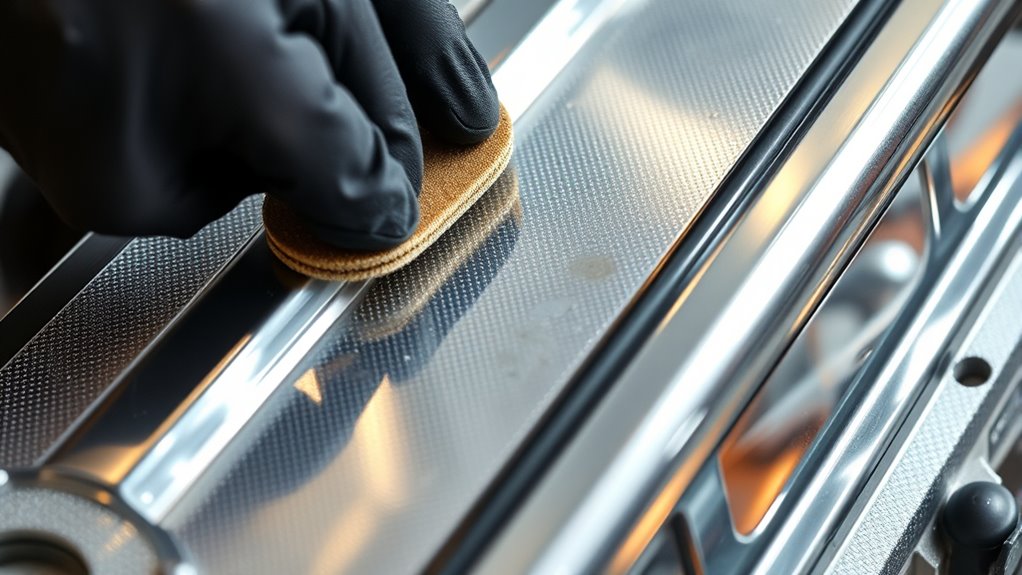
Polishing aluminum engine cases enhances their appearance and helps protect against corrosion, making your engine look as good as it performs. Achieving a mirror-like finish requires careful attention to detail and the right techniques. The process begins with understanding abrasive techniques, which are essential for removing surface imperfections, oxidation, and scratches. You’ll want to start with a coarse abrasive, such as a 220 or 320 grit, to level the surface and eliminate rough spots. As you progress, gradually move to finer grits like 600, 800, and even 1500, to smooth out the surface and prepare it for polishing compounds. This systematic approach guarantees you don’t leave deep scratches that can mar the final finish.
Once the surface is uniformly smooth, it’s time to use polishing compounds. These compounds contain abrasives that are specially formulated to remove the fine scratches left by the grit progression and bring out a high-gloss shine. You’ll typically apply polishing compounds with a soft cloth or a polishing wheel attached to a rotary tool. Use light, consistent pressure and work in small sections to ensure an even finish. As you work, you’ll notice the surface gradually transforming from dull to reflective. It’s important to keep the surface clean by frequently wiping away debris and excess compound, which can scratch the aluminum if left to accumulate. Incorporating proper polishing techniques can further enhance the quality of your finish and reduce the risk of micro-scratches.
Apply polishing compounds with a soft cloth or wheel, working in small sections for an even, reflective finish.
Patience is key when polishing aluminum engine cases. After applying the initial polishing compound, switch to a finer, more abrasive polish to refine the finish further. This step helps eliminate any remaining micro-scratches and enhances the mirror-like appearance. For an extra level of brilliance, you can utilize a buffing wheel with a dedicated polishing compound designed for aluminum. This step gives you that professional, mirror finish that makes your engine stand out. Remember to wear protective gear like gloves and a mask, especially when working with polishing compounds and abrasive techniques, to avoid inhaling dust or getting particles in your eyes.
In the end, the combination of proper abrasive techniques and high-quality polishing compounds will give your aluminum engine case an impressive, mirror-like shine. Not only does this improve its visual appeal, but it also provides an extra layer of protection against corrosion, extending your engine’s lifespan. The process demands patience and attention to detail, but the stunning results make it well worth the effort. With consistent practice, you’ll master the art of polishing aluminum to achieve a flawless, professional-quality finish that highlights your craftsmanship and care.
Frequently Asked Questions
What Safety Precautions Should I Take During Polishing?
When polishing, you should always wear protective gear like safety glasses, gloves, and a dust mask to shield your eyes, skin, and lungs from debris and dust. Keep your workspace clean and well-ventilated to prevent inhaling harmful particles and to reduce fire hazards. make certain tools are in good condition, and avoid distractions. Prioritize safety to prevent injuries and maintain a safe, efficient polishing environment.
How Long Does an Aluminum Engine Case Polishing Process Typically Take?
Rome wasn’t built in a day, and neither is a perfect mirror finish. Typically, polishing an aluminum engine case takes about 2 to 4 hours, depending on the surface’s condition and the level of shine you desire. You’ll need quality polishing equipment and proper surface preparation to accelerate the process. Patience and attention to detail will ensure you achieve a professional look without rushing.
Can I Use the Same Polishing Method on Different Metals?
You can’t always use the same polishing techniques across different metals due to varying metal compatibility. For example, aluminum responds well to softer abrasives, while harder metals like stainless steel need more aggressive methods. Always consider each metal’s properties before choosing your polishing technique. Using incompatible methods risks damaging the surface or causing uneven finishes. Research specific polishing procedures for each metal to guarantee the best results and avoid mishaps.
What Are the Best Polishing Products for Delicate Finishes?
For delicate finishes, you should use gentle polishing products like fine abrasive pads and mild polishing compounds. These tools help attain a smooth, mirror-like surface without causing damage or scratches. Always start with a softer abrasive pad, and apply polishing compounds sparingly, working carefully to avoid over-polishing. This approach ensures you enhance the finish while maintaining the integrity of delicate materials.
How Do I Prevent Scratches During the Polishing Process?
Did you know that improper polishing can cause up to 60% of surface scratches? To prevent scratches during your polishing process, you should use gentle polishing techniques and avoid applying too much pressure. Keep your abrasive materials clean and switch to finer grits gradually. Also, always use soft, lint-free cloths or pads, and work in a clean environment. This way, you maintain a smooth, scratch-free finish on your metal parts.
Conclusion
With patience and the right techniques, polishing your aluminum engine cases transforms them into a gleaming mirror that reflects your dedication. Think of it as sculpting a piece of art—each stroke reveals a flawless surface, turning rough metal into a shining masterpiece. Keep at it, and soon your engine parts will sparkle like a lake at sunrise, showcasing the pride you put into your project. The finish you achieve is truly the crown jewel of your craftsmanship.