To preserve original parts during restoration, gently clean them with soft brushes or mild solvents, ensuring you avoid damage. Carefully document and label each component during disassembly to keep track of its place and condition. Use compatible materials for repairs to prevent deterioration and maintain structural integrity. Prioritize preserving authentic parts over replacements and avoid modern modifications. For more detailed strategies on maintaining historical accuracy and craftsmanship, keep exploring ways to enhance your restoration process.

Get business pricing on garage and car supplies
- Business-only prices and quantity discounts
- Tax-exempt purchasing
- Multiple users, one account, clear invoices
Key Takeaways
- Carefully disassemble parts, labeling and documenting each component for accurate reassembly.
- Use gentle cleaning methods, such as soft brushes or mild solvents, to avoid surface damage.
- Match and use compatible materials like paints and adhesives to prevent deterioration.
- Store original parts in controlled environments to prevent environmental damage.
- Conduct thorough research to distinguish between original and replaced parts, ensuring authenticity.

Restoring a vintage vehicle or antique item often involves balancing the goal of revitalization with the desire to maintain its original character. Preserving the original parts is key to achieving this balance, and it requires careful attention to detail and respect for the item’s history. When you aim for historical accuracy, you focus on keeping the authentic look and feel intact, which means identifying and safeguarding parts that contribute to its genuine character. This involves thorough research to understand which components are original and which might have been replaced or altered over the years. You need to be meticulous during disassembly, labeling and documenting each part to ensure you can restore or replace components with exact or compatible equivalents later on.
Preserving original parts and documenting carefully ensures authentic restoration and maintains the item’s historical integrity.
Material compatibility becomes especially important when working with original parts. Using incompatible materials during restoration can accelerate deterioration or cause damage, compromising both the integrity and authenticity of the piece. For example, if you’re restoring a vintage vehicle, you should consider the types of metal, paint, and adhesives originally used. When repairing or reinforcing parts, choose materials that match the original in composition and properties, or at least are compatible enough to prevent adverse reactions. This approach helps preserve the item’s structural and aesthetic integrity while respecting its historical construction methods. Understanding the material composition of original parts aids in selecting suitable conservation techniques and replacement materials.
Handling original parts with care is essential. You want to clean and conserve them without stripping away their patina or altering their surface. Gentle cleaning methods, like using soft brushes or mild solvents, are often sufficient and less invasive than harsh chemicals that might damage the material. If parts are fragile, consider consolidating them with appropriate preservatives before any restoration work. Additionally, proper storage and environmental controls can prevent further deterioration over time. When replacement parts are necessary, seek out authentic reproductions or salvage items that closely match the original specifications, ensuring that any additions blend seamlessly with the existing components. Moreover, understanding the material compatibility of original parts aids in selecting suitable conservation techniques and replacement materials.
Throughout the process, your goal should be to preserve as much of the original as possible while making necessary repairs functional. This means avoiding unnecessary replacements and resisting the temptation to modernize beyond what’s required for safety or operation. By maintaining a focus on historical accuracy and material compatibility, you ensure that the restored item remains true to its origins. Ultimately, this careful approach not only honors the craftsmanship of the past but also guarantees that the vintage piece retains its value, character, and story for generations to come.
As an affiliate, we earn on qualifying purchases.
Frequently Asked Questions
How Do I Identify Original Parts Versus Replacements?
You identify original parts by examining their materials, construction methods, and wear patterns, which reflect historical authenticity. Look for factory markings or unique craftsmanship details, and compare with documented original specifications. Restoration ethics emphasize preserving as much of the original as possible, so carefully document and retain these parts. When uncertain, consulting experts or reference materials guarantees you maintain the integrity of the piece, honoring both authenticity and ethical restoration practices.
What Tools Are Best for Delicate Preservation Work?
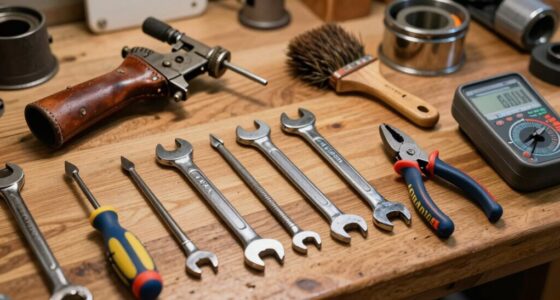
You should use fine, precise tools like scalpels, dental picks, and soft brushes for delicate preservation work. These tools align with restoration ethics by minimizing damage and maintaining authenticity. Keep your tools well-maintained with regular cleaning and sharpening to guarantee precision. Proper tool maintenance prevents accidental harm to original parts, helping you preserve their integrity. Using the right tools and caring for them demonstrates your commitment to respectful, high-quality restoration practices.
How Can I Prevent Future Corrosion of Preserved Parts?
You might think you’ve sealed the deal with a protective coating, but neglecting proper storage solutions leaves parts vulnerable. To prevent future corrosion, apply high-quality protective coatings and store items in climate-controlled environments—think away from humidity and temperature swings. Ironically, the best defense isn’t just the coating but where you keep your precious parts. Combining these strategies guarantees your restored pieces stay pristine for years to come.
Is It Necessary to Document Every Original Part Before Restoration?
Yes, documenting every original part is essential for maintaining historical accuracy and upholding restoration ethics. You should photograph, label, and record details about each component before removal. This process helps guarantee that the restoration respects the object’s history and allows future conservators to understand its original condition. Proper documentation also guides accurate reassembly and supports transparency, ultimately preserving the integrity and authenticity of the restoration project.
How Do Environmental Conditions Affect Preservation Techniques?
Environmental conditions substantially impact preservation techniques, as over 60% of deterioration occurs due to poor environmental control. You should guarantee a stable preservation environment by controlling humidity, temperature, and light exposure. Fluctuations can accelerate corrosion or decay, so maintaining consistent conditions helps preserve original parts. Prioritize a climate-controlled environment, use dehumidifiers, and avoid direct sunlight to protect your restoration efforts and prolong the lifespan of the artifacts.
vintage vehicle restoration parts
As an affiliate, we earn on qualifying purchases.
As an affiliate, we earn on qualifying purchases.
Conclusion
Preserving original parts during restoration is like saving the soul of a masterpiece—you maintain its history and character. Handle each piece with care, like a fragile treasure, and choose techniques that honor its story. Remember, every scratch and scar tells a tale worth keeping. When you respect the original fabric, you’re not just restoring an object; you’re nurturing its spirit, allowing it to shine brighter while still holding onto its timeless essence.
original metal preservation products
As an affiliate, we earn on qualifying purchases.
As an affiliate, we earn on qualifying purchases.
As an affiliate, we earn on qualifying purchases.
Evergreen bestsellers Picks
bestsellers
As an affiliate, we earn on qualifying purchases.