To track your vintage bike’s history, start by using its VIN to access online databases and manufacturer records for details about its past owners, accidents, and repairs. Compare your bike’s features with reference materials to verify authenticity and rarity. Seek out original parts for restoration and document all work to boost its value. Community forums and vintage clubs are great resources for insights and verified information. Keep exploring, and you’ll uncover even more about your bike’s unique journey.
Key Takeaways
- Use the VIN to access online databases and manufacturer records for detailed ownership, accident, and repair history.
- Compare your bike’s features, badges, and parts with reference materials to verify authenticity and identify rarity.
- Check for maintenance records and restoration details to assess the bike’s condition and care history.
- Engage with vintage motorcycle clubs and online forums to gather insights, verify model rarity, and find trusted parts sources.
- Document all findings and restoration steps to improve provenance and value, ensuring the bike’s history is well-traced.
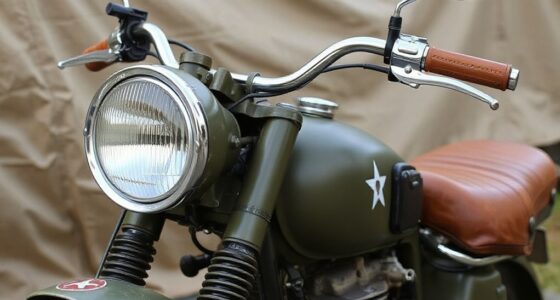
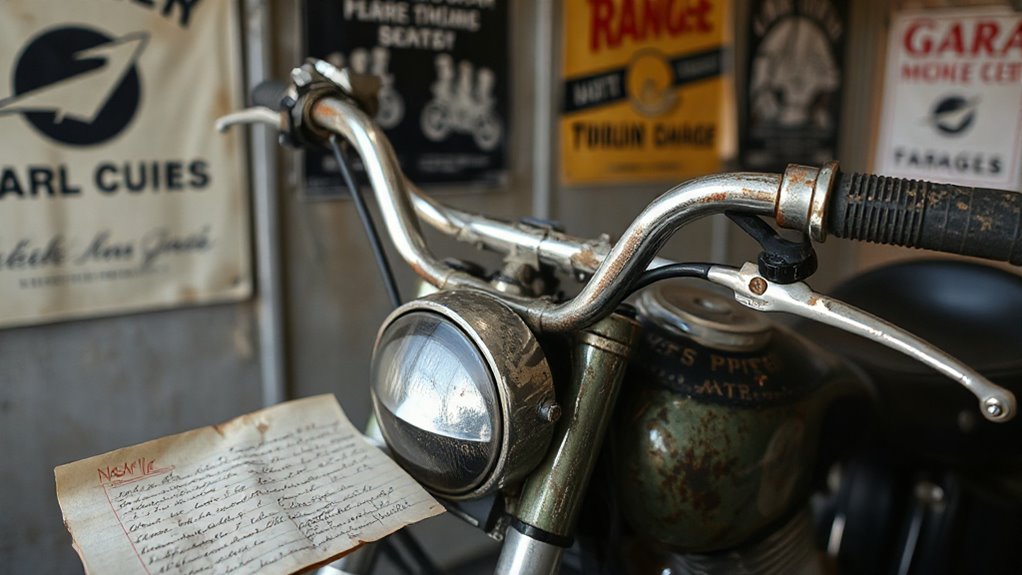
Tracking a motorcycle’s history can give you valuable insights into its past, helping you make informed decisions before purchasing or selling. When you explore a bike’s background, you’re not just gathering random facts but uncovering details that can influence its value, authenticity, and potential for restoration. One of the first steps is to research the motorcycle’s VIN, which acts as its unique fingerprint. This number can reveal manufacturing details, previous ownership, and even accident history if recorded. Using online databases or contacting the manufacturer directly can help you verify whether the bike matches its advertised description. If you’re dealing with a vintage or rare model, identifying its authenticity becomes even more critical. Rare model identification involves comparing your bike’s features—such as frame design, badges, and specific parts—to known reference materials or expert resources. This step ensures you’re not misled by replicas or modified bikes. When you confirm the model’s rarity, you can better understand its market value and historical significance, which is especially useful if you plan to restore or sell it later. Restoring a bike with accurate, original parts can significantly enhance its value and authenticity. Restoration tips are essential once you’ve established a bike’s history and confirmed its rarity. Knowing the original specifications and components helps you stay true to the bike’s authentic design during restoration. For example, sourcing period-correct parts and understanding the original paint schemes can greatly enhance the bike’s value and appeal. Documenting every restoration step also adds to the bike’s provenance, making it more attractive to collectors. Researching a motorcycle’s past isn’t just about confirming its authenticity; it’s about understanding its journey. Maintenance records, previous accidents, and restoration history can reveal how well the bike has been cared for and whether any major repairs were needed. This knowledge allows you to anticipate future issues and plan your restoration or maintenance work more effectively. Additionally, engaging with online forums and vintage motorcycle clubs can provide valuable insights. Enthusiasts often share documented histories and restoration stories that can help you identify potential pitfalls and best practices. They can also help you verify the rarity of a model or suggest trusted sources for parts and repairs. Knowing about piercing care and hygiene and proper jewelry materials can also be useful if you plan to customize or accessorize your bike with personalized details.
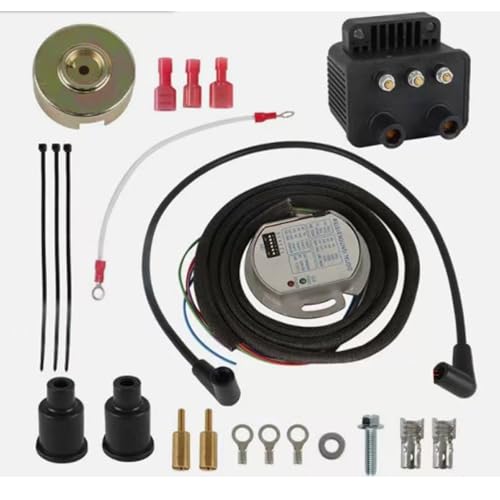
Single Fire Programmable Ignition Coil Kit - Compatible with 1970-1999 Harley-Davidson Big Twin (Except Twin Cam) & 1986-2003 Sportster (Except S models), Replaces 53-660
Wide Compatibility: Compatible with Harley-Davidson Big Twin models 1970–1999 (except Twin Cam) and Sportster 1986–2003 (except ‘S’ models).Also...
As an affiliate, we earn on qualifying purchases.
Frequently Asked Questions
Can I Find Original Ownership Records for My Vintage Motorcycle?
Yes, you can find original ownership records for your vintage motorcycle. Start by searching for registration documents, which often list the original owner’s name. Contact your state’s DMV or equivalent agency, providing details like the VIN and bike model. Sometimes, old registration records or title histories are available through online archives or motorcycle clubs. These sources can help you uncover valuable information about your vintage bike’s past owner.
How Can I Verify the Authenticity of a Classic Bike’s Parts?
You can verify a classic bike’s parts by becoming a detective in your own garage. Look for original part identification and factory markings that stand as fingerprints of authenticity. Cross-reference these details with manufacturer records or expert guides. Authentic parts often bear subtle engravings or stamps, so examine every inch. When markings match factory standards, you’re riding on genuine history, not just a well-crafted replica.
Are There Online Communities Dedicated to Vintage Motorcycle Research?
Yes, there are online communities dedicated to vintage motorcycle research. You can join online forums where enthusiasts share tips and experiences, or connect with collector clubs that often have extensive resources. Participating actively in these communities helps you learn about your bike’s history, find authentic parts, and verify details. These groups offer valuable insights, making your research more accurate and engaging while connecting you with fellow vintage motorcycle enthusiasts.
What Are Common Signs of a Restored or Modified Vintage Motorcycle?
You notice paint inconsistencies or non-original fasteners—red flags that your vintage bike may have been restored or modified. These signs often hide beneath the surface, so look closely for mismatched colors, overspray, or shiny new bolts replacing original hardware. Such details hint at past repairs or upgrades, making you wonder what else might have changed. Stay vigilant; these clues reveal the true story behind your vintage motorcycle’s history.
How Do I Determine the True Value of My Vintage Motorcycle?
To determine your vintage motorcycle’s true value, start by researching recent sales of similar models to gauge the market value. Consider its rarity assessment—if it’s a limited or unique edition, it could be worth more. Check condition, originality, and documented history, as these influence value. Consulting classic motorcycle appraisers or online valuation tools can give you a more accurate estimate, helping you set a fair price or make informed selling decisions.

32 Amp Alternator Charging System for 1970-1984 Shovelhead & 1984-1999 "EVO Evolution Big Twin FX/FL, Softail, Dyna, FXR, Touring Models (Except Twin Cam & EFI Models) with Stator, Rotor, Reg/Rec
Upgrade your '70-'84 Big Twins weak charging system with this upgraded 32 Amp Kit! These systems are the...
As an affiliate, we earn on qualifying purchases.
Conclusion
Knowing your vintage motorcycle’s history opens its true story and value. For example, imagine discovering your bike once belonged to a famous rider’s collection, boosting its worth and sentimental appeal. By researching registration records, previous owners, and maintenance logs, you connect with its past. This journey not only deepens your appreciation but also guarantees you care for it properly. Tracking its history transforms a simple bike into a treasured piece of riding history.
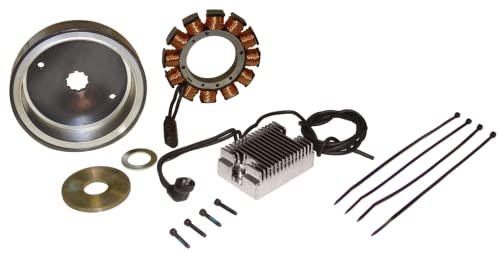
Heavy Duty 32 Amp Alternator Charging System w/HD One-Piece Rotor for 1970-1984 Harley Shovelhead & 1984-1999 EVO Big Twin Motor (Except Twin Cam & EFI Models) Chopper Bobber
Upgrade your '70-'84 Big Twins weak charging system with this HEAVY DUTY 32 Amp Kit! These systems are...
As an affiliate, we earn on qualifying purchases.

High Performance Ignition Coil fits for Honda 200 Atc200S Atc 200S 1985 1986 Atv High Performance Ignition Coil
100% brand-new, never ever been utilized, all parts are tested and quality controlled prior to shipment
As an affiliate, we earn on qualifying purchases.