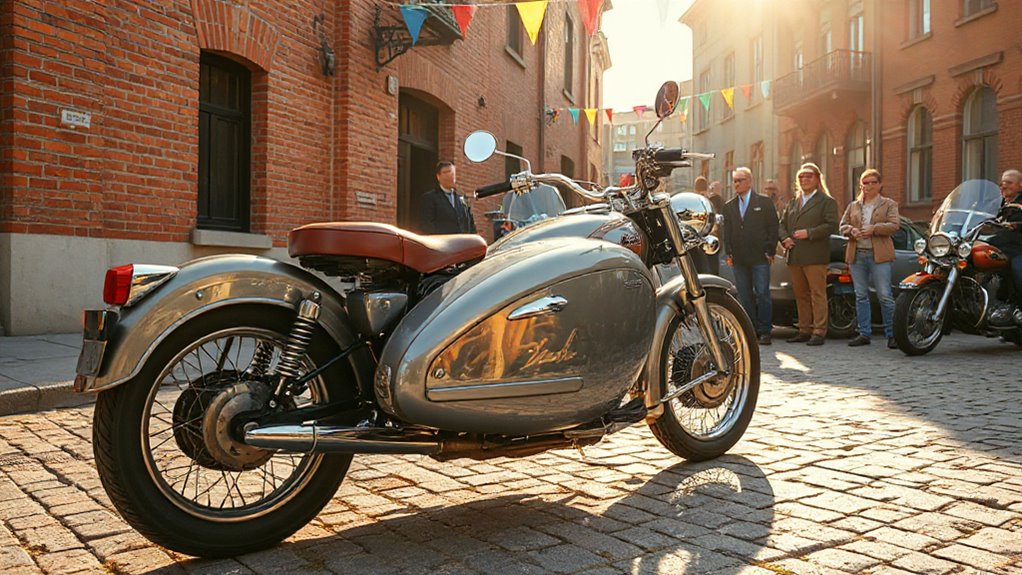

Motorcycle sidecars started in the early 20th century, serving practical purposes like transporting passengers and cargo. As cars became more affordable, their popularity declined, but enthusiasts kept their unique charm alive through vintage rallies and custom builds. Recently, a revival is happening, driven by nostalgia and modern innovation, blending history with style. If you stay curious, you’ll discover how this timeless accessory continues to evolve and inspire new generations.
Key Takeaways
- Sidecars originated in the early 20th century, providing utility and passenger transport before declining due to automobile popularity.
- Their cultural significance persisted among enthusiasts, fostering vintage appreciation despite reduced mainstream use.
- Modern revival focuses on customization, vintage aesthetics, and integrating advanced technology for safety and style.
- Enthusiast communities, events, and rallies sustain the sidecar culture, emphasizing craftsmanship, adventure, and shared experiences.
- The future trend combines historical appreciation with innovation, emphasizing sustainability and modern features in sidecar design.

Sidecar culture is a vibrant and enduring aspect of motorcycling that combines practicality with a sense of camaraderie and adventure. To truly appreciate it, you need to understand its history evolution. Sidecars first appeared in the early 20th century, transforming motorcycles from solo transportation into versatile, multi-passenger vehicles. During the 1910s and 1920s, they gained popularity for their utility, especially in rural areas and for commercial use. Their design was simple but effective, allowing riders to carry passengers, cargo, or even serve as makeshift ambulances. Over time, innovations in materials and engineering improved their stability, comfort, and safety, leading to a surge in popularity during the interwar period. However, as automobiles became more affordable and accessible, the appeal of sidecars declined, and by the mid-20th century, their presence on the roads diminished. Still, the cultural significance persisted, especially among enthusiasts who appreciated the unique riding experience and nostalgic charm of sidecars.
Today, modern trends have sparked a revival in sidecar culture. You’ll notice a renewed interest driven by a mix of vintage aesthetics, custom builds, and the desire for a distinctive riding experience. Builders now incorporate advanced technology and ergonomic designs, making sidecars more comfortable and safer than ever. Many riders see them not just as practical accessories but as expressions of individuality and style. The resurgence is also fueled by the broader motorcycling community’s embrace of retro and classic themes, combined with a desire for adventure beyond the confines of traditional solo riding. Modern trends include electric sidecars, which reflect the shift toward sustainable transportation, and innovative features like integrated storage, improved suspension, and modern lighting systems. Events, rallies, and social clubs dedicated to sidecar riding are flourishing, connecting enthusiasts worldwide and keeping the culture alive.
You might find yourself drawn to the charm and camaraderie of sidecar culture, whether you’re interested in restoring vintage models or customizing modern builds. It’s a community that celebrates craftsmanship, shared experiences, and a sense of adventure that transcends time. The evolution from its practical beginnings to a niche hobby, and now a trendy revival, shows how sidecars continue to adapt and inspire. As you explore this world, you’ll see that sidecar culture isn’t just about transportation; it’s about creating connections, embracing history, and riding into the future with style and purpose.
Top picks for "sidecar culture rise"
Open Amazon search results for this keyword.
As an affiliate, we earn on qualifying purchases.
Frequently Asked Questions
How Do Sidecars Impact Motorcycle Safety and Handling?
Sidecars impact motorcycle safety and handling by introducing stability concerns, especially during turns and sudden maneuvers. You need to be aware that riding a sidecar requires specialized rider training to manage these differences effectively. With proper training, you can handle the added stability challenges and enjoy safer, more controlled rides. Remember, understanding the unique dynamics of a sidecar helps prevent accidents and improves overall riding confidence.
What Are the Most Popular Sidecar Models Today?
Today, you’ll find popular sidecar models like the Ural Gear Up and Moto Guzzi V85 TT, which blend classic design innovations with modern trends. These models often feature improved stability, lightweight materials, and sleek aesthetics that appeal to enthusiasts. As design trends shift toward retro and vintage styles, these sidecars honor history while offering enhanced safety and handling, making them a top choice for riders seeking both tradition and innovation.
How Do Sidecars Influence Motorcycle Insurance Policies?
You’ll find that adding a sidecar can impact your motorcycle insurance policies considerably. Insurance premiums often increase because insurers view sidecars as higher risk, and they may require enhanced liability coverage to protect against potential accidents. It’s important to inform your insurer about your sidecar, so you get accurate coverage. This way, you’re better protected financially, and your policy reflects the true scope of your motorcycle setup.
What Modifications Are Needed to Attach a Sidecar?
To attach a sidecar, you need attachment modifications like reinforced mounting brackets and secure fasteners to guarantee proper connection. You should also focus on stability enhancements, such as adjusting the suspension and tire pressure, to keep your motorcycle balanced. Make sure to align the sidecar correctly and check all fittings regularly. These steps help improve safety, handling, and overall riding experience when adding a sidecar to your motorcycle.
Are There Specific Licensing Requirements for Sidecar Riders?
You might worry about licensing regulations, but generally, you need a valid driver’s license with motorcycle endorsement to operate a sidecar. Licensing requirements vary by state or country, so check your local regulations. In most cases, your driver licensing covers both motorcycle and sidecar riding, but some regions might require additional endorsement or certification. Always confirm local rules to ensure you’re fully compliant before hitting the road.
Conclusion
As you see, sidecar culture has experienced a remarkable rise, fall, and resurgence. It’s a demonstration to how passions can endure and adapt over time. Just remember, “what’s old is new again,” and sometimes, revisiting the past can lead to exciting new adventures. Keep the spirit alive, whether on two wheels or with a sidecar, and embrace the timeless thrill of the open road. The journey continues—never stop exploring.