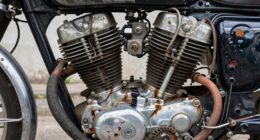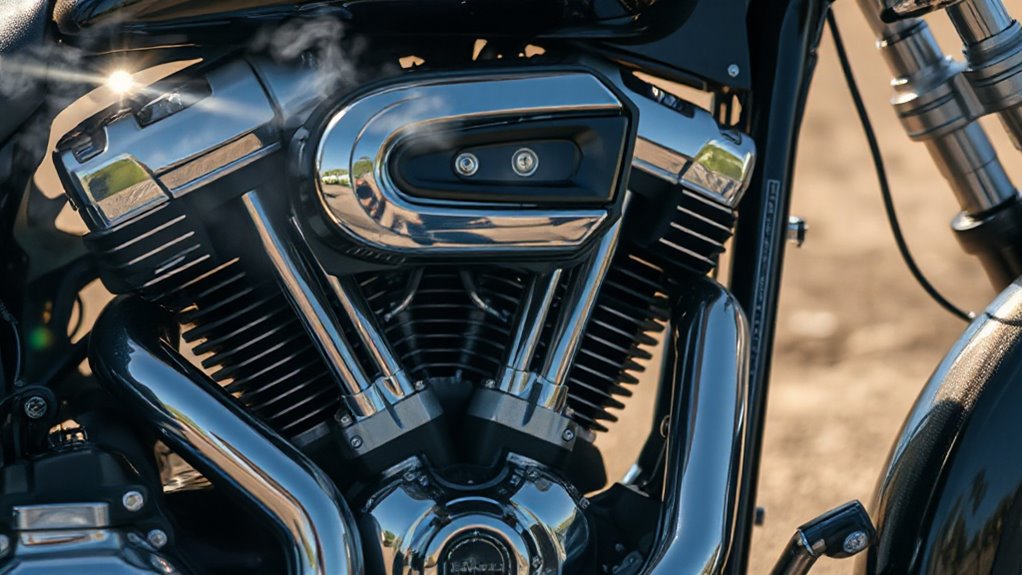

If your bike stalls when hot, start by checking your cooling system for coolant leaks, debris-blocked radiators, or low fluid levels, as overheating causes engine shutdowns. Inspect your spark plugs for signs of fouling or damage, since heat can lead to misfires. Also, examine electrical wiring and insulation, because heat weakens components and causes failure. Proper maintenance and timely repairs can prevent these issues, and more tips await if you keep exploring.
Key Takeaways
- Check and maintain the cooling system, including coolant levels and radiator cleanliness, to prevent engine overheating.
- Inspect and replace worn or fouled spark plugs to ensure reliable ignition during high temperatures.
- Examine electrical wiring, ignition coils, and connections for heat damage or insulation failure.
- Use heat shields or insulating wraps around electrical components to reduce heat exposure.
- Regularly service the cooling and electrical systems to identify issues before overheating causes stalls.
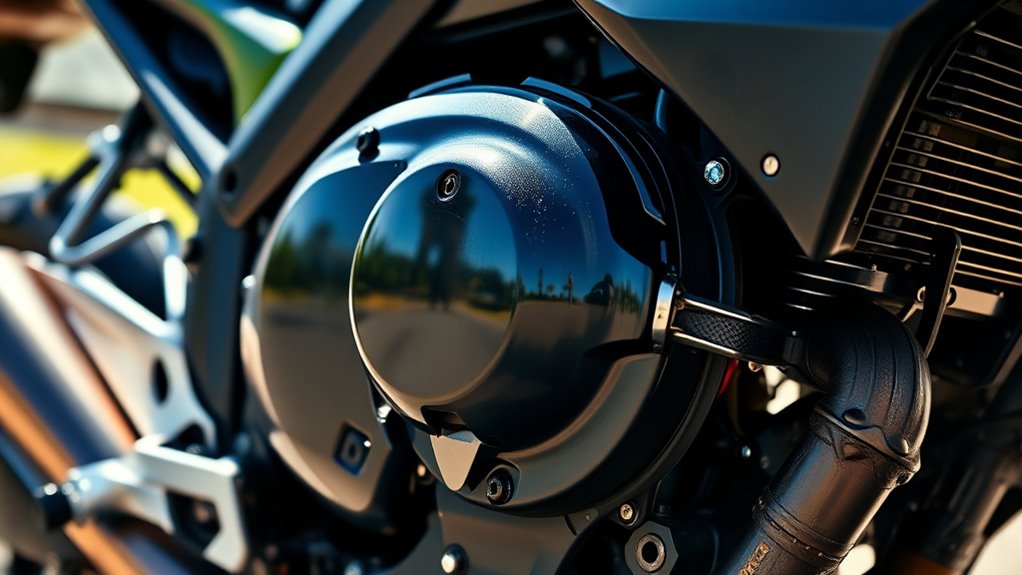
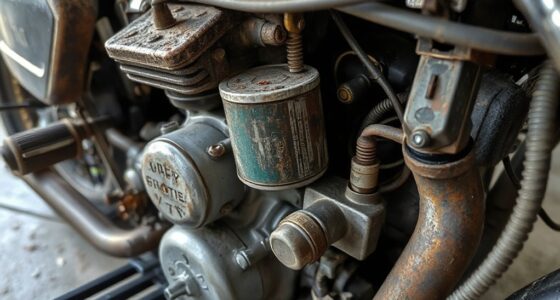
If your bike stalls or dies when it gets hot, it’s likely due to a heat-related issue in the engine or electrical system. High temperatures can cause components to malfunction or fail, making troubleshooting essential. One common culprit is the cooling system. If your bike’s cooling system isn’t functioning properly, the engine can quickly overheat, leading to stalls. Check for coolant leaks, low fluid levels, or clogged radiators. Over time, radiator fins can become blocked with debris, impeding heat dissipation. If your cooling system isn’t effectively managing engine heat, it’s only a matter of time before the engine stalls under stress. Maintaining proper coolant levels and ensuring the radiator is clean can help prevent overheating caused by insufficient cooling.
Another critical component affected by heat is the spark plug. When it gets too hot, a spark plug may misfire or fail to ignite the fuel-air mixture properly. A worn or fouled spark plug can generate excessive heat, exacerbating the problem. If your spark plug is old, damaged, or improperly gapped, it can cause misfiring during hot conditions, leading to engine stalls. Removing the spark plug and inspecting its condition can reveal signs of overheating, such as a white or blistered insulator. Replacing a faulty spark plug with a new, properly gapped one can restore reliable ignition and prevent stalls caused by heat.
A worn spark plug can overheat, causing misfires and engine stalls during hot conditions.
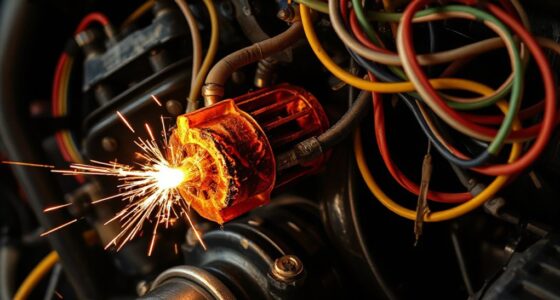
In addition to these issues, consider the ignition coil and wiring. Excessive heat can weaken insulation or cause electrical resistance, leading to inconsistent spark delivery. If you notice that your bike runs fine when cold but stalls after warming up, it might be worth checking the ignition coil and electrical connections for heat-related damage. Heat shields or insulating wraps around sensitive components can also help keep temperatures down. Regularly inspecting and maintaining electrical components can prevent electrical failures and improve reliability.
Monitoring your bike’s temperature gauge or paying attention to how it behaves under stress can alert you to potential heat-related problems early. Regular maintenance of the cooling system, replacing worn spark plugs, and inspecting electrical parts are essential steps to prevent engine stalls in hot conditions. When you keep these components in check, you’ll reduce the chances of your bike dying during hot weather and keep your rides smooth and reliable.

VEVOR Motorcycle Lift, 1100 LBS Motorcycle Lift ATV Scissor Lift Jack with Dolly & Hand Crank, Center Hoist Crank Stand with Wide Deck & Tool Tray for Street Bikes, Cruiser Bikes, Touring Motorcycles
Large Weight-bearing Capacity: When you need to lift your motorcycle for maintenance and cleaning, you can partner with...
As an affiliate, we earn on qualifying purchases.
Frequently Asked Questions
Can a Faulty Spark Plug Cause Overheating Stalls?
Yes, a faulty spark plug can cause overheating stalls. If your spark plug fouls or deteriorates, it disrupts proper ignition timing, leading to incomplete combustion. This causes the engine to run hotter than normal, increasing the risk of overheating and stalling when hot. Regularly check and replace your spark plug to guarantee proper ignition timing and prevent heat-related engine stalls, keeping your bike running smoothly.
How Does Fuel Quality Impact Engine Overheating?
Poor fuel quality can cause your engine to overheat. Fuel contamination, like dirt or water, disrupts combustion and creates excess heat. Using low-quality fuel or fuel with too many fuel additives can also lead to inefficient burning, increasing engine temperature. Always choose good-quality fuel, and consider fuel additives that improve combustion. Regularly check your fuel for contamination, and avoid cheap, poorly refined options to prevent overheating issues.
Are There Specific Riding Conditions That Increase Heat Issues?
Riding in traffic and climbing steep grades definitely increase heat issues. When you’re stuck in traffic, your engine struggles with poor airflow, causing it to overheat. Similarly, climbing steep grades puts extra load on your bike, generating more heat. To prevent stalls, avoid prolonged traffic jams and take breaks during steep climbs. Keep your bike well-maintained, and consider using cooling aids if you frequently ride in these conditions.
What Role Does Oil Type Play in Preventing Engine Stalls?
Choosing the right oil viscosity helps prevent engine stalls when hot, as it guarantees proper lubrication under high temperatures. Synthetic oils generally perform better than conventional oils because they resist breakdown and maintain viscosity longer, especially in demanding conditions. You should opt for a synthetic oil with the appropriate viscosity rating recommended by your bike’s manufacturer, as this helps keep the engine cool and prevents heat-related stalls.
Can Aftermarket Parts Affect the Bike’s Heat Management?
Aftermarket parts can considerably influence your bike’s heat management. If you choose poorly made or incompatible components, they might cause increased heat buildup, leading to stalls when hot. Properly selected aftermarket parts can improve cooling systems, airflow, and overall engine efficiency. Be cautious, though—customized components could compromise heat regulation if not designed for your bike. So, carefully consider and choose aftermarket parts that enhance, rather than hinder, heat management.

VEVOR Motorcycle Lift, 1100 LBS Motorcycle Scissor Lift Jack with Wide Deck & Safety Pin, 3.7"-13.8" Center Hoist Crank Stand, Steel Scissor Jack for Street Bikes, Cruiser Bikes, Touring Motorcycles
Large Weight-bearing Capacity: When you need to lift your motorcycle for maintenance and cleaning, you can partner with...
As an affiliate, we earn on qualifying purchases.
Conclusion
When your bike stalls from heat, don’t let it turn into a runaway nightmare. By checking your cooling system, spark plugs, and fuel lines, you can tame this fiery beast before it destroys your ride—literally! Remember, a hot engine isn’t just a minor hiccup; it’s like a ticking time bomb waiting to blow. Stay vigilant, perform regular maintenance, and keep that engine cool. Your smooth ride depends on it—don’t let heat win!

Orion Motor Tech Motorcycle Lift, 1100lb Motorcycle Scissor Lift Jack with Wide Deck T Handle 3/8" Socket, Motorbike Center Stand with Chain Brush, Crank Hoist Stand for ATV Dirt Bike Cruiser, Gray
Ultimate Motorcycle Support: Effortlessly lift motorcycles weighing up to 1100 lb. with this ready-to-use motorcycle scissor jack from...
As an affiliate, we earn on qualifying purchases.

Orion Motor Tech Motorcycle Lift, 1100lb Motorcycle Scissor Lift Jack with Wide Deck T Handle 3/8" Socket, Motorbike Center Stand with Chain Brush, Crank Hoist Stand for ATV Dirt Bike Cruiser, Blue
Ultimate Motorcycle Support: Effortlessly lift motorcycles weighing up to 1100 lb. with this ready-to-use motorcycle scissor jack from...
As an affiliate, we earn on qualifying purchases.