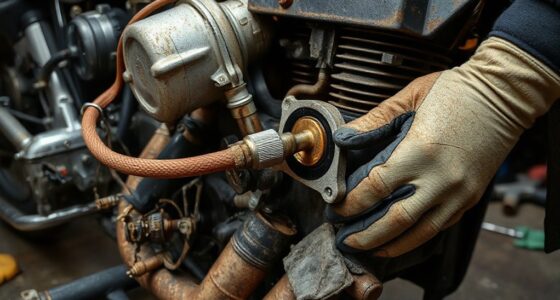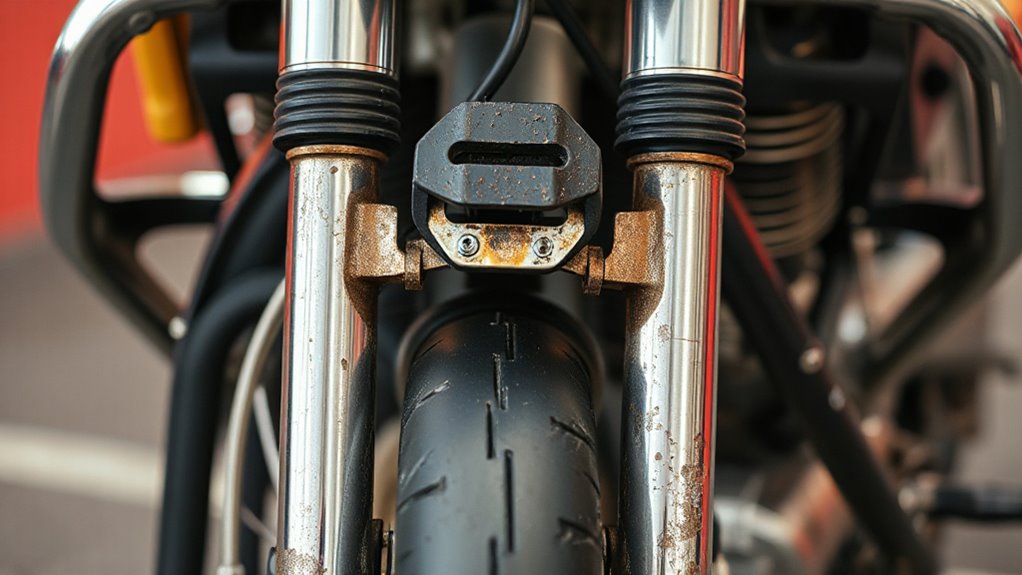

If your front end feels wobbly and you notice fork leaks, your suspension system likely has issues that need attention. Leaking shocks or struts reduce damping, causing rough rides and uneven tire wear, while a loose front end affects handling and safety. To fix this, inspect and replace damaged shocks or struts, then perform a professional wheel alignment. Continuing with proper repairs can restore your vehicle’s stability and safety, and you’ll find helpful tips ahead.
Key Takeaways
- Regularly inspect front suspension components for leaks, damage, or wear to identify potential issues early.
- Replace leaking shocks or forks promptly to restore proper damping and ride quality.
- Ensure proper wheel alignment after repairs to prevent wobbling and uneven tire wear.
- Check for loose or damaged suspension parts that can cause steering pull and instability.
- Use professional diagnostic tools to accurately assess suspension health and prevent further damage.

Your vehicle’s front suspension plays a crucial role in ensuring a smooth ride and responsive handling. When it’s working correctly, you hardly notice it, but if there are issues like fork leaks or a wobbly front end, you’ll feel it immediately. These problems not only affect your comfort but also impact safety and the longevity of other components. One common sign of suspension trouble is uneven tire wear, especially on the front tires. If your tires are wearing out faster on one side or developing unusual patterns, it could be a sign that your steering alignment is off. When the front suspension isn’t functioning properly, it can cause your wheels to sit at odd angles, leading to misalignment. This, in turn, accelerates tire wear, compromises handling, and reduces overall driving safety.
Fork leaks typically occur in the suspension struts or shocks, where hydraulic fluid escapes through damaged seals. This leakage diminishes the shock absorber’s ability to dampen road impacts, leading to a bouncy or wobbly front end. As the fluid leaks out, you’ll notice that the ride becomes increasingly rough, especially over bumps or uneven surfaces. Over time, the loss of damping power allows the suspension to rebound excessively, which can cause steering to feel loose or unresponsive. In addition, fork leaks contribute to uneven tire wear because the suspension isn’t properly controlling wheel motion. The misalignment caused by worn or leaking shocks can also cause your steering to pull to one side, making it harder to keep the vehicle straight and increasing driver fatigue. Regular inspections can help identify early signs of wear and prevent further damage.
Fixing these issues involves inspecting the suspension components thoroughly. If you find leaks in the shocks or struts, replacing them is essential. Not only does this restore proper damping, but it also helps realign the suspension geometry, improving tire wear and steering responsiveness. After replacement, you should have a professional perform a wheel alignment to correct any misalignment caused by the worn parts. Technological integration like advanced diagnostic tools can assist in assessing suspension health more accurately. Regular maintenance and inspections are key to preventing these problems from worsening. If you notice your steering feels heavier or you see uneven tire wear, don’t delay checking your suspension system. Addressing leaks early and ensuring proper alignment will save you money in the long run and keep your vehicle handling smoothly and safely on the road.
Frequently Asked Questions
How Often Should I Inspect My Front Suspension?
You should inspect your front suspension at least every 5,000 miles or during regular maintenance. Check for suspension fluid leaks, which can indicate worn seals, and verify your steering alignment is correct to avoid handling issues. Regular inspections help catch problems early, keeping your ride smooth and safe. If you notice any wobbling or uneven steering, perform an immediate check and consider professional service to maintain ideal suspension performance.
Can Uneven Tire Wear Indicate a Suspension Problem?
Uneven tire wear can definitely indicate a suspension problem, so don’t ignore it. You might need a tire alignment or replacement of worn suspension bushings. Addressing these issues early helps prevent more costly repairs and keeps your ride smooth. Regular inspections reveal if your suspension components are causing uneven wear, ensuring you stay safe and comfortable on the road. So, check those tires and suspension system often!
Are Front Suspension Repairs Covered by Warranty?
Warranty coverage for front suspension repairs varies depending on your vehicle’s warranty terms. Generally, if the issue stems from manufacturing defects, it’s likely covered. You should check your warranty details and make certain regular inspection frequency to catch problems early. Keep up with scheduled inspections, as they can help identify suspension issues before they become costly repairs, potentially making warranty claims smoother and more successful.
What Are the Signs of Worn-Out Fork Seals?
You might notice fork seal leaks or front suspension noise when your seals wear out. Coincidentally, these signs often appear together, signaling a need for inspection. Worn-out fork seals cause oil to escape, leading to decreased suspension performance and visible leaks. You’ll also hear unusual noises during rides, which indicates your front suspension isn’t functioning smoothly. Catching these signs early helps prevent more costly repairs down the road.
Is It Safe to Drive With a Wobbly Front End?
It’s not safe to ride with a wobbly front end because your bike’s stability depends on proper suspension and wheel alignment. A wobble could indicate issues with your front fork, which can affect handling and control. Check your rear shock and make certain your wheels are correctly aligned. Ignoring these signs can lead to accidents, so it’s best to get your suspension inspected and repaired before riding further.
Conclusion
Now that you’ve identified the signs of fork leaks and wobbly front ends, you’re on the edge of a critical fix. Imagine hitting the road again, feeling that smooth, confident ride as your suspension breathes new life into your bike. But beware—ignoring these issues could lead to more serious damage and a dangerous ride. Stay vigilant, address the problems promptly, and keep your journey safe and thrilling. The open road is waiting—are you ready?