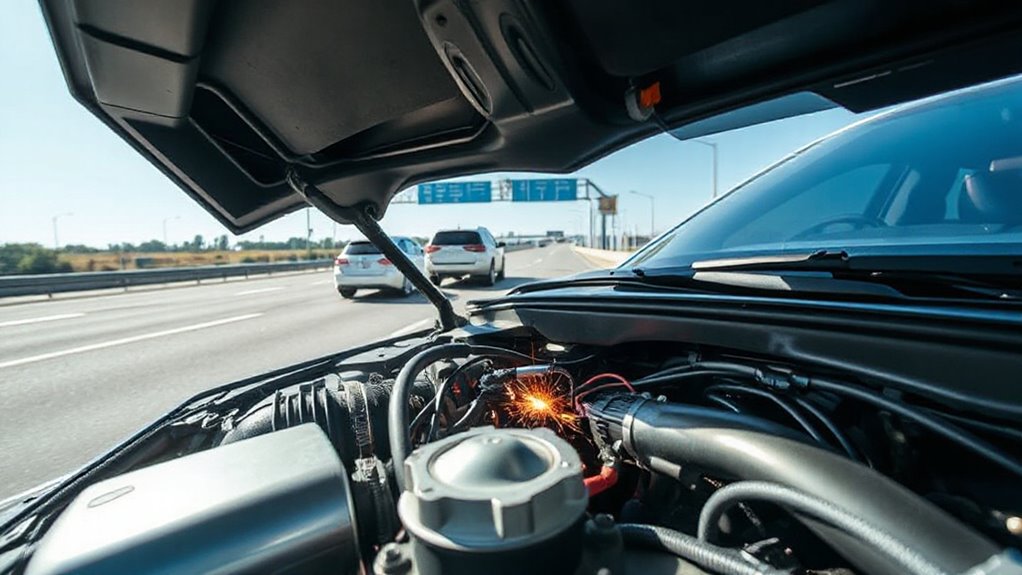

If your vehicle sputters or loses power at highway speeds, the issue often stems from alternator or fuel system problems. You should check for warning lights like the battery indicator, listen for fuel pump noises, and consider testing the alternator with a multimeter to monitor voltage. Fuel delivery issues, such as a clogged filter or faulty pump, could also cause trouble. Continuing with these tips will help you identify and fix the root cause effectively.
Key Takeaways
- Check the alternator output with a multimeter to ensure proper voltage regulation during high RPMs.
- Inspect the fuel filter and fuel pump for clogs or failure to maintain consistent fuel pressure.
- Monitor dashboard warning lights, especially the battery indicator, for electrical system issues.
- Test the fuel pressure to identify potential restrictions affecting engine power at highway speeds.
- Perform regular electrical and fuel system maintenance to prevent power fluctuations and sputtering.

Experiencing power loss at highway RPM can be frustrating and dangerous, especially when it hampers your vehicle’s performance on long trips. One common cause often overlooked involves alternator issues, which can disrupt the electrical system and lead to power fluctuations. When your alternator isn’t functioning properly, your vehicle may struggle to maintain a stable voltage, affecting essential components like fuel injectors and ignition systems. This instability can cause your engine to sputter or lose power at higher speeds, making driving unpredictable and unsafe. Additionally, a failing alternator can lead to a drained battery, further compounding the problem and potentially leaving you stranded. To diagnose this, check the dashboard for warning lights such as the battery indicator, and consider testing your alternator’s output with a multimeter to see if it’s charging correctly. Replacing a faulty alternator is often necessary to restore consistent power and ensure your vehicle runs smoothly at highway speeds. Proper maintenance of electrical components is crucial for preventing these issues, especially in modern vehicles with complex electrical systems.
Beyond alternator issues, fuel delivery problems are another significant factor behind power loss at highway RPM. If your fuel system isn’t delivering the right amount of fuel efficiently, your engine won’t perform at its best. Clogged fuel filters restrict flow, causing lean conditions that lead to sputtering and hesitation when you accelerate or cruise at high speeds. Fuel pump failures can also cause pressure drops, resulting in insufficient fuel reaching the engine. When fuel delivery is compromised, your vehicle may struggle to maintain power, especially under load or during sustained high-speed driving. To troubleshoot this, start by inspecting and replacing your fuel filter if it’s clogged, and listen for any unusual noises from the fuel pump. Using a fuel pressure gauge can help determine if the pump is delivering the correct pressure. Addressing these issues promptly can prevent further damage and restore your vehicle’s ability to perform confidently on the highway. Regular maintenance, including checking the alternator’s health and ensuring your fuel system is clean and functioning correctly, can help prevent these issues from escalating. If you notice your vehicle sputtering or losing power at highway speeds, don’t ignore these signs. Addressing alternator problems and ensuring proper fuel delivery are essential steps to keeping your vehicle reliable and safe during high-speed driving.
Frequently Asked Questions
Can High-Speed Sputtering Cause Long-Term Engine Damage?
High-speed sputtering generally won’t cause long-term engine damage if addressed promptly, but it can lead to issues like sputtering corrosion and engine overheating. You should check for signs of corrosion on spark plugs or wires, and monitor engine temperature. Ignoring these symptoms might result in long-term damage, so it’s best to have your vehicle inspected and repaired quickly to prevent costly repairs later on.
What Is the Average Lifespan of Sputtering Components Under Highway Conditions?
Think of your sputtering components as a delicate dance partner, gracefully enduring but gradually wearing down over time. Typically, under highway conditions, these parts last around 50,000 to 100,000 miles. Component degradation can reduce fuel efficiency and performance, so regular maintenance helps prolong their lifespan. Keep an eye on signs of wear, and you’ll make sure your engine keeps performing smoothly on every journey.
Are There Specific Driving Habits That Exacerbate Power Loss Issues?
Your driving style and acceleration habits can worsen power loss issues during highway sputtering. If you frequently accelerate aggressively or maintain high RPMs for extended periods, you’re putting extra strain on components, leading to faster wear. Try to adopt smoother acceleration and steady cruising to minimize stress on your engine. Consistent, gentle driving helps reduce power loss and prolongs the lifespan of your sputtering system, ensuring better performance over time.
How Does Ambient Temperature Affect High-Speed Sputtering Performance?
Ambient temperature crucially impacts high-speed sputtering performance through thermal effects. When ambient heat rises, your equipment can overheat more easily, leading to power loss at highway RPM. Cooler temperatures help dissipate heat better, maintaining ideal thermal conditions. You might notice improved stability and efficiency in colder environments. To prevent issues, monitor ambient heat levels and consider cooling solutions, especially during hot weather, to guarantee consistent sputtering performance at high speeds.
Is Specialized Maintenance Required for High-Speed Sputtering Systems?
Yes, you do need specialized maintenance for high-speed sputtering systems. You should follow specific maintenance protocols to keep the equipment in ideal condition. Regular calibration procedures are essential to guarantee consistent performance and prevent power loss at highway RPM. By adhering to these protocols and calibration routines, you help maintain system efficiency, reduce downtime, and extend the lifespan of your sputtering equipment.
Conclusion
Think of your engine like a finely tuned orchestra; when one instrument falls out of sync, the entire harmony suffers. By checking your fuel system, ignition, and sensors, you can restore that symphony of power at highway RPM. Don’t let power loss be the silent conductor, guiding you astray. Instead, troubleshoot methodically, and you’ll soon have your vehicle humming smoothly, ready to hit the open road with confidence and clarity.