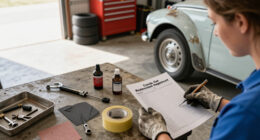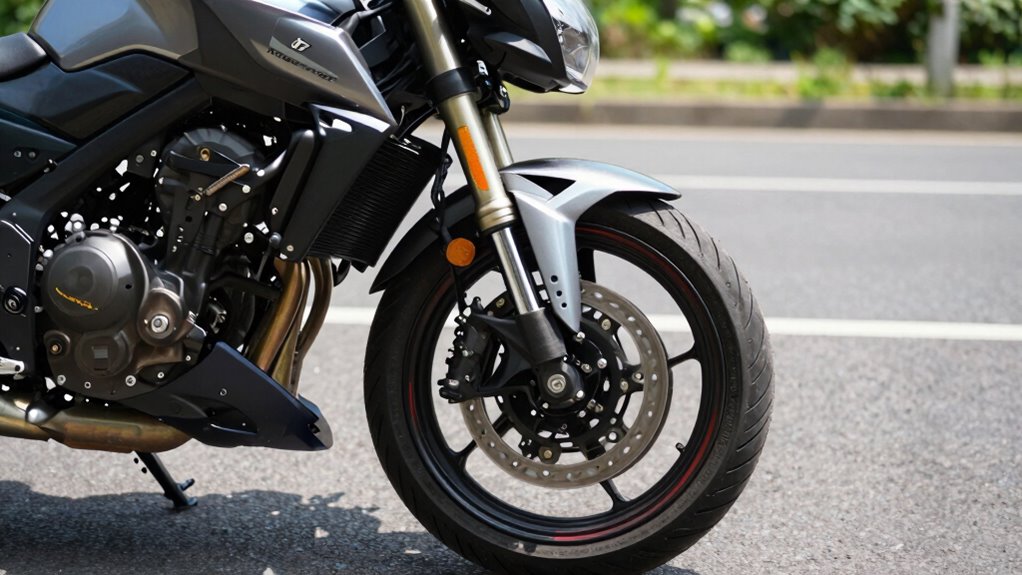

If your motorcycle pulls to one side, start by checking the tire pressure and verify it matches the manufacturer’s specs, as under- or overinflation can cause pulling. Next, inspect the brake pads and calipers for proper alignment and even wear. Examine your wheel for wobbling or damage, and confirm spokes or lug nuts are secure. Also, test your suspension and steering head bearings for looseness or wear. Continuing on, you’ll find more tips to help identify and fix the problem effectively.

Get business pricing on garage and car supplies
- Business-only prices and quantity discounts
- Tax-exempt purchasing
- Multiple users, one account, clear invoices
Key Takeaways
- Check tire pressure and ensure it matches manufacturer recommendations for even contact with the road.
- Inspect brake pads and calipers for uneven wear or misalignment affecting braking force.
- Examine wheel spokes, lug nuts, and rims for looseness, damage, or wobbling.
- Assess suspension for leaks, sagging, or uneven ride height that could cause steering issues.
- Verify steering head bearings are properly tightened and free of excessive play.
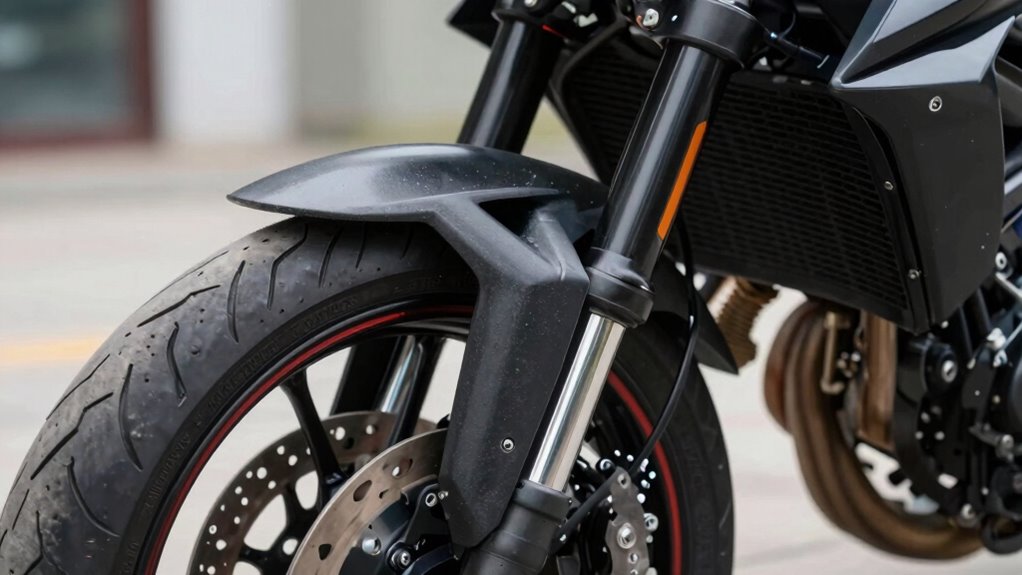
Have you noticed your motorcycle pulling to one side while riding? This issue can be unsettling and potentially dangerous if not addressed promptly. The first thing to check is the tire pressure. Unequal or incorrect tire pressure can cause your bike to veer to one side because the tires won’t make even contact with the road. Use a reliable tire pressure gauge to measure each tire’s pressure, confirming they match the manufacturer’s recommended levels. Keep in mind that underinflated tires create more rolling resistance and can make steering unpredictable, while overinflated tires reduce grip and responsiveness. Regularly maintaining proper tire pressure is vital for safe riding and smooth handling.
Check your motorcycle’s tire pressure regularly to ensure safe, smooth handling and prevent pulling to one side.
Next, think about the brake alignment. Misaligned brakes, especially if the brake pads are unevenly worn or not properly adjusted, can cause pulling. When you apply the brakes, uneven braking force can pull the bike to one side, which can be dangerous if unnoticed. Check the brake calipers and pads for even wear and ensure the calipers are properly aligned with the disc or drum. Sometimes, a simple adjustment or replacement of worn components can fix the issue. Don’t forget to test the brakes carefully after adjustments to confirm that they’re engaging evenly and smoothly. Proper brake alignment not only prevents pulling but also guarantees your stopping power is dependable.
Beyond tire pressure and brake alignment, you should also inspect your wheel spokes or lug nuts. Loose spokes or bolts can throw off wheel alignment, leading to pulling. Spin the wheel and look for wobbling or uneven rotation, which indicates a need for tightening or trueing the wheel. A bent rim can also cause pulling, so check for any visible damage. If you’re unsure, it’s best to have a professional mechanic examine the wheel setup. Additionally, wheel alignment can be affected by other components, so thorough inspection is recommended. Regular wheel maintenance ensures the overall integrity of your motorcycle’s stability. Properly maintaining your wheels and spokes is crucial for motorcycle stability and safe handling on the road.
Another aspect to think about is your suspension system. Worn or uneven shocks can affect your motorcycle’s steering and stability, making it pull to one side. Check for leaks, sagging, or uneven ride height. Proper suspension adjustment ensures your motorcycle handles evenly and responds well to steering inputs. It’s also worthwhile to consider suspension maintenance, as regular checks can prevent more serious issues down the line.
Lastly, take a quick look at your steering head bearings. Loose or worn bearings can cause instability and pulling. If the steering feels loose or there’s excessive play, have the bearings tightened or replaced. Keeping all these components in check guarantees your motorcycle rides straight and handles confidently, providing a safer and more enjoyable experience on the road.
As an affiliate, we earn on qualifying purchases.
Frequently Asked Questions
Can a Rider’s Weight Distribution Affect Motorcycle Alignment?
Your rider posture and gear weight can definitely affect motorcycle alignment. If you lean too much or shift your weight unevenly, it puts extra stress on one side, influencing how the bike tracks. Carrying heavy gear on one side can also cause imbalance, pulling the motorcycle to that side while riding. Maintaining balanced rider posture and evenly distributing gear weight help keep your bike aligned and riding smoothly.
How Often Should I Inspect My Motorcycle’s Steering Components?
You should inspect your motorcycle’s steering components every 5,000 to 6,000 miles or at the first sign of handling issues. During inspections, check the wheel alignment and suspension adjustment to guarantee everything’s properly aligned and functioning. Regularly examining these parts helps prevent pulling to one side, improves safety, and extends your motorcycle’s lifespan. If you notice any looseness or uneven wear, get your steering components inspected sooner.
Does Tire Pressure Influence the Motorcycle Pulling to One Side?
Think of your motorcycle as a tightrope walker—every detail matters. Yes, tire pressure influences pulling; uneven pressure causes imbalance. Proper tire alignment guarantees everything runs smoothly, preventing pulls. Don’t forget brake drag, which can subtly tug your bike to one side if brakes stick slightly. Regularly check and maintain tire pressure, alignment, and brake function to keep your ride straight and safe.
Are There Specific Riding Conditions That Cause Pulling?
Yes, certain riding conditions can cause your motorcycle to pull. Weather conditions like rain or strong crosswinds can affect stability, making you feel like you’re being pulled to one side. Also, uneven or rough road surfaces can influence your bike’s alignment and handling. When riding in these conditions, stay alert, adjust your grip, and reduce speed if necessary to maintain control and prevent pulling issues.
Can Aftermarket Parts Impact the Bike’s Steering Stability?
Imagine riding smoothly, then noticing the bike veering unexpectedly—aftermarket parts like steering upgrades can cause this. These modifications might not align perfectly with your motorcycle’s original design, impacting steering stability. Poorly installed or incompatible aftermarket modifications can create imbalance, making the bike pull to one side. Always guarantee your aftermarket parts are high-quality, properly installed, and compatible with your bike to maintain ideal steering stability and safe riding.
motorcycle brake caliper alignment tool
As an affiliate, we earn on qualifying purchases.
As an affiliate, we earn on qualifying purchases.
Conclusion
If your motorcycle keeps pulling to one side and you ignore it, you might as well be steering a wild beast instead of a bike! Don’t let small issues turn into catastrophic crashes. Regularly check your tires, alignment, and brakes—think of it as your bike’s health check-up. Stay vigilant, fix problems early, and keep your ride smooth and safe. After all, a well-maintained motorcycle isn’t just a bike; it’s your trusty steed ready for any adventure!
As an affiliate, we earn on qualifying purchases.
motorcycle steering head bearing kit
As an affiliate, we earn on qualifying purchases.
As an affiliate, we earn on qualifying purchases.
Fall Picks
fall essentials
As an affiliate, we earn on qualifying purchases.