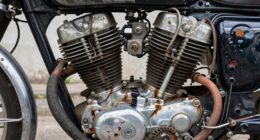
To troubleshoot poor MPG on your bike, start by checking your fuel injectors and spark plugs for dirt or wear, as both affect combustion efficiency. Make sure your air filter is clean and your tires are properly inflated to reduce resistance. Avoid aggressive riding habits like rapid acceleration or high speeds. If issues continue, it might be worthwhile to inspect for fuel leaks or sensor problems. Keep investigating these areas to release better fuel economy and smoother rides.
Key Takeaways
- Check and clean fuel injectors to ensure proper fuel delivery and prevent clogging-related inefficiencies.
- Inspect and replace worn or dirty spark plugs for optimal combustion and smoother engine operation.
- Maintain proper tire inflation and clean air filters to improve airflow and reduce engine workload.
- Avoid aggressive riding habits like rapid acceleration and high speeds, which decrease fuel efficiency.
- Conduct regular maintenance and seek professional diagnosis for persistent issues affecting MPG.
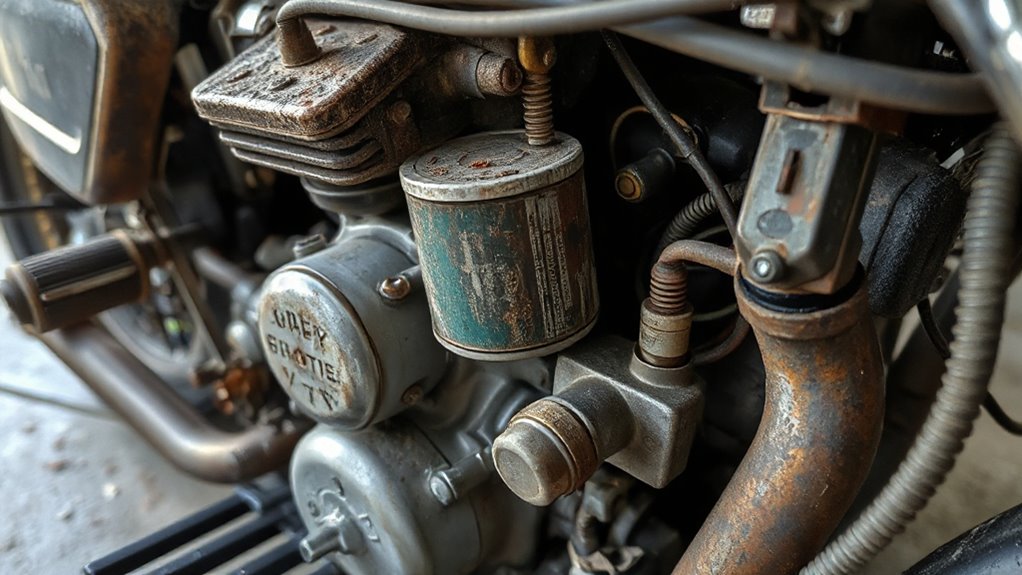
Many drivers notice their vehicles consuming more fuel than expected, which can be frustrating and costly. If your bike’s miles per gallon (MPG) suddenly drops, the problem often lies beneath the surface, and understanding common causes can help you troubleshoot effectively. One of the primary culprits is fuel injector issues. Your fuel injectors are responsible for delivering the right amount of fuel into the engine’s combustion chambers. Over time, they can become clogged or malfunction due to dirt, debris, or wear, leading to uneven fuel delivery. When injectors aren’t working properly, your engine runs inefficiently, forcing it to burn more fuel to produce the same power. Symptoms might include rough idling, hesitation during acceleration, or poor throttle response. Cleaning or replacing faulty fuel injectors can restore proper fuel flow and improve your bike’s MPG.
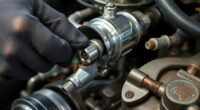
Fuel injector issues can cause your bike to run inefficiently and reduce MPG.
Another common problem that impacts fuel efficiency is spark plug problems. Spark plugs ignite the air-fuel mixture in your engine, and if they’re worn out, dirty, or improperly gapped, combustion becomes less efficient. When spark plugs aren’t firing correctly, your engine struggles to burn fuel completely, resulting in wasted energy and increased fuel consumption. You might notice your bike misfiring, rough running, or difficulty starting. Inspecting your spark plugs regularly and replacing them when necessary ensures excellent combustion. Using the correct gap and quality plugs helps maintain smooth engine performance and better fuel economy.
Beyond these issues, other factors can contribute to poor fuel economy. For example, dirty air filters restrict airflow, causing the engine to work harder and burn more fuel. Under-inflated tires increase rolling resistance, which also leads to higher fuel consumption. Additionally, riding habits matter—aggressive acceleration, high speeds, and excessive idling waste fuel. Ensuring your bike is well-maintained, with clean filters, properly inflated tires, and up-to-date spark plugs, can make a significant difference.
Keep in mind that diagnosing these problems isn’t always straightforward. If you notice persistent poor MPG despite basic maintenance, it’s a good idea to have a professional mechanic inspect your bike. They can check for deeper issues, such as fuel system leaks or sensor malfunctions, that might be affecting efficiency. Addressing fuel injector issues and spark plug problems early on can save you money at the pump and keep your bike running smoothly. Regular maintenance and attentive riding habits are your best tools to combat poor fuel economy and enjoy longer rides with fewer stops for fuel.

Red Line 60102 Complete Powersports Fuel System Cleaner – 4 Ounces
REDUCES OCTANE DEMAND – regain lost power and improve fuel economy
As an affiliate, we earn on qualifying purchases.
As an affiliate, we earn on qualifying purchases.
Frequently Asked Questions
Can Riding Style Affect My Bike’s MPG?
Yes, your riding style can substantially affect your bike’s MPG. Aggressive riding habits like rapid acceleration and hard braking waste fuel, while smooth, steady riding conserves it. Your gear choices also matter; riding in higher gears at lower RPMs improves efficiency. By adopting a more relaxed riding style and selecting appropriate gear, you can boost your bike’s fuel economy and save money on fuel costs.
How Does Tire Pressure Influence Fuel Efficiency?
You might think tire pressure doesn’t matter, but it actually does. When your tires are underinflated, the increased rolling resistance makes your engine work harder, lowering fuel efficiency. Check your tire tread for uneven wear, which can indicate misalignment affecting MPG. Properly inflated tires and correct wheel alignment reduce drag, helping your bike run more smoothly and saving you fuel. Keep an eye on these to boost your bike’s economy.
Does Engine Age Impact Fuel Economy?
Yes, engine age impacts fuel economy because engine wear and compression loss reduce efficiency. As your engine ages, parts like pistons and valves wear out, leading to decreased compression and poorer fuel combustion. This causes your bike to burn more fuel for the same power output. Regular maintenance, such as compression checks and engine inspections, can help identify issues early and improve your bike’s MPG.
Are Aftermarket Modifications Harmful to MPG?
Adding aftermarket parts and performance upgrades can drastically impact your bike’s MPG, often turning your fuel efficiency into a distant memory. Some modifications, like high-flow air filters or aggressive exhausts, might boost power but can also cause your engine to work harder, burning more fuel. Before installing upgrades, research their effects on MPG, and consider how they align with your riding style to avoid turning your ride into a gas-guzzling beast.
How Often Should I Service My Bike for Optimal Fuel Use?
You should service your bike every 3,000 to 5,000 miles or as recommended in your maintenance schedule. Regular service intervals, including oil changes, filter replacements, and tire checks, keep your bike running efficiently. By sticking to these intervals, you prevent issues that can harm fuel economy. Stay proactive with maintenance, and you’ll enjoy better MPG and a smoother ride.

Lot of 2 NGK Standard Non-Resistor Spark Plug 4629 C7HSA for 50cc 110cc 150cc Motorcycle ATV Dirt Pit Bike Go Kart Quad Honda Yamaha Kawasaki Suzuki Bristol
2 pack NGK Standard 4629 Spark Plug
As an affiliate, we earn on qualifying purchases.
As an affiliate, we earn on qualifying purchases.
Conclusion
If your bike’s poor fuel economy feels like a thorn in your side, remember that troubleshooting is key. By checking your air filter, spark plug, and tire pressure, you’re nurturing your bike’s health like tending a delicate garden. Addressing these issues promptly can turn your ride from a sluggish tortoise into a swift hare, saving you money and frustration. Keep an eye on these factors, and soon your bike will run smoother than a well-oiled machine.

HCmotorku Motorcycle Air Filter Replacement Intake Air Cleaner Element Fit for Harley Sportster XL Touring Road King Street Glide Dyna Softail Grey
【Fitment】:Fit For Harley XL Sportster (2004-2023). Fit For Dyna (2000-2017), For Softail (2000-2015), For Touring (2000-2007) Excludes: 2017…
As an affiliate, we earn on qualifying purchases.
As an affiliate, we earn on qualifying purchases.

Motorcycle Tire Pressure Gauge 60 PSI, PUIBERS 2’’ dial Mechanical Tire Gauges with 90 Degree Right Angle Chuck Flexible Hose, Tires Guages for Pressure Glow in The Dark for Cars, Motos, Bicycles
1. Reliable Air Pressure Gauge for Tires, full gear precision movement with bronze bourdon tube, no battery required,…
As an affiliate, we earn on qualifying purchases.
As an affiliate, we earn on qualifying purchases.