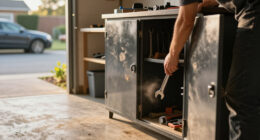

If your vintage bike floods repeatedly, first check the carburetor for proper adjustment and clean any clogged jets. Inspect and replace worn spark plugs, ensuring they’re properly gapped, and avoid leaving the choke on too long. Verify that the float level is correct and the fuel line is clean and free of leaks. Regular maintenance can prevent flooding from recurring; keep exploring for more detailed tips to keep your bike running smoothly.

Get business pricing on garage and car supplies
- Business-only prices and quantity discounts
- Tax-exempt purchasing
- Multiple users, one account, clear invoices
Key Takeaways
- Inspect and clean the carburetor, adjusting the air-fuel mixture and float level to prevent excess fuel entry.
- Check and replace worn or fouled spark plugs to ensure proper ignition and avoid flooding.
- Properly operate the choke, turning it off once the engine warms up to prevent overly rich mixtures.
- Examine fuel lines and petcock for leaks, blockages, or debris that could cause improper fuel flow.
- Perform regular maintenance, including cleaning and replacing worn parts, to ensure optimal carburetor and fuel system function.
If your vintage bike keeps flooding, it’s a clear sign that something isn’t right with its fuel system or carburetor. Flooding occurs when excess fuel fills the combustion chamber, making it impossible for the engine to start or run smoothly. The first thing you should check is the fuel mixture. If the mixture’s too rich, meaning it has too much fuel and not enough air, it can cause constant flooding. Confirm your carburetor is properly adjusted, and the air-fuel ratio is correct. You might need to tweak the mixture screws or replace worn-out parts, such as the needle jet or float valve, to prevent excess fuel from entering the combustion chamber.
Next, pay close attention to the spark plug. A fouled or wet spark plug is often a telltale sign that the engine is flooded. Remove the spark plug and inspect it. If it’s covered in black soot or fuel, it indicates a rich mixture or that fuel is flooding into the cylinder without igniting. Cleaning or replacing the spark plug can sometimes solve the issue, but if the problem persists, it points to a deeper carburetor issue. Make sure the spark plug gap is correct and that it’s in good condition. A worn or damaged spark plug won’t ignite the fuel properly, leading to continued flooding.
You should also consider the choke setting. If you’re riding with the choke engaged for too long, it can cause an overly rich mixture, leading to flooding. Always turn off the choke once the engine warms up, and avoid leaving it on longer than necessary. Additionally, check the float level in your carburetor. A float set too high can cause excessive fuel flow, resulting in flooding. Adjust the float to the manufacturer’s specifications to ensure the carburetor delivers the right amount of fuel. Proper carburetor maintenance can help prevent these issues from recurring. Regularly inspecting and cleaning the carburetor helps maintain optimal fuel flow and prevents clogged jets.
Finally, if your bike still floods repeatedly after these checks, it’s worth inspecting the carburetor’s condition thoroughly. Dirt, debris, or worn-out parts can cause improper fuel flow. Cleaning the carburetor and replacing any worn components will help restore proper fuel delivery. Remember, persistent flooding could also indicate an underlying issue with the fuel line or petcock, so inspect those parts for leaks or blockages. Regularly checking the fuel system components can help prevent flooding issues. By systematically checking and adjusting these components—particularly the fuel mixture and spark plug—you’ll get your vintage bike running smoothly again, avoiding the frustration of constant flooding.
vintage motorcycle carburetor rebuild kit
As an affiliate, we earn on qualifying purchases.
As an affiliate, we earn on qualifying purchases.
Frequently Asked Questions
Can Flood Damage Be Completely Repaired on Vintage Bikes?
Flood damage on vintage bikes can often be repaired, but it depends on the extent of the harm. You’ll need to focus on rust prevention by thoroughly cleaning and drying affected parts, and address electrical troubleshooting if wiring is compromised. Keep in mind, some damage might be irreversible, so consulting a specialist or restoring key components could be necessary. With proper care, you can restore your vintage bike’s functionality and preserve its value.
How Often Should I Inspect My Vintage Bike After Flooding?
You should inspect your vintage bike immediately after flooding and then every few weeks if it continues to be exposed to moisture. During these inspections, focus on rust prevention by checking for corrosion on the frame and components. Also, perform electrical checks to guarantee wiring and lighting still function properly. Regular inspections help catch issues early, preventing long-term damage and keeping your bike in good condition.
Are There Specific Vintage Bike Models More Prone to Flooding?
Some rare vintage bike models are more prone to flooding because of manufacturing flaws or design vulnerabilities, like open venting systems or outdated carburetors. You might notice these bikes have inconsistent starting or spluttering engines in wet conditions. These vulnerabilities make them susceptible to water intrusion, especially in heavy rain or deep puddles. Knowing your model’s weaknesses helps you take proactive steps, like sealing vulnerable parts or riding cautiously in wet weather.
What Are the Long-Term Effects of Repeated Flooding on a Vintage Bike?
Repeated flooding can cause long-term damage to your vintage bike’s electrical system, leading to corrosion and potential failure. Over time, moisture promotes rust on metal parts, weakening structural integrity. To prevent this, you should focus on corrosion prevention by keeping electrical connections dry and well-sealed. Regular maintenance and thorough drying after floods help preserve your bike’s condition, ensuring it stays reliable and functional for years to come.
Is Professional Restoration Necessary After Multiple Floodings?
Yes, professional restoration is necessary after multiple floodings to prevent further damage. Floodwaters can cause corrosion, rust, and structural issues that DIY repairs can’t fully address. You should consider restoration costs and whether your insurance coverage includes flood damage. A professional restoration guarantees your vintage bike’s value and function are preserved, making it a worthwhile investment to protect your passion and prevent costly future repairs.
motorcycle spark plug replacement
As an affiliate, we earn on qualifying purchases.
As an affiliate, we earn on qualifying purchases.
Conclusion
Dealing with a flooded vintage bike can be frustrating, but remember, every problem has a solution—sometimes just a simple fix. While modern bikes might recover quickly, your vintage ride’s charm lies in its quirks and history. So, don’t give up; instead, see each flood as a chance to learn and preserve its unique character. After all, a vintage bike’s beauty isn’t just in its ride, but in the stories it tells—floods included.
vintage bike fuel line repair kit
As an affiliate, we earn on qualifying purchases.
As an affiliate, we earn on qualifying purchases.
motorcycle float level adjustment tool
As an affiliate, we earn on qualifying purchases.
As an affiliate, we earn on qualifying purchases.
Fall Picks
fall essentials
As an affiliate, we earn on qualifying purchases.