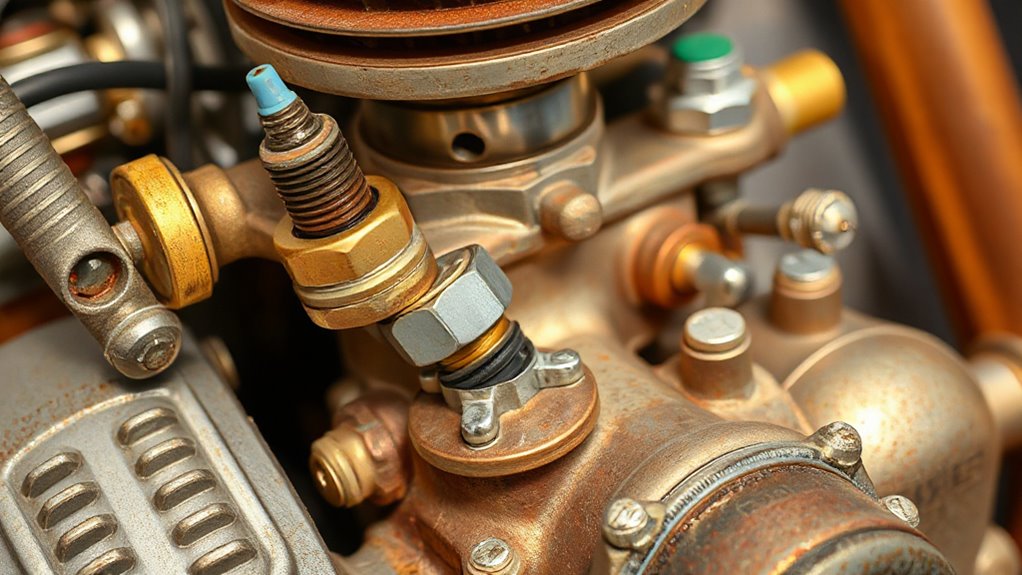

To get maximum power from your vintage two-stroke, focus on optimizing your fuel mixture by using the correct oil-to-gas ratio for smooth combustion. Regularly clean and carefully modify the exhaust port for better flow, ensuring a smooth path for gases. Adjust the port timing gradually to improve scavenging and power delivery. Small, precise tweaks to these areas will boost performance. Keep experimenting with these tricks, and you’ll uncover even more ways to maximize your engine’s potential.
Key Takeaways
- Optimize fuel mixture by maintaining the correct oil-to-gas ratio for smooth power delivery and engine longevity.
- Regularly clean and carefully reshape the exhaust port to improve exhaust flow and increase power output.
- Adjust port timing precisely to enhance scavenging and maximize power, ensuring modifications are measured and incremental.
- Make small, systematic tuning adjustments—fuel mixture, port shape, and timing—for best results and engine response.
- Use quality fuel and oil, maintain the engine well, and perform continuous fine-tuning for maximum performance from vintage two-strokes.
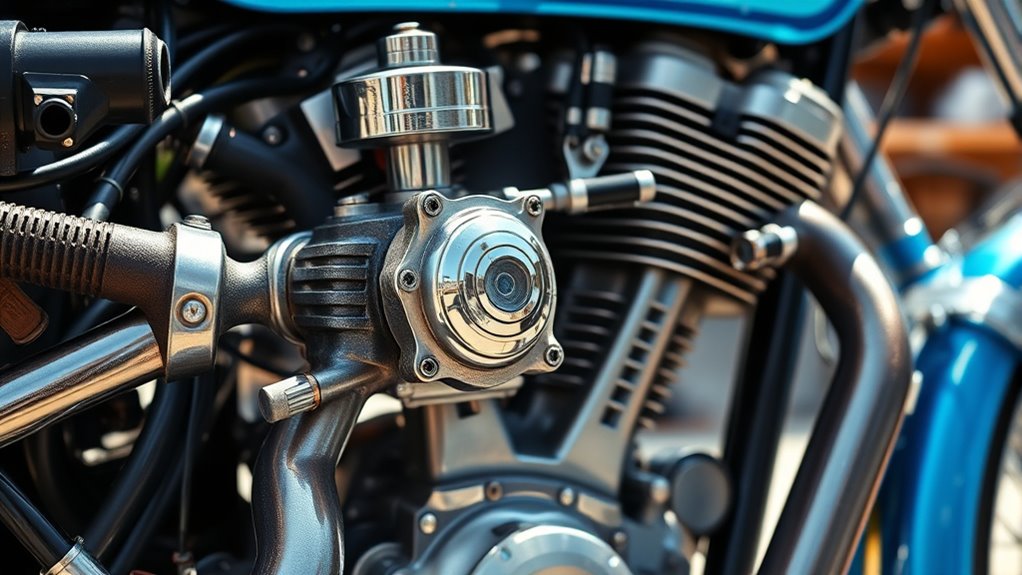
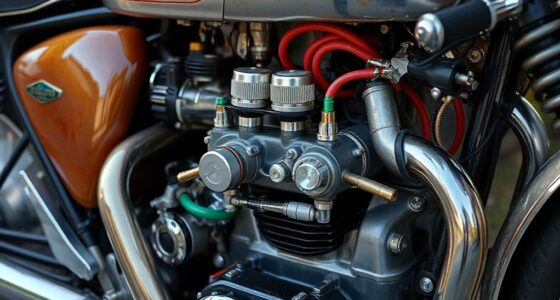
If you want to get the most out of your two-stroke engine, mastering some tuning tricks can make a significant difference. One of the most critical aspects to focus on is the fuel mixture. Confirming the right ratio of oil to gasoline is essential for optimal performance and engine longevity. Too lean a mixture, with less oil, can cause overheating and increased wear, while too rich a mixture, with excess oil, may lead to carbon buildup and sluggish response. Experimenting with the correct fuel mixture—usually around 50:1 or 40:1 for vintage engines—can improve power output, throttle response, and fuel efficiency. Always use high-quality fuel and oil, and make small adjustments to find that sweet spot where your engine runs smoothly and produces maximum power.
Optimize your two-stroke engine with the right fuel mix—usually 50:1 or 40:1—for peak performance and longevity.
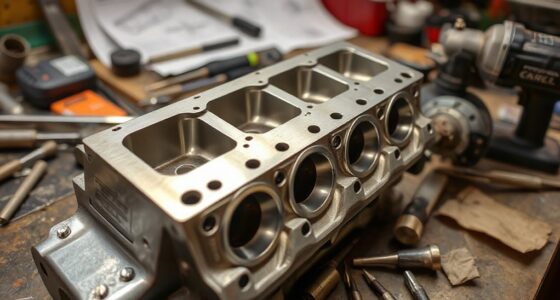
Another vital tuning trick revolves around the exhaust port. The exhaust port’s size and shape directly influence how well exhaust gases exit the combustion chamber, affecting power and throttle response. Over time, carbon buildup or improper modifications can restrict flow, choking the engine’s performance. To maximize this, carefully inspect and clean the exhaust port regularly to remove carbon deposits. If you’re experienced and confident, you can slightly enlarge or reshaping the port to improve exhaust flow, but be cautious—overdoing it can cause loss of low-end torque or engine damage. The goal is to achieve a smooth, unrestricted path for gases, which allows the engine to breathe better and produce more power.
In addition to these factors, pay attention to the port timing, which involves adjusting the position and duration that the exhaust port remains open during each cycle. Proper port timing ensures efficient scavenging, where fresh charge pushes out the exhaust gases and prepares the cylinder for the next cycle. Slight modifications to port timing can lead to noticeable gains in power, especially in vintage engines where the original design might not be optimized for modern performance. Always perform these adjustments carefully, and measure the effects on your engine’s performance.
Ultimately, tuning your two-stroke engine involves a combination of precise fuel mixture management, exhaust port maintenance, and port timing adjustments. These tweaks can reveal hidden power and help your vintage smoker run smoother and faster. Remember, small, incremental changes often produce the best results, so be patient and methodical. With a bit of practice and attention to detail, you’ll get the most out of your engine’s potential, transforming it into a more powerful, responsive machine.

Innova 3568 Digital Timing Light
Top-of-the line timing light with direct reading advance scale adjusts from 0-90 degrees
As an affiliate, we earn on qualifying purchases.
Frequently Asked Questions
How Do I Identify if My Two-Stroke Engine Is Underperforming?
If your two-stroke engine isn’t performing well, you can spot performance issues like sluggish acceleration or poor power output. Use diagnostic methods such as checking spark plug condition, inspecting the carburetor, and listening for irregular sounds. If it stalls frequently or struggles to start, these are signs of underperformance. Regularly examining these components helps you identify issues early and guarantees your engine runs smoothly and efficiently.
What Are the Signs of Incorrect Carburetor Tuning?
Imagine your engine struggling like a clogged drain—incorrect carb tuning causes issues like carburetor leaks and excessive exhaust smoke, signaling trouble. You might notice poor acceleration, sputtering, or inconsistent power. When tuning is off, leaks can flood the system, and smoky exhaust becomes a persistent gray or black cloud. Keep an eye out for these signs; they’re your engine’s way of telling you it needs a tuning tune-up.
Can Tuning Tricks Damage My Vintage Two-Stroke Engine?
Yes, improper tuning tricks can damage your vintage two-stroke engine. If you set the carburetor too lean or rich, it can cause engine wear and reduce fuel efficiency over time. Pushing the engine beyond its limits with aggressive tuning may lead to overheating or excessive strain. Always follow recommended tuning procedures carefully to maximize power without risking damage, ensuring your engine stays reliable and efficient.
What Are the Best Tools for Fine-Tuning Ignition Timing?
You’ll want a quality timing light to fine-tune your ignition; it’s crucial for precise adjustments. Did you know properly gapped spark plugs can improve power by up to 10%? Use a spark plug gapping tool to set the correct gap, then calibrate your timing light for accurate readings. This combination helps guarantee your vintage two-stroke runs smoothly and maximizes power, giving you ideal performance every time.
How Often Should I Perform Maintenance After Tuning?
You should perform maintenance after tuning every 20-30 hours of engine use to guarantee peak performance. Stick to a regular maintenance schedule that includes checking spark plugs, cleaning air filters, and inspecting carburetor settings. Doing this helps prevent issues and extends engine longevity. Consistent upkeep keeps your vintage two-stroke running smoothly, maximizing power and preventing costly repairs down the line. Stay proactive, and your engine will reward you with reliable performance.

Digital Timing Light with Tachometer, 12V Ignition Timing Gun with 0–90° Advance Angle BTDC, RPM Display, Xenon Strobe, Inductive Clamp for 2/4-Stroke Gasoline Engines – Car, Motorcycle, ATV, Boat
Professional Digital Timing Light – Prevent Engine Knock & Power Loss Instantly check ignition timing on the crankshaft...
As an affiliate, we earn on qualifying purchases.
Conclusion
So, there you have it—master the art of two-stroke tuning, and soon you’ll have a vintage smoker roaring like a beast. Just remember, a little tweak here, a tiny jet change there, and you’ll be the envy of every rusty old bike in town. Who knew that with some tricks and a pinch of patience, you could turn that sluggish smoker into a power-hungry monster? Now go on, make that two-stroke purr like a lion… or maybe just a really angry kitten.

Timing Light 12V Ignition Timing Light Automotive Strong Flash Timing Lights with Sliding Sensor Clip,Long Test Lead, Reverse Polarity Protection, Overload Protection for Car, Motorcycle Petrol Engine
【Powerful Ignition Timing Light】The timing light can intuitively detect the ignition timing scale on the engine flywheel or...
As an affiliate, we earn on qualifying purchases.
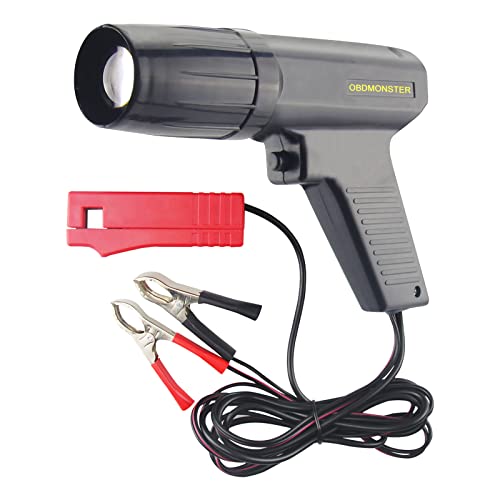
Automotive Timing Light 12V, Inductive Ignition Timing Light Gun for 2&4 Stroke Petrol Engine for Old Classical Car Motorcycle
Ignition Timing Light: Design to re-timing your car's ignition to get the best performance that you can. Suitable...
As an affiliate, we earn on qualifying purchases.