
TL;DR

Get garage and car supplies delivered free — and shop member deals
- Fast, free delivery on millions of items
- Access to Prime Big Deal Days deals on October 6–7
- Prime Video, Amazon Music and more included
Cycling Weekly published a Michael Hutchinson column examining a friend’s informal rules for saddle height, position and handlebar setup. Hutchinson says those rules may work for many riders, but notes that some benefit from professional fitting, particularly for cleat position, saddle choice and injury concerns.
Cycling Weekly has published a column by writer and former professional cyclist Michael Hutchinson arguing that common bike-fit rules can offer a workable starting point for many riders, while stressing that individual needs sometimes call for more detailed adjustment. The piece, prompted by a friend lowering his saddle on a hot ride, treats comfort and experimentation as part of bike setup rather than presenting one position as right for everyone.
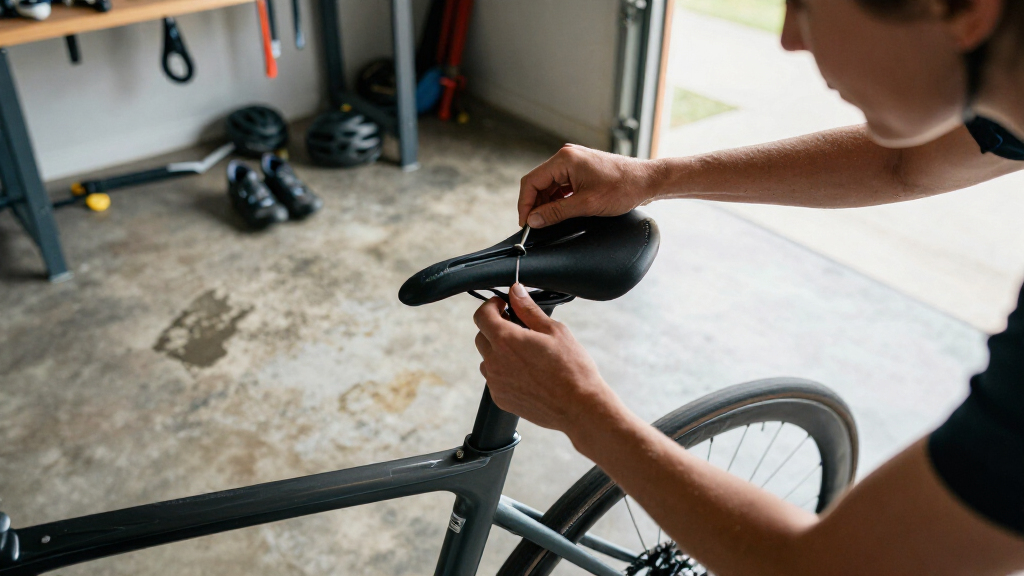
Hutchinson recounts riding with his friend Bernard, who stopped during a hot afternoon and lowered his saddle by a few millimetres because, he said, it felt right. Bernard is sceptical of professional bike fitting and favors a visual, rules-of-thumb approach. Hutchinson presents the exchange as an anecdote, not as evidence that heat requires a saddle adjustment or that professional fitting is unnecessary.
Bernard’s informal guide includes a saddle-height formula of 0.833 times inside-leg length, and a handlebar-position check based on whether the bars obscure the rider’s view of the front hub when seated with slightly bent elbows. He also favors a level saddle for most riders and gives a saddle-tip position of 60–65 millimetres behind the bottom bracket, while making exceptions for triathletes and time-trialists. These are Bernard’s rules as reported by Hutchinson, not universal fitting standards established by the article.
Hutchinson says the approach is “not a million miles out” for many people because riders can adapt to small changes. He also identifies areas where a shortcut may not be enough: choosing a saddle can be costly by trial and error, and detailed work on cleat position, cleat angles and insoles can help some riders address knee problems. The column does not provide clinical evidence or a formal assessment of the method.
Comfort and Individual Bike Setup
The column speaks to a practical choice facing cyclists: whether to adjust a bike by feel, follow standard measurements or seek a professional fitting. Small changes may be comfortable for one rider and unsuitable for another, so the piece’s main takeaway is not that measurements are irrelevant, but that they should not replace attention to how a bike feels and functions.
That distinction matters when riders are choosing costly equipment or trying to resolve discomfort. Hutchinson notes that repeated saddle purchases can become expensive, and that cleat setup and insoles may be relevant for some riders with knee concerns. The article does not claim that a bike fit diagnoses or treats an injury; persistent pain warrants advice from an appropriate health professional as well as careful consideration of the bike setup.
bike saddle height adjustment tools
As an affiliate, we earn on qualifying purchases.
As an affiliate, we earn on qualifying purchases.
From Frame-Building to Bike Fitting
Hutchinson places Bernard’s views against a history in which bike fitting was less established as a distinct service. He recalls that bespoke frame builders used their own approaches to turn a rider’s measurements into frame geometry. The account is personal recollection, rather than a detailed history of the industry.
The column also uses a comparison with professional cycling: Hutchinson says Eddy Merckx would sometimes stop during races to adjust his saddle height and carried a small spanner. The anecdote supports the idea that experienced riders may make changes while riding, but it does not establish that a particular adjustment is right for other cyclists. Hutchinson identifies himself as a writer, journalist and former professional cyclist with national titles in Britain and Ireland and competition experience at world and Commonwealth events.
“The thing is, I reckon his system is not a million miles out.”
— Michael Hutchinson
As an affiliate, we earn on qualifying purchases.
Limits of the Rules of Thumb
The source is a first-person opinion column, not a controlled study or a fit assessment. It does not establish that the stated measurements suit all body types, bicycles or riding disciplines. Nor does it explain what saddle angle, height or position a particular reader should use.
The column does not give evidence for Bernard’s suggestion that hot weather should prompt a saddle adjustment, and it does not specify how riders should distinguish normal adaptation from a setup that contributes to discomfort. The author’s mention of possible knee benefits from cleat adjustments and insoles is broad; no clinical findings, fitting protocol or individual case details are supplied.
As an affiliate, we earn on qualifying purchases.
Adjustments Remain Rider-Specific
The source material announces no follow-up study, product or formal guidance. For now, the column offers a discussion rather than a new technical standard: cyclists can treat basic measurements as reference points, make small changes cautiously and pay attention to comfort. Riders considering major or persistent changes may want advice from a qualified bike fitter, particularly when cleat setup, saddle choice or recurring discomfort is involved.
Any adjustment should be judged on the individual bike and rider, not on Bernard’s example alone. The next step for readers is therefore personal testing or specialist advice, depending on their needs; the article does not specify a further development or timetable.
As an affiliate, we earn on qualifying purchases.
Key Questions
What is the news in this Cycling Weekly article?
Cycling Weekly published a Michael Hutchinson column about a friend’s informal bike-fit rules. Hutchinson says they can be a useful starting point for many riders but recognizes that some setups call for more detailed, individual fitting.
Does the article recommend lowering a saddle in hot weather?
No. The hot-weather adjustment is Bernard’s personal choice in Hutchinson’s anecdote. The column does not offer evidence or general advice that riders should lower their saddles when it is hot.
What saddle-height formula does Bernard use?
Hutchinson reports Bernard’s rule as 0.833 multiplied by inside-leg length. The column presents it as a rule of thumb, not a universal standard for every cyclist or bike.
Does Hutchinson say professional bike fitting is unnecessary?
No. He says Bernard’s simple approach may work for many people, but also notes that detailed fitting can help with cleat positions, cleat angles and insoles, and that finding a suitable saddle by trial and error can be expensive.
Source: rss
Halloween Picks
halloween
As an affiliate, we earn on qualifying purchases.