
TL;DR

Get business pricing on garage and car supplies
- Business-only prices and quantity discounts
- Tax-exempt purchasing
- Multiple users, one account, clear invoices
A car diagnostic scanner reads supported trouble codes and vehicle data, helping you investigate warning lights and discuss symptoms with a repair shop. Its code points to a condition or system, not necessarily a failed part, and basic OBD-II compatibility does not guarantee access to ABS, airbag, or other systems. Check your exact vehicle’s coverage, and treat flashing warning lights or safety system faults promptly.
A check-engine light can turn a quiet drive into a guessing game. A car diagnostic scanner can give you a useful first clue in minutes, but it cannot magically name the broken part. The difference matters: replacing parts based on a code alone can cost you money and leave the real fault untouched.
This guide explains what a scanner reads, how basic code readers differ from more capable tools, and how to use the information without overinterpreting it. You’ll also learn what to check before buying one and when a warning calls for a mechanic. Think of a scanner as a flashlight under the hood: it helps you see where to look, while diagnosis takes more than a beam of light.
A scanner reads supported vehicle codes and data; it does not automatically identify the failed part.
Check a scanner’s coverage for your exact make, model, year, region, and desired systems before buying.
Record codes and symptoms before clearing anything; clearing a code does not fix the fault and can reset readiness monitors.
A clean scan cannot prove a used car is mechanically sound; pair it with an inspection and road test.
Treat a flashing check-engine light, poor running, and safety-system faults promptly, using a qualified mechanic where needed.
What a car diagnostic scanner can tell you in minutes
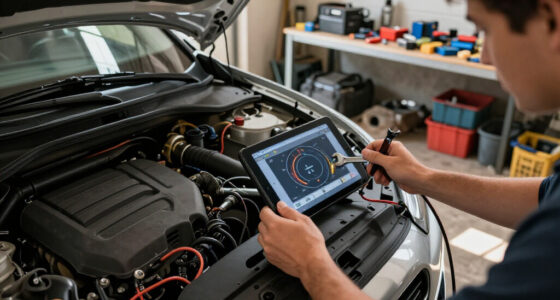
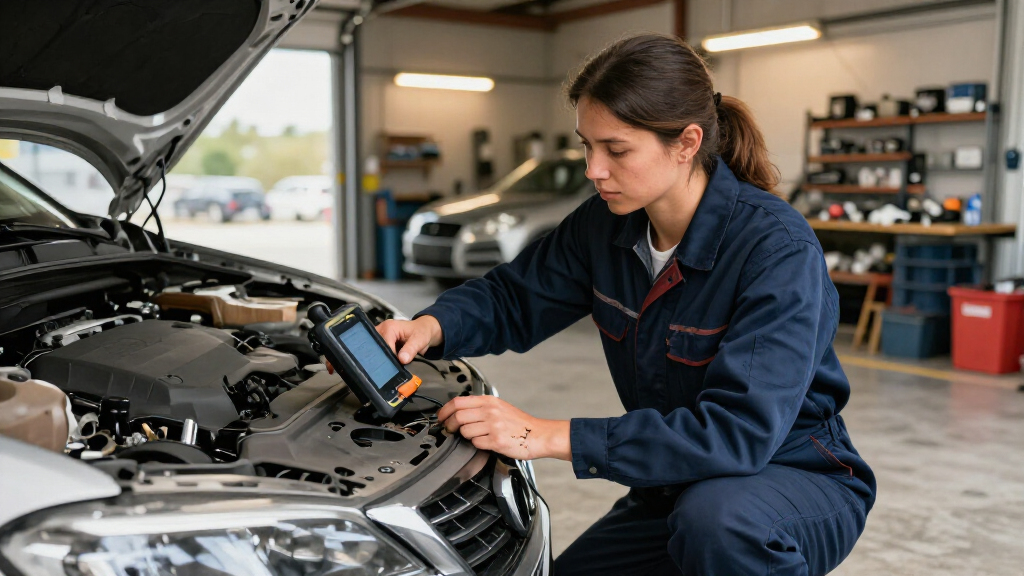
A car diagnostic scanner is a device or app that reads information from a vehicle’s onboard computers. It can retrieve supported diagnostic trouble codes, show selected live sensor data, and, with some tools, run tests or change settings. Its job is to give you clues about what the car has detected, not to confirm every repair.
In the United States, most cars and light trucks from model year 1996 onward use OBD-II. The connector usually sits under the dashboard, though its exact location can vary. Plug in a reader, switch on the ignition as instructed, and it may retrieve an engine code such as P0301. That code indicates a cylinder 1 misfire, but it does not tell you whether the spark plug, coil, fuel supply, compression, or wiring caused it.
For example, if your car shakes at a stoplight and the scanner reports a misfire, you now have a specific symptom and code to share with a repair shop. That is a better starting point than saying only, “The engine feels strange.” A scanner gives you a clue; testing turns that clue into a diagnosis.
OBD-II adoption and diagnostic coverage vary by region and vehicle. Check the tool’s stated coverage for your car’s year and market, even if the plug physically fits.
Products Worth Considering

Autel MaxiCOM MK808BT PRO Bidirectional OBD2 Diagnostic Scanner

Autel MaxiCOM MK900BT Bidirectional Diagnostic Scanner

Chemical Guys 14-Piece Arsenal Builder Car Wash Kit with Foam Blaster
As an affiliate, we earn on qualifying purchases.
Why a trouble code is a clue, not a parts order
A trouble code describes a detected condition; it usually does not identify the failed part. The car’s computer can tell you that it noticed a misfire in cylinder 1, for instance, but it cannot automatically distinguish a worn spark plug from a weak ignition coil, a fuel delivery issue, low compression, or a damaged wire.
Imagine your scanner shows P0301 just as the engine starts to stumble on a cold morning. The code narrows the search to a cylinder, and the timing gives a mechanic useful context. But the repair still calls for checks—perhaps inspecting the plug, testing the coil, or measuring compression. Swapping parts at random is like changing every bulb in a house because one room went dark: you may get lucky, but you have not found the cause.
Look at live data and freeze-frame information if your scanner provides them. Freeze-frame records can capture conditions around the moment a fault was stored, such as engine load or temperature. Those details may help explain why a warning appeared during a steep climb but not on a calm, level commute.
A code points you toward a test. It does not give you permission to skip the test.
Write down the code, symptoms, and when they occur before you clear anything. That short record can help a technician reproduce the problem and avoid chasing a code without its context.
Choose a scanner that covers the systems you care about
The right scanner depends on the information you need: basic engine codes, richer data, or access to several vehicle systems. A low-cost code reader may handle common emissions-related engine codes, while a more advanced model may show readiness monitors, manufacturer-specific codes, or data from systems such as ABS and transmission. Coverage depends on both the scanner and the exact vehicle.
The label “OBD-II compatible” generally describes basic diagnostic communication; it does not guarantee full access to airbags, ABS, body electronics, or every manufacturer-specific function. Before buying, search the tool’s coverage list for your make, model, year, region, and the particular job you want to do. Broad claims like “works on all cars” don’t tell you whether it can read your car’s airbag module.
A phone adapter can make a handy dashboard for an owner who wants to check engine codes in a driveway. A handheld scanner may be easier to operate and offer built-in coverage or controls. Either way, the adapter, app, and car all affect what you can do. Check app permissions and data handling before connecting a phone; also see whether the adapter should be unplugged after use, since some draw power while connected.
More advanced tools may perform bidirectional tests or adaptations. Those features can change vehicle behavior, so follow vehicle-specific instructions and leave unfamiliar procedures alone. A scan tool that can reach a system is not automatically a safe shortcut for repairing it.
Use your scanner in five careful steps
Use a scanner to record and understand the fault before clearing codes. A careful scan preserves information that can help you or a mechanic see what happened. Here’s a simple driveway routine for a vehicle with an illuminated check-engine light.
- Park safely. Stop on level ground, set the parking brake, and follow your scanner’s instructions for ignition position and connection.
- Read and record the codes. Save every code, including pending codes, if the tool displays them. Photograph the screen or write down the exact letters and numbers.
- Note symptoms and conditions. Record whether the engine was cold, whether the car shook, and whether the light appeared during idle, acceleration, or a long climb.
- Check the coverage and explanation. Consult reliable vehicle-specific information and treat the scanner’s description as a lead. For example, a P0301 code calls for misfire diagnosis, not an automatic coil purchase.
- Decide whether to stop or seek help. If the warning flashes or the car runs poorly, stop driving when safe and arrange prompt professional help. Otherwise, share your notes with a technician or plan an informed next check.
Suppose you scan a car after the check-engine light appears on the way to work. You record P0301, note that the engine shook at idle, and leave the code stored. When the mechanic sees the car, those details can guide diagnosis. Clearing the code first might erase useful information and reset emissions readiness monitors, which can matter before an inspection.
Many scanners can clear stored codes, but clearing a code does not repair the cause. If the fault remains, the warning may return.
Know when a warning light needs a mechanic
Get professional help when a scanner reading comes with a flashing check-engine light, poor running, or a safety-system fault. A flashing light can signal a potentially damaging misfire, so continuing to drive may turn a small repair into a much larger one. If the car shakes badly, loses power, or smells strongly of fuel, pull over somewhere safe and contact a repair professional.
A warning light can have causes ranging from a loose fuel cap to a serious engine or emissions problem. A code may help narrow the possibilities, but it cannot judge how safely the car will stop or protect you in a crash. Leave brake, airbag, and other safety-critical repairs to a certified mechanic. High-voltage electric vehicle systems also require appropriately trained service professionals; do not probe or repair those circuits with a consumer scanner.
If you are checking a used car, scan it alongside a road test, visual inspection, and independent mechanical inspection. A clean scan is not proof of a sound vehicle: codes can be cleared, and some issues may not yet have triggered a code. Readiness monitors can also show whether diagnostic checks have completed since a reset.
For example, a seller’s car may show no stored engine codes but have incomplete readiness monitors after a recent battery disconnect or code clear. That doesn’t prove dishonesty, but it does mean a clean screen is not the whole story. Ask questions and let an independent mechanic inspect the vehicle before you buy.
Turn scan results into a better repair conversation
A scan is most useful when you bring a clear record of codes and symptoms to the person diagnosing the car. Share when the warning appeared, how the vehicle behaved, and whether the scanner showed freeze-frame or live-data details. That gives the technician a starting point without telling them which part to replace.
For instance, “P0301 appeared after a cold start, and the engine shook at idle for two minutes” is more helpful than “The scanner says cylinder 1 is broken.” The first statement separates what you observed from what the code means. A technician can then inspect the ignition, fuel, compression, or wiring instead of inheriting a parts guess.
Keep a simple note on your phone: date, odometer reading, warning light behavior, code, and any recent work such as a battery change. If the same light returns after a repair, that timeline can show whether the fault is new or recurring. It also helps you ask focused questions: “What test confirmed the failed part?” and “Did the readiness monitors complete?”
A scanner is a communication tool as much as a reading tool. It can make a repair visit less mysterious, but a trustworthy diagnosis still rests on evidence from the vehicle itself.
Frequently Asked Questions
What does a car diagnostic scanner do?
A car diagnostic scanner reads supported trouble codes and vehicle data from onboard systems. Depending on the scanner and car, it may also show live data, freeze-frame details, readiness monitors, or run certain tests.
Will a scanner work with my car?
Check the coverage list for your car’s make, model, year, market, and the functions you want. Basic engine and emissions diagnostics are more widely supported than access to ABS, airbags, or manufacturer-specific features.
Can a scanner tell me which part to replace?
Usually not. A code identifies a detected condition or system, while diagnosis requires interpreting it alongside symptoms and tests. A P0301 misfire code, for example, can have several causes.
Can I use a scanner to turn off the check-engine light?
Many scanners can clear stored codes, but that does not repair the underlying fault. The light can return if the issue persists, and clearing codes may reset emissions readiness monitors.
Can a basic scanner read ABS or airbag codes?
Only if the specific tool supports those systems for your vehicle. “OBD-II compatible” often means basic engine and emissions diagnostics, not access to every module.
Can a scanner help me inspect a used car?
Yes. It can reveal supported stored codes and readiness status, but a clean scan does not prove the car is mechanically sound. Pair it with a road test, visual checks, and an independent inspection.
When should I stop driving and call a mechanic?
Seek prompt help if the check-engine light flashes, the vehicle runs poorly, or a safety system such as brakes or airbags has a fault. High-voltage EV repairs also belong with a properly trained professional.
Conclusion
Use a car diagnostic scanner to get a clearer first clue, then pair that clue with symptoms and proper testing. Record the code before clearing it, check what your tool truly supports, and ask for professional diagnosis when the car runs poorly or a safety system is involved.
A scanner can light the path to the problem. The right test shows you where the road ends.